Tuesday, April 16, 2024

Profits before People

Written by: Jed J. on 16 April 2024


In the age we live in gas and electricity are necessities. They are not commodities which we can choose to buy or not buy. 

Yet in the capitalist system the supply of these essential needs is in the hands of private companies whose main aim is to maximise profits.

The supply of gas and electricity should be, as they once were, controlled by government Utilities to ensure they are available and affordable for all.

Since these utilities were privatised, many working people are finding it increasingly difficult to pay for these basic necessities. 

There is a cost of living crisis today and energy costs are contributing to it. 

Australian gas is being sold overseas in quantities that allow people in foreign countries to pay less for gas than in the country of its origin.

To maintain their profit levels private energy companies are resorting to large increases in their supply costs.

Many Australian workers, as a result, are finding it increasingly difficult to pay their energy bills while the suppliers make increasing levels of profit.

So what is the government planning to do? Are they planning to introduce price controls? Are they planning to limit export of our natural resources? Are they planning to de-privatise the supply of energy and put it under the control of government controlled Utilities?

No. They are talking about another round of handouts to vulnerable sections of the people, supposedly to help them cope with the price rises.

Actually the public funds used to do this will help guarantee that the energy companies will not miss out on the profits they make selling gas and electricity to these vulnerable people.

The profiteers will be the main beneficiaries of the government’s largesse. Public funds will be used to bolster private profit. 
If the government is serious about helping people cope better in this present cost of living crisis they would de-privatise the energy companies and place them in the hands of government controlled Utilities.

That would be the best way to reverse the present trend and put people before profits. 

Sunday, April 14, 2024

Israel gets a taste of its own medicine

Written by: Nick G on 14 April 2024


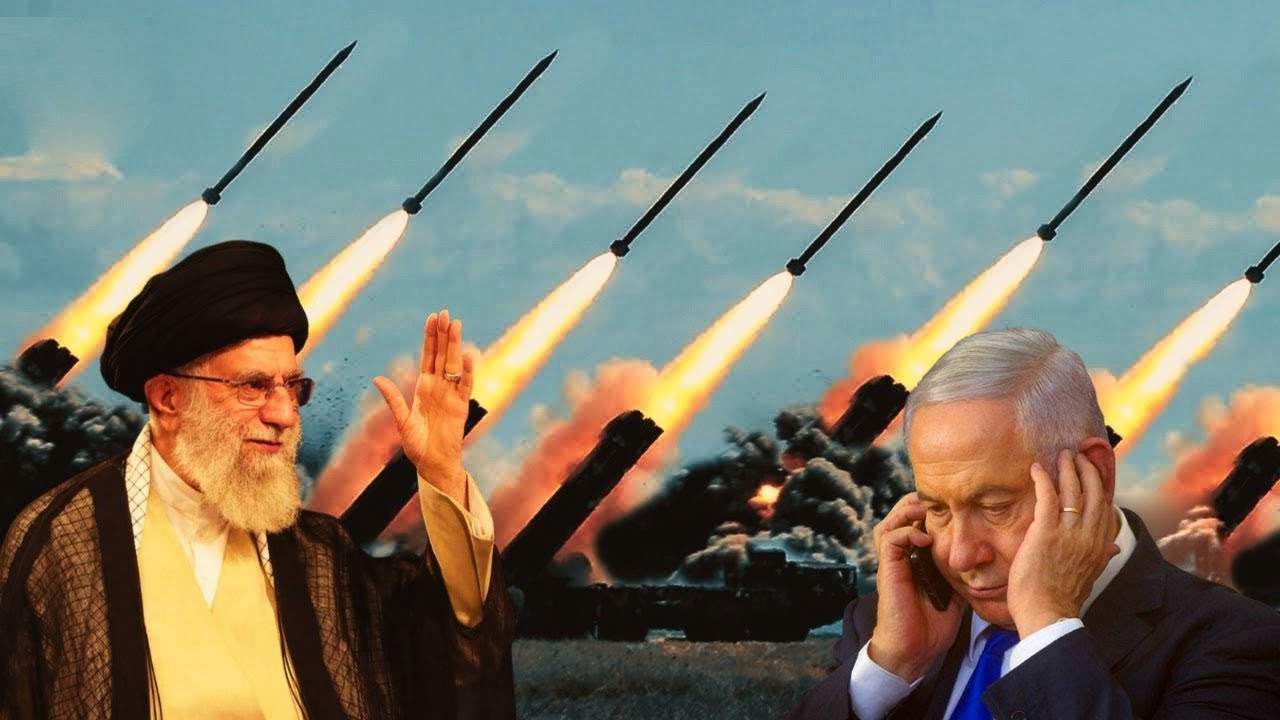
Image: www.hiiraanweyn.net

Iran’s retaliatory missile attacks on the Zionist Israeli regime are a necessary and justified response to Israel’s attack on the Iranian consulate in Syria two weeks ago, which killed 18 members of the Iranian Revolutionary Guard.

We know that the Iranian state authorities are reactionaries and that the Iranian people have waged courageous struggles for democratic rights and the liberation of women.

That does not change our opinion towards the justness of their response to the consulate attack.

By way of contrast, the Zionist-supporting Australian government has condemned the retaliation in which more than a hundred drones, dozens of cruise missiles, and ballistic missiles were sent to specific targets in Israel.

For too long, Israel has arrogantly chosen targets in Lebanon and Syria and carried out targeted assassinations with seeming impunity. The assassinations include those of five Iranian nuclear scientists for which Israel has never been held to account.

Its attack on the Iranian consulate was typical of that arrogance. 

It followed reports by Western analysts that Iran was not seeking to escalate regional tensions. That remains Iran’s position, its spokesperson saying after its retaliation that the "matter can be deemed concluded". 

Iran’s retaliation punctures the arrogance of the Zionists and will boost morale among Palestinians in Gaza and the West Bank.  

It comes three days after Israeli PM Netanyahu boasted “We have determined a simple rule: Whoever harms us, we will harm them.”

Netanyahu is now getting a taste of his own medicine.

Saturday, April 13, 2024

Museum workers lead action to save SA Museum

Written by: Ned K. on 14 April 2024


On Saturday 13 April about 2,000 people held a rally outside Parliament House on busy North Terrace Adelaide to protest about proposed cuts to jobs and research at the South Australian Museum. 

The rally was organized by the Museum workers and their union the Public Service Association and concerned members of the SA community who had made donations, both large and small to the Museum.

In the week leading up to the rally, concerned supporters of, and donors to, the Museum paid for a full page advertisement in the local Adelaide Advertiser headed "An Open Letter: The Future of SA's Museum Is At Risk"

The letter started,

"Dear Premier Malinauskas,

Capturing 165 years of continuous research and tens of thousands of years of First Nations’ cultural knowledge, the collections housed at the South Australian Museum are not only one of the most significant cultural assets in SA, they are among the most significant in the world".

A newly appointed head of the Museum, CEO David Gaimster, and the Museum Executive and Board decided to ram through a "restructure" of the Museum at the expense of research carried out by highly skilled scientists and researchers in the natural sciences including zoology, mineralogy and palaeontology and natural history generally.

Over the last three decades of economic rationalism, the Museum staff had been reduced to just 73 people and the SA Museum, a state government Statutory Authority, was trying to get rid of the top 27 research positions.

During this period, the SA Museum and other SA Government icons next to the Museum, (Library and Art Gallery) had experienced outsourcing of support services such as cleaning, catering, security, maintenance and research assistants. In some areas of the Museum, scientists and researchers relied on the goodwill of volunteers to complete their work.
 
One speaker at the rally said that the loss of the 27 individual research staff equated to the loss of 474 years of expertise and knowledge.

Research into and management of biodiversity is threatened with cuts to scientific staff. Since British colonial invasion, more than 300 species have been lost. Studies of collections as to Museum assists in species adaption and survival.

Speakers at the rally included Ngarrindjeri/Kaurna Elder Major "Moogy" Sumner who expressed concern that the cuts to research would be a loss for First Nations communities. With only one position in the restructure reserved for Indigenous expertise, it was possible that the cultural knowledge of First Nations women could be lost. Lack of funding would bring an end to the repatriation of the thousands of First Peoples’ remains from collections from the UK and other European countries and the USA. 

The SA Museum Act 1976 states that a core function of the Museum is " to carry out, promote, research into matters of science and historical interest, and to accumulate objects and specimens of scientific or historical interest".

One of the placards at the rally summed up just how the proposed restructure by calling the Museum ATM standing for "Automatic Tellya Museum 

Key In Pin
Select Research
Press Enter
Insufficient Funds"

with a picture of a small child trying to make sense of it all. 

The Public Service Association Secretary spoke on behalf of all unionists employed at the Museum and informed the rally participants that the Museum had not even complied with its own Enterprise Agreement in trying to ram through cutbacks to staff at a time when what was actually needed was an increase in funding of both Museum staff and resources.

The SA Government has been caught out. There is plenty of money for supporting the US war machine and football events and stadiums, all at the expense of areas of society that the Government thinks will not get it re-elected for another 4-year term of office. Adelaide Lord Mayor Jane Lomax-Smith, a former Chair of the SA Museum Board and Minister of Education in the Rann Labor Government, said that multiple State government had stagnated funding of the museum. She said there had been no real funding for over 20 years. Cultural institutions, she said, had been neglected by a bread and circuses culture.

More broadly, the struggle of the Museum workers is another example of how most of the surplus value created by the working class as a whole ends up in the hands of the ruling capitalist class rather than being used for the benefit of the working class and those unable to work, such as children, unemployed, and the aged.


Thursday, April 11, 2024

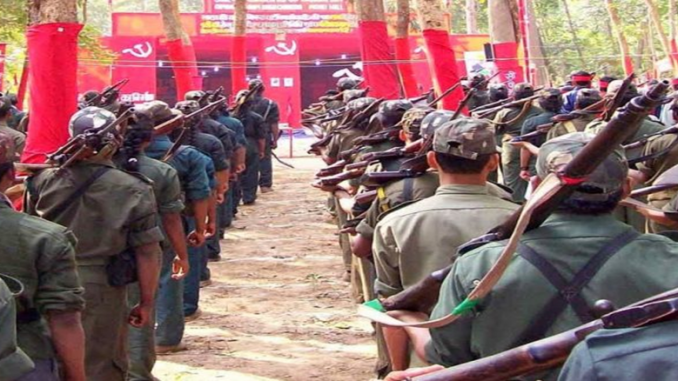
CPI (Maoist) announces the immortalization of 50 people's fighters

Written by: Communist Party of India (Maoist) on 11 April 2024


The Communist Party of India (Maoist) has issued a statement commemorating the deaths of 50of the fighters of People’s Liberation Guerilla Army. The Maoists and other progressive forces are subjected to brutal attempts at elimination by the Modi saffron fascist regime. We salute their sacrifices-eds. 

....................

April 9, 2024

The Central Committee of the Communist Party of India (Maoist) issued a statement announcing the death of 50 guerrillas from January 1 and calling on the people to protest the massacres.

"WE TRUST THE POWER OF THE MASSES"

In its statement, the CPI (Maoist) said, "For the last 50 years, a revolutionary movement has been going on in our country under the leadership of the Communist Party of India (Maoist) with incredible sacrifices. The ruling classes are constantly conducting military operations to stop India's revolutionary movement at its very inception. The Government of India, which has declared our party as the only major threat to the internal security of the country, has been carrying out large-scale, long-term military pressure operations for the last 20 years," he said, noting that at least five thousand CPI (Maoist) guerrillas and people have been killed in 20 years.

"Despite this, our revolutionary movement for the democratization of the people in our country continues on its way with great devotion, determination in the face of many tides, with the support of fraternal movements, and by relying on the organized power of the broad masses," the statement continued.

"50 OF OUR COMRADES WERE MARTYRED"

From January 1, 2024, the reactionary Indian state has launched a new military operation called "Operation KAGAR". In a statement, the CPI (Maoist) announced that nearly 50 of its comrades were immortalized within the scope of this operation and summarized the details of the operations as follows:

"Six people were massacred in Chipurbatti, 13 in Korcheli, 3 in Pujari Kanker and 2 in Kerajhiri Dabri. We condemn these murders and commemorate all our heroic martyrs with respect. We will pledge to build a gender-equality, secular and democratic system without exploitation and caste for their unfulfilled dreams.

"For the past two decades, conflict zones across the country have been constantly populated by central and state armed governments, as well as police forces. Unprecedented military repression is being exerted in the conflict zones of Andhra Pradesh, Telangana, Odisha, Maharashtra states of the Central Region, Chhattisgarh and Chhattisgarh, which are the battlegrounds of Bihar-Jharkhand, West Bengal, Uttar Pradesh, Uttarakhand and Assam states in the Eastern Region, which have been identified by the predatory ruling classes as powerful states for the Maoist movement.

"Only modern weapons, anti-mine vehicles, drones and helicopters fly and shoot in the sky. Police are conducting a search operation in thousands of forests. They attack villages and kill people, especially young people, without even seeing the distinction between men and women and the elderly. They chase the revolutionaries, shoot bullets. In fact, seeing all this reminds us that a war is going on in enemy territory. The Indian government is waging a civil war against the citizens of India. The government's war against the people of India must be stopped immediately."

PRESSURE ON THE PUBLIC IS INCREASING

In the continuation of the statement, it was explained that the people were attacked in order to destroy the Maoists and information about these attacks was given: "The reactionary forces have decided to end the Maoist movement throughout the country in the next three years. They target all those who oppose their exploitative policies, anti-people governments, and divisive policies among the people in the country and carry out different kinds of attacks on them. All kinds of activities of citizens are monitored. Modern industry keeps an eye on this. For the last 10 years, the Hindutva dictatorship of the RSS-BJP forces has been going on in the country. By doing many things and abusing power to put a mask of parliamentary democracy on their administration, the 18th century, they hold their Lok Sabha elections.

"The entire village of Prabal is being crushed under the boots of the murderous police. Due to the constant intensive search operations of the police, the chances of survival of people in villages and forests are getting worse and worse. Today, in the forests, there is no guarantee of the safety of life and property of the tribal people, respect for women, protection of children and youth. The police brutally murder those caught in forests and villages, calling them Maoists and fabricating false and fabricated stories about the seizure of weapons and ammunition from them."

BANDH CALLED

The statement concluded: "Fraternal movements must be built in favour of the peoples who are struggling wherever possible for the survival of the Indigenous people against the fascist regime and to stand against the ongoing arbitrary attacks against them.

"Students, intellectuals, human rights activists, social workers, journalists and friends of the media, writers, artists and lawyers are working to establish peace in the forests. People in the Central Region (Telangana, Andhra Pradesh, Odisha, Maharashtra and Chhattisgarh), especially Indigenous people, protested against the harsh conditions faced by Indigenous people and condemned the ongoing attacks against them and demanded an immediate halt to the attacks."

The CPI (Maoist) called on the people to carry out propaganda and demonstrations from 13 to 15 p.m. and bandh on April 15.

(A bandh is a 24-hour strike)

Ants and Elephants: Middle Class relations with the Imperialist Bourgeoisie and the Working class

Written by: John G. on 11 April 2024
 

Australia is a capitalist country. 

Big corporates rule the economy, their key owners are overseas capitalists with American moneybags top of the heap. British bosses are next in line with Japanese, German, French and other European capitalists being joined by latecomer Chinese owners.

Their involvement in the country is to make profits, either directly here or by securing resources for profit-making elsewhere, or both.  

Workers

Among Australians, the working class, the people who have to work for a living selling themselves to a boss, is the largest class. 

There’s a section who sell themselves at very generous premiums, doing very well out of looking after capitalists’ interests; managers, top bureaucrats, people doing the dirty work of policing workers in commissions like Fair Work, police and judges and the like. Many are paid handsomely to keep other workers in line and the capitalists on top. 

Still, there’s 3/4s of the population who work for a living in the grind of capitalist exploitation. 

Our interest in having comfortable lives, good education, good accessible healthcare, a good living, stand in conflict with capitalists making the best profit they can get. Working class interests are the mainstay of the opposition to capitalists plundering the country, its people, its resources and its environment. 

However, working class organisation and capacity to stand up for itself is at a low point. Unionism overall is below 10%. In the public sector, it’s higher but still under 20%. In the private sector unionism is in the lower part of single digit percentages. 

Union coverage varies hugely between industries, between industry sectors, and between sections of the workforce within an industry or industry sector. In construction, unionism is higher on major city jobs and tiny in housing construction. Among government school teachers, unionism is very high while it’s much lower in the private sector . In hospitals, unionism among nurses runs well over 70% while among hospital administrative and support staff it’s below 30%. 

Overall, there is weakness in the working class but there are some areas of strength.

 In the confrontation over capitalist profit-chasing at the cost of working-class living standards, the capitalists’ interest dominate, living standards lose out and down we go. 

Middle Classes

Classes other than the working-class superhero and the capitalist supervillain, are wedged between the two. 

Middle classes of small and medium businesses, self-employed professionals and the like, vary between those reliant for their social position on the big corporate capitalists and those screwed down by the system of finance and markets monopolised by big corporates. Sometimes they are in both situations simultaneously.

With the working class relatively quiet, the smaller classes and sections pull their heads in and try to do the best they can in circumstances dominated by big corporate monopolies led by US and British imperial capitalists. Those that get desperate, facing imminent ruin or losing out big time, pop up from time to time and squeal, but generally they hunker down. Some take advantage of workers’ support for local production and use the space that affords them to promote locally-owned businesses and locally-produced products, with the success available. 

In the building industry, there is experience of subbies and smaller builders supporting workers, some providing jobs when the big builders have blacklisted militants. At the same time they are capitalists, making profits from exploiting workers. Working with and struggling against, is just how it works sometimes.  

The main point however is that generally small businesses can’t afford to put a target on their back when the working class is weak, disorganised, lacking direction and fight for its own well-being and freedom and for the nation’s liberty from the plunder of foreign corporate giants.  

Workers' relations with Middle classes

When the working class is not able to impose its overall strength on the imperialists, our strategy has to be defensive. 

Within that defensive position, sections burst out on tactical offensives. Many public sector workers leapt into strike and protest campaigns in a few states last year. Workers’ sufferings grew as their locked down wages left them open to hardships as inflation raged. That wave of struggle gained concessions and has eased now. 

Wollongong Nurses and Midwives in struggle for ratios last year

While workers are on the defensive and under the boss’s thumb, the opportunity to call for middle classes to back the struggle against imperialist rule and get useful responses is limited. It should be carefully considered until workers are on the move. 

If the workers are weak at the moment, those middle classes are pretty hopeless. The limits on anti-imperialist struggle among them reflects the reality of class relations today. There’s a tendency to engage with limited reformism and use what influence they have to hold back the working class from confrontation with imperialism. 

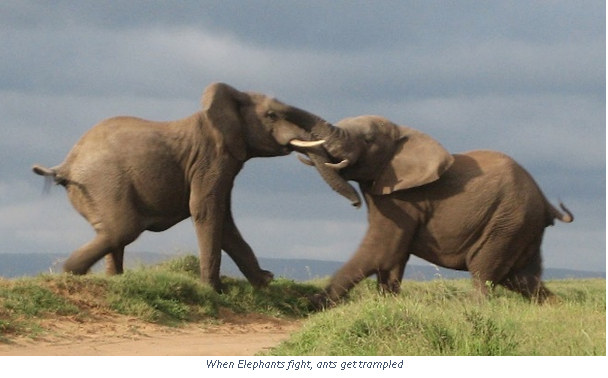
The old African proverb “When elephants fight, ants get trampled” applies to middle classes keeping their distance in our current situation. 

Judgement of the relations of middle classes to the two giant class forces in Australian society and the anti-imperialist struggle won’t really be able to be made until workers are able to take the initiative in offensives against imperialism. 

Tuesday, April 9, 2024

Binskin appointment comes with a conflict of interest

Written by: Nick G. on 10 April 2024


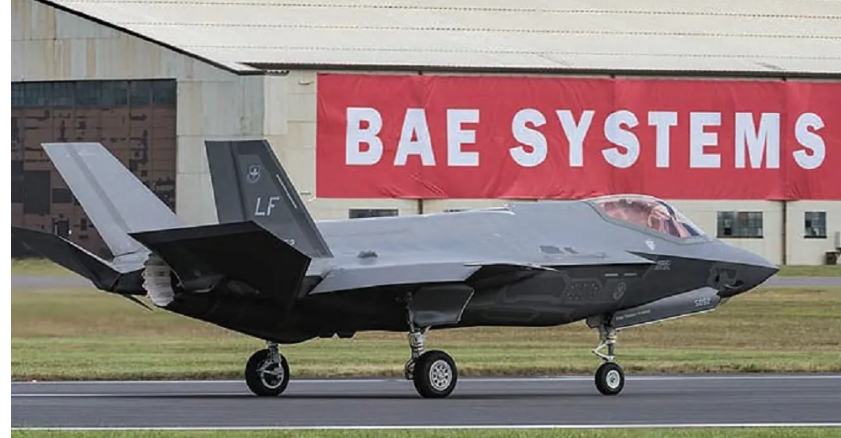
Photo credit: militaryleak.com 

The Australian government’s appointment of Air Chief Marshal Mark Binskin (Rtd) to serve as Special Adviser to the Australian Government on Israel's response to the Israel Defense Forces strikes which killed Zomi Frankcom, and six of her World Central Kitchen colleagues, comes with a major conflict of interest.

Binskin is a non-executive director for Defence and National Security Policy of BAE Systems Australia. Its UK parent company is literally making a killing out of Israel’s genocidal war on the Palestinians.

A non-executive director of a company is usually not an employee, but advises the company in return for fees, equity (shares) and cash payments. 
Binskin’s ties with the commercial life of BAE Systems began in 2018. He was Chief of the Defence Force when BAE Systems Australia was awarded the $35 billion Future Frigate contract, the largest surface warship program in Australia’s history. 

The following month Binskin retired. The contract for the $1.2 billion upgrade of the Jindalee Operational Radar Network was also awarded to BAE in the final months of Binskin’s tenure.

In July 2019, one year later, the minimum timeframe permitted, Binskin joined BAE Systems, a position he still holds.

BAE and Israel

BAE Systems, headquartered in London, supplies the Israeli military with a wide variety of weapons, including components for combat aircraft, munitions, missile launching kits, and armoured vehicles. BAE technologies are also integrated into Israel's main weapon systems, including fighter jets, drones, and warships.

BAE Systems provides weapon systems and components to the Israeli Air Force's fleet of F-15, F-16, and F-35 fighter jets.
In 2018, BAE was contracted to manufacture $20.4 million worth of transmitters for Israel's F-35s through the U.S. government's Foreign Military Sales program. Even before October 7, the Israeli Air Force has used the F-35 to launch airstrikes in and around Gaza. BAE in the U.K. produces 15% of the components for these F-35 jets.

Additionally, BAE has provided the Israeli military with electronic missile launching kits and gunsight technology for F-16 aircraft. Israel's use of these weapons against civilians in Gaza is killing Palestinians in their thousands.

BAE partnered with Israeli state-owned weapon manufacturer Rafael Advanced Defense Systems to upgrade Rafael's MK-38 Typhoon gun system, a remotely controlled naval weapon system installed on the Israeli military's unmanned Protector drone. The drone has been used to enforce Israel's illegal blockade of the Gaza Strip. Gazan fishermen, who are restricted by Israel to severely limited fishing areas, have reported being fired at by the Israeli Navy on an almost-daily basis.

In 2015, in close collaboration with the Israeli military, BAE developed the Rokar Silver Bullet, a precision guidance kit used to transform large-caliber projectiles, fired, for example, by tanks and warships, into highly accurate munitions. BAE has supplied Israeli weapon manufacturer IMI Systems (owned by Elbit Systems since 2018) with its Silver Bullet for integration into M401 155mm cannon artillery.

Israel has routinely fired 155mm heavy artillery into residential areas of Gaza City long before the resistance breakout on October 7.

Mark Binskins

It is not good enough that someone working for genocide profiteer BAE Systems will investigate the World Central Kitchen murders.

If it was thought that someone of his military seniority was required to get past Israeli obstructions, then he should have been appointed as part of a team that included war crimes legal specialists and human rights lawyers. The World Kitchen killings are not an isolated incident and should be investigated as part of the murders of nearly 200 aid workers by the Zionists, of their deliberate starvation of the people of Gaza, attacks on food convoys including the so-called “flour massacre” on 29 February 2024 when at least 118 people were killed and 760 injured after Israeli forces opened fire on civilians seeking food from aid trucks. Anything less than an investigation on this scale will miss the whole point of the Zionist genocide.

If Binskins returns a report that is in anyway inconclusive, that in anyway refuses to see what even Blind Freddy can plainly see, then it will have no credibility given his conflict of interest.


Monday, April 8, 2024

“Grey-Zone” intelligence assessments and real-war scenarios

Written by: (Contributed) on 8 April 2024


The US diplomatic response to credible competition from China in the Western Pacific and wider Indo-Pacific region has taken the form of an intensification of Cold War hostilities using grey zone-type intelligence assessments. They rest upon their desperate attempt to reassert traditional hegemonic positions, although remain fraught with dangers of real war scenarios for the US and their allies upon which they are increasingly dependent.

The recent high-level diplomatic visit of US Secretary of State Antony Blinken to the Philippines was accompanied with a brief media release high-lighting the perceived threat of China's 'grey-zone strategy' which had been assessed as a threat to 'US interests'; it included reference to 'a constant ratcheting up' of China's diplomatic brinkmanship. (1)

Grey-zone conflict in military jargon has been usually associated with subversion and has included: destablisation, weakening or undermining traditional structures, in order to systematically weaken an adversary. It has become the face of the new Cold War which exists in the murky area in-between 'between peace and conflict'. (2)

It is, however, accompanied by grey-zone conflict in political circles which has far-reaching implications for civil society and contemporary Australia. It has taken Australian society into the darkest depths of Cold War positions whereby anything linked to China is regarded as suspicious in classic 'reds under the beds' scenarios. (3)

A typical example of the crude conspiracy theories entering into mainstream Australia has been the claim by the so-called US Centre for Strategic and International Studies that China's Qinling base on Antarctica 'was perfectly located … to spy on Australia and New Zealand particularly the satellite launch location in the Northern Territory'. (4) More sensible commentary, however, has noted 'many South-east Asian and Pacific countries are closer, and some would be more hospitable hosts. The growing number of Chinese satellites going over Australia could also do the job'. (5)

It is important to note the US Centre for Strategic and International Studies is a Washington-based 'think tank' with tentacles reaching deeply into Australian academia through seemingly harmless associates; to the contrary, it is an arm of the massive military-industrial complex designed specifically to serve 'US interests'. War, and preparation for war, is big business.

The US-led diplomatic position and controversy about the Qinling base has rested on  two significant points: the decision by the Pentagon to transform their Defence Intelligence Agency (DIA) early in the last decade to provide as many as 1,600 newly recruited intelligence-gathers 'into a spy service focused on emerging threats'; a highly controversial study conducted in Washington which found 'the US is no longer the dominant power in the Western Pacific and would struggle to win a conflict against China'. (6)

The former has included extensive use of open-source intelligence (OSINT) with intelligence assessments based on information already in the public domain, raising problems that anything even remotely linked to China or Chinese endeavour can be spied upon and subject to surveillance as being regarded as suspicious. Intelligence-gatherers now also lurk on-line or in university libraries accessing post-graduate research documents while Defence publications openly flout links between universities as centres of learning with military-based programs. The position actively promotes the worst aspects of the previous Cold War now being played-out in the present one; publications from the past have revealed the extent of contemporary class, state paranoia and hysterical mind-sets. (7)  

Within those hysterical circles of Cold War fanatics, those who pay the piper, invariably call the tune; the Pentagon remains closely linked with the US military-industrial complex which thrives on increased defence budgets and arms sales. The US defence budget for the last year amounted to $816.7 billion. (8) Vast amounts of US defence spending support the corporate sector and research and development programs, often directly linked into universities which have become dependent upon the hand which feeds them. China, by contrast, had defence spending at only $224.79 billion. (9)

The US imperialists, nevertheless, are relentless and seek to increase their defence budgets on the annual basis in order to reassert traditional hegemonic positions. They fear any competition from China, whether it originates from economic considerations and trade, or defence and security concerns.
 
The increased US defence budgets, however, have not made the world a safer place. In fact, to the contrary, we live in a world of seemingly endless US-led sabre-rattling and escalating diplomatic tensions. Australia is clearly drifting toward a US-led confrontation with China, and successive governments in Canberra have done little to stand-up for national interests; Australia, furthermore, is increasingly out-of-step with regional neighbours.

The recent ASEAN Special Summit in Melbourne in early March, for example, saw Australia assume the role of the sub-imperial power, although it failed to achieve the Cold War US-led consensus it sought. It took place at a pivotal time. The ASEAN countries have a total population of about 600 million and have become China's largest export market with $790 billion in trade, pushing the US into second place. ASEAN member countries, furthermore, see little benefit in choosing sides between the US and China; they have little to gain from side-lining China.

Some ASEAN political leaders were also forthright in their chosen diplomatic position: Malaysian Prime Minister Anwar Ibrahim, for example, used his visit to Australia to push for countries in the region to remain neutral and non-aligned, with foreign policies decided upon by their sovereign governments, not foisted upon them by Washington and the Pentagon.

In conclusion, the US-led 'grey-zone' assessments of China have taken the region into a dangerous diplomatic position whereby even Washington has acknowledged the strategy is 'on track to create a serious regional crisis and probably armed conflict'. (10)

                                         We need an independent foreign policy!


1.     Grey-zone response a way to call China's brinkmanship bluff, Australian, 22 March 2024.
2.     Today's wars are fought in the 'grey zone', Atlantic Council, 23 February 2023.
3.     See: Labor's national security kowtow a win for the CCP., Australian, 26 March 2024.
4.     China's Antarctica moves should be a cause for concern, Australian, 4 April 2024.
5.     Ibid.
6.     Pentagon plays the spy game, The Guardian Weekly (U.K.), 7 December 2012; and,
        Study: US no longer dominant power in the Pacific, Information Clearing House, 22 August 2019.
7.     See: None dare call it treason, John A. Stormer, (Missouri, 1964), which was distributed across Australia by the far-right Australian League of Rights. The book was first published in 1964 and was subsequently re-printed twenty times in-between February and October of that year.
8.     Website: US Department of Defence, Biden Signs, 23 December 2022.
9.     See: China to increase defence spending, CNN., 7 March 2023; and, China's 2023 defence spending, Jamestown Foundation, 14 April 2023.
10.   Australian, op.cit., 22 March 2024.