Showing posts with label workers' demands. Show all posts

Friday, September 18, 2026

Transdev bosses are spewing, but oh, so politely, as they take on MUA ferry workers in Sydney

Written by: Louisa L. on 18 September 2026


(Photo supplied)

Transdev began as part of a French state-owned financial institution, Caisse des Dépôts Group. In 2019 the German family-owned Rethmann Group took a 66% controlling share.  Rethmann made its billions through the private water, raw material and waste management company, Remondis.

Worth $11.7 billion, the Rethmanns are Germany’s 10th richest family. They own a controlling share in Transdev, that runs Sydney Ferries.  

Transdev had nearly $17billion revenue 2025. Through September, Seek was advertising a ferry job for Casual General Purpose Hand “$42.60 per hour plus super plus penalty rates”. 

Poor old Rethmanns! They can’t afford to pay workers more. 

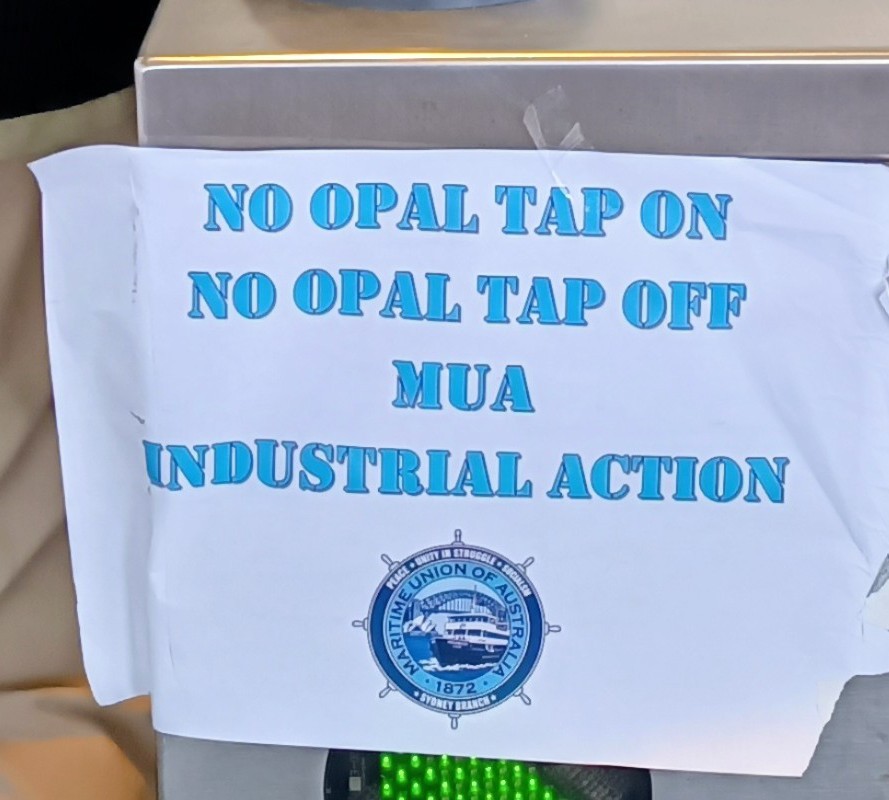
On Friday 4 September, Transdev’s Sydney Ferries workers, led by MUA Sydney branch began a month’s protected industrial action for a new EBA. Ferries are operating free for customers. 

Transdev bosses are spewing, but oh, so politely! They announced, “Fares have not changed during the industrial action. Opal readers are operating and customers should tap on and tap off as usual, including where gates are open or unattended.” But with gates locked open and signs announcing the free ride, customers happily walk on through.

(Photo supplied)

Transdev reckons it empowers “freedom to move every day thanks to safe, reliable and innovative transport solutions that serve the common good.” It boasts its 7100 Australian and NZ employees provided 271million trips.  

But the company, not workers, shut down ferries to Parramatta for two days. It’s a favourite way from Sydney’s midwestern business heart to get to Sydney.

This time passengers were spewing in Transdev’s help-the-poor-bucket.

A reunion crew of retired state school teachers cheered for the workers as they headed for takeaway at Watsons Bay. The reply, ‘MUA, here to stay!’


Tuesday, September 15, 2026

Government "Rescue Package" NO SECURITY FOR WHYALLA STEEL WORKERS

Written by: Ned K. on 16 September 2026


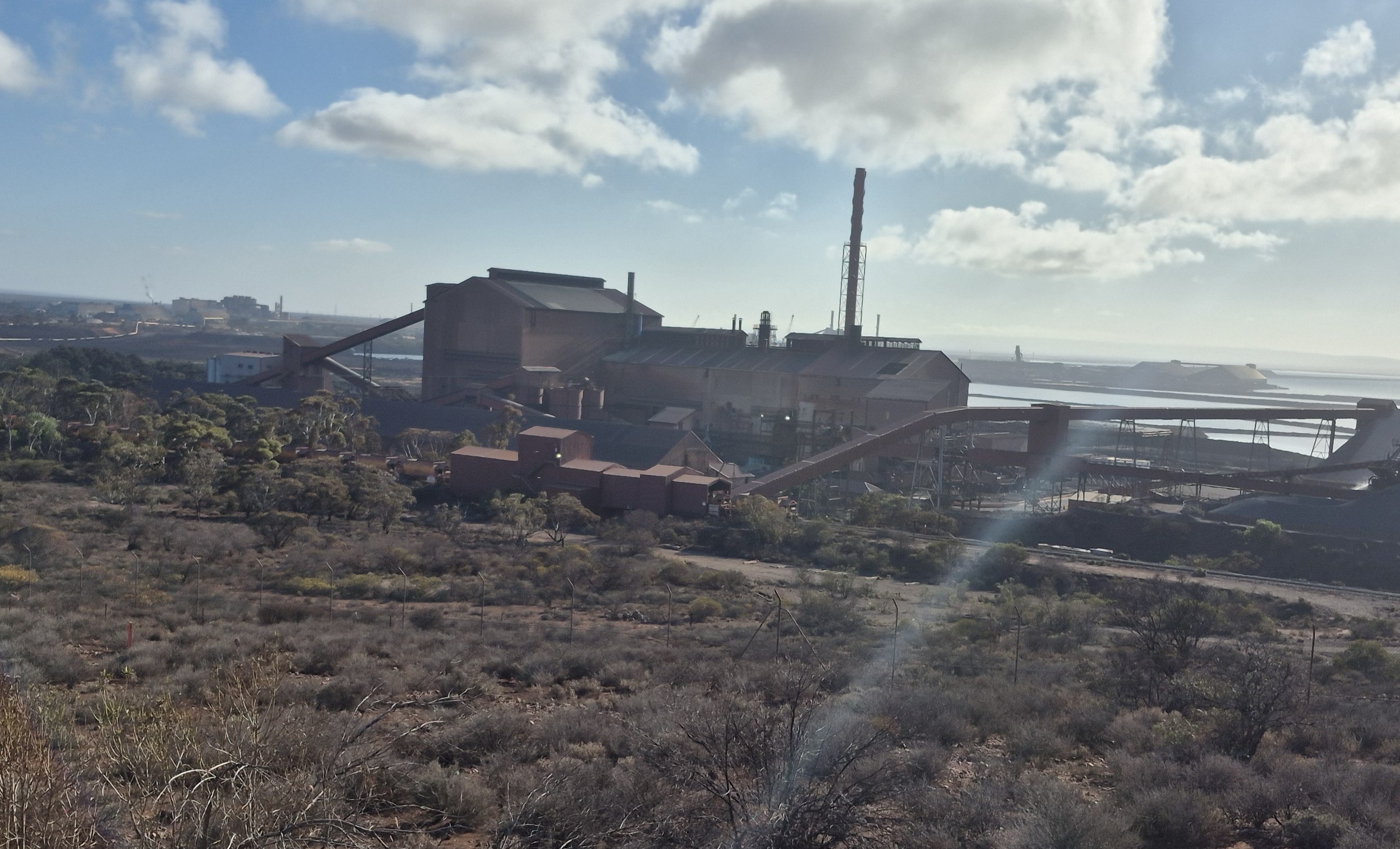
(Above: Whyalla Steelworks.  Picture supplied)

On Monday 14 September SA Premier Peter Malinauskas went to Whyalla to announce the final shutdown of the blast furnace at the Whyalla Steel Works in South Australia. 600 workers, including about 100 contractors, will lose jobs. The Premier blamed the failure of previous owners of the steelworks over several decades for the demise of the blast furnace. 

These previous owners - Gupta's GFG Alliance, Arrium and One Steel and before that BHP - all had one thing in common. They manufactured high grade steel from locally mined high grade iron ore for profit. Thousands of workers lived at Whyalla and worked at the steel works and up until the 1970s at the Whyalla shipyards as well. 

Many of these workers were new migrants to Australia. Over the decades they produced the wealth appropriated by large corporations from BHP through to Gupta's GFG Alliance.

In February 2025, the SA and federal ALP governments announced a $2.4billion "rescue package", ousted the heavily in debt GFG Alliance from control of the Steelworks and placed the Steel Works into the hands of administrator Korda Mentha.

Korda Mentha was the corporate shark that recommended Gupta's GFG Alliance purchase of the Steel Works in the first place!

The "rescue package" by the SA and federal governments was a case of governments acting in the interests of capitalism as a whole as so many different sectors of the economy relied on the high-grade steel produced at Whyalla.

During the period of GFG Alliance ownership and the period of Korda Mentha administration, the resilient backbone of the Steel Works, the steel workers themselves and the working people of Whyalla generally, kept the steel production going and with limited resources tried to keep the blast furnace operating.

Workers were told that "help is on its way" in the form of a new Steel Works owner who would not only purchase the Steel Works, but instal a new electric arc furnace replacing the old blast furnace. 

The SA Government told workers and the Whyalla community a decision on the new owner would be made by September 2026. As the old blast furnace shutdown announcement was made on 14 September 2026, the Government said it was hopeful of announcing a new owner by the end of 2026.

Workers Win All Entitlements

The strength of Whyalla since the first blast furnace operated in 1941 has been the workers of Whyalla, across not only the steel works, iron ore mines and the port but throughout the community. 

The steelworkers and earlier shipbuilding workers have been not only unionised but highly organised with strong delegate structures, good communication networks among themselves, strong community leisure and sports clubs and strong support for workers in the many services sectors without which the steelworks and shipbuilding works would not have functioned.

This is the main reason why on 14 September 2026, the SA Premier had no real choice but to guarantee all workers made redundant would receive all monetary entitlements owing plus support services to find workers other jobs.

Reading between the lines, the Government may know that whoever the new owner selected (M Resources from Qld or Jindal Steel from India), there may be no new electric arc furnace. If this is the case, none of the 600 jobs will return. The Steel Works will do what it does at the moment. Import steel billets which will be rolled and refined at Whyalla to customers’ requirements but no longer manufactured at Whyalla. 

Workers Need a Real "Rescue Package"

Both SA and federal ALP governments are parties of capitalism. Their "rescue package" of putting the Steelworks into administration has only had partial short-term success. The next phase of their "rescue package" is to once again hand the Steel Works to yet another large corporation whose prime reason for bidding for the Steel Works is to maximise profit.

Whyalla workers know this and sense that the only real short to medium term secure "rescue package" is for the steel industry in Australia to be nationalised as a step towards national independence and socialism with an economy based on people's needs rather than being based on profits for big capitalist corporations.


Monday, June 29, 2026

NO SECURE JOURNEY FOR IMMIGRATION DETENTION CENTRE WORKERS

Written by: Ned K. on 27 June 2026


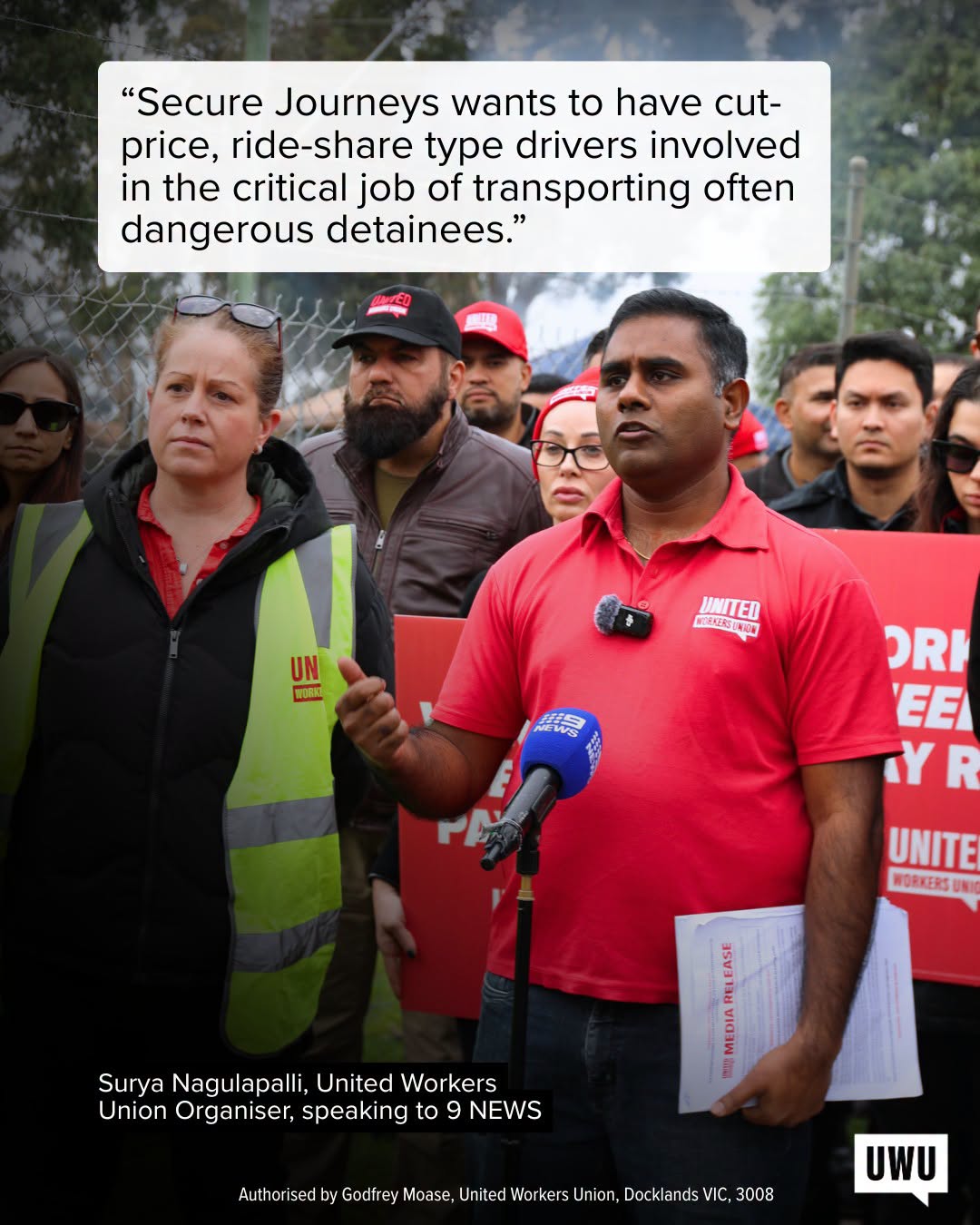
(Source: UWU Facebook page)

Detention Centre Officers who are members of United Workers Union have been taking rolling strike action for several weeks to win a real wage increase, safe staffing levels and better rosters.

Their employer is US owned Management and Training Corporation Pty Ltd and trades as Secure Journeys in its contract with the federal ALP government to operate 7 onshore Detention Centres and numerous "Alternative Places of Detention" in Australia. 

This US corporation operates private prisons in 8 US states and also operates in the UK and Egypt.

The nearly 1000 United Workers Union members across these Centres in Australia work unsafe rosters of up to 15 day blocks on 12 hour shifts. Fatigue is a serious safety issue as well as workload due to under staffing.

Secure Journeys' contract with the federal government hands them $2.3 billion so the more they can reduce staffing levels and labour costs, the more profits flow back the corporations head office in Utah in the US.

Immigration Detention Centre Officers had numerous workplace issues with the previous, outgoing contractor, UK multinational Serco, including a dispute over redundancy pay when Serco lost the contract.

The federal ALP government showed its allegiance to US imperialism by handing the new contract to Secure Journeys. 

The Detention Centre Officers have had anything but a "secure journey" working for the latest one of a number of overseas owned for-profit Immigration Detention Centre operators.

These workers are part of a growing number of services sectors workers who unashamedly see themselves as part of the working class in Australia. Like the "blue collar" mass manufacturing industry workers of decades ago in Australia, they face the same class enemy in the form of mainly US multinational corporations.

The type of work the Immigration Detention Officers perform is different from for a Ford or GM Holden worker of decades past, but the class nature of their struggles is the same.

The Detention Officers are determined to continue action until they win their key demands.

Thursday, May 21, 2026

SA nurses, midwives to resume industrial action

 Written by: Nick G. on 22 May 2026


Representing over 25,000 nurses, midwives and health care workers in SA, the SA Branch of the Australian Nursing and Midwives Federation announced that members would recommence industrial action in the public sector last Monday (18/5). 

Industrial action was suspended in February when the government made an offer of a 6% “interim administrative increase” in the lead up to the state election. Following the election, negotiations resumed over the ANMF’s full wage claim and demands for improved conditions. These negotiations have now stalled with no further offer forthcoming from SA Govt.

Negotiations had begun on April 30, 2025. More than a year has now passed, which is typical of how governments and other employers string out the process in the hope of weakening the resolve of their workers.

However, the determination of nurses and midwives for wages and conditions improvements is very strong. Earlier in the campaign, it featured some of the largest strike rallies seen in SA.

Health workers want respect

While wages and conditions are important, especially at a time of cost-of-living crisis, the ANMF says the campaign is about respect, saying that resumption of the industrial campaign is the only way to force the government to show members the respect they deserve.

This is important for public sector employees in daily contact with members of the public. 

They want to know that their service to the community is respected by their employer, the government, and that they are not resented as a burden on its finances.

At the same time as their conditions of employment give rise to the need for struggle, their campaign is constrained by the professional nature of their employment and their concern to not place patients at risk by withdrawing their services.

This week, ANMF members started wearing campaign t-shirts to work as well as only fulfilling roles strictly within their job requirements. Next week industrial action will escalate to bans on non-clinical duties. If a decent offer has not been made by June, nurses will move to strike action.

Malin-Auskas: respect for the big end of town

The respect demanded of the Malinauskas government by the ANMF is slow in coming, in contrast to his service to the big end of town and to the circuses he uses government funds to provide in the hope that workers will forget to worry about bread.

In February, Malinauskas announced that SA would host the Motorcycle Grand Prix and take it from Phillip Island in Victoria. He has not revealed how much SA would have to pay to host the event, but it will be considerable as the operators had just knocked back an offer of additional funding from the Victorian government to keep it in that State. 

He has also committed $45 million to redevelop the public North Adelaide golf course, firstly for the now-collapsed LIV Golf tournament, and now for a replacement arrangement with Golf Australia.

In August 2025, the state, federal and Tasmanian governments stepped in to pledge $135 million to a bail out of Port Pirie’s metal smelter and Nyrstar’s zinc refinery in Hobart. The state government invested $55 million with the Commonwealth spending $57.5 million and the Tasmanian government contributing the remaining $22.5 million. As of May 1, things are back to square one, with Nyrstar asking for a further government bail-out to continue its operations. (Nyrstar is owned by Trifigura, one of the three-largest commodities companies in the world. It had revenue of $244.3 billion in 2023 yet demands taxpayers fund its operations here.  In January 2026, it secured one of the first two special licenses issued by the United States, to negotiate sales and to export Venezuelan oil. It has been mired in controversies and scandals around the world.)

At Whyalla, the SA government has firmly committed around $650 million to the Whyalla rescue and transition package so far. A further $140 million in “contingency” funds has been allocated. 

The government has refused to take out equity in either of the Pt Pirie and Whyalla bail-outs, arguing that operations are best left with the private sector. His respect for them, and belief in them, is undisguised. 

At the National Energy Conference this week, Malinauskas displayed his loyalty to the mining and fossil fuel industries by announcing that the SA government would move to overturn a ten-year moratorium on fracking in the State’s South-East which had been sought by farmers and grape-growers. In the past, Malinauskas has had family connections with the Santos corporation, and is keen to see them supported – even respected – by his government.

Whilst the bulk of capital costs associated with the AUKUS arrangements are met by the federal government, Malinauskas has thrown in $5.4 million to establish the new “Office for AUKUS” inside the SA government to coordinate the state’s role in the nuclear submarine program. That project obviously has his respect and support.

There are many more Malinauskas government handouts to the corporate sector and the military industries, but he declines to respect the hardworking people who hold our community together.

We demand better pay and conditions for our public sector nurses and midwives who are more deserving of our respect than the clowns providing circuses for our distraction, and the militarists who are driving the competition for our destruction.


Friday, April 10, 2026

Award wage increases are not "trivial"

 Written by: Ned K. on 10 April 2026


(Low wages are bad enough without being swindled into the bargain, Source: UWU Facebook page)

In May this year the Fair Work Commission will hand down its National Wage Case Decision which will determine the minimum wage rates that will apply in Awards from July 2026. The ACTU on behalf of affiliated Unions has put in claim for 5% increase in the Awards rates of pay for all classifications. Various employer organizations have argued that the Commission should determine that there be no wage increases at all or at least no wage increase in any Award greater than 3.5%.

The 5% wage increase claim by the ACTU is nowhere enough to provide a real wage increase for the still many thousands of workers paid under Awards given the current rising cost of living crisis for the working class.

Real wage increases to the Award minimum wage rates also benefit workers who are paid above- Award wage rates under Enterprise Agreements as a real wage increase in the Award enables workers under Agreements to pressure their employers to at least maintain relativity to their industry Award wage rates.
In the early 1990s the federal ALP government changed industrial laws to diminish the power of Unions to improve wages and working conditions across a whole industry. The new industrial laws made site and/or employer specific enterprise bargaining as the way for workers to improve wages and working conditions.

This inevitably divided workers across industries and within the same industry and even within the same employer where an employer had more than one worksite.

For the working class as a whole, the move away from Awards as the main method for increasing wages and improving working conditions arguably increased the surplus value extracted from the labor of the working class as a whole.

When the Liberal/National Party government managed the capitalist economy on behalf of big business between 1996 and 2007, it tried to return the Australian working class to pre-Award days by legislating individual contracts called Australian Workplace Agreements as the main method of determining all workers' wages and conditions.

The capitalist class's own economists proudly announced year after year that the percentage of the capitalist Gross Domestic Product attributed to wages and salaries was declining and the percentage attributed to profits was increasing.

The capitalist class has historically opposed regulation of wages and conditions and whenever workers have attempted to improve minimum wages and conditions by regulation.

This has been the case even in the services sectors of the economy which the big corporations and their governments call "non-core" sectors of the economy.

NOT A "TRIVIAL" MATTER

A striking example of this occurred in South Australia in the late 1920s and early 1930s.

In 1929 the Federated Miscellaneous Workers Union made an application to the state Industrial Court for a Common Rule Award to regulate the wages and conditions of caretakers and cleaners.

The application was for such an Award to cover caretakers and cleaners in the inner city and metropolitan area of Adelaide. At that time the owners of office buildings in Adelaide including the Savings Bank of SA and various Insurance companies directly "employed" caretakers and cleaners on individual employment arrangements with no minimum pay and conditions at all. Some of the companies and office building owners remunerated caretakers and cleaners by part money payment and part payment in kind such as provision of lunch and especially with caretakers a room to live in within the building.

The employers argued that the Union's application for an Award for caretakers and cleaners was "trivial" and "not in the public interest" and that these workers were "looked after" well by their benevolent masters!

The Union won the day and for the first time these semi-indentured caretakers and cleaners became "free" wage workers with regulated minimum wages and conditions.

The vast majority of the caretakers and cleaners were males and worked full time hours of 44-48 hours a week Monday to Saturday or Monday to Friday and half a day on Saturday.

The benevolent capitalist owners of the buildings in the inner city and inner metropolitan area did not like having "their" property services workers having basic Award rights and conditions of employment.

They created cleaning companies which were registered as businesses with the relevant government department. They then entered into a commercial cleaning services contract with the newly created contract cleaning companies. The contract cleaning companies were not bound by the Award (then called a Determination of the Court) as were the capitalist owners of the buildings.

The contract cleaning companies were able to pay caretakers and cleaners on less than the new Award and compete with other contract cleaning companies.
The owners of the buildings thought this was pretty good - a return to the "good old days" of a completely de-regulated property services. 

The Miscellaneous Workers Union of course supported its members and applied to the Court to vary the scope of the Award (Determination) so that it covered contract cleaning companies as well. 

In 1933 the contract cleaning companies were bound by the Award (Determination) as well.

Competition between the contract cleaning companies for cleaning services contracts with the city and metropolitan property owners started the still existing "race to the bottom" on price.

Cleaning companies started to win cleaning contracts by cutting hours of work. Full time cleaners became the exception, and cleaners became employed as part -time workers or casual on as little as two-hour shifts.

Workload of cleaners increased dramatically as did turn over of cleaners.

When caretakers and cleaners were directly employed by the building owners prior to the making of the Award (Determination), they undoubtedly increased and maintained the use value of the buildings they cleaned, contributing to the owner's ability to maintain and attract tenants willing to pay the rent and pay increases in rent. In that sense caretakers and cleaners were remunerated amounts less than the value they added to the buildings.

When the caretakers and especially the cleaners became employed by the contract cleaning companies they continued to provide a use value for the building owner. However that is not the prime reason why the contract cleaning companies employed them. The prime reason was so that the cleaning companies made a profit from the surplus value created by the cleaners. This surplus value was created mainly by work intensification, a trend that continues to this day.

That is why any increase in the minimum Award rates of pay is still so important today for cleaners. Caretakers are rarely employed now by property owners of large buildings. The minor maintenance duties and specialized trade work is provided by property maintenance services companies who, like the cleaning companies, are about making profits from the work performed by those they employ.


Monday, March 30, 2026

Teachers say “Time to fight!”

Written by: Alice M. on 27 March 2026


(Photo supplied)

Teachers say "Time to Fight!

With many years of being sold out by Labor governments more teachers and parents know that they must rely on their own united mass struggle on the ground, not on parliamentary parties.

After years of deteriorating pay and working conditions, along with cuts in government spending on public education, 40,000 Victorian state school teachers, education support staff and principals drew a line in the sand and took strike action on 24 March. Over 40,000 withdrew their labour, closing down more than 500 schools across the state.  It was the first teachers’ strike in 13 years and the biggest Australian Education Union (AEU) strike in Victorian history.

In a show of solidarity, over 35,000 defiant AEU members clad in red union T-shirts, rallied outside the Victorian Trades Hall and marched to state parliament, demanding a  35% pay increase over 4 years, improved working conditions and more funding for public education.

After 9 months of phony negotiations with an arrogant state Labor government offering a miserable 17% pay increase over 3 years with no improvement in working conditions, AEU Victorian Branch members said they’d had enough, with 98% voting members supporting protected strike action.

Victoria already has the lowest funded state school funding and the lowest paid teachers nationally.  Victorian state schools are chronically underfunded and understaffed. The state governments’ 17% pay increase offer will worsen the existing chronic staffing and workload crisis in the state school system with teachers leaving in droves.  The rising cost of living crisis and worsening working conditions will drive even more teachers out of state schools and out of teaching which they love.

In 2022 union leadership agreed to a measly 2% pay increase which led to over 1,000 members resigning from the union in protest.  In 2023 teachers and parents were further outraged to learn that the Labor government secretly cut $2.4 billion from state schools funding.

Teachers mobilising for the fight 
In 2024 AEU members voted in new leadership promising industrial action, including strikes.  The new union leadership began engaging members in drafting their next log of claims (EBA), and mobilising members to fight for better pay, conditions and proper funding for public education.  The new leadership took the teachers’ campaign to parents and communities, forging broader alliances.

Many former members rejoined the union and more teachers joined for the first time. In some schools AEU membership grew to 100%.  In many schools, in the weeks before the strike, thousands of AEU members wore their union T-shirts.

The state Labor government, used to dealing with a compliant union and smugly taking for granted teachers’ dedication to public education, the strike announcement sent them into panic.  The government called on retired and casual teachers to scab on their fellow teachers.  It tried to sow divisions amongst AEU members by offering lower pay to education support staff, and tried to divide and antagonise the wider community against striking AEU members.

But the Labor government’s attempts to isolate and divide striking workers and weaken their union only backfired.  Instead, their divisive tactics galvanised solidarity between teachers and education support staff, and strengthened community support for the striking teachers and their union.   Parents Victoria, the state’s peak parents’ organisation came out in support of the strike, saying it supported “the principle behind the strike”, and that the Victorian state teachers’ relatively low wages was a serious threat to quality education in government schools. 

After years of acquiescing to the Labor government, more teachers and the union are angry, feeling betrayed and used by Labor.

Teachers and parents unite
This time the union mobilised its members and engaged more broadly with the community in a common fight for better pay and conditions for teachers, and better funding for state schools.

Justin Mullaly, the newly elected President of AEU Victoria, told members, “There is a strong sense that we need to fight the Labor government, that there can’t be any cosy settlements, and that we will fight them just as hard as we will fight a Liberal government.”

The Labor government’s only ally was the bosses’ Australian Industry Group Victoria complaining and threatening that the strike would keep parents away from work and disrupt $billions profit making for the bosses.

At the core of this struggle is the clash between the needs and demands of working people and the capitalist ruling class.   Under capitalism public education is always underfunded. Capitalism funds public education only as far as it requires minimally educated and obedient working class in the production and extraction of profit, an education system that maintains the power of the profiteering capitalist class. On the other side are teachers, students and working class parents fighting for public education that prioritises the needs of working people for secure livelihoods, and empowers the people as agents of change for a better world, an education system that nurtures the builders of a society that looks after the people and the environment.

Just like the LNP, the ALP is a party of capitalism serving the needs of monopoly capitalism. In a socialist society, run by workers and working people, the education system will serve the collective wellbeing of all working people.

The magnificent strike by AEU members relying on the combined power of their own and community strength has inspired many. 


Sunday, March 22, 2026

Workers' struggles in Australia intensify - make the rich pay

Written by: Ned K. on 20 March 2026


(Two days after this was taken and diesel is up to $3 per litre.  Photo supplied)

The US imperialist war of aggression in the Middle East is impacting on workers' lives in Australia. The most obvious impact is the rising price of fuel which in turn is leading to rising prices of everyday goods. 

The Reserve Bank chipped in by lifting interest rates to 4.1% which the big four Banks seized as an opportunity for squeezing workers even more by raising their interest rates to about 6.5%. 

The Albanese Government’s automatic reaction to support Trump's war on Iran is coming back to bite them, with Treasurer Chalmers telegraphing a tough budget (for working people) in May and language similar to Keating's "the recession we had to have".

Alarm bells are ringing in the ACTU as they realize that to maintain credibility with union members, they will have to put up a show at the Fair Work Commission for an "above inflation" wage rise at the National Wage Case held in April- May. The ACTU have put out an online request for union members to express their view about the need for an "above inflation" wage rise to apply in minimum rates Awards from 1 July 2026.

Workers who are employed under Enterprise Agreements continue to use the very limited "protected industrial action" provisions of the Fair Work Act to win real wage increases. In recent weeks this has included strike action by hundreds of Casino workers at Crown Casino and action by Queensland public sector workers against attempts by the Queensland Government to cut wages.

In the pipeline, workers in dairy food manufacturing are getting organized to protect and extend incomes by aligning Enterprise Agreement expiring dates so they can unite as an industry through a multi-employer agreement. BHP workers most of whom are FIFO workers will be "greeting" the new BHP CEO with united action to ensure real wage increases.

The working class will always find a way to resist attempts by imperialism and its parliamentary governments to make workers take a hit for imperialism's economic crises exacerbated by imperialist wars. 


Sunday, February 22, 2026

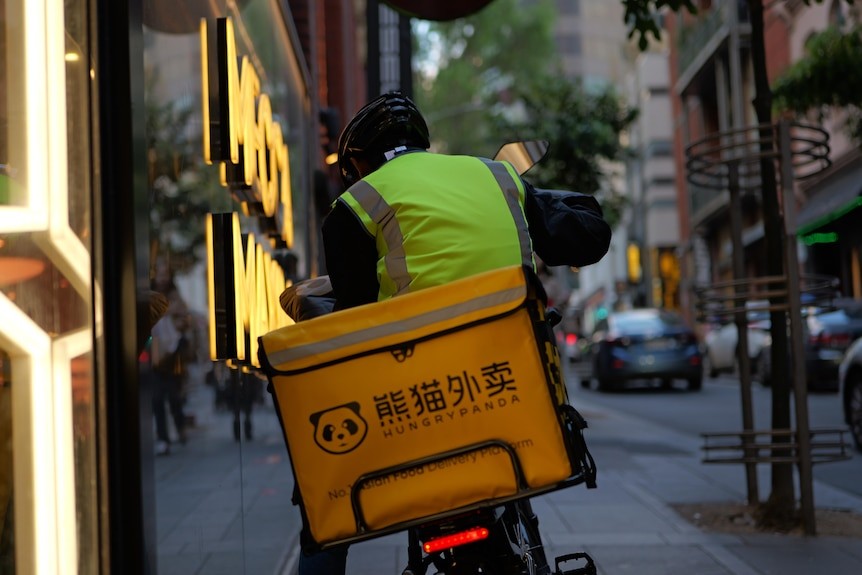
Support HungryPanda delivery riders’ campaign for wages and conditions.

 Written by: Nick G. on 23 February 2026
 

(Photo source: ABC News)

HungryPanda delivery riders who organised a strike for better wages and conditions on Chinese Lunar New Year allege that Chinese police have intimidated and targeted family members of organisers in China, and even threatened to arrest organisers on their return to China.

There is no evidence that the company organised the police actions in China, but it is evidence of the close monitoring of Chinese students in Australia by Chinese security.
 
The gig economy is notorious for its exploitative conditions, low pay and insecurity. The dispute reveals Chinese state interference in Australian labour relations which must be condemned.
 
What is HungryPanda?
 
HungryPanda is the brainchild of Liu Kelu, then a young student from China studying in Britain. Apparently dissatisfied by the availability of authentic Chinese restaurant food, he opened a food delivery service in the United Kingdom in 2017 and expanded it to Australia and the United States in 2019.
 
The company now operates in nine countries and more than 100 cities, with 6.5 million registered users, 100,000 partner merchants and around $US1 billion in annual transaction volume.
 
What separates HungryPanda from other delivery services like Uber Eats and DoorDash is that it is aimed at only one demographic – the Chinese language diaspora. Consequently, it employs young people within that demographic who often have no clear idea of their rights in a foreign country. 
 
Grievances over wage reductions, opaque algorithmic management and worsening conditions have festered within HungryPanda for some time.
 
Wang Zhuoying is one of the few to have taken HungryPanda to court over payment and welfare issues. 
 
HungryPanda’s abysmal record includes the case of a HungryPanda delivery driver who was killed in a road accident while working in 2020. The company failed to report the rider's death to SafeWork NSW promptly and refused his wife’s claims for compensation, saying that he was not an employee, but an independent contractor. A court awarded an $830,000 payout against the company, ruling that the worker was indeed an employee.
 
The previous year, the company reinstated two riders who had taken it to court for unfair dismissal.
 
HungryPanda remains a private company, and because it is not listed on the stock exchange, many key details are obscure. No-one knows Liu Kelu’s personal wealth, but it is reasonable to assume that it is greater than the delivery riders that he employs.
 
The company itself has raised significant venture capital — reportedly hundreds of millions of dollars across multiple funding rounds — but no public document from those rounds has disclosed Liu’s ownership stake or personal wealth. 
 
International finance and venture capital has bought into the company, a fact presumably known to Chinese state security services when they have interfered to warn delivery riders from organising against the company.
 
Its major sources of capital are Mars Growth Capital, a joint venture between Mitsubishi UFJ Financial Group (MUFG) and Liquidity Group, which stumped up $55 million in 2024; UK and French-based private equity firm Perwyn that led HungryPanda’s $130 million Series D round in 2021; Swedish investment firm Kinnevik; 83North (formerly Greylock Israel Partners), an Israeli-headquartered venture capital firm that invests at all stages of a startup fundraising cycle; Australian venture capitalist Felix Capital and various other private investors. 
 
Marx wrote that one capitalist kills many, meaning that free market competition resulted in competing firms being driven into bankruptcy or taken over.
 
HungryPanda is becoming very hungry, and in our region has taken over EASI (Australia), a Melbourne-based food delivery service, and BUY@HOME (New Zealand), an Asia-focused delivery platform based in New Zealand.
 
In addition to acquisitions, HungryPanda has expanded its own product offerings using investment capital, including:
 
• PandaFresh – a fresh-food and grocery e-commerce platform.
• VouchersPanda – lifestyle deals and discounts platform connected to delivery services.
 
Capital compels its owners to find new sources of surplus value for the purposes of capital accumulation. Along with expansion goes intensified exploitation and the growth of precarious employment.
 
China buys into the dispute
 
Allegations of Chinese interference in the dispute have come from protest organisers.
 
Former HungryPanda delivery driver Wang Zhuoying has launched a legal claim against the company and accused it of slashing her orders after she organised protests against it.
 
She told the ABC she had recently received three separate phone calls from police from her home province in China which made her feel "targeted" and "intimidated". She said on the same day she got another call from a different police officer who was not aware of the first call and threatened to get her arrested upon her return to China if she chose to protest in Australia.
 
Another delivery driver in the group, Wang Caifa, verified the claims, saying that earlier this month he received a "panicked" phone call from his father in China who had just been taken to the local police station.
 
He told the ABC that the police warned his father that his son was involved in "dangerous activities" overseas.
 
Chinese police confirmed that they had monitored communications between protest participants on the Chinese WeChat platform. It is almost mandatory for Chinese citizens to use WeChat (or its Chinese parent Weixin), meaning authorities can monitor all of a person’s communications, personal, legal, financial and political. You can't really function in society in China without a WeChat account.
 
The Chinese Communist Party may have decided to intervene, not because HungryPanda has la-ed some guanxi (pulled strings and made use of personal connections), but because it has always required overseas Chinese to obey the laws of the countries in which they were residing.  From the early 1950s on, the policy of Party leaders was that overseas Chinese should not participate in local political movements and should respect and abide by the laws and regulations of their countries of residence.
 
There was nothing illegal under Australian law in what the organisers of the HungryPanda protest had done.  Therefore, there was no excuse even under the policies of the Chinese Communist Party for the Chinese police to intimidate and harass the organisers and their families. By discouraging lawful industrial protest by Chinese workers in Australia, the CCP has confirmed that it stands for the stability of capitalist relations of production and is opposed to working class struggle against exploitation.
 
The fight of migrant and diaspora workers deserves visibility and solidarity. The struggles of Chinese workers abroad are part of the common struggle of the international working class and should not be marginalised or silenced.
 
Last November, the Transport Workers Union (TWU) reached an agreement with Uber Eats and DoorDash for minimum safety net pay rates and other conditions for delivery drivers and riders. This followed years of campaigning by workers and the union.
 
The TWU must take up the case of HungryPanda emloyees and force the company to agree to minimum wage rates, improved safety measures, accident insurance paid by the company, an agreed dispute resolution procedure, and the right to union membership. 
 
We demand that the Embassy of the People’s Republic of China in Australia issue a statement confirming the legal right of Chinese citizens in Australia on visas to organise, to speak up, and to demand fair pay and conditions.

 

Thursday, February 19, 2026

Health workers’ force Victorian government backdown

Written by: Bill F. on 19 February 2026


Determined and united action by members of the Health Workers Union has forced the Victorian government to make significant concessions to the union campaign for better wages and conditions.

The union represents some of lowest paid workers in the state’s hospital service, such as cleaners, orderlies, cooks, clerks, security guards and some technicians.

This campaign had been going on for well over a year, with bans and protected stop-work action building pressure on the government.

The HWU claim for 12% increase over 2 years was met initially with a paltry 3.3% over 3 years, promptly rejected, and a later offer of 9% also totally rejected.

The government would have known then that these workers were not going to back off, but chose to prolong the dispute.

Massive strike action ultimately took place on 18 February, involving a rally and march from nearby Footscray Park to Premier Jacinta Allen’s formal opening of the new Footscray Hospital. While the new hospital made the news cycle, so did the noisy and angry health workers. A further offer then conceded the full 12% over 2.5 years and will be put to the members to consider.

What do workers learn?

That they need to act together to get anywhere, that they need smart, honest, and dedicated union leaders, and that they need to be resilient to outlast the bosses. They also learn that whatever they win, the bosses keep coming to take it away again, the prices keep going up, the conditions start to slip, workloads only get bigger – capitalism never takes a “sickie”.

So, it goes on – struggle, win a bit, lose it over time, struggle again, win a bit again, lose it all again – the system works for the bosses, not the workers!

Socialism puts an end to this rubbish and brings the working class to power in society, bringing security and justice to hard-working families, replacing week to week struggle and insecurity. 

Wednesday, January 14, 2026

Workers united struggle under re-elected ALP government is needed

Written by: Ned K. on 14 December 2026


The landslide election victory by the ALP in the 2025 election has not seen any further changes to the Fair Work Act. 

The changes made during the ALP’s first term of office such as Same Job, Same Pay and Multi Employer Bargaining, Casual Conversion and minimal Delegates Rights clauses in Awards and Agreements have enabled some sections of the working class to become stronger in the workers’ ever-present struggle against capital.

In the State and Territories workers in the public services sectors including ambulance officers, nurses, hospital workers and school teacher aids and cleaners, have won through action higher wages than in recent years.

The largest wage increases have been realised in the federally funded aged care and child care sectors.  These wage increases were a result of workers in those sectors through their Unions being able to exert political pressure on an ALP government.  The Unions supported the ALP election campaign in exchange for ALP commitment to fund higher wages.

Apart from some Labor hire workers’ wages significantly increasing under Same Job Same Pay legislation, wage increases across the whole private sector have not been nearly as high.

The leaders of Unions whose members rely on federal funding from either federal or state governments have been reluctant to push the boundaries and pursue the federal government on issues affecting all workers such as the Right to Strike if workers are employed under an Award or during the life of an Enterprise or Multi Employer Agreement if workers are so employed.

The dependence of some Union leaderships on their relationship with the ALP has also seen them compliant with the ALP in government destroying a Union ( CFMEU Construction Division ) by putting it in control of a government appointed administrator.

Divisions within Union Ranks

This situation of higher wages in sectors reliant on government funding and associated strategies by Union leaderships to achieve these wage outcomes with  limited industrial action and by being “responsible” leaders by not upsetting the private sector employers has caused divisions within the ranks of union members.

Within some of the larger Unions formed through amalgamations with very broad industry coverages,  the strategy of high dependence on ALP governments in office definitely has a downside.

It has given rise to Union members employed in non-government dependent sectors feeling left behind and searching for alternative leaderships of their own Union or jumping ship to another Union.

This has been a problem for workers going back at least to the Accord days of the 1980s and still present today.

In some cases there are challenges to the existing leaderships of Unions every three or four years when internal union elections are held.

Usually the challengers at union election time run on tickets that promise a “members  first”  or “member led” Union.

Existing Union leadership try and maintain their elected positions by highlighting the wins members have had due to the Union being able to exert pressure on the state or federal government.

Unlike parliamentary elections, voting in Union elections is not compulsory.

So the ticket that is able to reach enough members and urge them to vote is the likely winner.

Unity is strength

On occasions in the history of working class mass organisations (unions) in Australia, there have been unions led by people whose political aim has been to build a working class movement that has a vision for workers that goes beyond capitalism and all its laws and institutions that are designed to maintain the power of the capitalist class.

Those leaders have led some big successful struggles of the working class such as the anti-conscription struggle during World War 1 and the refusal of workers to send iron ore to Japan in lead up to World War 2.

More recently the Your Rights At Work Worth Fighting For campaign that defeated the Howard Government showed the best way forward.

That campaign united workers from public and private sectors, whether union members or not, independent contractors (on AWAs and other sham contracts), small businesses squeezed by corporate giants and people on fixed incomes and the unemployed.

United workers struggle is the way forward in 2026.