Showing posts with label cost of living. Show all posts

Tuesday, April 16, 2024

Profits before People

Written by: Jed J. on 16 April 2024


In the age we live in gas and electricity are necessities. They are not commodities which we can choose to buy or not buy. 

Yet in the capitalist system the supply of these essential needs is in the hands of private companies whose main aim is to maximise profits.

The supply of gas and electricity should be, as they once were, controlled by government Utilities to ensure they are available and affordable for all.

Since these utilities were privatised, many working people are finding it increasingly difficult to pay for these basic necessities. 

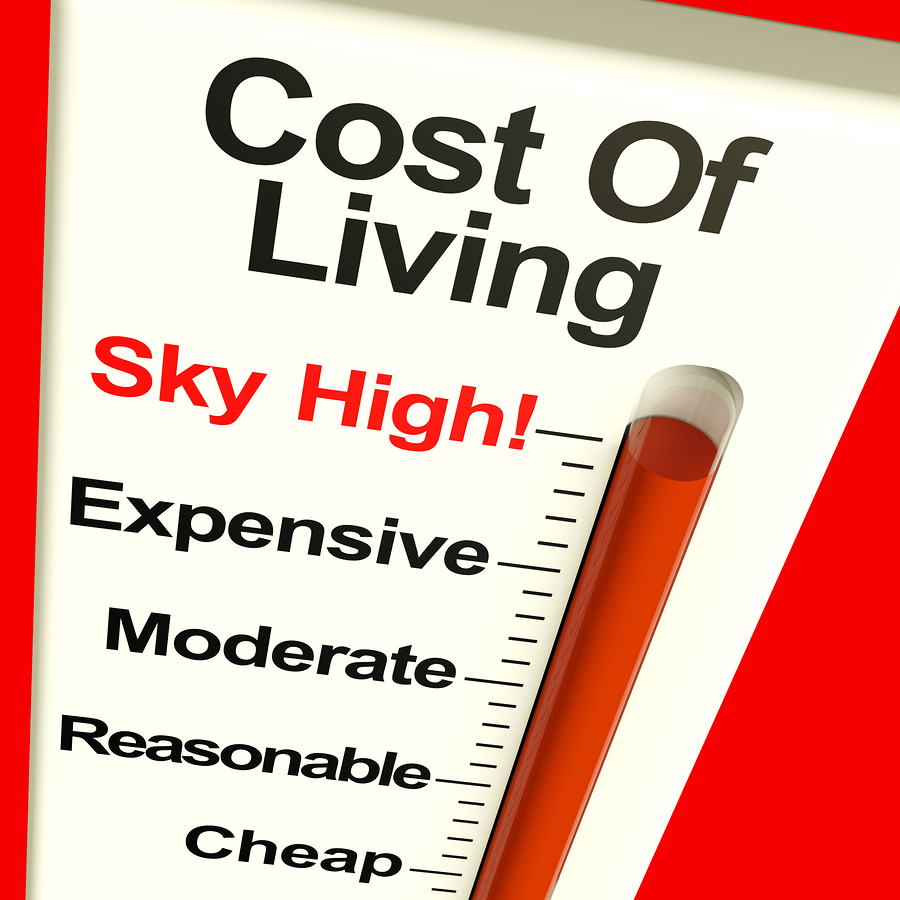
There is a cost of living crisis today and energy costs are contributing to it. 

Australian gas is being sold overseas in quantities that allow people in foreign countries to pay less for gas than in the country of its origin.

To maintain their profit levels private energy companies are resorting to large increases in their supply costs.

Many Australian workers, as a result, are finding it increasingly difficult to pay their energy bills while the suppliers make increasing levels of profit.

So what is the government planning to do? Are they planning to introduce price controls? Are they planning to limit export of our natural resources? Are they planning to de-privatise the supply of energy and put it under the control of government controlled Utilities?

No. They are talking about another round of handouts to vulnerable sections of the people, supposedly to help them cope with the price rises.

Actually the public funds used to do this will help guarantee that the energy companies will not miss out on the profits they make selling gas and electricity to these vulnerable people.

The profiteers will be the main beneficiaries of the government’s largesse. Public funds will be used to bolster private profit. 
If the government is serious about helping people cope better in this present cost of living crisis they would de-privatise the energy companies and place them in the hands of government controlled Utilities.

That would be the best way to reverse the present trend and put people before profits. 

Tuesday, November 8, 2022

Privatisation and the Cost of Living


(Above:Woodside Flame      Photo: by Jim Bendon CC BY-SA 2.0).

Written by: Jed J. on 8 November 2022

Many Australian workers are struggling to make ends meet. What they earn is not keeping up with the steep rise in the cost of living, especially the rise in the cost of electricity and gas which is predicated to go through the roof in the near future.

Electricity and gas are not commodities that consumers can choose to buy or not buy. They are essential. Life without them in this day and age is unimaginable.

Businesses are also feeling the pinch. The higher charges for power could send many small businesses to the wall and the consequences for the economy could be catastrophic. 

The provision of these necessities was once under government control. That was before privatisation. Since then, like many other essentials such as education, health and public transport they have become commodities.

We used to live in a society. Now we live in a market.

Since privatisation the availability of these essential services has been in the hands of private companies whose main aim is to maximise profits. They do this by reducing their costs to the minimum and charging consumers the maximum they can get.

Now consumers are not just paying for the provision of these necessities they are also contributing to the massive profits the energy companies are making.

Due to the shortages of gas and electricity in the world today these energy companies are profiteering from the situation at the expense of households and businesses who are struggling to pay their bills.

Clearly in the minds of these capitalist enterprises the need to make profits is all that matters. If they can make higher level of profits by selling Australian gas overseas, they do so even though that means that Australian consumers will pay more.

They treat consumers as cash cows to be milked for every dollar they can get.

In a report recently released by the Institute of Energy Economics and Financial Analyses and reported on the ABC website, the extent of energy companies’ profiteering is exposed. Journalist Michael West is red hot summing up solutions to this grand theft. 

The report shows that between 2014-2021 households and businesses were charged $10 billion more than the “normal” level of profit.

According to the report the justifiable level of profit for this period would have been about $15 billion.

However, the regulator approved charges to customers that allowed for $25 billion to be milked from the consumers.

Some network companies in the Eastern States and South Australia, the report claims, gained super profits by persistently charging too much for network charges which make up to half of their customers’ bills.

This shows how their local customers have been funding super profits for the last eight years.

Why should Australian resources developed by Australian labour benefit only the local and overseas capitalist class?

Why shouldn’t Australian workers who are, after all, responsible for turning raw materials into products, benefit by paying less not more for electricity and gas?

Without the input of their labour there would be no products to sell.

The new Labor government can and should take steps to ensure that all Australians benefit from the money made from selling Australian resources. But will they do it? 

Currently they are “talking with business”, inviting a hungry fox into the henhouse. 

Renationalise the energy sector and taking over the development and distribution of electricity and gas on a cost recovery basis is the way to go.

This couldn’t happen through parliament alone. There has to be a mass movement led by the organised working class to demand that all Australians, not just a few greedy local and foreign capitalists, benefit from the country’s natural resources. 


Sunday, August 14, 2022

Workers Struggle Is Only Way To Reverse Declining Standard Of Living


 Written by: Ned K. on 14 August 2022

As the cost of living increases and insecure work escalates, the hope given to workers by the new Government is that its Jobs Summit in September will show the way out of a cost of living and insecure work crisis.

The ACTU is hoping the Jobs Summit will be "a chance to chart a path towards an economy that works for people". 

There may be some good things for workers that come out of the Summit if the Government implements some of the ACTU's ideas such as 
Regulation of multinational companies' energy prices
public ownership of key segments of the energy industry
accelerating transition to renewable energy to reduce vulnerability to future fuel price hikes (profiteering)
expanding public housing
affordable child care
right of workers to collective agreements across whole industries
an excess profits levy on multinational energy companies
 
These and other measures are needed. Even the Adelaide Advertiser (a Murdoch paper) cannot ignore the impact of rising cost of living which is affecting even the more affluent sections of the working class who have an income equal to or greater than the average employee earning of $69,400 per year.
 
The Advertiser on 12 August included an article which provided some eye-opening statistics on the plight of workers with average earning of $69,400.
 
The article based on research by Finder analysed the cost of family necessities against this average income figure of $69,400 per year. 
 
The research found that "simply paying for petrol, groceries and their mortgage costs 28 hours of work each week" based on a net pay rate of $33.68 per hour.
 
28 hours is equivalent to 75% of a full time 38 hour week. 
 
The research found average rent per week in Australia is $522 per week and average home loan payments are $647 per week. This is equivalent to 19.2 hours of the income for a full working week.
 
The research found that the "typical grocery bill" is five hours’ worth of work for someone on the average wage and a single tank of petrol consumes another 3.9 hours of work per week.
 
So, if workers on or above the average wage of $33.68 net per hour are struggling, where does that leave the majority of the working class who struggle to survive on as low a wage as $23 an hour!
 
An indication of the dire situation for workers is when sections of the working class who rarely take strike action are doing just that - going on strike in a desperate struggle to increase their income and job security.
 
A case in point is the strike action by mainly migrant cleaners at the Brisbane Airport. The Airport contracts out the cleaning to a multinational company called Securecorp who pays minimum wages, cuts hours and generally treats these workers like second class workers. Meanwhile the Brisbane Airport, part-owned by industry superannuation fund interests, rakes in big profits. 
 
These contract cleaners know that it is class struggle that will improve their income and working conditions and that the more collective action by workers, the more chance something good for workers may come out of the Jobs Summit and subsequent government measures. They are raising their voices and urge other workers to do the same 

Saturday, April 8, 2017

Peoples' livelihoods are being crushed by capitalism's economic crisis


Max O.

Capitalist production has placed enormous pressure on ordinary peoples' lives to the extent that we are again seeing the immiseration of the working class. Corporations are ceaselessly escalating their exploitation of workers who are pressed to do more in less time.

But their wages and livelihoods don't reflect the increased demands made on them. In fact the phenomenon of the working poor, whose size is ever increasing, has become common place this century. More and more of the value, what Marxists call Surplus Value, they create goes to the boss class.

Life is a battle when it comes to work, housing, transport, health and education. These needs are fundamental pillars to our day to day existence. 

Trying to maintain these pillars of life has become a misery for workers who are increasingly sliding into poverty.

Australia' economic slump continues, boding disaster for workers

Capitalism's frequent economic crises come about due to its inbuilt tendency for the rate of profit to fall which causes a withholding of investment by investors who prefer to hoard their money.

This combined with over-production creates a disruption in the circuits of capital:

Stage 1. The capitalist's money purchases commodities, this first stage of circulation is shown as Money to Commodities or  M — C.

Stage 2. Capital goes through the process of production, resulting in commodities of increase value or P...C'

Stage 3. The capitalist goes back to the market and sells commodities for money; the final circulation stage or C — M.

Karl Marx's formula for the circuit of money-capital is: M — C ... P ... C' — M', the dots indicate that the process of circulation is interrupted, and C' and M' designate that C and M have increased by surplus-value.

Australia continues to suffer a damaging four-year slump in corporate investment. Expenditure by business on new machinery, equipment and buildings has slid 2.1 percent compared to the previous three months to February this year. This was a twofold contraction than was predicted by bourgeois economists and a fourth straight quarter decline since 2016.
  
•    New capital expenditure fell overall from about $42 billion a quarter in 2012 to $27 billion per quarter in 2016, a drop of 36 percent.

•    Mining investment nose-dived almost 60 percent since its high in 2012, and is projected to fall by another 27 percent in 2016-17; and there has been no rise in non-mining investment.

•    Australia's dependence on foreign investment looks ominous; annual foreign direct investment inflows halved, to less than $30 billion, between 2013 and 2015.

•    Roy Morgan polling surveys show unemployment and under-employment now affects more than 2.4 million workers, or nearly 18 percent of the workforce: 1.3 million are jobless and 1.1 million are under-employed.

•    Wages figures continue to show record low growth with average weekly earnings rising just 1.6 percent in 2016, just slightly above the consumer price index rise of 1.5 percent. Reserve Bank delusion of a higher wages growth to boost the economy hasn't come to pass. 

The economic slump drives the boss class to increase their exploitation of workers.

Work


Capital relentlessly seeks to discipline labour-time so that workers do the job as quickly and as cheaply as possible. The 9-5 work day is now a by-gone era. 

Smart technology has blurred the boundaries between work and home; now businesses can command their workers 24/7. A research commissioned by The Australia Institute (TAI) reported that more than half of all workers said that their employers insisted they work unpaid hours or work at home outside of normal hours. 

Australian workers delivered $128 billion in unpaid overtime annually and are cajoled by employers not to take their entitled annual leave, reported TAI.

Housing

Demographia early this year reported that Australian housing has become one of the most unaffordable in the world; soaring housing costs have priced millions of young workers out of the market. In an international survey of 51 assessed Australian housing markets, 33 were considered largely unaffordable.

Mortgage repayments often outstrip the wages of those who do purchase a house. Mobile apps are now available for people to use to bid for rental accommodation - an attempt to push up rental prices. 

Rental costs have also continued to climb, consuming about a third of the median household income - the median weekly rent for a Sydney apartment is over $500. Although 1.3 million households received welfare payments and the $130 fortnightly Commonwealth Rental Assistance supplement in 2016, they still suffer rental stress.

Transport

Household, Income and Labour Dynamics in Australia (HILDA) 2013 data reported that the average weekly commuting time for full time workers in Australia's largest cities increased by almost 20 per cent from 2002 to 2011, to five hours and 45 minutes a week.

In Brisbane public transport fare that cost $3.40 in 2008 had risen to $6.20 by 2012. Data shows that in the outer city suburbs, fares go up and incomes fall.

Health

Recent annual Medicare statistics revealed that half of those suffering from chronic health conditions skipped treatment because of the high costs on “out of pocket” expenses incurred by patients. The national average out-of-pocket expenses for Medicare services increased from $3.95 in 1984–85 to $54.60 in 2014–15.

The Liberal-National government attempted to slash health funding in its 2014–15 budget by around $1.8 billion over four years, and $57 billion over a decade. In effect Australia’s publicly-funded Medicare insurance scheme is a “two-tier” healthcare system - excellent for the rich, lousy for the poor.

Education

Governments had three objectives in implementing NAPLAN (National Assessment Program—Literacy and Numeracy) in schools. The first was to excuse education spending cuts and prepare the ground for future austerity measures; the second is to socially sort students into winners who go to university and losers who become low wage work fodder; third is to attack teachers’ working conditions and enforce retrograde teaching practices, such as “initiatives proven to boost student results.”

The Turnball government abandoned the scheduled “Gonski” school funding for 2017 and 2018. The Gonski funding model, introduced by the former Labor government, was to fund schools on a needs basis. After winning office the Liberal-National government abandoned much of the planned funding, amounting to around $4 billion.

Build the people's 5 pillars movement

Ordinary people are focussed on their immediate needs to survive from day to day. Therefore to combat capital's exploitive intensification of workers and its austerity budget cuts that target worker's social welfare, ways need to be found to coalesce unions, unemployed, homeless, community support groups etc. into a fighting movement. 

The common denominator for these groups are the 5 pillars of livelihood - work, housing, transport, health and education - to mobilize and campaign around, so as to challenge capital and show another way of operating society is possible.

Monday, June 24, 2013

Imperialist globalisation turning workers into fringe-dwellers

Vanguard July 2013 p. 8
Bill F.

Fringe dwellers are people who live on the outside, cut off from the main centres of activity and social enjoyment, isolated and chained down by poverty and lack of opportunities to change their situation.

This is what is happening across Melbourne as the ‘losers’ in the globalisation game are pushed further out. As manufacturing jobs are wiped out and the building industry slows, lesser skilled workers find it harder to get secure employment.

Low wages, casualisation, temporary work contracts, unemployment and pitiful welfare benefits have meant that many can no longer meet housing costs in the formerly working class inner suburbs.

These are now rapidly being taken over by a higher paid class of educated and skilled workers and professionals, managers and small business owners. This is not to say that their future is all that secure either, as out-sourcing and off-shoring is now cutting a swathe through white collar jobs in the banking, finance and legal areas, while on-line shopping is hitting the retail sector.

In suburbs such as Altona North, Yarraville, Coburg, Preston, Newport, Thornbury and Fawkner the demographic balance is shifting towards higher income groups and higher levels of debt.

At the same time, the sprawling outer suburbs and towns such as Cranbourne, Tarneit, Romsey, Koo Wee Rup, Melton, Bacchus Marsh, Somers and Whittlesea have seen an influx of lower income workers, young families and arriving migrants.

Traffic chaos

(Peak hour in Hoddle Street)

Adding to their struggle to make ends meet is the need to spend hours in traffic every day just getting to work and back, as these suburbs are poorly served by public transport.

Melbourne’s radial network of roads means that traffic converges at bottlenecks that used to be in just a few inner suburbs but now occur all the way through the middle suburbs. If people manage to get to work on time, they arrive stressed out, and that’s even before the boss has a go at them!

This chaos is most apparent in the poorly planned growth areas to the south and west of Melbourne. According to a state government report, the Wyndham Growth Corridor around Werribee, Point Cook, Tarneit and Hoppers Crossing will generate 226,000 vehicle trips a day by 2021. It is the fastest growing municipality in Australia. Much of this traffic will converge on the main Yarra River crossing at West Gate Bridge.

Currently, at least 170,000 vehicles, including 24,000 trucks, travel over West Gate Bridge each day, and this is increasing at more than 2% each Year.

Instead of building another river crossing, whether bridge or tunnel, all that has happened is the emergency lanes on the bridge now carry traffic and the other lanes are narrower. Don’t get crook or have a bingle on West Gate Bridge, because the ambulance just won’t get through!

So, all this chaos and misery isn’t just down to short-sighted politicians. It’s part of the restructuring of the local economy in the interests of the global imperialist agenda – the de-industrialisation of Australia; just have mining and resources and a few service industries. Everything else can be imported.

The main ones to benefit from this will be the foreign multinationals and their lackeys – the same mob that makes huge profits from the cars, fuel, road-works and insurance that we all need and rely on.

Cost of living squeezes workers

Vanguard July 2013 p. 12
Contributed


Even the big business media cannot ignore the rising cost of living for working people. Two common contributors to the rising cost of living that receive some attention in the media are cost of housing and the cost of utilities.

There is evidence to support this. In the Howard years, house prices outstripped average workers’ income by a factor of three to one. (www.housingstress.org.au ). Nothing much has changed since then.

Another study shows that the cost of paying off a house as a percentage of the income of a base trade equivalent skilled worker has risen from 53% in 2001 to 87.4%. In Melbourne, in the four years 2000 to 2004, house prices doubled. This meant that wages had to double to maintain status quo on the ratio between house prices and wages constant. Of course this didn’t happen. (www.en//wikepedia.org/wiki/Australian_propertybubble )

Prices for households of gas and electricity have leapt ahead of household incomes. In the period 2007 to 2012, the percentage increases in costs of these items in all States of Australia increased by over 55%, with NSW topping the list at 80%. The Consumer Price Index for the same period increased by 15% while average weekly earnings increased by 25%. (www.theconversation.com?housing-stress-and-energy-poverty-a-deadly-mix-9484 )

Household energy costs also rose at a faster rate than energy costs for business for the same period. Those who profit from this are mainly big corporations who have benefitted from the privatisation of gas and electricity production over many years.

As we near a federal election, anger is growing at the major political parties who people see as more interested in themselves and their survival than improving the lives of the people.
 
In the short term many vent their anger at the ballot box which is reflected in the large swings in opinion polls against the federal government and large votes against the sitting state governments in WA, Victoria, NSW and Queensland in recent years.

Frustration in the workplace is growing too as workers can see that the industrial laws under the Fair Work Act declare effective industrial action “unprotected” and illegal. This frustration is bound to flow over to action regardless of the law as workers’ lives come more under the pump.