Friday, October 31, 2025

People's struggle continues against SA government " love affair" with property developers and their $1 per year rent!

Written by: Ned K. on 31 October 2025

 

In the middle of winter this year several thousand people took to the streets and rallied on the steps of SA Parliament House on North Terrace in Adelaide. The people of diverse backgrounds included First Nations people, blue- and white-collar workers, young people, retired people and some former politicians. 

They were there to send a message to the SA Government that they opposed the proposed LIV Golf "development" on Park Lands which was also sacred land of the Kaurna people. (The name "LIV" refers to the Roman numerals for 54, the number of holes played at LIV events.) They also opposed the decision of the SA Government to allow the private for-profit property developer Walker Corporation to build a 38 Level office tower (Festival Tower 2) immediately behind Parliament House.

In October this year, the SA Government announced that it had "consulted " with Kaurna Elders, and the LIV Golf course development would go ahead with a minor concession to quarantine from the development a small area of land nearest to the Karra Wirri Parri (river of Red Gum Forest), named Torrens Lake by the British colonists after their invasion of Kaurna lands in 1836.

This small concession was rejected by Kaurna people who argue that the minor concession is tokenism as there will still be destruction of land where Kaurna people's descendants now rest. The Kaurna people are supported in their struggle to preserve lands sacred to them by the Adelaide Park Lands Association.
The proposed Walker Corporation 38 level office tower immediately behind Parliament House is also on Park Lands, as is Parliament House itself!

How did this come about? 

The British colonial city of Adelaide on Kaurna land was planned by British colonialist William Light in 1837. On 7th February of that year he wrote to the colonial Resident Commissioner that the city of Adelaide be bordered by 920 hectares of Park Lands of native vegetation with the streets bordering the city being North, East, South and West Terraces. 

"Light's Vision" as this came to be known did allow the Park Lands to be used for "recreation of citizens and various Government building or other purpose". 

Over time various not-for-profit sporting grounds and recreation facilities were built at various points on the Park Lands.

The understanding was that no private for-profit buildings could be built on any of the Park Lands surrounding the boundaries of this Central Business District of Adelaide.

In recent decades successive governments have "privatized" the use of the Park Lands.

For example, the Casino was built on land previously part of the government owned Adelaide Railway Station. The not-for-profit University of Adelaide was built on Park Lands as was the not-for-profit public hospital, RAH. The University is now a for-profit degree factory while the new RAH is operated by private for-profit interests on a 30-year lease.

Under the Marshall Liberal Government between 2018 and 2022, the Walker Corporation property developer was granted a long lease to build Festival Tower 1 and Sky City Casino was granted a lease to extend the Casino and build a five-star hotel, both on the Festival Theatre Plaza.

When the Malinauskas Labor Government came to office in 2022, it found that the Walker Corporation had a lease signed sealed and delivered for a second 3 Level Festival Tower 2 immediately behind Parliament House.

This land was originally part of the Park Lands and then became part of the SA Government owned Festival Theatre Plaza built during the Don Dunstan Government experiment of the 1970s.

In a decision which showed how much the Premier Malinauskas is a servant of the property developers in Adelaide, the SA Government, rather than opposing any Festival Tower 2 development by the Walker Corporation, agreed that Walker's second Festival Tower development immediately overlooking Parliament House could be not a 3 Level office building, but a 38 Level office tower!

The updated tower scheme comes after South Australian Minister for Planning Nick Champion initiated a planning Code Amendment in January 2025, enabling a maximum building height of 40 storeys. The Code Amendment, that changed the zoning law, was rushed through without following the government’s own community engagement charter, or due planning process.

If that wasn't enough to appease the Walker Corporation, the lease agreement included that the rent Walker Corporation would pay the SA Government was $1 per year for the next 100 years!

Last week, former SA Labor Government Premier Lynn Arnold was part of a delegation of concerned citizens who met with current Premier Malinauskas in an effort to get him to overturn the deal with Wlaker Corporation. 

These groups cannot even include the CFMEU Construction Division in any delegations to the government, let alone construction workers putting a ban on Festival Tower 2's construction. This is part of the fall out of this Union being put into Administration.

For those people in SA who see Parliament House as a symbol of the limited democratic rights that exist under capitalism in the (still) colonial state of South Australia, having a private-for-profit 38 Level office tower casting its daunting shadow over this House was the straw that broke the camel's back.

Premier Malinauskas told the concerned delegation that he would get back to them regarding their concerns. However soon after the meeting one of his faithful off-siders, Minister (for the Property Council vested interests!) Nick Champion praised the Wlaker Corporation development claiming a 38 Level office tower will create millions of dollars of "wealth" to South Australia!

With a state election due in March 2026, the dream run of Malinauskas Government "partnership" with big business is looking shaky!

Sunday, October 26, 2025

US imperialism’s back yard blues

 Written by: (Contributed) on 27 October 2025


A series of diplomatic incidents between the US and countries in Latin America are best assessed in the wider context of present-day Cold War hostilities. The relationship between the northern US and the southern half of the Americas, however, has a long and troubled history. The emergence of China as a competitor to traditional US hegemonic positions, likewise, has also become an additional factor for consideration.

Allegations, by the Trump administration, that the governments of both Colombia and Venezuela were actively involved in drug-running have coincided with the largest US military exercises in the Caribbean in over three decades. (1) The former has provided the Trump administration with a means of deflecting unfavourable attention toward the Epstein scandal and a return to the days of the Reagan administration's War on Drugs; the latter is intended to send a strong diplomatic point toward the southern half of the Americas.

The fact that Reagan's War on Drugs was a convenient cover for widespread US complicity in international drug-running and the fated Iran-Contra scandal is clearly something Trump and his cohorts have forgotten, if they ever really accepted the facts in the first place which is doubtful. (2) The final section of the scandal involved the transportation of cocaine, in huge quantities, from Latin America into the US to fund the Nicaraguan Contra in Central America. (3) No evidence was provided by the Trump administration about recent allegations of drug-trafficking. Nor is it expected.

The fact that the countries of the southern half of the Americas have been moving away from previous US-led tutelage and economic dependence for decades, and forming closer diplomatic links with China remains a major point in question and has provided an explanation about the huge US military build-up in a sensitive area of the southern half of the Americas. Gun-boat diplomacy is the appropriate description of the psychological operations (psyops).

Much of the US history toward the Caribbean, Central and Latin America from the previous Cold War has provided a chilling glimpse of US connivance with regimes imposed to serve 'US interests'. (4) Their role model was General Pinochet who seized power in Chile in September, 1973, and used his position to impose economic rationalism in a test-tube like manner which subsequently became vogue economic thinking for US-led globalisation.

Globalisation was essentially intended to give the US economic domination with a monopoly of highly advanced technologies, control over the world's essential energy and mineral resources, the ability to exploit regions where profits were high and labour was cheap and finally, the right to decide the fate of millions of people.

It failed; in a spectacular manner.

The fact that General Pinochet, furthermore, was a notorious, and well-known drug-trafficker, has been conveniently forgotten by his apologists; he served his purpose. (5)

It was, however, the Bush administrations which sealed the fate of US hegemonic positions in the region; their attempt to foist a so-called Free Trade Area of the Americas (FTAA), stretching from Alaska to Chile met with fierce resistance from the southern half of the Americas who had no wish to cede their sovereignty to Wall Street and finance capital. The resistance also laid the basis of BRICs, which has proved to have far-reaching implications for the US in both the present-day and longer-term.

In recent decades China has entered the markets of the southern half of the Americas in a spectacular manner; at the turn of the century its influence was small, trade by 2008 grew at an average of 31 per cent annually, by 2021 it amounted to $450 billion and last year was $518 billion, reliable estimates cite it will grow to $700 by 2035. (6) China's growing influence in the region has been based primarily on 'soft power' and South-South Co-operation, marked by numerous trade agreements and participation in the One Belt, One Road, together with BRICs. (7)

Reliable studies of China's role in the region have concluded that it has been 'quietly reshaping the foundations of Latin American economic integration'. (8)

The developments have been closely scrutinised by the US, which regard them in a dim light. In fact, it has been noted that 'the US is losing ground to China in its own neighbourhood … and … China's growing presence in Latin America, including Colombia, has changed the economic and political dynamics in the region … and … the US has had to adapt to a new reality in its own backyard'. (9)

Foreign policy toward the region by the Trump administration has recently taken the form of their attempt to foster discord amongst different countries. Favourable diplomacy toward the far-right government in Argentina has been played against an attempt to exclude Nicaragua, Cuba and Venezuela from the forthcoming Summit of the Americas, in the Dominican Republic, scheduled for 4-5 December. It has already created the conditions whereby Mexico and Colombia have already announced they will also not be attending in protest at the exclusion of the three countries. (10) Others are expected to follow suit.

It is, however, the role of Colombia which has set the nerves of the US jangling; until 2022 it was one of the last bastions of US strategic influence in the region

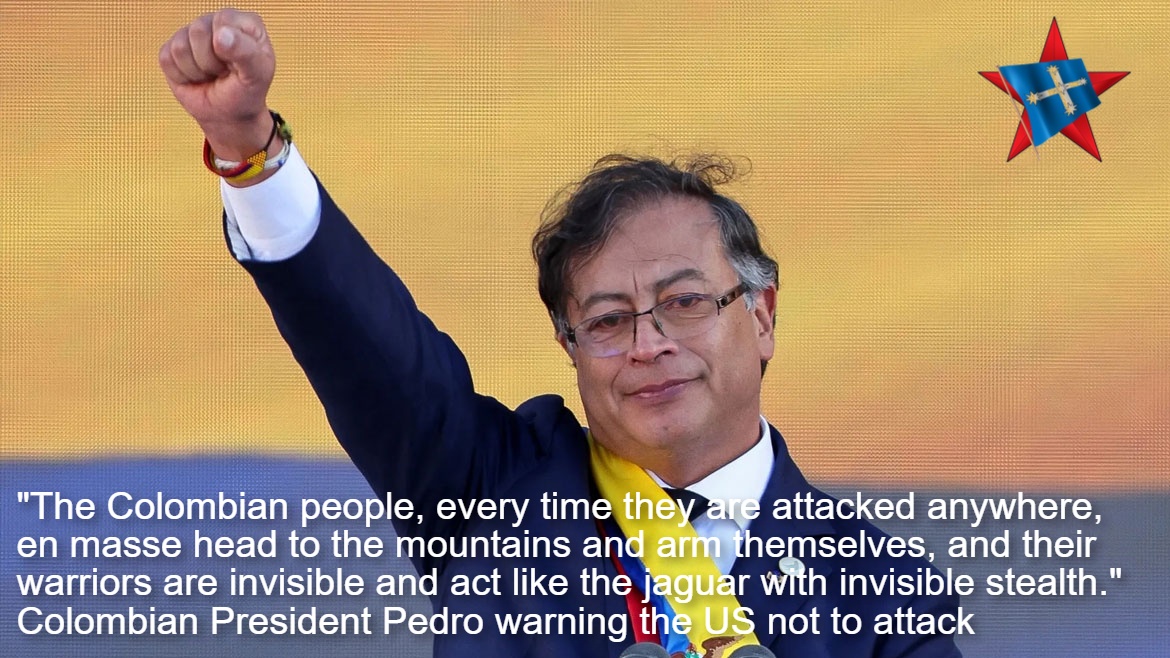
Until 2022 Colombia was an important regional hub for the US to retain some hegemonic presence. Washington and the Pentagon turned a blind eye toward the right-far-right administrations ruling the country on their behalf; they had no qualms about the cocaine trade as the cartels, and their associates, served 'US interests'. Repression, therefore, was the order of the day. The present government in Bogota, however, is headed by President Gustavo Pedro, a former left-wing guerilla surrounded by a centre-left administration. It is typical of the changing balance of forces taking place across the wider region.

A noticeable development with the recent Cold War diplomatic hostilities waged by the Trump administration toward Colombia has been the decision to cut financial aid. Since the 1990s successive US administrations provided Bogota with over $14 billion in anti-drug and counter-insurgency assistance. (11) In practical terms it was historically used by the right-wing administrations to counter the influence of the left-wing forces and what was regarded by the US as subversion; the drug trade was regarded as a different matter. In fact, President Pedro has already stated that 'it was he who had exposed the ties drug traffickers had with the country's political establishment'. (12) The cutting of US aid has therefore been taken as an attempt to prevent the Pedro administration using it against supporters of the previous regimes and their right-wing subversion.

Washington and the Pentagon have been virtually reduced to only Paraguay as the last remaining supporter of traditional US hegemonic positions. It is also not a major player in Latin American politics or diplomacy and places the US at a distinct disadvantage when dealing with the region.

In conclusion, the Trump administration is waging psyops and other warfare techniques toward the southern half of the Americas; it is not particularly difficult to find the main reason.

To date, the combined share of the eleven members of the BRICs organisation in the global economy amounts to forty per cent, the developed countries, including the US and EU, have only 28 per cent. (13) The main organisation is also set to allow further countries to join which 'is widely viewed as an alternative to western-dominated institutions'. (14) The fact it has successfully enabled countries in Latin America to trade with counterparts in Africa, the Middle East and Asia, is evidence in itself, of their skilful diplomacy.

The final straw, however, for the Trump administration was the recent announcement from BRICs that they were intending reforming the World Trade Organisation (WTO) 'to make the multilateral trading system fair and reflective of today's global realities'. (15) The high-level diplomatic plan is likely to be successful; the BRICs members, and those associated with them, have the numbers in influential positions. The US, and their supporters, have been increasingly marginalised; they have passed the point of no return.

And an informed opinion on the matter, noted that BRICs, 'is important economically, but also politically, because it is a counterpoint to the hegemony of the US'. (16)

The countries of the southern half of the Americas, increasingly centred on Brazil, have successfully established the basis for a multi-polar world order, which the present Trump administration have no intention of accepting. In fact, they are being totally disruptive of the whole project; authorisation, by the Trump administration, for example, for the CIA to launch covert operations in Venezuela, leaves little to the imagination. (17)

The recent Cold War diplomatic hostilities by the US toward some governments in Latin America are best viewed in that light. Studies of the previous Cold War and US foreign policy, moreover, have suggested their significance for the present day should not be overlooked and, 'security in the Americas, so dear to the US, does not necessarily give democracy primacy. It would not take much for Operation Condor to rise from the ashes'. (18)

The analysis has provided a further insight and chilling warning about the real nature of the Trump administration. For both Washington and the Pentagon, the stakes remain very high indeed!

1.     US threat to cut aid to ally Colombia over drug-running, Australian, 21 October 2025; and, US in huge Caribbean military build-up, Australian, 16 October 2025.
2.     See: The Iran-Contra Scandal: The Declassified History, Edited, Peter Kornbluh and Malcolm Byrne, (New York, 1993).
3.     CIA's Drug Confession, The Consortium Magazine, 15 October 1998; and, America's Secret War, Third World Traveller, ref: http://www.thirdworldtraveler.com/CIA/secret_war.html ; and, 1980s, Nicaragua: Reagan's Contra Terrorists; and, 1980s, US / Central America: Contras, Gangs and Crack; and, 1980s, USA: Money laundering for Contras, Mob and CIA., A People's History of the CIA, (Ottawa, 2000), Issue 43, December 2000, pp. 35-38.
4.     See: 1976, South America, 'Operation Condor' cross-border killing, A People's History of the CIA, ibid., pp. 31-32.      
5.     See: Revealed – Pinochet Drug Link, The Observer (London), 10 December 2000.
6.     China's growing influence in Latin America, The Council for Foreign Relations, 6 June 2025.
7.     Ibid.
8.     Chinese investment shapes Latin America's economic integration, UPI., 28 June 2025.
9.     Council for Foreign Relations, op.cit., 6 June 2025.
10.   See: The president of Mexico refuses to attend the summit, Cibercuba, 14 October 2025; and, Colombia to skip summit, teleSur, 15 October 2015.
11.   US threat, Australian, op.cit., 21 October 2025.
12.   Ibid.
13.   BRICs GDP outperforms global average, BRICs Brazil 2025, 2 May 2025.
14.   BRICs meetings inflame Trump, Australian, 24 October 2025.
15.   Ibid.
16.   BRICs GDP, op.cit., 2 May 2025.
17.   Trump threatens airstrikes on Venezuela after B-52 show of force, Australian, 17 October 2025.
18.   Operation Condor Explained, Le Monde Diplomatique, August 2001, pp. 12-13.

Saturday, October 25, 2025

Grain farmers oppose sand miners

Written by: Duncan B. on 24 October 2025


The critical minerals deal between Trump and Albanese caused a massive spike in the share prices of critical minerals miners in Australia. These include the Gina Rinehart-backed companies Lynas and Arafura Rare Earths.

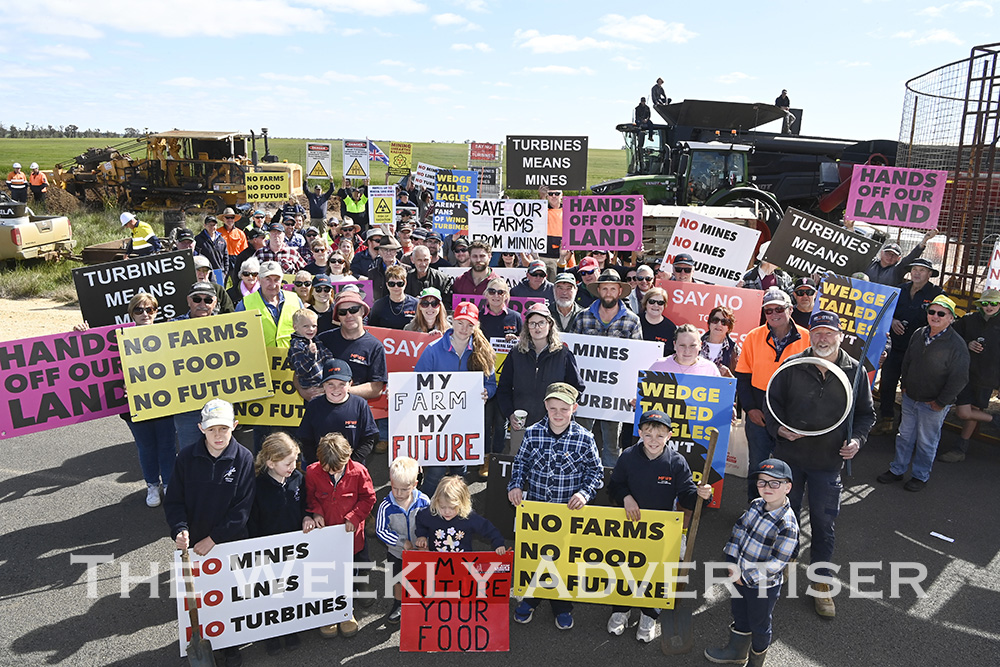
One group of Australians who won’t be celebrating are some grain growers in Victoria’s Wimmera and Mallee districts.  These farmers have been growing grain in these regions for 150 years but their farms lie above vast deposits of mineral sands. Mining companies are planning mineral sand mining operations which cover many thousands of hectares of farm land in various parts of north-western Victoria.

Farmers are concerned that the compensation being offered will not be enough to cover having to leave their farms and the effects of noise, vibration and contamination from toxic dust. They are also concerned at the likely effects on the environment and the amount of water that the projects will use. The proper rehabilitation of the land after the project end is another cause for concern.

The Horsham Rural City Council has stated that it will not support a project at Dooen, near Horsham, until it can prove environmental safety, community fairness and long-term benefits. The council has little confidence in the company’s rehabilitation trials.

Farmers have been forming groups to oppose mineral sand mining and are also taking direct action. Recently, 150 farmers and 80 machines gathered to stop trenching work for the water supply to the Donald Mineral Sands Project in the Wimmera. 

Victorian Farmers Federation president Brett Hosking, who is a grain grower in the Mallee, said the rush to dig up and process critical minerals shouldn’t come at the expense of the state’s food bowl. “This can’t be a free-for-all driven by global politics,” he said. “We might be small fish up against these huge mining companies driven by global superpower tensions, but this land and these farmers matter and help provide food for millions.”

We agree with Brett Hosking’s sentiments and wish grain farmers success in their struggle against the mining companies, but fear that they will be swept aside by governments and big corporations in the race for critical minerals.

Grain farmer numbers shrinking
On the subject of grain farmers, Australia has lost 3000 grain and cropping farms in the last two years. The latest Grains Research and Development Corporation annual report shows that there were 19,401 grain farms in 2024-25, 19,780 in 2023-24, 22,491 in 2022-23 and 24,000 in 2015-16. (A grain farm is defined as a business paying levies with a total value of production of more than $40,000 for the financial year.)

The fall in grain farm numbers is even more drastic when we note that there were 52,000 grain farms in 1988-90! The trend has been for grain farms to get larger as farms are consolidated into large aggregations. Foreign buyers, especially Canadian and US pension funds have been big buyers of grain and cropping farms in Australia. 


Oppose foreign ownership of Australia's water

 Written by: Duncan B. on 15 october 2025


Large areas of Victoria and South Australia are affected by drought. Some dairy farmers in drought areas have suffered about a 50% drop in their income compared to last season. Dairy farmers in southwest Victoria and west Gippsland are battling to survive. South Australian potato farmers are predicting that there will be a severe shortage of potatoes due to drought in potato growing areas in SA.

The Bureau of Meteorology is predicting warmer than average summer daytime temperatures in most of Australia with unusually high maximum temperatures in parts of Victoria and Tasmania. Overnight temperatures for November to January are very likely to be above average across almost all of Australia. The BOM predicts unusually high minimum temperatures across most of the country, especially in northern and eastern Australia.

With this disturbing scenario in mind, Australians should by extremely concerned at the level of foreign ownership of Australia’s water. According to the latest annual report of the Register of Foreign Ownership of Australian Assets, in the 12 months to June 30, foreign ownership of Australian water entitlements rose by 3.3% from 4775 gigalitres (GL) to 4932GL. The overal proportion of water entitlements with a level of foreign ownership rose by 0.5% from 11.8 to 12.3 % in that time.

Canadian and US investors control 1778Gl of water, equal to 36% of the water held by foreign interests. Canadian pension fund PSP Investments is the biggest player among the foreign owners of our water. Canada ranks as the nation’s largest foreign owner of our water with 1062GL, with the US second on 716GL. The UK is third with 352Gl. China is fourth with 351GL, and France comes in fifth with 207GL.

Looking at foreign ownership of our water on a state-by-state basis, foreign interests own 10% of water entitlements in the NSW-ACT, 19.2% of Queensland’s water, and about 7% of Victoria’s water. Foreign interests own almost 13% of the Murray-Darling Basin’s water. 

Foreign interests own 28.1% of North Murray-Darling Basin surface water and 7.8% of Southern Murray-Darling Basin surface water. Foreign interests own a 13% proportion of groundwater across the Murray-Darling Basin.

As Australia suffers more in the future from higher temperatures and lower rainfall in many areas, the risk of droughts will increase. We must not allow more of our water to fall into foreign hands!

Wednesday, October 22, 2025

Whose is this “national interest”?

Written by: Ned K. on 23 October 2025


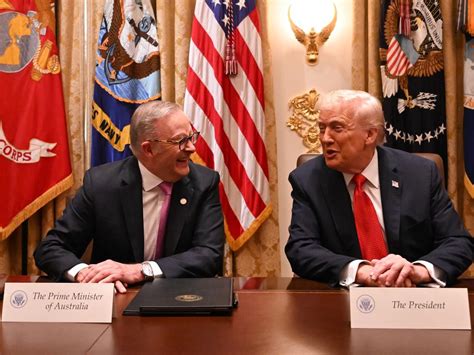
Prime Minister Albanese said that in his meeting with Trump in Washington D.C. his sole objective was to achieve the best outcome for "the national interest".

The "national interest" for Albanese on this occasion was hearing Trump say that he was committed to AUKUS and nuclear submarines in Australia and an agreement between the Australian and US governments on Australia providing the USA with rare earth minerals from Australia.

Foreign Affairs Minister Penny Wong has also used the term "national interest" in relation to the genocide of Palestinians by Israeli Government. She said it was in Australia's national interest to support the state of Israel as it was a "democracy" like Australia and had the right to "defend itself".

Both Albanese and Wong's use of the term "national interest" have been in relation to Australia's foreign affairs policies or strengthening military ties with the USA which they equate with making Australia a more secure place for people to live in.

Using their own logic, is it in Australia's "national interest" to ensure that our major airports and defence bases and naval bases are secure?
Albanese and Wong would agree that this is important.

However, the security of our airports, defence bases and naval bases are contracted out to multinational corporations whose allegiances and profits end up overseas.

The major security companies involved in airport, defence bases and naval bases are -

MSS Security - owned by an Indian multinational, SIS Limited
Securecorp - owned by China Security Co Ltd, based in Shenzhen, China
Certis Security - Singapore-owned
Wilson Security - owned by Sun Hung Kai Properties of the Kwok family
ISS - owned by a Danish based multinational
Secom Security- a Japanese owned company
Serco - UK owned 

All of these multinational corporations are involved in cyber security and electronic surveillance services to governments and large corporations. 

They came into existence and grew during the massive privatizations of security services all over the world including Australia under both Liberal and Labor branded governments.

This situation is just one example of how the use of the term "national interest" by this, and previous governments really means the interests, not of Australian people, but the foreign powers that governments serve. 

Currently, that foreign power is US imperialism whose political interests at the moment are served by Trump, who Albanese now embraces as his friend and master.

Critical minerals deal: pulling the chain on Australian sovereignty.

 Written by: Nick G. on 23 October 2025


(Credit: www.weeklytimesnow )

When it comes to rare earths and critical minerals, supply chain dominance equals military dominance.

As an imperialist superpower, the US is capable of squeezing the suppliers of needed resources through subservient politicians of the supplying country. 

For example, the Ukraine–United States Mineral Resources Agreement is an agreement between the two countries establishing terms for joint investment in Ukraine's natural resources, including critical rare-earth elements, oil, and gas, as well as providing for reconstruction efforts. No-one would argue that it was an agreement between equals, and Zelensky was probably a fool to believe that the agreement would guarantee the US backing that he sought from Trump.

Albanese is likewise a fool if he believes that the one-sided minerals agreement he has signed sitting next to the US President will guarantee the delivery of US nuclear-powered submarines.

But believing he is helping the US sidestep China’s near-control of rare earths and critical minerals fuels his delusions.

So, what is the agreement all about?

The official United States-Australia Framework for Securing of Supply in the Mining and Processing of Critical Minerals and Rare Earths, signed on October 20, contains few details.

The media release from Albanese’s office provides little more. As you might expect from a government determined to bury transparency along with changes to the Freedom of Information Act.

Instead, we need to go to the US Embassy fact sheet on the agreement.

Here we find that “the U.S. and Australian governments intend to invest more than $3 billion together in critical mineral projects in the next six months, with recoverable resources in the projects estimated to be worth $53 billion”.

Two projects are identified in the statement from Albanese’s office: the Alcoa-Sojitz Gallium Recovery Project in Wagerup, Western Australia, and the Arafura Nolans project in the Northern Territory.

Gallium is a soft, silvery element with a low melting point of 30°C. It will melt in a human hand, much as does Albanese in the palm of President Trump. It does not exist as a free element in the Earth's crust; its availability is fundamentally determined by the rate at which bauxite, zinc ores, and coal are extracted. It is produced exclusively as a by-product during the processing of these ores. As of July 2023, China accounted for between 80% and 95% of its production.

Together with germanium it is key to the semiconductor industry and there is a 'chip war' between China and the US. When the US restricted exports of semi-conductors to China, China started restricting exports of both materials. 

What the US Embassy Fact Sheet reveals, but not mentioned in the PM’s media release, is that the “U.S. Department of War will invest in the construction of a 100 metric ton-per-year advanced gallium refinery in Western Australia, further advancing self-reliance in critical minerals processing.”

That is, US self-reliance, not Australia’s. It is direct investment and control of operations by the US Department of War on Australian territory.

The Arafura Nolans project, 135km north of Alice Springs, is focused on the development of rare earth minerals, particularly neodymium and praseodymium (NdPr). These elements are crucial for various technologies, including electric vehicles, wind turbines, magnets and to create strong metals for use in aircraft engines. 

The neodymium magnet made from praseodymium alloy is one of the most powerful and widely used rare earth magnets. The magnets are three times stronger, and one-tenth the size of conventional magnets.

Currently China produces 85 per cent of the world’s NdPr output. 

Arafura’s biggest shareholder with a 10 per cent slice, is Gina Rinehart’s Hancock Prospecting. 

Australian super funds pushed into the mix

The US Embassy fact sheet also tells us that “Australia’s superannuation funds will increase investments in the United States to $1.44 trillion by 2035—an increase of almost $1 trillion from current levels.”  

Who has given assent to the superannuation funds of Australian citizens  to be used to prop up the US war machine?

And who will benefit?  According to the US Embassy, “This unprecedented investment will create tens of thousands of new, high-paying jobs for Americans.”

For Americans.  Not for Australians. Not for rural roads, for schools and hospitals.

And since we throwing money at the Americans, why not tip some more into the quicksand of AUKUS. The Embassy is pleased: “Since February, Australia has contributed $1 billion to the U.S. Government to expand and modernize the U.S. submarine industrial base, with another $1 billion by the end of the year.”

Labor politicians set to benefit

It would be nice to think that there might be a few Labor politicians with a touch of the Whitlams about them (not to mention Rex Connor), and who might raise an objection or two to this sell-out of Australia.

But not likely.  For as online media Crikey has revealed, there are plenty of Labor politicians with their hands in the rare earths and critical minerals industry.

Top of the list is former federal secretary of the Nurses Federation and president of the ACTU Ged Kearney. Her interests are held by her partner Leigh Hubbard, former Firies Union and Vic THC leader. The investments comprise Lynas Rare Earths, Ilika Resources, Northern Minerals, LaTrobe Magnesium, CZR Resources, Lake Resources and Syrah Resources.

Other Labor politicians identified by Crikey are Tom French, Gordon Reid, Libby Coker, Meryl Swanson and Zaneta Mascarenhas.

Albanese heads a Government arguably more firmly and dangerously aligned with US imperialism than any other since sacking of Whitlam.

Albanese boasts that the cooperation on critical minerals and rare earth supply chains with the US is in Australia’s national interest, but it is really pulling the chain and flushing Australian sovereignty down the drain.

The question of “national interest” is, in any case, not something abstracted from the reality of class in Australia. It is very much a class question and the working class gains nothing from the likes of Albanese hiding behind it.

Monday, October 20, 2025

Let the ruling classes tremble at the sight of the fighting Filipino masses

 Written by: National Democratic Front of the Philippines International Office on 21 October 2025


The accompanying statement on the situation in the Philippines is from the National Democratic Front (NDF). The (NDF) is the umbrella alliance of underground revolutionary organizations that are fighting for genuine national freedom, democracy and all-around development in the country -eds.


Let the ruling classes tremble at the sight of the fighting Filipino masses
 
Published: 10 October 2025

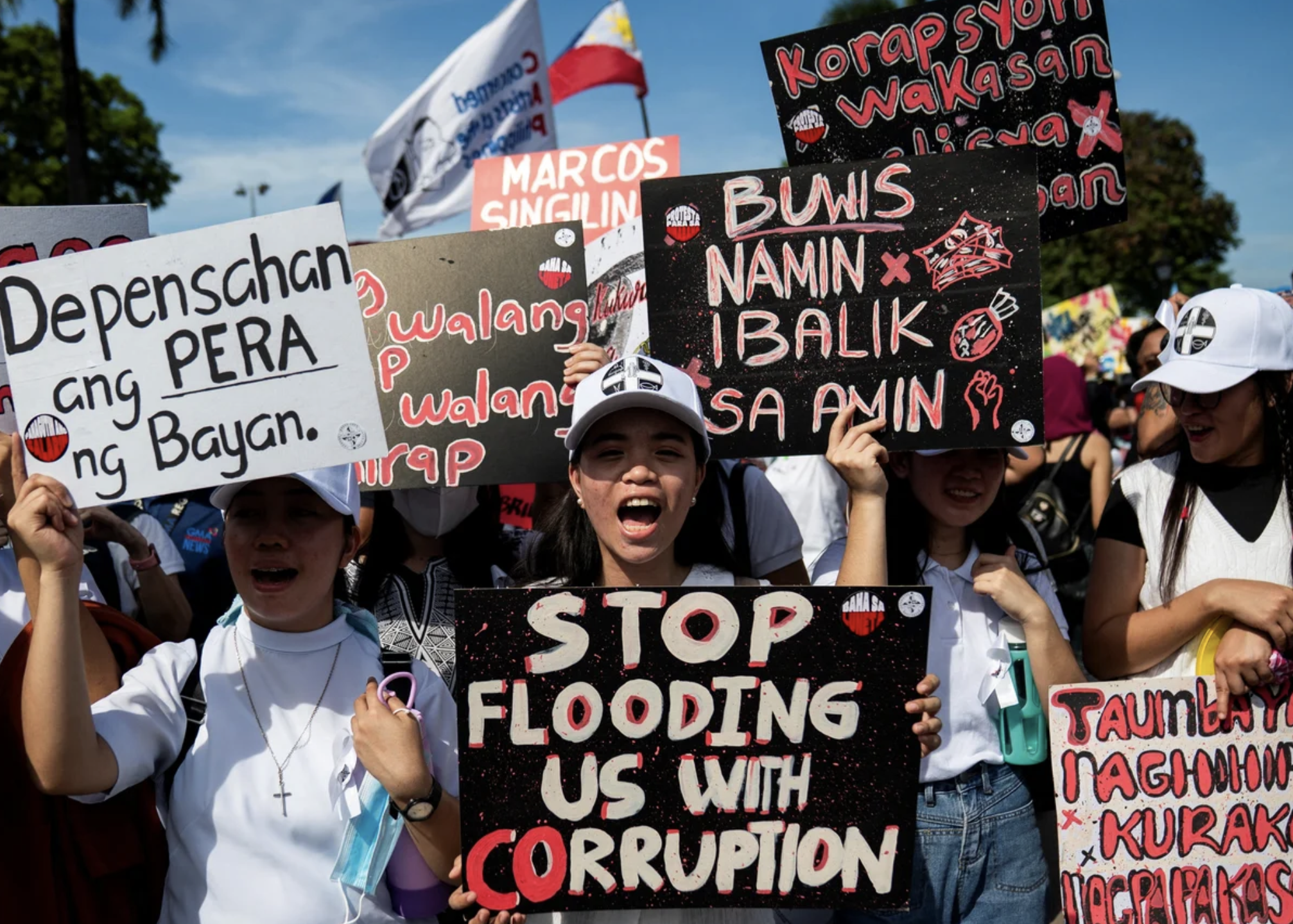
The streets of the Philippines have erupted once more in a historic show of force that saw aver a hundred thousand people march in what has become the largest protest under the Marcos Jr. regime. The September 21 demonstrations was a massive show of the people’s rightful outrage against corruption in the reactionary state. What began as indignation over corruption-laden flood control-projects has swelled into a mass movement against bureaucrat capitalism: a collective reckoning with a political system that has long treated public office as private business.

Students and young people have again surged to the frontlines. From the campuses of Manila to regional universities, thousands walked out of their classrooms, linking arms with workers, farmers, and the urban poor. Their chants and placards carried not only anger but analysis. They understand that corruption is not simply an act of a few politicians, but the symptom of a system rooted in bureaucrat capitalism.

Their militancy recalls the proud legacy of Kabataang Makabayan (KM), the revolutionary youth organization founded in 1968 that helped ignite the First Quarter Storm against the Marcos fascist dictatorship. Similar to the fiery legacy of KM, this generation of youth knows that the rot of corruption is inseparable from the broader system of bureaucrat capitalism which represents the marriage of big landlords, big comprador bourgeoisie, and bureaucrat capitalists who use the state as their personal fiefdom and in service to US imperialist interests.

Outside the Philippines, the fire of protest has spread among overseas Filipinos. In cities from Amsterdam to Hong Kong, from Los Angeles to Doha, migrants and Filipino expats have joined coordinated demonstrations denouncing the same corruption that drove many of them abroad. Their anger is rooted in experience: they labor under harsh conditions, send billions in remittances home, only to watch the wealth they produce siphoned off by corrupt politicians and their cronies.

The upsurge of protests at home and abroad has shaken the ruling classes because it signals a shift from outrage to an organized force capable of ousting them from power. In response, the Marcos Jr. regime deployed thousands of police to harass and inflict violence against demonstrators, and to red-tag youth organizers.

What frightens the ruling classes is not simply the number of people protesting in the streets but the direction of their fury. These protests are not pleading for reform but pointing toward transformation and system change. They now understand that corruption cannot simply be “fixed” without dismantling the semifeudal and semicolonial conditions that breed it. Once again, the specter of people’s power haunts the halls of Malacañang. But unlike the past, the people now recognize that merely changing leaders will not end their suffering.

So let the Philippine ruling classes tremble, for the fighting Filipino masses are at their gates. The youth are marching, the workers are organizing, the peasants are rising. The massive protests of September 21 are not the end, they are just the beginning of a new chapter in the Filipino people’s struggle to break free from the grip of bureaucrat capitalism, feudalism and US imperialism.

The Marcos Jr. and Duterte ruling cliques may still sit in Malacañang, but the ground beneath them is shaking.

Sunday, October 19, 2025

Whitehall and the Five Eyes: well, well, well, what 'ave we 'ere!

Written by: (Contributed) on 20 October 2025


Some recent developments centred on Whitehall have cast considerable light upon how governments of the day, and their Cold War associates and counterparts, deal with espionage, while attempting to contain the problem and credibility and the legitimacy of state institutions which they serve.

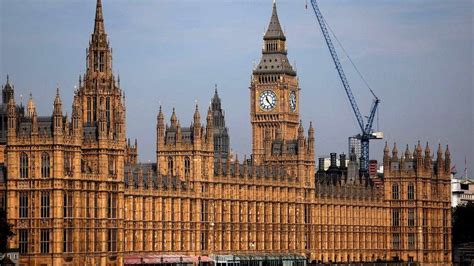
It was recently reported that two Westminster parliamentary staffers attached to the Conservative Party have had espionage charges against them dropped for seemingly curious reasons; the allegations included two Chinese spies and breaches of the 1911 Official Secrets Act between January, 2022, and February, 2023. (1) The allegations included how one of the spies 'had been commissioned by a Chinese intelligence agent to write 34 reports on matters of political interest to the Chinese Communist Party … ten of which were deemed prejudicial to UK national interest'. (2)

Amid a political and diplomatic flurry of further allegations, a carefully worded official script dealing with the matter noted 'the government would not say in public that China was an enemy of the UK'. (3) Diplomatic protocol would appear the order of the day in such circles. While allegations of an official cover-up reached a crescendo, an official statement from Westminster actually recalled that 'the security services had prepared a dossier of evidence with hundreds of examples and case studies proving China was a threat'. (4) 

The developments have lifted a mighty sizeable lid on the dysfunctional nature of Whitehall; while the security services were preparing and submitting their dossier, the Home Office were experiencing problems in an attempt 'to convince other Whitehall departments of the need to designate China a national security threat'. (5) They appear to have experienced considerable difficulty achieving objectives. Did anyone believe them?

The elite nature of the patronage systems operating inside Whitehall have tended to fill sensitive positions with little professional scrutiny; as one occupant of a seat of power retires or moves to a more lucrative career pathway, their replacement inevitably comes from the same chain of patronage. Both class and state power is retained inside elite schools, university departments, the military, secret societies and select dining clubs; identity theft and corruption remain rampant. The Spycatcher, by Peter Wright, provided the classic view of such patronage systems; little has changed in hundreds of years. In fact, the last great shake-up was the English Civil War, 1642-49. It was subsequently reassembled in 1688.

Elite appointments have been shrouded in layers of bureaucratic secrecy for centuries; the issue of competency or suitability for sensitive positions has never been an agenda item for panels at interviews. The positions are filled from patronage systems, come what may.

The fact one of the alleged spies was actually chair of the China Research Group, which had a role in representing M.P.s, 'who were lobbying government to take a tougher stance on Beijing', has revealed a great deal about patronage systems operating inside Whitehall. (6) Nothing would appear to be what is resembles; benchmarks and reliable frameworks of reference to safeguard sensitive information clearly do not exist in that shadowy and spooky world of Whitehall filled with appointees granted secure employment from up yonder.

The predicament facing Whitehall has been a subject in literature and popular culture for a very long time, the clues in such texts are often highly revealing: Living is easy, with eyes closed … Nothing is real ... Strawberry Fields, forever?

The Starmer government in Westminster, desperate to contain the political fall-out, eventually issued a statement intended to clarify the legal decision to not proceed with the spy-case on the basis that, 'in 2023 China had not been designated as a threat to national security … you can't prosecute someone two years later in relation to a designation as a threat to national security'. (7) It met with complete outrage and finger-pointing at those regarded as party to the high-level intrigue. It was noted, for example, that, 'in 2021, the government's integrated review of security and defence said China presented the biggest state-based threat to the UK's economic security. It added that the distinction between economic and national security is increasingly redundant'. (8)

While the political and diplomatic fall-out continued to resound around Whitehall, another related matter on the far side of the world in sleepy New Zealand, came to light.

Revelations that notes taken during a top secret four-day Five Eyes meeting hosted by the Royal Navy's Warfighting Centre in Portsmouth, were found amongst other donated items in a Salvation Army op shop in Wellington caused raised eye-brows and an abrupt 'no comment' from official circles inside the corridors of power. (9)

The four-day Five Eyes meeting took place within a highly secret special unit composed of about 120 personnel, half military and half civilian, whose role is to provide military intelligence assessments, 'fed on a daily basis into operational decisions … at the Navy Command Headquarters'. (10) No electronic devices were allowed in the meeting rooms.

The carefully drafted and neatly worded notes in question, however, were extensive and covered Five Eyes preparations for 'hi-tech wars' with China; it included information about the network planned for 'globally integrated, all-domain, command and control system … capability for counter-PRC operations'. (11) There was no ambiguity; China was the target.

The fact the notes drew specific attention to 'hours of discussion about AI, including Ethical Obligation – automating dangerous tasks, What is the level of acceptability?, and Responsible AI as an enabler, not a constraint', reveal how internal systems inside the Five Eyes have been upgraded. (12) References to regular simulation war-games and military exercises in cyber-space. (13) Computer screens were the real world.

To what extent the upgraded systems incorporated Project Redspice (Resilience, Effects, Defence, SPace, Intelligence, Cyber, Enablers), launched in March, 2022, which, 'has expanded Australian Signals Directorate's remit and facilitated a huge uplift in ASD capability that includes almost doubling the size of the workforce … adding that about 40 per cent of the ASD workforce strength is now stationed outside Canberra – around the country and alongside Five Eyes counterparts', has yet to be established. (14)

It would, however, appear an already close working relationship.

A previous Australian government was responsible for establishing an Australian Warfare Fighting Centre as a counterpart to the UK facilities; it is based at RAAF Williamstown, 30 kms from Newcastle, NSW. (15) Reference to the Five Eyes secret cloud contained in the secret notes taken at the Portsmouth meeting correspond with official media releases from the ASD, which note 'the ASD is developing … a top secret cloud to support Australia's intelligence community'. (16)

There is also an important question arising with the relationship between the Five Eyes and the US-led Indo-Pacific Strategy, of which Australia is a major participant. Circles of interest clearly overlap.

Any reference to diplomatic and signals links between US allies, for example, has to take into account revelations in the Snowden disclosures. The Five Eyes also rely upon Echelon networks in collaboration with Israel, Japan, the ROK and Singapore. The latter is 'one of the world's biggest digital telecommunications hubs … it … is a key third party working with Five Eyes intelligence partners'. (17) Throughout the recent Israeli bombing of Gaza the role of Australia has continually been brought into question with their collusion with the IDF. Canberra has responded with diplomatic silence to the allegations of complicity with war-crimes. They do not want to openly divulge the range and capacity of signals facilities.

In conclusion, a trend whereby military and intelligence personnel appear to have taken priority over other counterparts in government to prevent any accountability whatsoever has taken place; they lurk behind bureaucratic procedures and official secrecy. Proposed restrictions on access to documents under Freedom of Information are part of this. In fact, commentary about the secret notes from the Portsmouth meeting have highlighted the problem that 'either defence officials are pursuing plans contrary to their own government's wishes or the government is not being straight with the public'. (18)  And Australia is not a casual bystander to these dangerous developments: we need an independent foreign policy!

1.     White House anger white hot over UK espionage case fiasco, Australian, 13 October 2025.
2.     Ibid.
3.     Heat on PM over China spy case ruling, The Weekend Australian, 11-12 October 2025.
4.     Ibid.
5.     Ibid.
6.     Ibid.
7.     Ibid.
8.     Ibid.
9.     Secret defence notes pointing to sensitive China preparation left at op shop, Nicky Hager, 9 October 2025.
10.   Official Website: Maritime Warfare Centre, Royal Navy, U.K., Portsmouth.
11.   Secret defence notes, op.cit., 9 October 2025.
12.   Ibid.
13.   Ibid.
14.   ASD leads global strike on Russian cyber crooks, Defence Report,  Australian, 16 October 2025.
15.   Official Website: Australian Warfare Training Centre, Australian Government, Defence.
16.   ASD leads global strike, op.cit., 16 October 2025.
17.   See: 'Singapore, South Korea', The Sydney Morning Herald, 31 January 2014; and,  'Japan lends it vision', Nikkei, 10 January 2019; and, 'New Snowden leaks', The Brisbane Times, 17 November 2024; and,Echelon, Espionage, Spies and Secrets, Richard M. Bennett, (London, 2002), pp. 89-93.
18.   Secret defence notes, op.cit., 9 October 2025.

Venezuela: Resist Trump’s gangster tactics

Written by: Nick G. on 19 October 2025


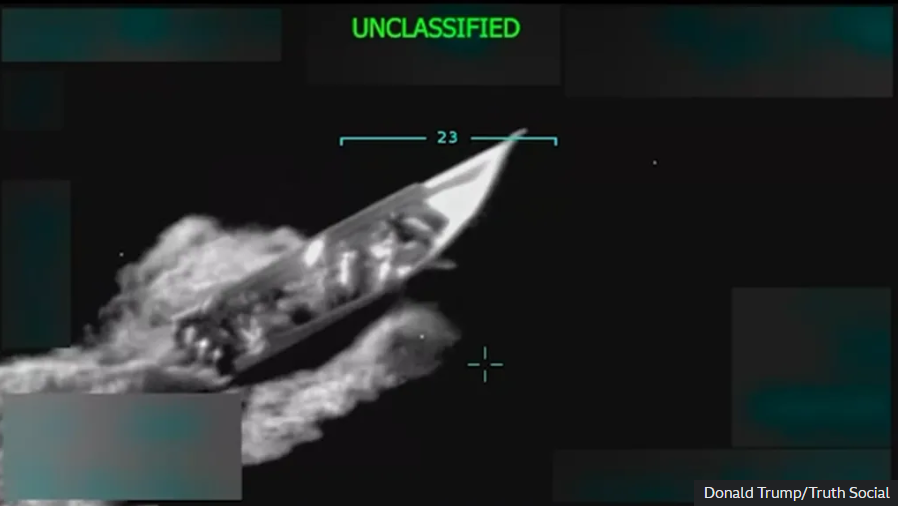
Above: screenshot from Trump's social media

The US concept of the rule of law has not developed all that far since “shoot first, ask questions later” became an accepted practice.

According to etymologists (those study the origins of words and phrases) it first became fashionable back in the 1880s.

Nearly a century and a half later, Donald Trump is still applying the maxim as he seeks to get his way towards Venezuela’s rich oil deposits.

He has illegally attacked vessels in Venezuelan and international waters, arguing, without proof, that the boats were carrying drugs into the US.

In September, he relished showing the world a video of a direct strike on a vessel in which 11 people were killed. There have since been other attacks, including on a Colombian vessel. Al Jazeera says: “The US has carried out at least six strikes on boats in Venezuelan waters since the start of September, killing some 27 people, after allegations that they were carrying narcotics.” 

Drug cartels do indeed send narcotics from some South American countries to the US. But one of the worst and most damaging drug cartels was home-born.

Purdue Pharma was the manufacturer of the opioid Oxycontin to which millions of Americans became addicted. These corporate criminals knowingly fostered dependency on their product. The TV mini-series Dopesick needs to be watched to understand the criminality inherent in corporate profit-seeking. 

Trump’s attempted criminalisation of President Maduro follows the playbook of President H. W. Bush who in 1998, accused Panamanian dictator Manuel Noriega, of running drugs into the US. Despite Noriega’s longstanding ties to United States intelligence agencies, it was feared in US circles that he threatened the neutrality of the Panama Canal, and the U.S. claimed it had the right under the treaties to intervene militarily to protect the canal.

Venezuela has long been threatened by US imperialism. Venezuela has the largest oil reserves in the world and significant deposits of gold, iron, diamonds, copper, bauxite and many other minerals, making the country one of the richest in the world in terms of natural resources. 

US imperialism is determined to secure access to Venezuelan natural resources in the face of competition from Russia and China.

Rosneft, Russia’s state-controlled oil company, has been heavily involved in Venezuela’s oil industry, partnering with PDVSA (Petróleos de Venezuela S.A.) in multiple joint ventures. Russia has extended billions of dollars in loans to Venezuela, many of which are backed by oil guarantees. These arrangements give Russian firms direct stakes or rights in Venezuelan oil output.

Venezuela has been a major supplier of crude oil to China, particularly through long-term oil-for-loan agreements signed in the 2000s and 2010s. The China Development Bank and China Exim Bank lent Venezuela over $60 billion since 2007, with repayment largely made in oil shipments. In Addition to oil, China has shown interest in Venezuela’s gold, bauxite, coltan, and rare earth minerals—resources crucial for electronics and green technologies.

The defence of Venezuela's sovereignty will be strengthened by its new-found relationship with neighbouring Colombia which shares its opposition to US encroachment on the region. Involvement of the people of both countries in preparation for defence against US invasion is necessary.

While the current major task is to defeat the ongoing threats of aggression by US imperialism in the Caribbean seas, there must be the realisation that there is no “good” imperialism, and that Russian and Chinese imperialisms must also be guarded against.

Saturday, October 18, 2025

The Pukpuk Australia-PNG mutual defence treaty and the wider US-led Indo-Pacific strategy

 Written by: (Contributed) on 14 October2025


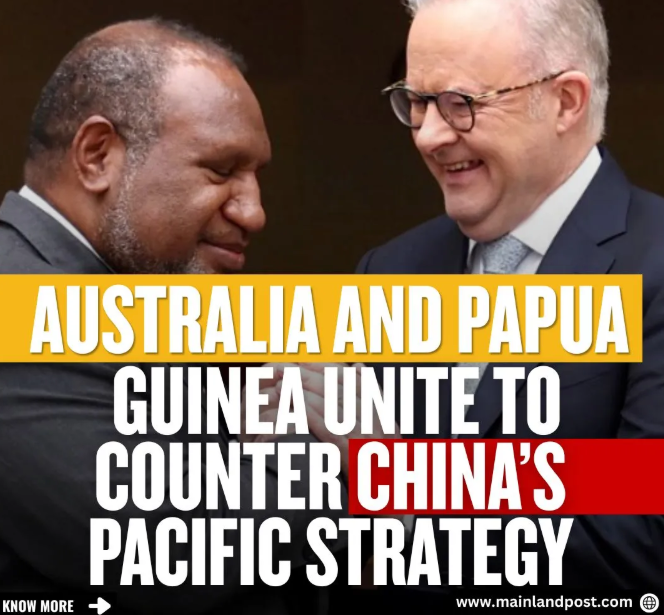
Above: Credit Mainland Post

The recent Australia-Papua New Guinea Pukpuk mutual defence treaty (named after the PNG Pidgin word for “crocodile”) forms a small, but highly significant, component part of the wider US-led Indo-Pacific Strategy (IPS), which is responsible for the waves of Cold War militarism sweeping the vast region.

The small print contained in the treaty is likely to eventually cause problems for both countries. The changing regional balance of forces has already created problems for traditional US hegemonic positions. The declaration by Bougainville, likewise, to move toward full independence in the next few years is also an important consideration.

The Pukpuk mutual defence treaty was greeted by Canberra as a significant step toward defence and security provision in the South Pacific. The big print of the treaty contained reference to both countries having an obligation to 'act to meet the common danger if either comes under attack'. (1) Other similar references included 'Australia's plans form a hub and spoke security network with our closest neighbours'. (2)

Media coverage of the treaty tended to play down the fact that PNG's South Pacific neighbours, the Solomon Islands and Vanuatu, wanted nothing to do with the treaty or similar provision. The Solomon Islands already have a security pact with China, signed in 2022; Vanuatu, likewise, has China-led police and security training programs. (3)

Opposition to the Pukpuk treaty inside PNG also raised serious concerns that it would 'threaten PNG's independent foreign policy and could draw the country into a future war with China'. (4)

It remains highly significant to note that the Pukpuk treaty contained reference to PNG being elevated with defence and security provision 'to the same status as its alliance ties with the US and New Zealand', carrying hallmarks of the US-led IPS remaining an important consideration behind the scenes. (5)

The revamped IPS has a framework where the US, Japan, India and Australia, have established a 'quad' containing and encircling China on all sides; other regional countries have then been linked through one or more of the 'quad' as lower-level partners. (6) The IPS, furthermore, also has the main US-Japan alliance upgraded to that of a global alliance, and the recent Pukpuk treaty closely followed other high-level diplomatic initiatives between Australia and Japan.

As the balance of forces swings against traditional US-led regional hegemonic positions, moves pushed by the Pentagon have become ever more desperate to block China's diplomatic initiatives in the vast Indo-Pacific region.

It is not particularly difficult to establish the small print of the Pukpuk treaty, despite it not being well publicised.

Six years ago, more than 97 per cent of the people of Bougainville, an island part of PNG, voted for the autonomous region to seek full independence. The final decision is still in the hands of the PNG government, and part of a longer agenda stretching back to before PNG was granted independence in 1975.

The people of Bougainville were included into the sovereignty of PNG by the Australian colonial administration, despite declaring their independence; the demands of the Bougainvillians were never accepted by either Canberra or Port Moresby. (7)

Geographically, nevertheless, Bougainville is the largest island in the Western Pacific's Solomon Islands Chain, and five hundred miles from PNG. (8) The subsequent independence war fought between 1988 and 1998, led by the Bougainville Revolutionary Army (BRA) against PNG, resulted in widespread human right abuses.

To date, the whole matter has simmered on longer and not straightforward neo-colonial agendas. The fact that Bougainville hosted the enormous Panguna mine, which was closed by the BRA, has recently been assessed as still containing 5.3 million tonnes of copper and 547 tonnes of gold, remains a major consideration. (9) The deposits have been estimated to be valued at about $60-100 billion. (10)

As an act of defiance, Bougainville has recently set 2027 as the date from which they will establish full independence. The move has been strengthened by the recent re-election of the President Ishmael Toroama, a former BRA leader and leading political figure in Bougainville.

It remains unclear whether PNG will even agree to the creation of a new country in the South Pacific; they have not accepted the proposed 2027 deadline. (11) An official statement from Port Moresby, for example, noted the whole matter was regarded as 'still subject to the parliamentary process'. (12) Political leaders in PNG have long feared ethnic considerations potentially resulting in other independence struggles, including the Western Province bordering on West Papua and controlled by Indonesia.
PNG, therefore, has a constitution which enables conscientious objection as a right for all military personnel; due to extensive ethnic groupings and rivalries it was created to prevent separatist threats to the sovereignty of PNG itself. The Pukpuk treaty, however, would appear a way around constitutional problems, by placing Australia as potentially the main policing power in the region, if, and when, required, under IPS supervision.

Part of the treaty, for example, has provision for 10,000 PNG citizens to serve in the Australian Defence Forces. (13) The move was, however, supported by an official media release acknowledging that 'Bougainville is a no-military zone for the PNG Defence Force
.. . this would ensure there would be no stepping into Bougainville by PNG's military or police'. (14)

Canberra and Port Moresby, have, therefore, used the Pulpuk treaty to circumvent problems arising with interpretations of PNG's constitution. It has been noted, for example, that while the PNG Defence Force report to their Commander, including Papua New Guineans in the ADF, those accepting Australian citizenship report to their respective Commander in Canberra. (15) The PNG constitution does not allow joint citizenship. The status of former PNG Defence Force personnel attached to the ADF and serving at the Lombrum base on Manus Island, which has been recently upgraded by Australia for rapid deployment into the wider region, therefore, has yet to be officially clarified.     

Reading the small print of the Pukpuk treaty would tend to indicate, however, that Australian defence and security provision has been extended into PNG to safeguard long-time neo-colonial and economically dependent interests, particularly with Bougainville. References, elsewhere, to Australia viewing Bougainville as a 'strategically important inner security arc', have shown just how close class and state power considerations and assessments remain to Canberra's diplomatic thinking in regard to the South Pacific.

The fact that Bougainville rests on an arc from sensitive military facilities in Queensland and the Northern Territories, swinging across the whole of the South Pacific, including counterparts in Port Moresby and Lae in PNG, leaves little to the imagination. (16) There remains a fine line between genuine defence and security considerations and general interference inside other political systems. The localised Australian facilities, for example, enable the constant monitoring and surveillance of all movements and developments taking place in their designated area of interest. They are, subsequently, also over-ridden by US facilities based at Pine Gap, with a global range for monitoring and surveillance, specifically for counter-insurgency and counter-intelligence provision. (17)

The Pukpuk treatyis a component part of the US-led IPS:

                                         We need an independent foreign policy!


1.     PNG set to approve Pukpuk defence treaty, The Weekend Australian, 4/5 October 2025.
2.     The pain of Pacific's twice-jilted bride, Australian, 18 September 2025.
3.     China's influence mission in the Pacific,  The Weekend Australian, 13-14 September 2025.
4.     Retired PNG general seeking legal advice on Pukpuk treaty, Australian, 23 September 2025.
5.     Weekend Australian, op.cit., 4/5 October 2025.
6.     See: The reasons behind Washington's push for GSOMIA., Hankyoreh, 12 November 2019.
7.     See: How China is paving the way for Bougainville independence, The Asia Times, 12 June 2025.
8.     Bougainville's long goodbye to colonialism, Who, What, Why, 24 July 2025.
9.     Asia Times, op.cit., 12 June 2025.
10.  Who, What, Why, op.cit., 24 July 2025.
11.   PNG's Bougainville leader see independence by 2027, Islands Business, 12 December 2024.
12.   Ibid.
13.   PNG pact could put PNG troops into Bougainville, Australian, 7 October 2025. 
14.   Ibid.
15.   See: Military treaty to boost PNG force, Australian, 3 October 2025.
16.   See: Peters Projection, World Map, Actual Size.
17.   See: Pine Gap is a place for counter-insurgency, IPAN., (South Australia), 24 July 2025.