Showing posts with label surveillance. Show all posts

Monday, March 30, 2026

BOOK REVIEW-THE PHILOSOPHER IN THE VALLEY

 Written by: Alex M and Duncan B on 31 March 2026
 

Duncan B.

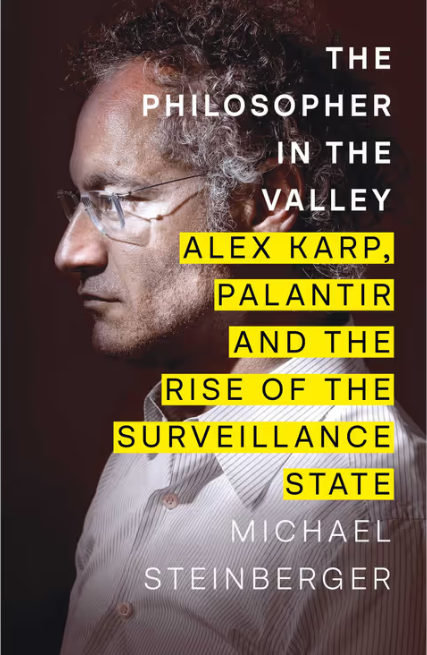
The Philosopher in the Valley. Alex Karp, Palantir and the Rise of the Surveillance State is written by Michael Steinberger, a contributing writer for the New York Times Magazine. The book tells the story of the rise of the software company Palantir and its co-founder and CEO, Alex Karp. 

Palantir Technologies started as a company that specialized in data analytics. Its software could sift through enormous quantities of data to identify connections and trends which human analysts would need days or months to find.

Palantir was started in 2003 by co-founder Peter Thiel in the wake of the Al-Qaeda attacks on the US on September 1, 2001. Thiel believed that Palantir’s purpose was to help the American government combat terrorism. Palantir was partly financed by the CIA’s venture capital arm In-Q-Tel to the tune of $1.25 million. Later, Palantir went on to develop a software programme which met the CIA’s requirements, which they subsequently purchased.

In 2004 Thiel invited Karp to join Palantir, and Karp soon became CEO. He said that Palantir’s mission was to defend the West and liberal democracy.

Prospective employees had to believe in the company’s mission. Anyone who was fussy about helping to kill terrorists or work with the US government had no chance of being hired.

Karp was concerned with the privacy and civil liberties aspects of the surveillance technology that Palantir was building. The problem was that the end users of Palantir’s programmes did not share this commitment. For example, there were cases of Palantir’s programmes being used by police departments to amass vast amounts of information about millions of people, with the risk of racial profiling of coloured people. 

In 2016, Palantir sued the US army for excluding Palantir from submitting a bid to build a new data analysis system for the army. Palantir won the case and gained several contracts from the US military. 

There were allegations that Palantir got these contracts thanks to Peter Thiel’s support for Trump in the 2016 election. Thiel became a strong supporter of Trump and donated $1.25 million to Trump’s election campaign. At that time, Karp was still a Democrat supporter, although later he swung around to support Trump. The US Customs and Immigration Enforcement (ICE) was one of the government departments awarded contracts to Palantir for use of its technology in ICE’s crack-down on alleged illegal immigrants.

Previously, Palantir had not been involved in the development of AI systems, remaining a data analytics company. In 2017 the Pentagon started a programme called Project Maven, which aimed to bring AI and machine learning to the battlefield. Originally, Google was awarded the $10 million contract to build this system. Due to objections by thousands of Google employees, the company pulled out of the contract. Palantir took over the contract and made Project Maven a reality. Maven helped the US provide the Ukraine forces with vital information which allowed them to destroy Russian forces invading Ukraine.

At the start of the Covid pandemic Palantir developed software which the US and other governments used to fight the disease. It enabled governments to bring together all the data necessary to track the spread of the disease, collect data on testing and hospitalization and coordinate the distribution of vaccines and other critical supplies.

This use of Palantir’s systems in the fight against Covid shows that computer technology and AI can benefit humanity. It is the use of Palantir’s programmes by the US government agencies, the US military and by the Israeli government in its war on the people of Palestine that show that in the wrong hands this technology is used to spy on the people and suppress their struggles.

Control must be in the hands of the people, not the likes of Musk, Altman, Bezos, Zuckerberg, Karp, Thiel and the other tech billionaires. 
                                                       *******************
Alex M:

What is really striking when you read biographies such as this one is the hubris that Tech billionaires like Karp almost invariably possess. Along with figures such as Elon Musk, Peter Thiel, Mark Zuckerberg and others, Karp is not lacking in self-regard. Having come from a family which considered themselves ‘progressive’ (his father is Jewish and his mother is African American and they saw themselves as politically liberal in the U.S. sense), Karp continues to identify as ‘progressive’ even though he supported Trump in the last presidential election. In addition, as Duncan B has pointed out above Karp’s supposed progressivism has not stopped him or Palantir actively seeking and gaining contracts with the CIA and the Pentagon among others. Aside from some hand-wringing about privacy, Karp has not been bothered too much about Palantir’s involvement with the U.S. and Israeli militaries and intelligence agencies. He rationalizes this by claiming that Palantir is part of the fight to maintain the values of liberal democracy and the dominance of the West.

As a child, Karp was diagnosed with dyslexia which, with help, he was able to overcome and he became a diligent student. So much so that he completed his undergraduate tertiary studies at Haverford College, majoring in philosophy (hence the title of the book) and then opted to go to Stanford University to complete a graduate Law degree. It was at Stanford in the late 1980s, early 1990s that he met Peter Thiel and established a friendship that would see them re-connect years later. After completing his Law studies at Stanford, Karp decided to do a PhD in Germany having little to no German language skills. Taking an intensive German language course Karp was able to quickly become fluent in German which was necessary because Karp’s PhD thesis not only required him to read German texts, but he also wrote it in German; no mean feat for a non-native speaker of German and one who had had dyslexia early in life. Karp completed his PhD in 2002. His PhD thesis examined the bitterness of many Germans over being held accountable for the Holocaust and being reminded constantly about it. Steinberger states that: “In essence, the dissertation was a study of in-groups, out-groups, and the rhetoric of fascism.” (Steinberger, p.53)

By now Karp was in his mid-thirties and not inclined to pursue a career in academia. He re-connected with Thiel and eventually Thiel offered Karp the position of CEO of his Silicon Valley start-up company Palantir in 2004. What makes this appointment stand out is the fact that Karp has no background in computer science (nor for that matter does Thiel). Karp quickly showed that he was adept at promoting and selling Palantir’s products as well as being renowned for his eccentric manner.

Karp is also abrasive when it comes to excoriating rival big tech companies. As Duncan B pointed out above thousands of Google employees objected to Google’s involvement in Project Maven, causing the company to withdraw from the project in 2018. Palantir stepped in and took up the contract. Karp wrote an op-ed published in the Washington Post in September 2019 taking Google and the rest of Silicon Valley to task for betraying the U.S. military” and by extension, American democracy”. (Steinberger, p.168) 

Palantir’s involvement with Project Maven marks the start of Palantir’s direct engagement with AI. Karp made it clear in a conversation with Steinberger in 2019 that he considered that Project Maven was the Manhattan Project of the 21st century because as with the atomic bomb, “the country that gained a military edge with AI would ‘determine the world order tomorrow’”. (Steinberger, p.169) Karp contrasted the West with China which for Karp and Thiel stands as the very antithesis of so-called Western values and liberal democracy and therefore AI must be used in the military forces of the U.S. and selected allies such as the Israelis, to stave off the challenge coming from China.

Palantir, and by extension Alex Karp and Peter Thiel, represent the moral, political and social bankruptcy that lies at the heart of contemporary U.S imperialism.

Control of software that may be of some benefit to humanity must be wrested from the hands of Tech billionaires, and governments such as those in the United States; the consequences of not doing so will be dire for the world’s working people.


Wednesday, October 22, 2025

Whose is this “national interest”?

Written by: Ned K. on 23 October 2025


Prime Minister Albanese said that in his meeting with Trump in Washington D.C. his sole objective was to achieve the best outcome for "the national interest".

The "national interest" for Albanese on this occasion was hearing Trump say that he was committed to AUKUS and nuclear submarines in Australia and an agreement between the Australian and US governments on Australia providing the USA with rare earth minerals from Australia.

Foreign Affairs Minister Penny Wong has also used the term "national interest" in relation to the genocide of Palestinians by Israeli Government. She said it was in Australia's national interest to support the state of Israel as it was a "democracy" like Australia and had the right to "defend itself".

Both Albanese and Wong's use of the term "national interest" have been in relation to Australia's foreign affairs policies or strengthening military ties with the USA which they equate with making Australia a more secure place for people to live in.

Using their own logic, is it in Australia's "national interest" to ensure that our major airports and defence bases and naval bases are secure?
Albanese and Wong would agree that this is important.

However, the security of our airports, defence bases and naval bases are contracted out to multinational corporations whose allegiances and profits end up overseas.

The major security companies involved in airport, defence bases and naval bases are -

MSS Security - owned by an Indian multinational, SIS Limited
Securecorp - owned by China Security Co Ltd, based in Shenzhen, China
Certis Security - Singapore-owned
Wilson Security - owned by Sun Hung Kai Properties of the Kwok family
ISS - owned by a Danish based multinational
Secom Security- a Japanese owned company
Serco - UK owned 

All of these multinational corporations are involved in cyber security and electronic surveillance services to governments and large corporations. 

They came into existence and grew during the massive privatizations of security services all over the world including Australia under both Liberal and Labor branded governments.

This situation is just one example of how the use of the term "national interest" by this, and previous governments really means the interests, not of Australian people, but the foreign powers that governments serve. 

Currently, that foreign power is US imperialism whose political interests at the moment are served by Trump, who Albanese now embraces as his friend and master.

Sunday, October 19, 2025

Whitehall and the Five Eyes: well, well, well, what 'ave we 'ere!

Written by: (Contributed) on 20 October 2025


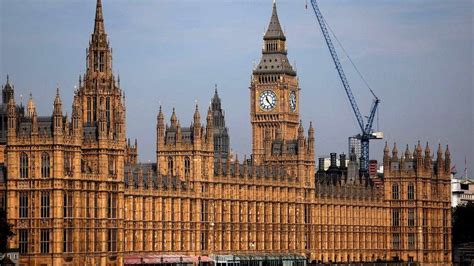
Some recent developments centred on Whitehall have cast considerable light upon how governments of the day, and their Cold War associates and counterparts, deal with espionage, while attempting to contain the problem and credibility and the legitimacy of state institutions which they serve.

It was recently reported that two Westminster parliamentary staffers attached to the Conservative Party have had espionage charges against them dropped for seemingly curious reasons; the allegations included two Chinese spies and breaches of the 1911 Official Secrets Act between January, 2022, and February, 2023. (1) The allegations included how one of the spies 'had been commissioned by a Chinese intelligence agent to write 34 reports on matters of political interest to the Chinese Communist Party … ten of which were deemed prejudicial to UK national interest'. (2)

Amid a political and diplomatic flurry of further allegations, a carefully worded official script dealing with the matter noted 'the government would not say in public that China was an enemy of the UK'. (3) Diplomatic protocol would appear the order of the day in such circles. While allegations of an official cover-up reached a crescendo, an official statement from Westminster actually recalled that 'the security services had prepared a dossier of evidence with hundreds of examples and case studies proving China was a threat'. (4) 

The developments have lifted a mighty sizeable lid on the dysfunctional nature of Whitehall; while the security services were preparing and submitting their dossier, the Home Office were experiencing problems in an attempt 'to convince other Whitehall departments of the need to designate China a national security threat'. (5) They appear to have experienced considerable difficulty achieving objectives. Did anyone believe them?

The elite nature of the patronage systems operating inside Whitehall have tended to fill sensitive positions with little professional scrutiny; as one occupant of a seat of power retires or moves to a more lucrative career pathway, their replacement inevitably comes from the same chain of patronage. Both class and state power is retained inside elite schools, university departments, the military, secret societies and select dining clubs; identity theft and corruption remain rampant. The Spycatcher, by Peter Wright, provided the classic view of such patronage systems; little has changed in hundreds of years. In fact, the last great shake-up was the English Civil War, 1642-49. It was subsequently reassembled in 1688.

Elite appointments have been shrouded in layers of bureaucratic secrecy for centuries; the issue of competency or suitability for sensitive positions has never been an agenda item for panels at interviews. The positions are filled from patronage systems, come what may.

The fact one of the alleged spies was actually chair of the China Research Group, which had a role in representing M.P.s, 'who were lobbying government to take a tougher stance on Beijing', has revealed a great deal about patronage systems operating inside Whitehall. (6) Nothing would appear to be what is resembles; benchmarks and reliable frameworks of reference to safeguard sensitive information clearly do not exist in that shadowy and spooky world of Whitehall filled with appointees granted secure employment from up yonder.

The predicament facing Whitehall has been a subject in literature and popular culture for a very long time, the clues in such texts are often highly revealing: Living is easy, with eyes closed … Nothing is real ... Strawberry Fields, forever?

The Starmer government in Westminster, desperate to contain the political fall-out, eventually issued a statement intended to clarify the legal decision to not proceed with the spy-case on the basis that, 'in 2023 China had not been designated as a threat to national security … you can't prosecute someone two years later in relation to a designation as a threat to national security'. (7) It met with complete outrage and finger-pointing at those regarded as party to the high-level intrigue. It was noted, for example, that, 'in 2021, the government's integrated review of security and defence said China presented the biggest state-based threat to the UK's economic security. It added that the distinction between economic and national security is increasingly redundant'. (8)

While the political and diplomatic fall-out continued to resound around Whitehall, another related matter on the far side of the world in sleepy New Zealand, came to light.

Revelations that notes taken during a top secret four-day Five Eyes meeting hosted by the Royal Navy's Warfighting Centre in Portsmouth, were found amongst other donated items in a Salvation Army op shop in Wellington caused raised eye-brows and an abrupt 'no comment' from official circles inside the corridors of power. (9)

The four-day Five Eyes meeting took place within a highly secret special unit composed of about 120 personnel, half military and half civilian, whose role is to provide military intelligence assessments, 'fed on a daily basis into operational decisions … at the Navy Command Headquarters'. (10) No electronic devices were allowed in the meeting rooms.

The carefully drafted and neatly worded notes in question, however, were extensive and covered Five Eyes preparations for 'hi-tech wars' with China; it included information about the network planned for 'globally integrated, all-domain, command and control system … capability for counter-PRC operations'. (11) There was no ambiguity; China was the target.

The fact the notes drew specific attention to 'hours of discussion about AI, including Ethical Obligation – automating dangerous tasks, What is the level of acceptability?, and Responsible AI as an enabler, not a constraint', reveal how internal systems inside the Five Eyes have been upgraded. (12) References to regular simulation war-games and military exercises in cyber-space. (13) Computer screens were the real world.

To what extent the upgraded systems incorporated Project Redspice (Resilience, Effects, Defence, SPace, Intelligence, Cyber, Enablers), launched in March, 2022, which, 'has expanded Australian Signals Directorate's remit and facilitated a huge uplift in ASD capability that includes almost doubling the size of the workforce … adding that about 40 per cent of the ASD workforce strength is now stationed outside Canberra – around the country and alongside Five Eyes counterparts', has yet to be established. (14)

It would, however, appear an already close working relationship.

A previous Australian government was responsible for establishing an Australian Warfare Fighting Centre as a counterpart to the UK facilities; it is based at RAAF Williamstown, 30 kms from Newcastle, NSW. (15) Reference to the Five Eyes secret cloud contained in the secret notes taken at the Portsmouth meeting correspond with official media releases from the ASD, which note 'the ASD is developing … a top secret cloud to support Australia's intelligence community'. (16)

There is also an important question arising with the relationship between the Five Eyes and the US-led Indo-Pacific Strategy, of which Australia is a major participant. Circles of interest clearly overlap.

Any reference to diplomatic and signals links between US allies, for example, has to take into account revelations in the Snowden disclosures. The Five Eyes also rely upon Echelon networks in collaboration with Israel, Japan, the ROK and Singapore. The latter is 'one of the world's biggest digital telecommunications hubs … it … is a key third party working with Five Eyes intelligence partners'. (17) Throughout the recent Israeli bombing of Gaza the role of Australia has continually been brought into question with their collusion with the IDF. Canberra has responded with diplomatic silence to the allegations of complicity with war-crimes. They do not want to openly divulge the range and capacity of signals facilities.

In conclusion, a trend whereby military and intelligence personnel appear to have taken priority over other counterparts in government to prevent any accountability whatsoever has taken place; they lurk behind bureaucratic procedures and official secrecy. Proposed restrictions on access to documents under Freedom of Information are part of this. In fact, commentary about the secret notes from the Portsmouth meeting have highlighted the problem that 'either defence officials are pursuing plans contrary to their own government's wishes or the government is not being straight with the public'. (18)  And Australia is not a casual bystander to these dangerous developments: we need an independent foreign policy!

1.     White House anger white hot over UK espionage case fiasco, Australian, 13 October 2025.
2.     Ibid.
3.     Heat on PM over China spy case ruling, The Weekend Australian, 11-12 October 2025.
4.     Ibid.
5.     Ibid.
6.     Ibid.
7.     Ibid.
8.     Ibid.
9.     Secret defence notes pointing to sensitive China preparation left at op shop, Nicky Hager, 9 October 2025.
10.   Official Website: Maritime Warfare Centre, Royal Navy, U.K., Portsmouth.
11.   Secret defence notes, op.cit., 9 October 2025.
12.   Ibid.
13.   Ibid.
14.   ASD leads global strike on Russian cyber crooks, Defence Report,  Australian, 16 October 2025.
15.   Official Website: Australian Warfare Training Centre, Australian Government, Defence.
16.   ASD leads global strike, op.cit., 16 October 2025.
17.   See: 'Singapore, South Korea', The Sydney Morning Herald, 31 January 2014; and,  'Japan lends it vision', Nikkei, 10 January 2019; and, 'New Snowden leaks', The Brisbane Times, 17 November 2024; and,Echelon, Espionage, Spies and Secrets, Richard M. Bennett, (London, 2002), pp. 89-93.
18.   Secret defence notes, op.cit., 9 October 2025.

Wednesday, May 14, 2025

A very British coup? “They have spies, we have agents”

Written by: (Contributed) on 15 May 2025


Moves to find a suitable replacement for the outgoing MI6 chief in London have revealed serious considerations at the very centre of Britain's Secret Intelligence Service (MI6), which also has implications for the elite Five Eyes intelligence-sharing network.

The fact the controversy has already spilled over into the public domain remains evidence, in itself, of the depth of the problem; MI6 would appear to be experiencing problems adapting to modern trends of intelligence-gathering, with implications for subsequent accurate analytical assessments from the world's trouble-spots and areas of interest.

Sir Richard Moore, MI6 chief, has planned for his retirement in a few months’ time and the search has already begun to find a suitable successor. Britain's overseas intelligence services
have a long history reaching back to imperial yesteryear; shadowy figures with fingers remain in pies all over the world. Controversy, nevertheless, has arisen about modern intelligence-gathering techniques which have tended to supersede 'penetration agents'. (1)

Previously the British State relied upon agents, often portrayed in works of fiction to avoid unnecessary finger-pointing and fears of prosecution under the draconian Official Secrets Act. British writer Graham Greene was but one; he wrote about 'Greenland'.  His various works, for example, portrayed a well-placed British spy in pre-revolutionary Batista's Cuba in the 1950s operating undercover selling vacuum cleaners. (2) He was never identified.

One of Greene's later works revealed quite accurately the problem confronting Whitehall when dealing with Apartheid South Africa. The country was regarded as strategic for western defence and security provision although Apartheid was not considered acceptable. (3) The book also provided a glimpse of the faceless bureaucrats who were employed in the almost unaccountable layers of bureaucracy filled from elite patronage systems which rested upon Gentlemen's Clubs and elite dining facilities where counterparts could meet for confidential and discreet 'talk' about mutual areas of interest, without fear of detection.

MI6, historically, has operated as overseas intelligence, under the head of state, and linked into the Commonwealth and elsewhere through the Foreign Office. In practice, the head of state, has relied upon the Privy Council, an executive of the House of Lords, to usually act on their behalf. MI6 was then linked into domestic intelligence, MI5, through the joint-intelligence committee usually headed by the Home Secretary, operating on behalf of the prime minister of the day. Their joint pre-occupation and obsession was/is identifying and assessing threats to the class and state power of the realm. They are, moreover, inherently right-wing and racist, which has continually interfered with their focus, judgements and opinions on numerous occasions. They are clearly not the font of all wisdom.

The two intelligence services frequently operate through other government departments and corporate entities; the Post Office in the UK was a good example. While ostensibly providing telecommunications and postal services, it provided a convenient cover for clandestine operations. It also provided technical training for foreign nations within the British Commonwealth. Its internal security system, the Special Investigation Branch (SIB), was well-known for links with the intelligence services and the preoccupation and obsession with spying on the entire workforce under the guise of 'security vetting'. (4) The telecommunications systems in military facilities used by NATO's secret armies had to be protected at all costs; the fascists they deployed operated within a culture of impunity. (5)

Secrecy, however, has shielded non-reliable sources of intelligence and their questionable assessments; Hanslope Manor estate, for example, is owned by the UK, Foreign, Commonwealth and Development Office. It is also home to the British Government Communications Centre and within easy reach of Whitehall in the City of Milton Keynes. Housing extensive archives from its imperial past, the institution has been described as 'the fortress-like warehouse for top-secret government files'. (6) Most of the estimated 1.2 million documents will never be declassified; they are generally recognised as containing incriminating evidence about Britain's imperial past. Silence remains the order of the day.

Sir Richard Moore would appear to have followed the old tradition, serving undercover in Vietnam, Turkey, Pakistan and Malaysia before becoming British Ambassador in Turkey. (7)
The country remains one of vital interest; its former imperial past has continued to provide links into the modern-day Islamic World. Recent references in the public domain to the sensitive British-based GCHQ listening station, linked into the elite Five Eyes of the US, Canada, Australia and New Zealand, however, show how intelligence-gathering has tended to move away from strategically placed individual agents quietly collecting information, toward massive downloads of intercepted data from telecommunications facilities.

It has led to concerns that 'MI6 is losing its cutting edge in a world where the vast bulk of actionable intelligence is gathered by GCHQ'. (8)

Moves which began with the Echelon system in the Five Eyes decades ago which had the facilities to provide 'an awesome spying capacity for the USA, allowing it to monitor continuously most of the world's communications targeting civilian as well as military traffic', have now been upgraded to include the internet. (9)

The Echelon system relied upon computer systems in various strategically placed stations around the world which were programmed with chosen key-words, allowing 'each station to collect all the telephone calls, faxes, telexes, internet messages and other electronic communications that its computers have been programmed to select for all its allies and automatically sends this intelligence to them'. (10)

In recent years, however, the 'National Security Agency's attention has shifted to finding ways to exploit the global reach of Google, Microsoft, Venizon and other US technological powers'. (11) The NSA, at the centre of the Five Eyes, is now faced with huge troves of intelligence gathered from on-line facilities.

It has not made the work of intelligence services easier; in fact, to the contrary, it has led to the problems recently publicised by MI6. More intelligence gathered has required more analysts to provide assessments. It has not proved cost effective.

When dealing with the large-scale troves on intelligence, a former intelligence officer was recently quoted as stating 'they have lost their way … they seem to have forgotten that their job is agent handling and running and recruiting'. (12) Another former MI6 officer who applied for the top job 'called for a return to classic recruitment of penetration agents … your organisation needs a complete reset'; they did not make the short-list. (13)

Published sources have revealed front-runner for the top MI6 job is Dame Barbara Woodward, Britain's Ambassador to the United Nations, who is also the most senior woman employed in the Foreign office. A China specialist, Woodward was Ambassador to Beijing during 2015-20. (14)

The appointment takes place at a time when 'the security services have alleged that Chinese spies have penetrated the inner circle of the Duke of York, infiltrated political circles, hacked businesses and attacked Hong Kong dissidents in the UK. Intelligence officials say Chinese spying activity is on an industrial scale'. (15)

In conclusion, whether we will see a return to the days of yonder and Colonel Daintry, however, who 'had a two-roomed flat in St. James's Street which he found through the agency of another member of the firm. During the war it had been used by MI6 as a rendezvous for interviewing possible recruits … few people who walked down St. James's Street knew of the court's existence. It was a very discreet flat', remains, as yet, to be established. (16)  

The secret contribution made by Colonel Daintry and his associates to the maintenance of the British State and all which that entailed, nevertheless, has remained neatly filed away at Hanslope Manor, and will remain so for the foreseeable future. The elite patronage systems of which the intelligence agents formed part, have remained intact for centuries and appear even stronger now than yesteryear. Labour governments may have challenged them, but reform was never on the horizon or even an agenda item.

In fact, Labour governments appear to have been accommodated and assimilated within the morass. Governments may come and go with the following of established constitutional procedures, the bureaucracy on which they rest and depend upon, however, has not experienced serious discord since the heady days of the English Civil War, 1642-49.

When Peter Wright wrote Spycatcher and spilled the beans on one of the oldest professions in the world, perhaps he wrote it on behalf of all of them!


1.     'Beijing Barbara' leads race to be first female MI6 chief, Australian, 12 May 2025.
2.     See: Our Man in Havana, Graham Greene, (1958)
3.     See: The Human Factor, Graham Greene, (London, 1978).
4.     Spycatcher, Peter Wright, (Victoria, 1988), pages: 7, 18, 45, 46, 83, 131, 172.
5.     See: NATO's Secret Armies, Daniele Ganser, (2005); and, Late 1940s-1990s, Europe: Building Right-Wing Terror Groups; and, EU Resolution (1990) on Operation Gladio (ie., sword); and, 1950-now, Germany: 'Stay Behind” Forces and Neo-Nazism, Psywar Terror Tactics, A People's History of the CIA., December 2000, (Ottawa), Issue 43, pp. 11-12.
6.     'King Charles, Caroline Elkins, 29 October 2023.
7.     Australian, op.cit., 12 May 2025.
8.     Ibid.
9.     See: Echelon, Espionage, Spies and Secrets, Richard M. Bennett, (London, 2003), pp. 89-93.
10.   Ibid.
11.   The intelligence coup of the century, The Washington Post, 11 February 2020.
12.   Australian, op.cit., 12 May 2025.
13.   Ibid.
14.   Ibid.
15.   Ibid.
16.   The Human Factor, op.cit., page 104

Wednesday, April 3, 2024

On the introduction of supermarket security checkpoints

 Written by: Comrade Swanston on 3 April 2024


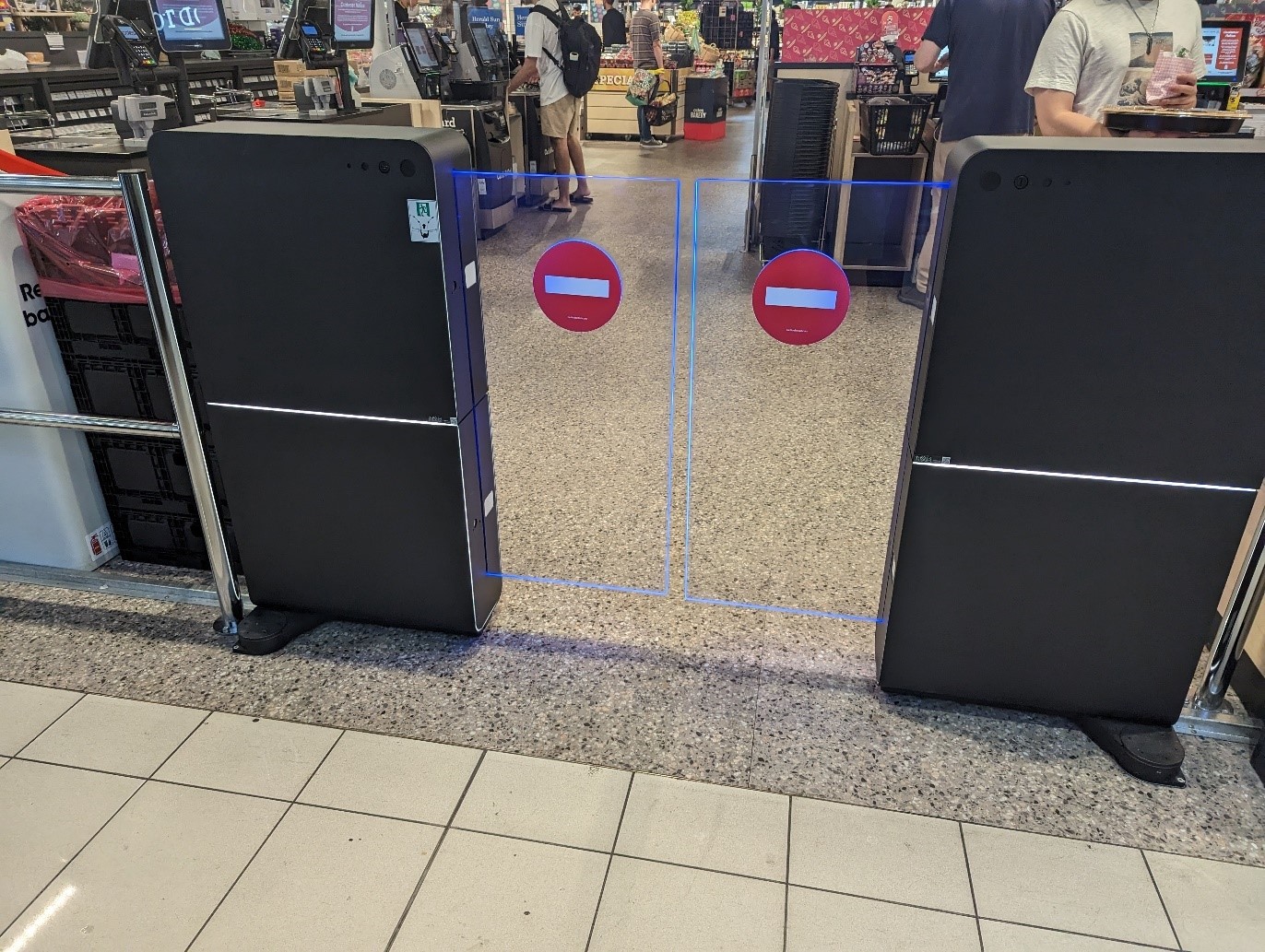
First introduced in mid-2023 to combat the rising number of incidents concerning shoplifting and what the talking-heads of the bourgeoisie have declared to be a sudden and unprovoked “rise in aggression” against their employees in Australian supermarkets, Coles’ and Woolworths’ anti-shoplifting programs demonstrate plainly the bloated and disconnected hubris of the bourgeoisie. 

These programs demonstrate a ruling class that is becoming more severed from the lived experiences of the working-class and working-poor with each passing day. It demonstrates a class with such little awareness of its conditions that it ignorantly believes that its own lies it tells to cheat us will simply be taken as fact: by both employee and customer alike. By those it exploits through undercutting wages, and by those it endlessly price gouges out of every dollar. 

Yet this lie that they repeat, this lie that they are introducing these means to protect some of Australia’s most vulnerable workers, is acknowledged by all those who toil day to day for what it is! As a sham! As a maliciously crafted excuse which has but one true purpose: to protect capital, From South Melbourne to Carrum Downs, from street to street this is acknowledged earnestly by all people. 

One emergency service worker recalled to me that Woolworth CEO Brad Banducci’s panopticon makes them feel as if “everyone is presumed to be a criminal”, and a young single mother told me that ever since those gates first came up in South Melbourne (along Clarendon Street) that she has only seen one thing change. That those “blackshirts” as she calls them, the corporate security of these shopping-centres, have only become ever more energised to brutalise and abuse those they deem “to look too poor” to shop. 

To hide behind excuses of fighting crime and to force people to come behind cameras and into that dreaded back room. To come into that back room and face the consequences of surviving and being able to live another day. This is the reality of these programs. This is the reality of the class conflict. 

Such measures such as the introduction of so called smart gates, of anti-theft fog and security databases, such measures such as the expansion of security teams and of the trolley-lock system only harm those within working-class suburbs. They do not even affect the wealthy and well-off, the bosses, nor the bureaucrat. 

This is even evident in where they place these measures. For what connects South Melbourne to Carrum Downs, what connects my own suburb to all the suburbs chosen for this program is that they are predominantly and historically working-class and host a large population who sit underneath the poverty line. A large population which relies on welfare payments and who reside in public housing. A large population who has long been exploited and shamed by the capitalist system and its supporters.

Like all things in the class conflict, this issue has not remained stagnant over the course of a few months. For it must be acknowledged that this attack has not been one that has been strictly led against consumers, but as ever has been expanded against these corporations’ hard-working employees. 

For as reported by several worker-representatives of the Retail and Fast-Food Worker Union, Coles has further expanded this campaign upon its own workers. That is, Coles now again will harass and coerce its employees alongside customers with their “blackshirts”, who will gleefully collaborate and undoubtedly restrain their hardworking and underpaid retail-clerks for but a suspicion of theft. Likely with threats of reporting them to management if they do not comply. With threats of loss of job and livelihood! 

These scenes though will be ironic to those who know of Coles’ long history of blatant wage theft. For Coles and Woolworths: the happy hypocrites who cry ‘thief!’ as they rob their workers of their rightful wages have always with a crocodile’s smile attempted to cast blame on others. 

They would not dare admit that their employees are being unpaid and should have the ability to shop where they work! They would not admit that the statement from the Retail and Fast-Food Workers Union (RAFFWU) could be true. That as Josh Cullinan, Secretary of RAFFWU puts it, that “the reason they’re bag checking is because they know that their own workers are forced to think about stealing because they can’t afford food”. 

For these corporations and their bosses would rather sit lying between their teeth with yearly salaries so high (collected from all their robbery) that the average person could not achieve such in a lifetime.


Monday, October 30, 2023

Microsoft buys into AUKUS and Australian surveillance industry


(Above: original image by freepik)
Written by: (Contributed) on 31 October 2023

An announcement that Microsoft was planning joint operations with Australian security agencies has revealed higher level Cold War security provision with the military-industrial complex. It has also revealed even closer diplomatic links between Australia and the United States, and a further escalation of hostilities directed toward China across the Indo-Pacific region. While ostensibly concerned with cyber-related defence and security concerns, the move will affect every level of Australian society, directly or indirectly. 

The planned $5 billion upgrade of Australian defence and security provision with cyber strategy by Microsoft had been additional to the already $9.9 billion allocated for the Redspice program with Australian Signals Directorate (ASD) last year. (1) There is little ambiguity about the planned upgrade: resting on the Redspice program where it was formally noted to be linked to the elite Five Eyes intelligence sharing facilities and the AUKUS defence and security for 'supporting a secure Indo-Pacific region', the new bumper Cyber Security Strategy (CSS) has been primarily directed toward countries considered adversaries; it is intended to be fully operational by 2030 as the 'second pillar' of AUKUS focussed upon 'technology sharing of advanced capabilities'. (2)

Two features of the CSS include: stronger diplomatic links between the US and Australia; and intelligence facilities primarily concerned with more efficient information and technology sharing through the use of AI. (3)

When viewed in the context of the present Cold War with China, an escalation of diplomatic hostilities will obviously occur, particularly in the Indo-Pacific region where Australia provides defence and security coverage of the southern half for 'US interests'.   

The announcement that Microsoft was already planning to increase its computer capacities by about 250 per cent during the next two years, reveals a stepping up of Cold War militarism; it rests upon a rapid uptake of AI. (4) When viewed in the context of the previous Cold War, there are far-reaching implications for Australians, directly by placing the country on a war-footing with China, and indirectly by domestic surveillance and monitoring of the civilian population.

There is little doubt that China remains the focus of US-led militarism sweeping the Indo-Pacific region; what, however, clouds the war-drive is the massive domestic surveillance of civilian populations. (5) Numerous US-led military exercises create fictional enemies in the warped minds of those lurking in the corridors of power inside the Pentagon.

Hidden in the official media releases was reference to 'Microsoft's collaboration with the ASD (Australian Signals Directorate – eds) to enhance cyber security for households and business', which can be viewed as contentious. (6) The previous Cold War was marked by massive domestic surveillance and espionage by those welding class and state power over ordinary citizens. Declassified documents, from the period, reveal civil liberties amounted to very little in those eyes of those welding power. 

Beginning in the 1960s, the US formalised Project X, for example, which was based at the US Intelligence Center and School at Port Holabird, Maryland; the project was designed to 'provide intelligence training to foreign friendly governments'. (7) Various 'lessons' provided for students, by US military officials, included extensive profiling of entire populations: 'they included lessons in creating black, grey or white lists of potential adversaries and in making block-by-block inventories of families and their assets to keep tabs of the population'. (8)   

The extensive use of intelligence agents to infiltrate 'a wide array of groups, including political parties, labor unions, youth and student groups, religious organisations, and publishing organisations', was considered a legitimate way for those welding class and state power to gather intelligence for profiling. (9) Today, there is little need for infiltration agents, the required intelligence can be easily collected from cyber-space and social media.

In fact, several years ago the US National Security Agency (NSA) closed a number of intelligence-gathering facilities because 'the NSA's attention shifted to finding ways to exploit the global reach of Google, Microsoft, Venizon and other US technical powers'. (10)

Studies of the US-led telecommunications interception facilities have concluded that the Echelon system has the ability to sift through millions of messages and select intelligence using 'trigger words' which are then used for higher-level analysis and profiling. (11)

The new CSS facilities also include Microsoft establishing nine 'new data centres in Australia', supposedly for protecting the country from cyber-criminals, while declassified documents from the previous Cold War have revealed US foreign policy and 'co-ordinated counter-intelligence activities world-wide … are conducted against … those who oppose the US Defence Department … during peacetime and all levels of conflict'. (12)  

The latter would appear to have taken priority over the former; the military practice was never discarded, only upgraded through the subsequent decades to the present day. The spies in cyber-space are not elsewhere, but within.

And those who fail to learn the lessons of history, have to repeat them over and over again:

                                          We need an independent foreign policy!


1.     Microsoft to spend $5 billion 'turbocharging' AI in Australia, Australian, 24 October 2023; and, Redspice, The Guardian (U.K.), 29 March 2022.
2.     Guardian, ibid., 29 March 2022; and, US trip must send signal of unity, Editorial, Australian, 25 October 2023; and, Australian, ibid., 24 October 2023; and, Killing by Algorithm, Declassified Australia, 21 August 2023.
3.     Editorial, Australian, ibid., 24 October 2023.
4.     Microsoft, Australian, op.cit., 24 October 2023.
5.     See: China 'is right at the top' of US watch list, Australian, 26 October 2023; and, Indo-Pacific still 'top of the list', Editorial, Australian, 26 October 2023.
6.     PM enlists Microsoft for cyber war, Australian, 24 October 2023.
7.     Lost History: Project X, Drugs and Death Squads, Robert Parry, The Consortium Magazine, 31 March 1997.
8.     Army's Project X had wider audience,  The Washington Post, 6 March 1997.
9.     Ibid.
10.   The intelligence coup of the century, The Washington Post, 11 February 2020; and, Compromised encryption machines, The Washington Post, 17 February 2020; and, Crypto AG / Five Eyes, The Millennial Source, 15 February 2020; 'Crypto AG – the CIA', The Daily Telegraph (London), 12 February 2020.
11.   Espionage, Spies and Secrets, Richard M. Bennett, (London, 2002), Echelon, pp. 89-93.
12.   Turbocharging, Australian, op.cit., 24 October 2023; and, Army Foreign Intelligence Assistance Program, Army Regulation 381-20, Section 1.5, Mission and Policy, page 1, (declassified, 15 November 1993).  

Monday, September 5, 2022

AI abuses revealed, including in employment selection procedures


 Written by: (Contributed) on 5 September 2022

Information about a large number start-up companies in Silicon Valley designing apps and other tools for the Australian business classes to use with employment selection procedures have sent alarm bells ringing; the federal government has already been urged to appoint a Commissioner to deal with the larger problem of dealing with cyber security and artificial intelligence and accountability.

There are at present few, if any, safeguards in place in Australia to protect citizens and residents from the uses and abuses of high-tech espionage, which they encounter in almost every part of their private and everyday lives, including their employment.

A study of the uses and abuses of cyber and artificial intelligence in contemporary Australia through the University of NSW and a government department have established over a hundred companies in Silicon Valley developing cyber / AI apps and tools for use with the screening of employment applicants in Australia. (1) The finding has come soon after widespread public disquiet being raised about retail outlets using facial recognition technology with customers, without their consent. (2) Further concern has also been raised about profiling techniques being used with intelligence-gathering from social media outlets, including TikTok. (3) Research conducted through the University of Melbourne has revealed TikTok 'captures the face-prints and voice-prints of its users … which are … comparable to finger-prints as they can help others identify, surveil and profile people of interest'. (4)

A major part of the problem is that many social media users access websites from mobile telephones, which are easily high-jacked and tracked, enabling those involved in intelligence-gathering to amass huge amounts of personal bio-data which can then be shared with third parties. While some of the security problems surrounding the matter have been tightened, many Australians run the daily risk of identity theft, or profiles of their behaviour being used without their consent or control. The recent legal verdict and $200,000 fine imposed on the Singapore-based Circles.Life telecommunications company for not conducting proper identity checks on users was, for example, only the tip of a very large iceberg. (5) While the company were found to have been responsible for transferring customers phone numbers from other telecommunications companies, their failure to use correct identity checks allowed 42 customers to become victims of fraud-related concerns, including at least seven who experienced financial losses. (6) No reference was provided in the legal documentation about personal information from 1,787 customers who transferred from other companies; Circles.Life, however, did note it used Optus networks and their own smartphone app without elaborating on the range and capacity of the latter.

Google, likewise, was recently fined $60 million in an Australian federal court for intelligence-gathering from customers Android phones, without the users consent. (7) Google was apparently collecting location data of an estimated 1.3 million Australians. The personal location data was regarded as 'sensitive and important to some consumers'; fears arose the data could be used for profiling and by third parties for ulterior motives. (8) It has become common practice with intelligence-gathering to identify post-codes and recurring patterns of personal behaviour, for example, for profiling purposes.

The fines already issued, however, amount to paltry sums of money for the corporate bodies concerned, which are also likely to be written off in annual audits by company accountants.

Many Australian employers, furthermore, already regard it as a totally acceptable business practice to access highly confidential information from the medical records of their workforces, by using non-standard methods of intelligence-gathering, which by-pass practitioners. A major successful campaign led by Australian trade-unions to encourage their members to 'opt out' of collective medical computer banks, making it very difficult for employers and others to access information, led to blanket silence and denial by the business classes.

These recent developments have been accompanied by a private legal challenge to Facebook in Australia whereby it has been alleged the social media giant has continually failed to take appropriate action over 'fake adds that lured unsuspecting people into scams', for personal information. (9) The forthcoming court-case, by the Australian judiciary, will take place at a future date. No doubt the corporate giant will use their lawyers to hide behind legal technicalities to avoid unfavourable publicity.

The fact ordinary Australians have no, or very limited protection, with on-line infringements of their privacy, however, is a matter which should be dealt with by the federal government in Canberra immediately. The fact the Australian business-classes appear to already be using computer programs for employment selection procedures, compiled from information gleaned by non-regulated intelligence-gathering techniques, is the hallmark of a very sinister side of industrial relations aimed at greater control of society at large.

Calls, therefore, for a federal government commissioner to investigate improper usage of artificial intelligence and on-line intelligence-gathering techniques, is an important and welcome development. (10) Hopefully the outcome will be easy to access and transparent; using CentreLink and Medicare as other government departments as a bench-mark, however, an official federal commission with powers to investigate improper usage of on-line internet intelligence-gathering for ordinary Australian people may prove to be as evasive as the dark side of the moon.  

The highway to hell would appear already well-paved with good intentions by the US-led military-industrial complex operating in collusion with the Australian business-classes. It is aimed at defending their interests, at all times.

1.     Commissioner 'could keep watch over AI', Australian, 25 August 2022.
2.     Kmart, Bunnings in privacy probe, Australian, 13 July 2022.
3.     It's time to stop TikTok harvesting our children's data, Australian, 12 August 2022.
4.     Ibid.
5.     Telco fined $200,000 over fraud exposure, Australian, 9 August 2022.
6.     Ibid.
7.     Google to pay $60m fine for secretly taking users' location data, The Weekend Australian, 13-14 August 2022.
8.     Ibid.
9.     Forrest fit to fight Facebook challenge, The Weekend Australian, 27-28 August 2022.
10.   Commissioner, op.cit., Australian, 25 August 2022.


Friday, August 26, 2022

Cyber security and rights at work


Written by: (Contributed) on 26 August 2022

 In August, the Albanese government announced a national overhaul of cyber security provision. In a society where cyber attacks have been estimated to cost the economy more than $33 billion a year, with an attack taking place every eight minutes, it was a welcome announcement. (1)

Australia, in recent years, has experienced an epidemic of identity thefts and other related cyber problems. It has been estimated that more than one Australian in every six have had their identities stolen. What has not been so well publicised, however, is the emerging problem of Facial Recognition Technology (FRT) provision in wider society and the implications for Australian people.

In July the Office of the Australian Information Commissioner began a probe into FRT systems following disclosures that the Good Guys, Kmart and Bunnings were using the technology randomly with their customers. (2) The Commission noted the retail outlets were recording bio-metric data of customers, without their consent. FRT technology enables the analysis of personal images and facial appearances, known as face-prints. Later, it was announced that a number of gambling and alcohol premises in South Australia were also using FRT technology on customers. (3) Fears had arisen that proprietors could potentially use the confidential information for other purposes without consent. Serious ethical issues, therefore, arise about uses and abuses of personal information data.

A study of the latest FRT technology has revealed it is readily available and easy to obtain with a minimal financial outlay. More sophisticated systems, still readily affordable, can also be used and controlled through cyber space on mobile telephones and drones; foreign governments, criminals and employers are able to act with relative impunity. (4)

Elsewhere, other investigations of TikTok social media by the British and Australian governments and the University of Melbourne, have already noted face-prints together with voice-prints, can be used as 'dangerous permissions' enabling third parties to 'hijack a phone's camera and microphone, collecting photos and voice recordings of users at any time … allowing the company to share this bio-metric data with third parties … these face-prints and voice-prints are comparable to finger-prints as they can help others identify, surveil and profile people of interest'. (5)

Workplace Surveillance


It is also important to note that in most Australian States, laws concerning the use of spy-cameras are notoriously lax, with serious implications for traditional civil liberties. A worker, for example, filmed operating a mobile phone and drinking a cup of coffee in a rest area of a workplace or office might be having a timed 'smoko' or meal-break, and not being work-shy. Manufacturing workers  have specifically timed breaks of 10 minutes, 15 minutes, 20 minutes and 24 minutes at different times of their standard 7.6 hour and/or 12.0 hour shifts and overtime entitlements as specified in the Manufacturing and Associated Industries and Occupations Award, September 2020, and their own Enterprise Bargaining Agreements which also allow for further washing-time and walking-time. Those in control of surveillance systems placed over tea-areas tend have no localised knowledge of which worker was taking which break-time, leading to allegations to management of excessive time taken away from work-stations.

In South Australia the official government information centre, MyGov, has also been found to be notoriously 'leaky' on numerous occasions, particularly in the area of health records. Highly confidential personal information has regularly entered the public domain. There is also highly limited and virtually non-existent accountability for those whose civil liberties have been infringed. The reliability of personal data on MyGov has also been shown to be a major problem; ordinary citizens rarely, if ever, gain access to the massive computer banks to check their personal information. 

 Another area of controversy has also arisen with the widespread use of private security companies in Australia and their use of personnel for intelligence-gathering in everyday society. Recruitment to such organisations is conducted through a one week-long training course and a registration for work in open society. While private security companies are subject to government scrutiny, they also operate in 'grey areas' with questionable legal considerations which are often overlooked.

The reliability of those providing the personal information to computer banks, likewise, has also been shown to be questionable on occasions; with serious implications for employers using the personal information systems for selection and recruitment purposes for workforces. Recent studies conducted by Forrester Consulting commissioned by Data-com, have found Australian organisations have fallen behind on 'best practice in cyber security … with almost half of those surveyed in the report yet to implement leading verification practices'. (6) 

A number of leading law firms dealing in industrial relations offer employers website advice on the extent to which they can legally place employees under surveillance. The surveillance includes accessing employees’ emails, inbound and outbound phone call and internet usage, as well as monitoring by CCTV cameras (now including FRT) and GPS location tracking.

Only NSW and the ACT have laws governing workplace surveillance. Victoria, SA, the NT and WA have no specific workplace surveillance legislation; instead, there is general legislation covering surveillance. Tasmania and Queensland have no legislation on surveillance at all. 

SO, for many workers around Australia, there are no laws or regulations restricting an employer or others using FRT technology on their workforces or social gatherings. Used in conjunction with MyGov and other state and federal data-banks, furthermore, very real fears arise about confidentiality of personal information for millions of people.

1.     Labor wipes slate on cyber, Australian, 19 August 2022.
2.     Kmart, Bunnings in privacy probe, Australian, 13 July 2022.
3.     Call to halt gambler facial recognition, Australian, 19 August 2022.
4.     See: Websites – Facial Recognition Technology Systems.
5.     It's time to stop TikTok harvesting our children's data, Australian, 12 August 2022.
6.     Business fails cyber security, Australian, 11 August 2022.