Showing posts with label Mining. Show all posts

Wednesday, October 22, 2025

Critical minerals deal: pulling the chain on Australian sovereignty.

 Written by: Nick G. on 23 October 2025
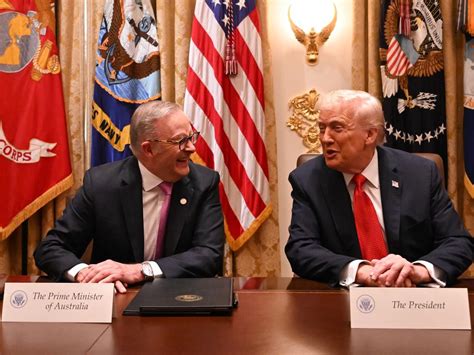
 

(Credit: www.weeklytimesnow )

When it comes to rare earths and critical minerals, supply chain dominance equals military dominance.

As an imperialist superpower, the US is capable of squeezing the suppliers of needed resources through subservient politicians of the supplying country. 

For example, the Ukraine–United States Mineral Resources Agreement is an agreement between the two countries establishing terms for joint investment in Ukraine's natural resources, including critical rare-earth elements, oil, and gas, as well as providing for reconstruction efforts. No-one would argue that it was an agreement between equals, and Zelensky was probably a fool to believe that the agreement would guarantee the US backing that he sought from Trump.

Albanese is likewise a fool if he believes that the one-sided minerals agreement he has signed sitting next to the US President will guarantee the delivery of US nuclear-powered submarines.

But believing he is helping the US sidestep China’s near-control of rare earths and critical minerals fuels his delusions.

So, what is the agreement all about?

The official United States-Australia Framework for Securing of Supply in the Mining and Processing of Critical Minerals and Rare Earths, signed on October 20, contains few details.

The media release from Albanese’s office provides little more. As you might expect from a government determined to bury transparency along with changes to the Freedom of Information Act.

Instead, we need to go to the US Embassy fact sheet on the agreement.

Here we find that “the U.S. and Australian governments intend to invest more than $3 billion together in critical mineral projects in the next six months, with recoverable resources in the projects estimated to be worth $53 billion”.

Two projects are identified in the statement from Albanese’s office: the Alcoa-Sojitz Gallium Recovery Project in Wagerup, Western Australia, and the Arafura Nolans project in the Northern Territory.

Gallium is a soft, silvery element with a low melting point of 30°C. It will melt in a human hand, much as does Albanese in the palm of President Trump. It does not exist as a free element in the Earth's crust; its availability is fundamentally determined by the rate at which bauxite, zinc ores, and coal are extracted. It is produced exclusively as a by-product during the processing of these ores. As of July 2023, China accounted for between 80% and 95% of its production.

Together with germanium it is key to the semiconductor industry and there is a 'chip war' between China and the US. When the US restricted exports of semi-conductors to China, China started restricting exports of both materials. 

What the US Embassy Fact Sheet reveals, but not mentioned in the PM’s media release, is that the “U.S. Department of War will invest in the construction of a 100 metric ton-per-year advanced gallium refinery in Western Australia, further advancing self-reliance in critical minerals processing.”

That is, US self-reliance, not Australia’s. It is direct investment and control of operations by the US Department of War on Australian territory.

The Arafura Nolans project, 135km north of Alice Springs, is focused on the development of rare earth minerals, particularly neodymium and praseodymium (NdPr). These elements are crucial for various technologies, including electric vehicles, wind turbines, magnets and to create strong metals for use in aircraft engines. 

The neodymium magnet made from praseodymium alloy is one of the most powerful and widely used rare earth magnets. The magnets are three times stronger, and one-tenth the size of conventional magnets.

Currently China produces 85 per cent of the world’s NdPr output. 

Arafura’s biggest shareholder with a 10 per cent slice, is Gina Rinehart’s Hancock Prospecting. 

Australian super funds pushed into the mix

The US Embassy fact sheet also tells us that “Australia’s superannuation funds will increase investments in the United States to $1.44 trillion by 2035—an increase of almost $1 trillion from current levels.”  

Who has given assent to the superannuation funds of Australian citizens  to be used to prop up the US war machine?

And who will benefit?  According to the US Embassy, “This unprecedented investment will create tens of thousands of new, high-paying jobs for Americans.”

For Americans.  Not for Australians. Not for rural roads, for schools and hospitals.

And since we throwing money at the Americans, why not tip some more into the quicksand of AUKUS. The Embassy is pleased: “Since February, Australia has contributed $1 billion to the U.S. Government to expand and modernize the U.S. submarine industrial base, with another $1 billion by the end of the year.”

Labor politicians set to benefit

It would be nice to think that there might be a few Labor politicians with a touch of the Whitlams about them (not to mention Rex Connor), and who might raise an objection or two to this sell-out of Australia.

But not likely.  For as online media Crikey has revealed, there are plenty of Labor politicians with their hands in the rare earths and critical minerals industry.

Top of the list is former federal secretary of the Nurses Federation and president of the ACTU Ged Kearney. Her interests are held by her partner Leigh Hubbard, former Firies Union and Vic THC leader. The investments comprise Lynas Rare Earths, Ilika Resources, Northern Minerals, LaTrobe Magnesium, CZR Resources, Lake Resources and Syrah Resources.

Other Labor politicians identified by Crikey are Tom French, Gordon Reid, Libby Coker, Meryl Swanson and Zaneta Mascarenhas.

Albanese heads a Government arguably more firmly and dangerously aligned with US imperialism than any other since sacking of Whitlam.

Albanese boasts that the cooperation on critical minerals and rare earth supply chains with the US is in Australia’s national interest, but it is really pulling the chain and flushing Australian sovereignty down the drain.

The question of “national interest” is, in any case, not something abstracted from the reality of class in Australia. It is very much a class question and the working class gains nothing from the likes of Albanese hiding behind it.

Tuesday, April 16, 2024

Madeleine King: Helping the Pentagon to our nickel

Written by: Nick G. on 17 April 2024


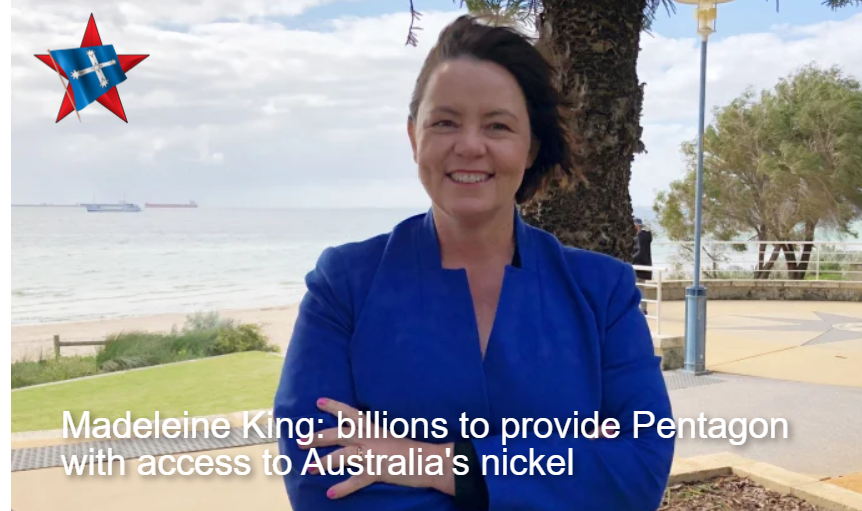
(Above:original photo WA Today Nathan Hondros) 

Resources Minister Madeleine King has approved the use of government funds to ensure the US military has access to Australian nickel.

She met with the US Under Secretary of Defence for Acquisition and Sustainment William La Plant at the Pentagon on March 8 to evaluate available options amid weakening nickel prices that led to several operating Australian nickel facilities either announcing a reduction in operations or going into care and maintenance.

“I think it’s fair to say they are keen to work with us to make sure we’re able to have a nickel industry that survives,” King said.

Nickel is known for its resistance to corrosion, and was a popular metal for coins. The US 5 cent coin was made from nickel and known as a “nickel”.

Nickel is one of eight critical minerals for military purposes.

The US National Mining Association says “Nickel can be used in steel, and this has been used for armor plating in tanks and anti-aircraft firearms. In addition, nickel is used in military batteries for propulsion and storage…A shortage of nickel would hurt goals in both the transportation and defense sectors.”

It is an essential component of high-temperature alloys used in aerospace, and essential to US imperialism’s plans to be the dominant military power in Outer Space.

Nickel (Ni) has long been widely used in batteries, most commonly in nickel cadmium (NiCd) and in the longer-lasting nickel metal hydride (NiMH) rechargeable batteries, which came to the fore in the 1980s.

It is also a major component of the lithium-ion batteries used to run electronic vehicles.

The United States is not a major source of nickel. It has only one operating nickel mine which is planned to close in 2026. Last September, the US Department of Defense provided Talon Metals, a Rio Tinto subsidiary, with $26 million to support prospecting work in Michigan and Minnesota.

Taking a leaf out of the US corporate charity book, King, prior to her trip to the Pentagon, placed nickel on the Critical Minerals List, giving nickel companies opportunity to access up to $4 billion dollars in Commonwealth funding.

Australia is one of the world’s largest producers of nickel. 

There are more than 186 nickel mines in operation globally, of which 127 are in Australia.

The five largest nickel mines here are owned by Swiss multinational Glencore, Canada’s First Quantum Minerals, Australian IGO (which is also invested in a lithium focused joint venture with Chinese partner, Tianqi Lithium Corporation, which comprises a 51% stake in the Greenbushes Lithium Mine and 100% interest in a downstream processing refinery at Kwinana producing battery grade lithium hydroxide), and two by BHP (more than 70% US-owned).

It is anyone’s guess how much of the billions of Australian taxpayers’ dollars King is prepared to splash around will go to foreign-owned miners, but she has made it perfectly clear that this is to support a supply chain directly into the murderous US military.

None of this would happen if we were a genuinely independent and anti-imperialist country.


Monday, December 4, 2023

Imperialist Rivalry Plays Out in Fight for Control of Australia's Rare Earth Minerals Deposits


(Above: Image from Flickr Commons)


Written by: Ned K. on 4 December 2023

While all the hand shaking and well-wishing between Prime Minister Albanese during his recent meetings with US President Biden and Chinese President Xi Jinping, on the economic front, the competition for access and control of raw materials, a feature of imperialist rivalry, continues.

With changes in technology this competition spreads to new raw materials required by capitalist production. One of the new areas is the desperate search for access and control of the world's 17 critical minerals defined as rare earths.

Even though China mines 70% of these critical minerals and processes more than 80% of them, companies based in China are still in the hunt for these critical minerals in other countries. Australia has a growing number of critical minerals mines. 

The dominance of China in the race for access and supply of critical minerals has alarmed the Quad members, Australia, USA, Japan and India who want to find alternative sources of these minerals. 

The 17 critical minerals (rare earths) are essential in the manufacture of such commodities as electric vehicles, wind turbines and for the precision-guided missiles.

Given this relatively new arena of imperialist rivalry, it may come as no surprise to see the Australian Financial Review headlines on Monday 27 November, "China Link To Firm In Rare Earths Fight".

The article was about a rare earth mine in Browns Range in the north east of WA near the NT border. The mine is owned by Northern Minerals and will have the first fully integrated rare earths refinery. The federal government is putting up $1.25 billion loan for the building of the refinery. The refinery will process dyprosium and terbium.

A Singapore registered company, Yuxiao, has signed a co-operation agreement with China Northern and Shanghai-based Shenghe Resources. Yuxiao has shares in Northern Minerals and recently had its attempt to increase its shares in Northern Minerals to 19.9% blocked by the Australian Government Treasurer Jim Chalmers. 

This Browns Range venture is meant to be part of the Quad goal of decreasing dependency on China for critical minerals.

Yuxiao with direct connections with Chinese capital is now trying to install one of its people on the board of Northen Minerals.

Dyprosium and terbium are essential for the permanent magnets used in weapons systems to give them extreme accuracy, according to former Defence Minister Kim Beasley.

Beasley is an adviser to Lockheed Martin which uses these critical minerals in its fighter jets.
The story of imperialist rivalry is being played out on the economic front behind the facade of diplomacy. 

The other untold story about this imperialist rivalry for critical minerals is that these powers put their interests before the interests of First Nations people who may object to the mines or demand ownership and control of the mines as a condition of them going ahead.
..................
Additional reading:  In 2019 we covered the imperialist rivalry over Australian dysprosium deposits, concluding that "Pressure will be exerted in all manner of ways by both US and China on the Morrison Government regarding to where the rare earths from Australia are exported."  See: Rare Earth Minerals and Australian Independence


Saturday, June 17, 2023

Copper mining (the new gold rush) should be publicly owned


 Written by: Ned K. on 17 June 2023

With the transfer to renewable energy and electric vehicles, the race is on by multinational corporations to control the mining and processing of copper. The largest copper mine, Olympic Dam in Australia, is owned by multinational corporation BHP which also owns the Escondida Mine in Chile.

BHP has recently bought Oz Minerals copper mines, Prominent Hill and Carrapateena in South Australia located south west of Olympic Dam and its town Roxby Downs.

Smaller locally owned mining companies are Rex Minerals and Enviro Copper. Rex Minerals have received the go-ahead to mine copper on farming land near Ardrossan in South Australia. Enviro Copper plans to revive the copper mine at Kapunda in South Australia's lower north using an insitu method backed by the CSIRO and University of Adelaide.

In the 1860s to 1880s copper mining at Kapunda and the Copper Triangle of Moonta, Kadina and Wallaroo was a major export from the colony and also gave rise to the proud working class communities of those regions, with a strong Cornish background being a feature of the miners.

While the colonial government got some money from the copper mining of that period most of the profits went overseas to the headquarters of the British empire.

With copper resources in South Australia in high demand again, the SA Labor Government is looking forward to increased royalties from the corporations owning the copper mines and processing of copper.

According to an article in the Adelaide Advertiser on Saturday 17 June, the current price of copper is $US 8,300 per tonne. To give an idea of the amount of money per year that amounts to, BHP will produce at just its Olympic Dam mine alone 200,000 tonnes of copper in 2023. 

Enormous profits will flow to BHP, far in excess of the royalties paid to the SA Government. 

As even the Adelaide Advertiser article points out, "BHP on occasion built up expectations of expanding Olympic Dam with multi-million dollar investments, only to change its mind. It canned a planned $20 billion expansion of Olympic Dam in 2012, embarrassing the then Labor state government which had pinned its economic hopes and dreams on the project going ahead.”

BHP like other multinational corporations makes decisions based on its own global economic interests and cares little for First Nations people on whose lands the copper mines exist, the workers who mine the copper and service the mining facilities, state governments and the people (in this case in SA). 

In this day and age when electric vehicles and renewable energy are essential services in the people's struggle to prevent environmental catastrophe, the mining of rare earth metals and minerals like copper should be in the hands of the people, not multinational corporations who exist to make profit for a rich minority.

Tuesday, April 4, 2023

The Shoe is on the other Foot!


Photo: Farm Online


Written by: Duncan B. on 3 April 2023

Australia’s richest man, Andrew Forrest, has been copping a bit of his own medicine lately. Forrest is locked in yet another court battle to prevent mining on his 230,000 hectare property Minderoo Station.

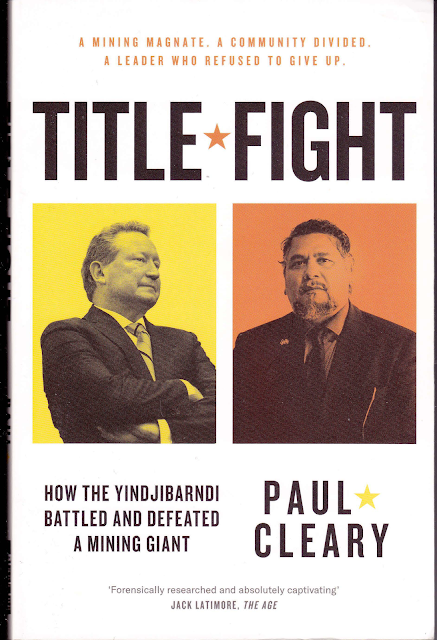
Before anyone starts having any sympathy for him, let us remember that this is the same Andrew Forrest who subjected the Yindjibarndi people of the Pilbara to thirteen years of law suits and dirty tricks to prevent them from gaining title rights and exclusive possession of their land.The sordid story is told in the book Title Fight: How the Yindjibarndi people Battled and Defeated a Mining Giant which we reviewed in September last year.

Forrest has spent the past decade acquiring exploration leases around his childhood home Minderoo Station, due to the environmental impact of mining in the area. It is a pity that he did not show the same concern for protecting the childhood home of the Yindjibarndi people from the actions of his company Fortescue Mining.

He has been fighting a company called Quarry Park since 2013, when that company gained a mining lease over a section of Minderoo Station. (Incidentally, 2013 is the year Fortescue started mining on Yindjibarndi land with Government approval, but without the approval of the Yindjibarndi Aboriginal Corporation, which is the legal custodian of the rights and interests of the Yindjibarndi people of the area.) Recently, Forrest also lost a bid to stop another mining company from building a haul road alongside Minderoo Station.

With Forrest losing legal battles to stop others doing to him what he has done to people, maybe there is some justice in the world.

Thursday, January 12, 2023

Chinese make further inroads on Australian lithium

(Above: The Tianqi Lithium processing plant at Kwinana, WA.   Photo: Terry, Creative Commons, Flickr)

 Written by: Nick G. on 13 January 2023

Chinese lithium miners, amongst the biggest in the world, are increasing their involvement in the extraction of this strategically important mineral.

Lithium is an essential component of electric batteries for the electric vehicle growth industry and China is a major EV manufacturer. But behind the apparently civilian application of lithium for EVs, there is also a strategic military application.

According to the ScienceDirect website, “Practically every weapon system requires a battery to provide electrical power for various functions. The lithium battery is becoming the “power source of choice” for a large number of these military systems. Lithium technology offers unique solutions to the combination of requirements imposed by military systems — low weight, low volume, long storage life, low life cycle cost, and immediate readiness over the full military environmental condition spectrum.” 

The world’s largest lithium producer, China’s Ganfeng Lithium, is mining lithium at Western Australia’s Mt Marion site and owns 50% of the Mt Marion parent company RIM. It also owns a 6.86% stake in a lithium mine in the Pilbara.

Also active in Australia is Tianqi Lithium, the world’s third-largest lithium miner, which has the Greenbushes lithium deposit in WA, the world's largest hard-rock lithium mine, 250km south of Perth.

In 2021, it formed a joint venture with Australia company, IGO Ltd, founded in 2000 as Independent Gold NL. For some years, Independent Gold explored for gold, copper and nickel in Africa and Australia, but divested itself of these activities to concentrate on lithium. 

The IGO and Tianqi joint venture company, 49% interest in Tianqi Lithium Energy Australia Pty Ltd (TLEA), is 49% owned by IGO and 51% by Tianqi. TLEA owns upstream and downstream lithium assets, including a 51% stake in the Greenbushes Operation and a 100% interest in a downstream processing refinery at Kwinana in Western Australia to produce battery grade lithium hydroxide.

On January 11, 2023, TLEA announced that it had acquired Australian lithium miner Essential Minerals for $136 million. Essential Minerals owns 100% of the Pioneer Dome Project in Western Australia.

The major shareholders behind both IGO and Essential Minerals are institutional investors, that is, they are nominee companies for capitalists who value anonymity. Many would be overseas capitalists. Of the top ten investors in Essential Minerals, seven are nominee companies including Citicorp, BNP Paribas, HSBC, CS Fourth and Morgan Stanley.  Of the top ten investors in IGO, eight are nominee companies including HSBC, JP Morgan, Citicorp, National and BNP Paribas. This ensures that the bulk of profits returned to investors are likely to be remitted overseas.

In his excellent book Sub-Imperial Power: Australia in the International Arena, Clinton Fernandes suggests:

Australia could establish a nationally owned company that exercised ownership and control of strategically important minerals. It would then be in a position to increase domestic innovation and support higher value-added sectors, such as high-technology research and development, advanced manufacturing and energy efficiency.

This is a sensible suggestion even from the point of view of the development of capitalism in Australia.

It poses no challenge to capitalism, except that the capitalism that has developed here is largely the capitalism of imperialist monopolies, and for generations, a class of Australian collaborators has served their interests and not those of the Australian people.

Fernandes says of this group of policy and decision-makers whose personnel are found throughout government departments:

… is not concerned with nation-building or increasing economic complexity but with creating a permissive environment for foreign investors to carve up Australia’s critical minerals. Its aim is to make Australia a better quarry. (p. 49)

Meanwhile, we allow the lithium itself to go to the two greatest arms manufacturers, China and the US, and the profits from this to go to private institutional investors rather than back to the Australian people.

Until we throw capitalism out and have a socialist Australia under working class state power, the most obvious and beneficial initiatives will never be brought to fruition.


Saturday, September 24, 2022

Book Review: TITLE FIGHT


Written by: Duncan B. on 22 September 2022

Andrew “Twiggy” Forrest is well-known to Australians as a self-made mining billionaire, philanthropist, environmentalist and friend of Indigenous people, or so his PR machine works overtime to convince us. The Yindjibarndi people of Western Australia’s Pilbara region have seen a different side of Forrest and his company Fortescue Metals Group. (FMG)

Andrew Forrest is Australia’s richest man with a personal fortune estimated at around $30 billion. (He is the second richest person in Australia after Gina Rinehart on $34 billion.)  Forrest has a 36% share in FMG which gives him a handy slice of the company’s $8-10 billion annual profit.  FMG is the fourth-largest iron ore producer in the world with assets of around $50 billion and holdings of over 87,000 sq. km in the Pilbara region. Some of the iron ore mines that have generated Forrest’s billions are on the land of the Yindjibarndi people.

TITLE FIGHT How The Yindjibarndi Battled and Defeated A Mining Giant by Paul Cleary tells the story of how the Yindjibarndi fought and won a thirteen-year battle against Andrew Forrest, FMG and their billions of dollars. 

In 2013, FMG started mining on Yindjibarndi land. FMG had state and federal government approval, but did not have the approval of the Yindjibarndi Aboriginal Corporation (YAC) which is the legal custodian of the rights and interests of the Yindjibarndi people of the area.

From 2008, FMG has tried to get unlimited access to Yindjibarndi land while offering minimal compensation. The Yindjibarndi resisted FMG’s attempts to take over their land and sought to gain title rights allowing them exclusive possession of their land. 

FMG used dirty tactics to oppose the Yindjibarndi. They tried to dispute the Yindjibarndi’s connection to their land and downplay the significance of the findings of archaeological surveys of sites on Yindjibarndi land. FMG sacked consultants who produced a report detailing a large number of sites which would have hindered FMG’s aims. FMG commissioned another report from another, more obedient, firm of consultants who produced a report more to FMG’s liking.

FMG subjected the YAC to multiple legal actions in a number of different courts, spending hundreds of thousands of dollars on high-powered lawyers against the poorly-resourced YAC.

FMG encouraged a breakaway group of Yindjibarndi people who were sympathetic to FMG. They were showered with millions of dollars in payments and backed and were financed in numerous court challenges to the YAC, in the hope of being declared the legal representatives of the Yindjibarndi. Unfortunately, playing off one group of Indigenous people against another is a tactic that is being used to advantage by other mining companies. 

The Yindjibarndi, led by Michael Woodley never gave up the struggle, until in 2017 the Federal Court of Australia granted them the right of exclusive possession over their land. It was not until 2020 that the High Court threw out FMG’s attempt to have the Federal Court’s decision overturned.

In another example of a victory by Indigenous people over a mining company, the Federal Court has just ordered Santos to stop drilling at its $6.3 billion gas project in the ocean about 120 km north of the Tiwi Islands, which lie 80 km north of Darwin. 

The Court found that the National Offshore Petroleum Safety and Environmental Management Authority (NOPSEMA) had approved Santos’ environmental plan without checking whether the company had carried out adequate consultation with all relevant parties, as required by law. The Tiwi Islanders claim that they were not properly consulted before NOPSEMA approved the plan.

Is not uncommon for the various regulatory bodies involved in dealing with the mining industry to look after the interests of mining companies rather than protecting the interests of Indigenous people and the environment.

Australia’s Indigenous people are showing us that victory is possible in struggle against multinational companies, using a variety of tactics, not just relying on the courts. TITLE FIGHT  is a must-read for everybody involved in the struggle for Australian Independence.


Tuesday, March 22, 2022

Chinese and US capitalists struggle for control of world’s lithium deposits


 Written by: Nick G. on 23 March 2022

The world’s top five lithium companies are split between China and the US, and their rivalry is intensifying for control of the resource which is in ihncreasing demand as an essential component for batteries in the expanding electrical vehicle market.

But behind the apparently civilian application of lithium for EVs, there is also a strategic military application which underwrites the intensity of their inter-imperialist superpower rivalry.

According to the ScienceDirect website, “Practically every weapon system requires a battery to provide electrical power for various functions. The lithium battery is becoming the “power source of choice” for a large number of these military systems. Lithium technology offers unique solutions to the combination of requirements imposed by military systems — low weight, low volume, long storage life, low life cycle cost, and immediate readiness over the full military environmental condition spectrum.”

In Australia, there are 57 companies involved in lithium exploration and mining listed on the Australian Stock Exchange, testimony to the feverish scramble to gain a foothold in such a lucrative market.

Already mining lithium at Western Australia’s Mt Marion site (above) is the world’s largest lithium producer, China’s Ganfeng Lithium. It owns 50% of the Mt Marion parent company RIM. It also owns a 6.86% stake in a lithium mine in the Pilbara.

Established in 2000 by Li Liangbin, formerly a researcher at a lithium plant in Jiangxi Province, where it is now based, the company entered the spotlight in 2009, when it became the first in China to set up facilities to extract lithium carbonate usable in batteries from salt lake brine. After raising capital on the Shenzhen stock exchange in 2010, it began investing in lithium projects abroad, and currently has production facilities in Australia, Argentina, Mexico and Ireland.

Ganfeng accounted for 24% of global output of lithium hydroxide last year for a total annual profit of RMB5,736,833,100 (around US$903m).  That represented a massive year-on-year increase of 408.91%.

The company aims to boost last year’s lithium-compound production capacity of 90,000 tons to at least 200,000 tons by 2025, enough for more than 4 million electric-vehicle batteries. Its goal is to eventually lift capacity to 600,000 tons per year.

Also active in Australia is Tianqi Lithium which has the Greenbushes lithium deposit in WA, the world's largest hard-rock lithium mine, 250km south of Perth.

Tianqi Lithium says its global lithium concentrate output jumped 39% and sales were up 56% respectively on a year-on-year basis from January to February this year.

Apart from the folly of providing lithium to the world’s two largest manufacturers of military equipment, why is an Australian government incapable of nationalising resource extraction and using the profits for the benefit of the Australian people?

Of course, it’s a rhetorical question, and we all know the answer.

Until we throw capitalism out and have a socialist Australia under working class state power, the most obvious and beneficial initiatives will never be brought to fruition.


Wednesday, June 2, 2021

Duterte - a Filipino sell-out


Written by: Nick G. on 2 June 2021

The reactionary Duterte regime, which has murdered thousands of Filipinos in the names of drug eradication and anti-Communism, is pushing ahead with the further opening up of the country’s economy and resources to foreign finance capital – mainly Chinese, but with some Australian as well.

The previous Aquino government had placed a temporary moratorium on new mineral agreements, pending a new tax law. 

Duterte signed Executive Order 130 on April 14 lifting the nine-year moratorium on mineral agreements in an attempt to spur economic growth halted by the Covid-19 pandemic.

However, the independent IBON Foundation questions the possibility of economic gain from mining, saying that “mining has delivered paltry gains. From 2001 to 2020 (available data is for January to September only), total exports of minerals and mineral products grew almost seven-fold from US$537 million to US$3.7 billion, but this contributed only 1.7% in 2001 and 8.3% in 2020 to total Philippine exports.”

Who is set to benefit?

According to IBON, “available data show that China is the top nationality with ownership in mining tenements in the Philippines and also accounts for a huge number of mining permits and pending applications.”

But there are some Australian companies sending capital to the Philippines. There are two gold processing plants operated by Australian firms, CGA Limited and Medusa Mining. The two companies account for half of the gold extracted in the Philippines. The largest shareholder in CGA is National Nominees with a 20.79% stake, followed by Peter Switzer’s Switzer Financial Group with 13.04%.  Medusa’s largest shareholders are also nominee companies headed by HSBC Custody Nominees with 31.83%. As the top five shareholders, these nominee companies (whose individual investors remain hidden from view) account for 70.36% of shares held in the company.

In another panicked response to the Philippine’s ailing economy, Duterte instructed the nation’s Department of Environment and Natural Resources last December to renew a long-delayed agreement with Australian-based miner OceanaGold governing the company’s Didipio gold-copper underground mine on the island of Luzon.

OceanaGold has been in dispute with local Indigenous people, the Bugkalot, and anti-mining environmentalists. Their 25-year mining agreement expired in June 2019. Many of its workforce had been sacked as a result. 

OceanaGold began operations in 1990 in New Zealand, at a small gold mine at Macraes. It moved into the Philippines in 2006 when it merged with Didipio’s owner, Climax Mining Co., based in New South Wales. According to its 2020 AGM, its two largest shareholders now are the BlackRock Investment Management (UK) Ltd., a subsidiary of the controversial US BlackRock company, the largest investor in US weapons manufacturing and a contributor to global warming. It has an 18.56% stake in OceanaGold.  The second largest shareholder is the US Van Eck Associates Corp with 9.02%. An Australian-based company, it is now largely a front for US capital.

Not only is OceanaGold being assisted by direct Presidential intervention to renew its mining agreement, but the Philippine government has also apparently certified that the OceanaGold’s agreement area is outside the ancestral domain of the Indigenous people.

While OceanaGold may have the backing of Duterte’s government, it has no social licence (community agreement) for its mine, and any attempt to restart operations will be met with spirited opposition.

Australian communists have long supported our Philippines comrades in their revolutionary struggle to free their country through people’s war.

As a country also dominated by US imperialism, we Australian communists will oppose Australia companies looking to exploit the people and the resources of other countries, at the same time as we fight for our own anti-imperialist independence and socialism.  

Wednesday, June 19, 2019

Rare Earth Minerals and Australian Independence

Ned K.                             19 June 2019
 
After US imperialism's Trump administration banned China's Huawei from access to the US telecommunications system, Trump warned the then British Prime Minister May that if the British government allowed Huawei into its 5G network, the US would restrict its “intelligence sharing" with Britain. 


In its intensifying trade war with China, the US is becoming more desperate to the extent that it now openly makes threats to one of its supposed friends.


Some sections of the US ruling class are worried though that Trump's huff and puff against Huawei and the rising Chinese social imperialist power may see US imperialism worse off.


Alan Dupont, the Contributing National Editor for the US Murdoch empire writes, "An equally disturbing development is the possibility that China may restrict or ban exports to the US of rare earths - minerals with exotic names such as dysprosium, terbium and neodymium that are critical components of many hi-tech products, from missiles and radars to ..smart phones". Electric vehicles are also dependent upon rare earth components.


The military applications of rare earths are significant. They include:


• Fin actuators in missile guidance and control systems, controlling the direction of the missile;
• Disk drive motors installed in aircraft, tanks, missile systems, and command and control centres;
• Lasers for enemy mine detection, interrogators, underwater mines, and countermeasures;
• Satellite communications, radar, and sonar on submarines and surface ships; and
• Optical equipment and speakers.


A report on the Defence Connect website states:


Recognising the importance of these factors, combined with China's complete dominance of the global supply chain of REE and the For reference, a US Navy Virginia Class fast attack submarine requires approximately 4.2 tonnes of various REEs (rare earth elements), while the Lockheed Martin F-35 Joint Strike Fighter requires approximately 417 kilograms of various REEs to support information transfer, energy storage, computational devices and in some cases stealth coatings.


Additionally, REEs form core components, including highly-powered magnets essential for the guidance systems of smart bombs, cruise missiles and the Aegis integrated air and missile defence combat system through to providing hardening elements for ceramic components for contemporary body armour and armour systems on ground vehicles.


The US imports most of its rare earths from China which controls 80% of the rare earths global market and produces over 95% of the global supply. In 1997, Deng Xiaoping boasted that "China would be for rare earth metals what the Middle East was to oil".


If the struggle between the two imperialist powers reaches the point of the US having no rare earth imports, the likelihood of military confrontation between the declining US imperial power and the rising social imperial power of China will intensify.


So, what has this got to do with Australia? Apart from the obvious military domination of Australia by the USA which makes Australia a military target in a war between the two above mentioned imperial powers, Australia is a significant supplier of rare earths to telecommunications giant corporations and military manufacturers.


Rare earth minerals are extracted and exported to the US and elsewhere by an Australian company called Lynas from Mount Weld in WA. Others currently mining and exporting, or on the way to doing so through feasibility studies, include the Nolans Project, owned by Arafura in the NT; the Dubbo Zirconia Project, owned by Alkane Resources, in NSW; Northern Mnerals’ Browns Range Project in the Tanami Desert; and Hastings Technology Metals Ltd projects Yangibana in the Gascoyne Region WA and Brockman near Halls Gap WA. The latter is heavily invested in by Malaysian capital.


Pressure will be exerted in all manner of ways by both US and China on the Morrison Government regarding to where the rare earths from Australia are exported.


The fact that Australia has significant deposits of these rare earth minerals is becoming more important every day. They should be used in the interests of the Australian people as a starting point to develop an Australian hi-tech products industry as part of the people's struggle and desire for Australia to develop an economic base independent of imperialist powers.


Winning an Australian publicly owned hi-tech products industry will be a small but important step in the struggle for independence from imperialist wars.