Showing posts with label Australian Labor Party. Show all posts

Wednesday, October 22, 2025

Critical minerals deal: pulling the chain on Australian sovereignty.

 Written by: Nick G. on 23 October 2025
 

(Credit: www.weeklytimesnow )

When it comes to rare earths and critical minerals, supply chain dominance equals military dominance.

As an imperialist superpower, the US is capable of squeezing the suppliers of needed resources through subservient politicians of the supplying country. 

For example, the Ukraine–United States Mineral Resources Agreement is an agreement between the two countries establishing terms for joint investment in Ukraine's natural resources, including critical rare-earth elements, oil, and gas, as well as providing for reconstruction efforts. No-one would argue that it was an agreement between equals, and Zelensky was probably a fool to believe that the agreement would guarantee the US backing that he sought from Trump.

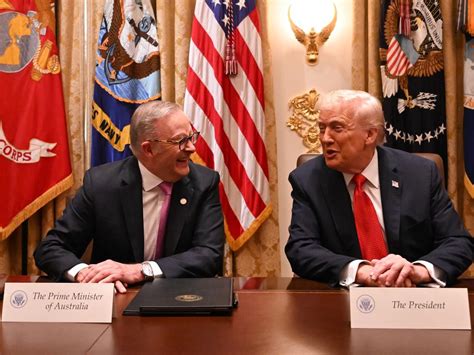
Albanese is likewise a fool if he believes that the one-sided minerals agreement he has signed sitting next to the US President will guarantee the delivery of US nuclear-powered submarines.

But believing he is helping the US sidestep China’s near-control of rare earths and critical minerals fuels his delusions.

So, what is the agreement all about?

The official United States-Australia Framework for Securing of Supply in the Mining and Processing of Critical Minerals and Rare Earths, signed on October 20, contains few details.

The media release from Albanese’s office provides little more. As you might expect from a government determined to bury transparency along with changes to the Freedom of Information Act.

Instead, we need to go to the US Embassy fact sheet on the agreement.

Here we find that “the U.S. and Australian governments intend to invest more than $3 billion together in critical mineral projects in the next six months, with recoverable resources in the projects estimated to be worth $53 billion”.

Two projects are identified in the statement from Albanese’s office: the Alcoa-Sojitz Gallium Recovery Project in Wagerup, Western Australia, and the Arafura Nolans project in the Northern Territory.

Gallium is a soft, silvery element with a low melting point of 30°C. It will melt in a human hand, much as does Albanese in the palm of President Trump. It does not exist as a free element in the Earth's crust; its availability is fundamentally determined by the rate at which bauxite, zinc ores, and coal are extracted. It is produced exclusively as a by-product during the processing of these ores. As of July 2023, China accounted for between 80% and 95% of its production.

Together with germanium it is key to the semiconductor industry and there is a 'chip war' between China and the US. When the US restricted exports of semi-conductors to China, China started restricting exports of both materials. 

What the US Embassy Fact Sheet reveals, but not mentioned in the PM’s media release, is that the “U.S. Department of War will invest in the construction of a 100 metric ton-per-year advanced gallium refinery in Western Australia, further advancing self-reliance in critical minerals processing.”

That is, US self-reliance, not Australia’s. It is direct investment and control of operations by the US Department of War on Australian territory.

The Arafura Nolans project, 135km north of Alice Springs, is focused on the development of rare earth minerals, particularly neodymium and praseodymium (NdPr). These elements are crucial for various technologies, including electric vehicles, wind turbines, magnets and to create strong metals for use in aircraft engines. 

The neodymium magnet made from praseodymium alloy is one of the most powerful and widely used rare earth magnets. The magnets are three times stronger, and one-tenth the size of conventional magnets.

Currently China produces 85 per cent of the world’s NdPr output. 

Arafura’s biggest shareholder with a 10 per cent slice, is Gina Rinehart’s Hancock Prospecting. 

Australian super funds pushed into the mix

The US Embassy fact sheet also tells us that “Australia’s superannuation funds will increase investments in the United States to $1.44 trillion by 2035—an increase of almost $1 trillion from current levels.”  

Who has given assent to the superannuation funds of Australian citizens  to be used to prop up the US war machine?

And who will benefit?  According to the US Embassy, “This unprecedented investment will create tens of thousands of new, high-paying jobs for Americans.”

For Americans.  Not for Australians. Not for rural roads, for schools and hospitals.

And since we throwing money at the Americans, why not tip some more into the quicksand of AUKUS. The Embassy is pleased: “Since February, Australia has contributed $1 billion to the U.S. Government to expand and modernize the U.S. submarine industrial base, with another $1 billion by the end of the year.”

Labor politicians set to benefit

It would be nice to think that there might be a few Labor politicians with a touch of the Whitlams about them (not to mention Rex Connor), and who might raise an objection or two to this sell-out of Australia.

But not likely.  For as online media Crikey has revealed, there are plenty of Labor politicians with their hands in the rare earths and critical minerals industry.

Top of the list is former federal secretary of the Nurses Federation and president of the ACTU Ged Kearney. Her interests are held by her partner Leigh Hubbard, former Firies Union and Vic THC leader. The investments comprise Lynas Rare Earths, Ilika Resources, Northern Minerals, LaTrobe Magnesium, CZR Resources, Lake Resources and Syrah Resources.

Other Labor politicians identified by Crikey are Tom French, Gordon Reid, Libby Coker, Meryl Swanson and Zaneta Mascarenhas.

Albanese heads a Government arguably more firmly and dangerously aligned with US imperialism than any other since sacking of Whitlam.

Albanese boasts that the cooperation on critical minerals and rare earth supply chains with the US is in Australia’s national interest, but it is really pulling the chain and flushing Australian sovereignty down the drain.

The question of “national interest” is, in any case, not something abstracted from the reality of class in Australia. It is very much a class question and the working class gains nothing from the likes of Albanese hiding behind it.

Thursday, October 3, 2024

SA Ambo’s election shows workers want their unions to fight regardless of who holds office

Written by: Nick G. on 4 October 2024


The election of a new leader for the Ambulance Employees Association in South Australian reflects the desire of union members for their union to pursue their objectives free of any alignment with the Labor Party.

Like ambulance services around the country, SA ambos and the community are angry at continuing problems with ramping where unwell or injured persons are delivered to hospitals but are unable to be admitted, so are kept for hours in ambulances parked at the doors of the hospitals.

The problems in SA became so acute a couple of years ago under a State Liberal government that Labor ran a single issue campaign, promising to fix ramping and was duly elected.

Despite opening a half a dozen new 24/7 ambulance stations across the metropolitan area and in several country locations, and despite an extra 27 ambulances added to the fleet over last two years and extra beds created for hospitals, ramping not only remains a problem, but has worsened.

In the lead-up to the last election, the ambulance union ran a highly visible campaign. Ambulances carried chalked messages damning the Liberals and calling for public support, and stories of critical incidents, including of people dying while being ramped, filled the media.

But after the election, the heat was lifted from the incoming Labor government, the AEA disappeared from the media, and ambulances went unchalked.

But the crisis kept on delivering bad news. Last December, a 54-year-old man died after waiting more than 10 hours for an ambulance. In July, an 83-year-old woman spent 12 hours waiting to be admitted to the Royal Adelaide Hospital overnight. The same month saw the worst ramping on record, with more than 5500 hours of ramping for the month - equivalent to 15 ambulance crews ramped, unavailable for the community, every single day.

The crisis continued into August when at one point up to 54 ambulances were ramped across Adelaide Hospitals, 17 of which were ramped at Flinders Medical Centre alone, some for up to 7 hours.

Meanwhile 23 emergency cases remained uncovered in the community. 

Paramedic Paul Ekkelboom contested the AEA election for the General Secretary position on a campaign headlined by the promise of re-establishing the AEA’s political independence, and including promises to empower AEA representatives, have a stronger stance and advocacy on ramping, and a preparedness to take legal and industrial action. He won the election with 801 to 342 votes.

The election result clearly shows that workers want their union to have the capacity to fight for their interests regardless of which party holds office. 

We say “holds office” rather than “gets into power” because real power resides in the boardrooms of the giant local and overseas monopolies that control the economy, and hence the political and legal structures that sustain their rule.

The demand that unions adhere to an independent working class agenda, not “go soft” on Labor when it holds office, and even disaffiliate from it to secure their independence, is bound to grow.


Wednesday, August 28, 2024

Study of Marxism-Leninism is the key to understanding the role of the ALP and unions

Written by: Nick G on 29 August 2024


The magnificent response by construction workers to the attempted destruction of their union has included disgust at the perceived betrayal of workers by the Labor Party. That disgust has extended to all but a few in the leadership of the union movement for failing to show solidarity with, and to support, the CFMEU.

We understand the labelling of Albanese and McManus as class traitors.

People who have to work for a living and who join the ALP believing it will advance their interests are entitled to feel betrayed. Union members who are organised by their union to spend hours door-knocking for Labor in the lead-up to 
an election, or who loyally stand at polling booths handing out Labor “how-to-vote” cards are entitled to feel betrayed.

It all fits a pattern.

For such people there is hope for parliamentary means of achieving “fairness” through a Labor (or Greens) party. The sentiment behind this hope is quite resilient. 

Despite all the betrayals by Labor governments, some people seem unable to break out of a cycle of hoping for a better deal than they are going to get from the Liberals, and then losing heart every time Labor wins office and backtracks on its promises to the point where it seems indistinguishable from the more open party of big business. We respect this sentiment, but do not share it. We need to break out of its dead-end cycle. 

As a Marxist-Leninist Party, we believe that study of revolutionary theory is the key to really understanding the role of the Labor Party and of unions.

We could (and do) refer interested readers to the writers of the classic texts of this theory.

But at the present time of Labor’s attacks on the CFMEU, and of the failure of most unions to repel those attacks, we strongly recommend two texts that are immersed in the reality of Australian conditions. They are embedded in the reality of the need to understand the Labor Party and of the unions associated with it.

In 1965, one year after the founding of our Party following a split in the original Communist Party of Australia (CPA), our founding Chairperson Ted Hill wrote Looking Backward: Looking Forward (Revolutionary Socialist Politics Against Trade Union and Parliamentary Politics).

Hill disputed the view then dominant in the CPA that the Labor Party was a “two-class” party, that it was simultaneously a party of the working class and a party of the capitalist class.

He examined the circumstances under which unions had created the Labor Party.

It was born from the defeat of the prolonged strikes of the early 1890s when workers looked for other ways to take on the capitalists.

“They wanted to use the bourgeois parliament to enact measures that would satisfy the workers’ demands to improve their own lot.”

There was insufficient experience to understand that the state was an apparatus for the suppression of the working class by the capitalist class, and insufficient experience to understand that parliament was a part of that state apparatus and not a neutral institution independent of the capitalist state.
“Thus, they accepted capitalism in two ways: (1) their demands accepted the social system of capitalism, (2) their methods of achieving them accepted the social institution of capitalism – parliament.”

These acceptances meant that although born from and based in communities of working class people, the character of the Labor Party was not “two-class” but “one class” - that it would be a party of capitalism and would work to make capitalism more acceptable to the working class on one hand, and the working class more acceptable to capitalism on the other hand.

That latter function of the Labor Party is the reason for its attempted destruction of the CFMEU.

The reluctance of unions affiliated to the Labor Party to embarrass it in any way, to endanger its chances of winning office, or, in in office, of retaining it, explain their collusion with a party of capitalism that attacks the working class.

But it is more than that. Unions are required for their legal existence to be tied in a thousand and one ways to industrial rules set up by the capitalist class. And they become part of capitalism through their accumulated assets, including investments and property, all of which they hold on the condition that they do not break the rules, that they accept the decisions of bodies created by the capitalist class to play the role of “independent umpires”. 

All of this is the subject of Looking Backward: Looking Forward.

In October 1974, while the Whitlam government was still in office, and had the task of taking the country out of the stultifying era of conservative party rule, Hill wrote The Labor Party? Dr Evatt – The Petrov Affair – The Whitlam Government. 

It drew on Hill’s collaboration with Evatt as a lawyer representing the Communist Party at the Petrov Royal Commission, and the first years of Whitlam’s government, to make a closer examination of the nature of the ALP as a party of capitalism.

In our introduction to a 2023 pdf of the book, we wrote: “Since this book was written, additional experience has arisen of Labor in office, including its attacks on the workers through the Accord, its pioneering of neo-liberalism under Hawke and Keating, its keeping the unions under control through Fair Work Australia, its further opening of Australian territory to the US military under Gillard, and the continuation of that treachery via AUKUS under Albanese, Wong and Marles. All these later phenomena can be best understood by learning from the example set by Hill in his analysis of the Labor Party.”

For interested readers, Looking Backward: Looking Forward (which we have just republished) is available as a pdf and an e-book here: Books & Pamphlets — E F HILL .

Hill’s The Labor Party? is available as a pdf here:  EFHs+The+Labor+Party+FINAL2.pdf (cpaml.org)


Saturday, August 19, 2023

E.F. Hill’s “The Labor Party?” republished.

Written by: Central Committee, CPA (M-L)19 on 19 August 2023

Founding Chairperson of the Communist Party of Australia (Marxist-Leninist), E. F. Hill, raised the understanding of Communists about the nature and role of the Labor Party to a distinct new height.

At the request of younger comrades for access to his The Labor Party?, the whole book has been retyped and placed on our website as a pdf.

It is available here.

By way of introduction to the book, we reproduce here a brief foreword to the 2023 edition: 

FOREWORD TO THE 2023 EDITION

Like a wine of exceptional quality, this book, now nearly fifty years old, has aged very well. Its analysis of the Labor Party shows its fundamental character as a party of capitalism. It explores its contradictions as a party alternating between service to imperialism, on one hand, and to Australian capitalists sometimes seeking greater capitalist independence from imperialism, on the other. It explains how internal Labor Party division is fuelled by its fundamental service to capitalism and its need to maintain the deception that it serves its electoral base in the working class and other progressive people.

The author, E F (Ted) Hill was the founding Chairperson of the Communist Party of Australia (Marxist-Leninist), established in 1964.  Ted was a prominent and outstanding Communist leader, activist and lawyer who dedicated his life and work to working people in Australia.  His other works can be found on the E F HILL website.


Since this book was written, additional experience has arisen of Labor in office, including its attacks on the workers through the Accord, its pioneering of neo-liberalism under Hawke and Keating, its keeping the unions under control through Fair Work Australia, its further opening of Australian territory to the US military under Gillard, and the continuation of that treachery via AUKUS under Albanese, Wong and Marles. All these later phenomena can be best understood by learning from the example set by Hill in his analysis of the Labor Party.

A young comrade offered to retype this book, long out of print, so that it can be made available to a new generation of Australian Communists. We thank him for his enthusiasm and hard work.   


Tuesday, April 4, 2023

Labor’s concern for human rights limited by service to capitalism and US imperialism


 Written by: Nick G. on 2 April 2023

In the lead-up to the Whitlam government, and during its term of office, the Australian Labor Party promoted itself as having a stronger independent national outlook, of being a better provider of public services, and of being committed to humanitarianism and social justice.

It is difficult to find any of this in the contemporary Labor Party and in the Albanese government.

It is true that it took some early measures that were more humanitarian than those of its predecessor, the Morrison Liberal government. The almost immediate decision, in May 2022, by the incoming Labor government to grant bridging visas to the Sri Lankan Murugappan asylum seeking family, thus enabling them to return to the embrace of the Biloela, Queensland community, was widely acclaimed. 

 This was followed two months later by the waiving of charges against lawyer Bernard Collaery whom the previous government had charged with breaches of national security for having revealed details of the Australian government’s bugging of the poverty-stricken East Timorese during negotiations over control of the resource-rich Timor Sea.

Early this year, the government announced it would abolish Temporary Protection Visas that had kept 19,000 refugees in limbo, unable to access social security or to reunite with family members. Although this continued to exclude asylum seekers who tried to arrive by boat under the turnback policy, and the associated offshore detention of such persons, it was also welcomed as a humanitarian decision.

Beyond these three measures, there are limits to Labor’s humanitarian actions.

Most recently, a South Australian District Court judge found that Australian Tax Office whistleblower Pater Boyle was not immune to prosecution under the Public Interest Disclosure (PID) Act. Boyle had made public cases where the ATO’s aggressive debt collection tactics had resulted in injustices for the people concerned. Commonwealth prosecutors successfully applied for the judge’s decision to remain confidential. 

Despite the fact that Attorney-General Mark Dreyfus could withdraw this prosecution as he did in Collaery’s case, the matter will go to a trial in which Boyle faces life imprisonment.

Then there is the impending actin against David McBride, the Australian Army lawyer who was blocked within the Army from raising concerns about possible Australian war crimes that he had raised following two tours of duty in Afghanistan. He subsequently took his concerns to the ABC whose program based on his concerns led to the Brereton Commission of Enquiry and now to the laying of war crimes charges against the soldier who shot and killed an unarmed Afghan in a wheatfield. 

McBride deserves to be Australian of the Year, not a criminal and sent to gaol. Dreyfus could also intervene in this case, but so far chooses not to.

And then there is Assange, still languishing in an English maximum security cell and facing extradition to the vindictive punishers in the US. Also facing extradition is former US marine pilot, now a naturalised Australian citizen, Daniel Duggan, arrested on US orders last October and held ever since in isolation and n maximum security as he awaits extradition on US charges of having trained Chinese aviators. 

Despite pleas from his lawyers for his immediate release and an end to the extradition, the Labor party has been silent.

Or rather, it has been selective in its most recent expressions of concerns for human rights.  Foreign Minister Penny Wong illustrated this perfectly week when she said: “It is one year since Australian citizen Cheng Lei faced a closed trial in Beijing on national security charges. She is yet to learn the outcome. Our thoughts are with Ms Cheng and her loved ones. Australia will continue to advocate for her to be reunited with her children.”

Her concern for Cheng Lei may be sincere, and the conditions of Cheng Lei's imprisonment and trial may deserve condemnation, but Wong is staggering in her hypocrisy. 

Of course, it helps that she is criticising the Chinese, and not her masters in the US.

David McBride tweeted in response, “It is five years since I was charged with telling the truth and standing up for the law in Australia, which was my job. I too will face a secret trial, shamelessly influenced by the US (who have no place in our Courts). It’s the only life my 2 daughters can remember.”

Boyle has been subjected to a secret court judgement. Duggan is yet to learn the outcome of his extradition proceedings. Assange rots in gaol. He has been under threat of extradition to the US since 2010, and held in the UK’s high security Belmarsh Prison since April 2019, that is three years longer than Cheng Lei’s post-trial detention.

And there are still asylum seekers held in indefinite off-shore detention, some of who have been there for over ten years.

The Prime Minister and the Foreign Minister both belong to what is regarded as the “left” of the Labor Party.

Of this “left”, foundation Chairperson of our Party, Ted Hill, said back in 1975, “The "left" espouses broad humanitarian policies and no doubt some of this "left" genuinely stand for these. This still does not alter the essence of the question, namely that fundamentally the Labor Party serves capitalism and in Australia's case, the multi-nationals. Moreover these "left" people do not have much difficulty in passing to the right” (Australia’s Economic Crisis – The Way Out p. 24).

We demand that whatever “humanitarianism” survives in Labor ranks be immediately extended to Julian Assange, David McBride, Peter Boyle, Daniel Duggan and the remaining incarcerated asylum seekers.


Monday, August 9, 2021

Labor: how can anyone call it an “Opposition”?


Written by: Nick G. on 10 August 2021 

The Labor Party’s latest act of deferring to the needs of the capitalist class has taken the unedifying form of support for the Government’s refusal to be transparent about which big corporations are refusing to pay back JobKeeper supplements, introduced at the start of the pandemic in 2020.

Labor and the independents had said they would require the tax commissioner to publish the names of entities which received JobKeeper, the number of individuals for whom the entity received the JobKeeper payment and the total amount that they received, with the option of also publishing information about how much the entity has paid back. These are companies that predicted a downfall in sales because of the Pandemic, but which subsequently turned in big profits, meaning that they did not need to retain the JobKeeper payment. Only five companies have so far paid back the funds.

It is well-known that big exploiters like Gerry Harvey (of Harvey Normans) simply thumbed their noses at the suggestion that they pay back the money. The car dealership Eagers Automotives paid out more than 100 per cent of the $67 million they received in JobKeeper for July-December in shareholder dividends. Others gave CEOs, already on obscene levels of remuneration, huge personal bonuses. And this was public money meant to keep workers in jobs.

Labor announced yesterday (August 9) that it would withdraw support for the transparency measures, leaving independents and the Greens like shags on a rock.

It followed Labor’s capitulation over the proposed low and intermediate-level nuclear waste dump proposal. Instead of holding the line with the independents and the Greens and blocking the dump, Labor worked with the government on a compromise that would allow the dump at Kimba in SA to proceed in return for opponents having the right of appeal through the courts.  The Barngarla First Peoples, having been subjected to a racist exclusion from a community vote on the dump, are now faced with having to plead for funds.  Anticipating the possibility of being forced into a judicial review of the dump, they established a Go Fund Me appeal several months ago, hoping to raise $100,000. To date, they have raised just $5,232 (including a donation from our Party).  The have been thrown to the wolves by Labor.

Crawling at the heels of the Government like a dog with a broken back, Labor is so determined to achieve office by making itself indistinguishable from the Liberals that they finally junked their negative gearing policy (which promised at least a partial redistribution of wealth) whilst attaching themselves firmly by the leash to the Government’s scheduled tax cuts for high-income earners.

Here's a tip for the journos in the mainstream media: stop calling Labor “the Opposition”. An Opposition opposes. It is possible to do that even within the common acceptance of Parliament as the social institution of capitalism, and within the agreed framework of capitalism as the accepted economic system. 

The Greens can oppose the Government on most things.  So can Jacqui Lambie, Rex Patrick and others in the Senate, and some of the independents in the Lower House.

As an exasperated Senator Lambie said to Labor Senators on Monday, “You are supposed to be the Opposition. God, you've been doing it for eight years! No wonder you're still there! Stand up to them, because I can tell you that they won't be giving in by Thursday afternoon. Goodness me! Here you are, both Liberal and Labor, with all these staff, yet it takes the Independents and the micros to come up through the lot of you and call you out.”

And the determined and hard-working Senator Rex Patrick also addressed the Labor seat-warmers: “I think I said in the chamber last year that I was going to help you with your marketing. I'm going to buy you a dog. I am going to buy you a dog and it's going to be a dog that rolls over every time a Liberal Party member walks into the room, because that's exactly what you're doing here.”

We have said, and we say it again, the Labor Party is a party of capitalism.  It has no vision for an independent and socialist Australia.  It does not provide any leadership in the direction of these goals of the Australian people. The "Opposition" label pinned on the ALP creates illusions of democracy and choice, as well as illusions that Labor represents the working class and socially progressive policies.

That it can’t even badge itself as a fighting Opposition says heaps about its sole goal of obtaining the fruits of holding office for the imperialists who really run Australia.

Its unwillingness to even play the role assigned to it as an Opposition, will give further credibility to the need for an independent working class agenda led by a real party of change, a party that will always stand by the right of the people to struggle and win.

Monday, December 23, 2019

S.A. Ex-Premier Jay Weatherill becomes a promoter of Andrew Forrest's self-help capitalism

Written by: Max O. on 23 December 2019 

For what shall it profit a man, if he shall gain the whole world, and lose his own soul? Or what shall a man give in exchange for his soul?
Saint Mark

Just recently the past Labor Premier of South Australia, Jay Weatherill made a Faustian pact with the mining and farming mogul Andrew Forrest to become the new CEO (one can imagine with a huge salary) of the early education arm of his philanthropic Minderoo Foundation.

Like Faust, a 16th-century German legendary character who agreed to sell his soul to the devil for knowledge, earthly pleasures, youth, and magical powers, Weatherill has attached his fortunes to the false gods that Forrest advocates.
 
He is the latest in a long list of former state and federal Labor politicians who, having worked for the capitalist class in parliament, have gone into direct service to capitalism in private post-political life. An obvious case in point is former Queensland Premier Ann Bligh who was appointed CEO of the Australian Banking Association in 2017, five years after she “left politics”.
 
Forrest is a moral crusader of many inconsistencies. He professes care and concern for Aboriginal people but has no hesitation in crushing them when they oppose his mining operations on their land. He poses as a free-marketeer who has also campaigned for a mining industry cartel to benefit himself. He regularly parades himself as a generous philanthropist but chains his charities to his business interests.
 
Weatherill, who hails from the Labor Left and conveys a humanist persona, aligned himself with Forrest's ideology back in 2014 when he came out in support of his proposed "Indigenous Employment and Training Review", which recommended that Centrelink clients who are placed on the cashless welfare card have 100 percent of their funds 'managed'. This was an unparalleled assault on the rights of people on income support to manage their finances.
 
What is the ideology of Andrew Forrest and his Minderoo Foundation that Jay Weatherill has now committed himself to? Forrest eschews Gina Rhinehart's blatant libertarianism and guided by his Christian-'humanitarian' faith embraces a high visibility capitalist philanthropy to solve human crises.
 
His Minderoo Foundation promotes the notion of a charity working in unison with capitalist development. Commitment to the private sector and markets is the preferred approach to current troubles facing society.
 
By reducing the public and expanding the private sector to invest huge amounts of money to solve complex societal predicaments and implementing biased technical fixes, Forrest and Weatherill can claim capitalism is the solution, not the cause of the society's problems.
 
What capitalist philanthropy does is camouflage the conflict between the poor and the rich, claiming that the poor do not have a better friend than the rich. In effect the poor should be grateful and beholden to the rich for their help.
 
Forrest runs an impressive list of Minderoo Charities:
 
•             Building Community: Funding arts, culture, community projects in Western Australia.
•             Eliminate Cancer: Provide funding to reduce the incidence of cancer and speed up the development of breakthrough therapies.
•             Flourishing Oceans: Fund research on eliminating overfishing and marine pollution.
•             Frontier Technology: Fund a range of projects that research the governance of artificial intelligence and data-flooded consumers.
•             Generation One: Training and employment programs for Indigenous Australians and linking service provider payments to long-term outcomes i.e. cashless welfare card.
•             Research: Fund and identify opportunities, new ideas, and new technology.
•             Thrive By Five: Funding research into early childhood development.
•             Walk Free: Campaigns against the estimated 40 million people living in modern slavery. Has undertaken to create the Global Slavery Index.
 
Jay Weatherill is just the man to take on the job of CEO of Thrive By Five for Minderoo. His track record of dismantling the public sector and embracing the private sector to shape and control government social policy proved to be a wise career move for life after state politics.
 
He has a litany of service to capitalism's wish list:
 
•             Closed the Adelaide Repatriation General Hospital, which was much valued by war veterans.
•             Closed down emergency departments in local hospitals and shifted them to a small number of hospital 'supersites'.
•             Pretended to consult the public by holding a royal commission into the nuclear industry, that was headed by a pro-nuclear former SA Governor, Rear Admiral Kevin Scare. Their real intention was to expand further the nuclear industry in SA, from mining to enrichment, energy and storage.
•             Sold off government assets such as the South East forests, state-owned buildings, and land; gave away western suburbs open space to the Real Estate industry, and forced school mergers.
•             Offered the “broadest possible support” to all 27 recommendations in Forrest’s blueprint for welfare reform which included punitive measures covering health, education and welfare, with the clear aim of driving participants off welfare into low-wage jobs for the benefit of employers.         
•             Campaigned with Forrest to implement a 100% cashless welfare proposal and joined the mining mogul’s reactionary push to use such measures to end “the blight of disparity” between black and white Australians.
•             Designed the child protection system, which catastrophically failed the safety of South Australian children and dumped the responsibility on the chief of the Education Department. 
•             Oversaw the chronic lack of funding and the appalling standard of care at state-run nursing homes for dementia patients. State investigation uncovered abuse and the rough handling of patients, excessive use of restraints and a concerning level of injuries at these facilities. A culture of a cover-up was employed to hide the damning evidence.
 
The problems that capitalist philanthropists claim to be solving are embedded in the same economic system that allows them to amass enormous wealth which comes off the back of workers' produced surplus-value. Philanthropy represents the reverse side of the coin of growing inequality between rich and poor.
There is a direct association between increased wealth accumulation, regressive tax measures, and funding toward philanthropic activities. This is all quite fine with Andrew Forrest and Jay Weatherill who are convinced of their own good deeds. A quote from Goethe's novel, Faust, aptly sums up their situation: Faust asks  "…who are you, then?", Mephistopheles (who is a demon) answers "I am part of that power which eternally wills evil and eternally works good."
 
Doing “good works” under capitalism (Forrest-style philanthropy) is the way the devil of capitalism does its social evil

Wednesday, October 23, 2019

Unite All Who Can Be United Around Widely, Deeply Felt Issues

Ned K.                            24 October 2019


Conferences at which the organising of theory and practice, presented to union organisers and delegates at ACTU-run training courses, has for many years encouraged participants to find the issues that are not only widely felt by workers and their communities, but deeply felt and around which it is possible to organise in collective action to win the issues.


Not all issues are won by this method and rarely is victory complete. For example, Your Rights At Work Worth Fighting For was a widely, deeply felt campaign that succeeded in throwing out the Howard Government and the hated Work Choices industrial legislation. However, workers were left with "Work Choices Lite" under the new Labor Government.


The long-lasting positive effect of the theory and practice of uniting around widely, deeply felt issues is that through the collective actions, workers and their communities realise the power of the collective and the associated benefits of establishing networks and of bringing forward newly emerging leaders within their own ranks.


Whatever happens to Labor policies?


The stark contrast to this organising theory and practice within progressive sections of the union movement is the transactional relationship between unions and the ALP embedded in the bourgeois parliamentary system. This system encourages and promises workers through their unions and their community sub-branches to express their widely, deeply felt issues in ALP policies determined at State or federal conferences.


Year after year, union leaders trudge along to ALP conferences and sometimes get quite progressive resolutions passed only to see them never implemented even when a Labor Party forms government at state or federal level.


However, the issues highlighted in many of the resolutions tabled at ALP conferences do give an indication of many of the widely felt issues faced by workers. According to one union leader, the recent state ALP conference in SA is an example of this. He said there were many resolutions that rank and file unionists and sub-branch members spoke passionately about. He gave the following examples of widely felt demands:


* secure and affordable housing - There are 6,000 homeless men women and children in SA. 43% of homeless people are women and that percentage is on the rise
* end and reverse privatization of public services with resolutions covering a diverse range of public services from pathology to trams and trains
* renewable energy with demands for the state government to support the $650 million solar thermal power station at Port Augusta and the demand for a state-owned clean energy generator as part of a transition to a low carbon economy
* all government infrastructure projects to use Australian Certified Steel 100% locally produced
* government support for electric vehicle manufacturing in SA
* increase New Start to $430 per week
* no Australian acquisition of nuclear weapons or basing nuclear weapons on Australian territory
* no export of gas until local needs satisfied. Australia is currently the biggest gas exporter with the world's highest gas prices!
* no nuclear power
* affordable public dental health system. 32,000 South Australians are on the general dental health waiting list


The list could go on. Any of these issues and more may be not only widely felt but deeply felt and the "spark that lights a prairie fire".

Monday, May 20, 2019

Federal election: Don’t mourn, Organise!

A statement by the CPA (M-L)              20 May 2019


The outcome of the federal election has come as a shock to many. 


People with a deeply-felt commitment to the parliamentary process as a vehicle for progressive reforms are grieving.  Right-wing and reactionary forces will be emboldened, and not just on the conservative side of politics.  The likes of Joel Fitzgibbon and Senator Don Farrell are calling for Labor to “return to the sensible centre” and to “get back in touch with blue-collar workers”.


Their meaning is clear, and echoes the advice of the National’s Barnaby Joyce and powerful voices in the capitalist media: drop the “class warfare rhetoric” of wealth redistribution and give the green light to Adani.


The inadequacies of Bill Shorten


Of course, there was no real class warfare content to the policies advanced by Shorten and the Labor Party.  Labor presented an appearance of a “progressive” agenda for social change (invoking Whitlam), but without touching the multinational corporations’ tax evasions and their power.  Instead it targeted the small fish – franking, superannuation, etc. which gave ammunition to the ultra- reactionary forces (and most of the ruling class) to divide and divert people's attention from multinational's tax evasions.


Shorten's lack of policy on Adani gave him no credit with either side of that debate. Labor did not offer a viable and realistic program of transition from fossil fuel to sustainable energy, creating jobs, because that would require Labor to start talking about nationalising extractive industries and energy suppliers.  Instead, it was a mish mash of a few empty platitudes without any substance that no one believed Labor would do anything about anyway.  Workers are not stupid.


Up until the end of the Menzies era, the personality of a Prime Minister or Opposition leader was not the spoonfed daily diet of the great mass of the people. The Labor machine reacted to Rudd-Gillard-Rudd by adopting a set of rules that make it almost impossible to replace a loser as a leader.  Workers could not warm to Shorten’s gormless personality; indeed, Shorten’s gift, out of his own mouth, of a weekly “zinger” to political satirist Shaun Micallef ensured he could never be seen as a credible leader.  He was a machine man and people sensed it. Generally, the Coalition actually believe what they say, poisonous as it is. Shorten had to be pushed and pushed to take pro-people policies, and he did it because otherwise unions weren’t going to support him and Labor has so few members it needed us knocking on doors to have any chance to get elected. Shorten only stood for what would get him elected. He actually stands for nothing. Australian people despise pretence. They see through it.


The imported Obama method of targeting seats and now streets and bombarding them has backfired. The right knows how to deal with it.  People don’t like teams of evangelical outsiders, whether led by Bob Brown or anyone else, coming into their communities and acting like they own them. Everyday people don’t generally dress in bright red or green or whatever colour T-shirts. We make ourselves obvious as outsiders by these uniforms. We only turn up at election times.


Get ready for the attack


Any leash on mining and fracking will be removed. That will be terrible for First Peoples. In the NT, Labor polled well in remote areas - among First Peoples it seems. Jacinta Price polled well on a law and order campaign in regional centres like Alice and Katherine. She has little standing among her own people. On top of the ongoing Intervention with its 12th anniversary next month, her election as an Aboriginal person blaming her own people, would justify more large-scale attacks. At least Warren Snowden now stands against the Intervention, unlike his party.


The departure of 10,000 jobs and the people who did them, with the completion of the gas hub in Darwin, has had a very negative impact on the economy and community there. We know having a job is critical. But fracking is a disaster. Divide and conquer of First Peoples will continue over fracking as Native Title allows them no veto.


Over the next decade, public schools will lose the $14 billion Abbott promised way back in defeating Rudd. That will be deeply felt in schools which are increasingly concentrating disadvantage. The loss of the commitment for 70% of contracts going automatically to TAFE instead of private providers is also a big blow.


Anybody on Newstart will be wondering how to face the future.


The Australian Building and Construction Commission remains and may be strengthened. Workers defying the ABCC currently find themselves facing 6 months gaol– or be silenced by fear of it.


There will be more attacks on unions. Their channeling of the Change the Rules campaign into parliament will come back to bite them.  The ALP and union leadership had directed and pinned many working people’s hopes to fervently believing that change could simply be brought about by voting in parliamentary elections. They were misled and deceived (manipulated) by ALP and union leadership).   Many are devastated and unsure where the campaign can now go. The need to run the campaign as an independent working class movement was not made a mass question. Social democracy cannot build movements that lead away from the promise of high parliamentary office.
What provisions have been made to sustain and support the heroic Longford workers who have now been out on the grass for two years?  How many people outside of Victoria (or of Longford, for that matter) even know about this dispute?  These workers have been urged to be patient and promised that once the ALP is elected the rules will be changed and everything would be hunky dory.


Fight on our ground, not theirs


We mention impending attacks not to feed the gloom and despondency that some are feeling.  Quite the contrary.  We remember the words of murdered American labour activist Joe Hill as he faced his execution by the capitalist state: “Don’t mourn, Organise!”


Real people’s organisation needs to be built upon and developed.  Organisation in the workplace and the community is crucial to advancing a working class movement independent of parliamentary careerism.  Even if it had attained office this time, a Labor government would have essentially administered the system overseen by the Business Council of Australia, the Property Council and other peak bodies of the capitalist class. Their power is enormous.  They can subvert and sabotage anything that challenges their fundamental interests. They have all the powers of the state, all the means of manipulating opinion, on their side.


Parliament is their ground.  It runs according to their rules.  We should fight on our ground, the workplaces and communities, not on theirs.


We are ready for the task.  We must take to road of Clarrie O’Shea, recently celebrated at gatherings around the country.  Never underestimate the people’s enthusiasm for real struggle!