Showing posts with label Environment. Show all posts

Monday, January 12, 2026

New Federal environmental laws insufficient for forests’ survival

Written by: Leo A. on 12 January 2026


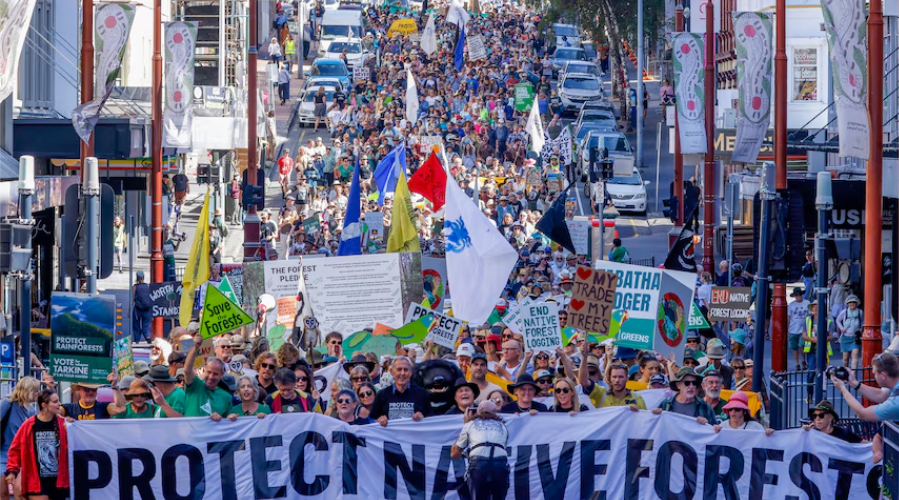
(Above: Anti-logging protest in Hobart in 2024.  Source: ABC News)


After years of public pressure, on November 28 the federal government passed new laws affecting the forest and woodland habitats of many threatened species. While some good will indeed come from this, the laws have already been widely criticized by environmental groups. 

The main highlight of the legislation is that the Tasmanian logging industry will no longer be exempt from federal environmental regulations. Those who remember our article ‘Did capitalist corner-cutting kill the Thylacine’ will recall that habitat damage from clearing forests has been a serious crisis on the island for a long time, and as readers may have inferred from that article, Tasmania’s native forest logging is a very powerful and influential industry. With this in mind, it shouldn’t come as a surprise that the industry has been given a year and a half of breathing room before the exemption will officially come to an end on July 1, 2027. Those eighteen months of business-as-usual chainsaw privilege can still make a big difference. And there have already been warnings that even afterward, the industry may still find loopholes to exploit. It is worth briefly adding, for perspective, that 88% of Tasmanians oppose ongoing logging.  

In addition to what has happened, it is useful context for us to explain what did not pass in the new laws. As environmentalist and former senator Bob Brown said: “Our appeals to get Takayna the World Heritage protection it deserves were rebuffed with a pitchfork by Albanese and Watt. Playing off the Greens with the Coalition is like playing off the Angels with Bluebeard. Nevertheless, the Greens were able to block some holes in Watt’s legislative sieve.”  

Environmental organisations such as the Wilderness Society have correctly assessed that, while some good will come from this legislation, it is only a minor and limited victory. However, we must add that, while these organisations are good at identifying and targeting environmental matters, they usually lack class-consciousness. When asked about the deeper root causes of environmental issues, they still tend to dismiss such an approach with remarks like “it’s better to send a positive message than to sling mud” and “we can’t repair all of democracy”.  

This comes partly because their long and often successful campaigns over decades faltered dramatically in recent years. Their real enemy, the logging, mining and gas industry, is one of the most aggressive sections of the ruling class. It has immense power. One of its most successful tools has been to win over the workers who are the front line of their attack against environmentalists. It's workers who they confront in blockades and in towns reliant on extractive industries.  

At times like these it is important for us to occasionally take a step back to remind ourselves where and why these societies and organisations currently stand on big-picture thinking outside of specific environmental challenges.

Our task is to help them and their members develop the class consciousness necessary to take part in a broader mass movement on the path to Australian independence and socialism.  

Sunday, January 11, 2026

Net Zero targets – Peoples struggle against Green and Brown Capitalists

Written by: John G. on 12 January 2026


The political brawl over Net Zero has found voice. The coalition turned away from targeting net zero carbon emissions in November. 

Now Barnaby Joyce and Matt Kanavan aren’t the only dogs barking at the renewable transition passing them by. The Coalition has joined the chorus of howling canines. 

At heart is political opportunism. The carry on has in mind drawing in people sick of being pushed around by big corporate monopolies chasing the green dollar. 

The political would-be’s see an opening where people are peed off about having some huge corporate money factory dumped on their farm, dominating their local beaches, scarring their local landscape, hitting local wildlife for six. All the while, power bills head skywards despite government assurances of cheaper power ahead.     

Power bills are just one side of the problem. 

Great ribbons of farmland are being clear-felled, stripped of vegetation for hundreds of kilometres, making way for new high voltage power lines. Farm equipment reliant on sat-nav can’t be used beneath the lines and they limit aerial crop spraying, loading overworked farmers with reliance on 20th century methods in a 21st century industry. 


Seafronts and hilltops are being taken over as estates for windfarms owned by huge corporates, most of them foreign owned. People across the country are finding themselves stomped over as renewable robber barons build their green empires. The greenback is the nirvana they chase not the environment.  

In the case of farmers, significant financial inducements are payable for easements on their land. The process of consultation and negotiations are about as fair as union consultations in most workplaces. Government administrators have increased legal and police powers and punishments in their kitbag, and they wave that about.   

Farmers for Climate Change reckon NSW financial inducements may be OK. But with a lot of family farmers on the brink of insolvency, reductions in the land they can graze or cultivate, and restrictions on their activities, can be an existential threat to their living.  Transition plans needed by coal mining communities are also required for those farmers, where the lines are necessary for the nation’s programs. 

That’s not what the Coalition, One Nation, and other reactionaries propose. They opt for the nuclear option, both in fact and metaphorically. They have no resolution for those existentially threatened other than more climate change, keep the emissions.   

Opposing Green Capitalists doesn’t mean backing fossil capitalists

There is danger in moves by political opportunists to become the voice of people oppressed by green capitalists and state agencies working to force people to let the green capitalists to have their way. For donkey’s years the Coalition and One Nation leaders have stood with big corporates, working to divide people. 
People know things need to be done to deal with climate change. Those being trampled by corporate monopolies chasing the green dollar are rightly up in arms. 

The opportunists are keen to see the resisters abused as NIMBYs. They have paid party hacks to organise across the country for the last couple of years against windfarms and to promote nuclear power. They have long pursued advantage from mine closures as renewables gain ground. Not that they’ve done diddly squat about transition for communities, in government or out. They talk about city slickers looking down their champagne glasses in disgust at people in the regions closing their gates. 

Resistance to being frog-marched into ceding land to ‘green’ capitalists under oppressive laws and harsh punishments has become a cause celebre for climate change deniers to organise people into reactionary organisations.  

Division among the people is their game. They are one arm of the divide and conquer quest in their cynical parliamentary games.    

Robber Barons brawling over who governs chasing ‘green’ and ‘brown’ dollars

Some of the green robber barons, have jumped into the political game, touting renewables and transition to Net Zero.

“Twiggy” Forrest is well known for touring the globe selling green steel, the idea, not actual steel, to be made using hydrogen produced from renewable energy. There hasn’t been one tonne of ‘green’ steel produced yet. God only knows how many solar panels and wind turbines that will take. 

Front and centre are tariffs and sanctions on steel which isn’t green, making existing steel plants - his future competition - obsolete. Huge new plants will have to be constructed. More of Forrest’s iron ore will be needed for that. Competitors like Gina Rinehardt would have to avoid being boycotted out of existence. For the time being, Forrest gets a premium from investors for the potential windfall, if he can pull it off. 

Mike Cannon-Brown is another local boy made good, a multibillionaire in IT monolith Atlassian. He was partnering with Forrest and others in Sun Cable, a $35 billion renewables project set up in 2020 to produce electricity 800 kms south of Darwin. The initial idea was to export electricity to Singapore. It would be the biggest solar farm in the world, 120 square kms, 4,300 kms of undersea cabling, and enough battery power to run a million EVs. 

Cannon-Brown was one of the biggest funders of the Teals election campaigns Climate 200 fund – putting $2.5 million in with his Atlassian co-founder Scott Farquhar. 

Forrest is the other big holder in Sun Cable. The two multibillionaires fell out in 2023.  Cannon-Brooks wanted to pursue the original idea. Forrest wanted SunCable to power his ‘green’ steel and ammonia production. The two capitalists clashed over whether to power AI server farms (Cannon-Brooks) or steel mills and chemical plants (Forrest). The brawl exposed these ‘green’ capitalists’ rush for the green dollar bonanza. 

On the other side, mining billionaires Clive Pamler and Gina Rinehardt, put cash into campaigns to stop action on climate. Climate action builds up their competition, doesn’t send a zac their way, destabilises their markets and threatens to make their customers’ old tech operations obsolete. 

Former PM Keating’s advice to not get between a Premier and a bucket of money, applies even more seriously to capitalists. They’ve been known to start wars over such things. There’s no love lost between Forrest and Rinehardt nor Forrest and Cannon-Brooks.  

Neither side is baulked at the prospect they are having to stomp over people to get their way.  

Green capitalists’ tyranny doesn’t mean scientists are wrong

In standing against being swamped by the scramble for the green dollar, don’t fall for the global heating denier trap. 

Be clear about it. The climate is changing, getting more extreme. Bigger storms/cyclones, hotter summers and more intense bushfires, more and bigger floods are just a beginning. People need things done about it, flood mitigation, seawalls, lower carbon and other emissions. Seaside and mining communities need transition plans and support. 

The scientists aren’t wrong because some capitalists are tyrannically walking over people, devastating the environment, and dumping people in coal towns and old power stations and neglecting eroding seaside communities.  The problem is the “Twiggy” Forrests, the Mike Cannon-Brooks - the capitalists trashing farms and country, constructing new landed and sea estates, clawing their way over us to get at the bonanza of green dollars in renewables industries. 

The rest of us are left to pick up the bill as we try to keep out the cold in winter and run the air-con in summer, or rebuild after floods and bushfires. 

People aren’t just being trampled in the rush. They are standing up. They defy bureaucrats, police and gaol. They are right to rebel against ‘green’ capital.

Stand up to ‘green’ capitalists’ land grab. 

Support struggle for community and farmer transition plans   


Wednesday, December 3, 2025

8000 Rising Tide protesters enforce Newcastle Port shutdown

Written by: Louisa L. on 4 December 2025


(Above: The Knitting Nanas blockade)

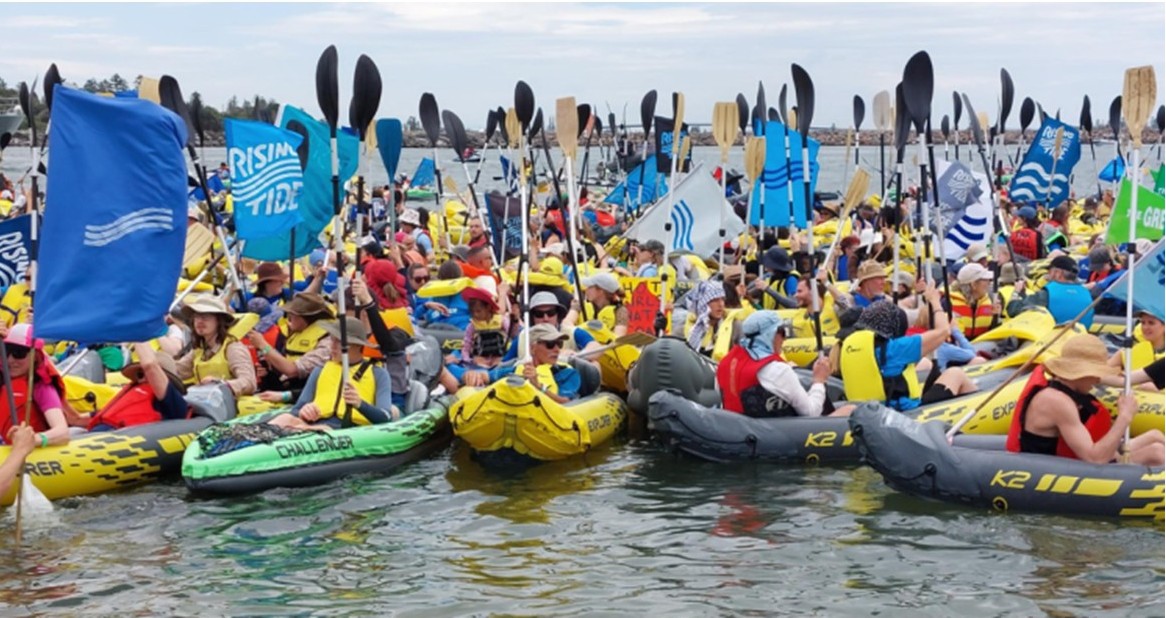
For three years, Rising Tide has brought thousands to Newcastle to blockade the world’s biggest coal loader. This year, over six days, 8000 people stood firm against police and government threats. They demanded the immediate cancellation of all new fossil fuel projects; a 78 percent fossil fuel tax to fund a just transition for workers in the fossil fuel sector and to pay for climate loss and damage; and an end to Newcastle coal exports by 2030.

Rising Tide has the backing of 86 percent of Newcastle’s people, according to Newcastle Mayor Ross Kerridge. On water protesters defied possible $22,000 fines and two years jail under Section 214 of the Crimes Act, to block three coal ships. Many ships were diverted to other ports. 155 people were arrested. 

Mr Kerridge, a scientist, called for people to discuss respectfully with open minds and rely on overwhelming scientific agreement to achieve community consensus. 

‘I love this planet,’ he said. ‘I live in hope for its future.’

A Rising Tide spokesperson, 26-year-old Zack Schofield, told Guardian Australia, ‘I grew up in Newcastle. I learned to count by counting the coal ships on the horizon with my mum.

‘We have in Newcastle a responsibility at a global scale to do everything in our power not just to protect the livelihoods of Hunter workers, but to protect the future generations of the entire planet,’ he said.

This message convinced 22-year-old Zac Tritton, a Newcastle coal industry worker to join the blockade.

One older woman had a different reason, ‘It’s the grief’ of inaction. No wonder, when in four years the chance to limit average temperatures to a 1.5 degree increase will pass. 

There’s always money for US war, for mining, and for Australian police. In June the NSW Government promised $46.6 million to replace the current police Class 1 Vessel (Nemesis) that protesters faced in Newcastle. 

‘It looked like a warship,’ remarked one protester.  

A prominent placard on Horseshoe Bay quipped, ‘Now Albanese’s married, it’s time to divorce the Minerals Council.’ Its members are overwhelmingly foreign owned, mostly by US corporations and finance houses.

Night and day

On Day One, three of the 69 Knitting Nannas at the protest, plus a clown (obviously a climate change denier) and a driver broke through in a tinnie. Police chased, the tinnie turned and, while hundreds of swimmers flummoxed police, it broke through again. The tinnie captain was arrested, and police dumped the wet Nannas, with no money or phones, on the city’s edge. They walked into a pub. Patrons cheered and ordered an Uber to for them to rejoin the protest.

Every night was a dance party, with pop group Lime Cordiale and brilliant Murrawarri Filippino musician Dobbie two of the headline acts. 

Lime Cordiale hit the water in the Greenpeace breakout. While two unfurled a banner and locked-on to the anchor, the musicians demanded a timeline for action on the coal ship’s hull. Chinese crew members lowered speakers so they had music to paint to. The crew pointed out China’s record- breaking expansion of green energy, but acknowledged the issue with its new coal-fired power stations. It’s one of the reasons this risen capitalist power is beating its crumbling US imperialist rival.

122 volunteer affinity groups did everything from feeding everyone to cleaning toilets to supporting those arrested. Every morning was a decision-making big circle with volunteers reporting back to their groups.

In all, three ships were turned back, and the port was closed from Sunday lunchtime. 

By the end grief was replaced by exhilaration, the young by the determination of the old, and the old by the energy of the young.

A Nana told me, ‘I’m as high as a kite! I want to build the struggle!’

Saturday, October 25, 2025

Oppose foreign ownership of Australia's water

 Written by: Duncan B. on 15 october 2025


Large areas of Victoria and South Australia are affected by drought. Some dairy farmers in drought areas have suffered about a 50% drop in their income compared to last season. Dairy farmers in southwest Victoria and west Gippsland are battling to survive. South Australian potato farmers are predicting that there will be a severe shortage of potatoes due to drought in potato growing areas in SA.

The Bureau of Meteorology is predicting warmer than average summer daytime temperatures in most of Australia with unusually high maximum temperatures in parts of Victoria and Tasmania. Overnight temperatures for November to January are very likely to be above average across almost all of Australia. The BOM predicts unusually high minimum temperatures across most of the country, especially in northern and eastern Australia.

With this disturbing scenario in mind, Australians should by extremely concerned at the level of foreign ownership of Australia’s water. According to the latest annual report of the Register of Foreign Ownership of Australian Assets, in the 12 months to June 30, foreign ownership of Australian water entitlements rose by 3.3% from 4775 gigalitres (GL) to 4932GL. The overal proportion of water entitlements with a level of foreign ownership rose by 0.5% from 11.8 to 12.3 % in that time.

Canadian and US investors control 1778Gl of water, equal to 36% of the water held by foreign interests. Canadian pension fund PSP Investments is the biggest player among the foreign owners of our water. Canada ranks as the nation’s largest foreign owner of our water with 1062GL, with the US second on 716GL. The UK is third with 352Gl. China is fourth with 351GL, and France comes in fifth with 207GL.

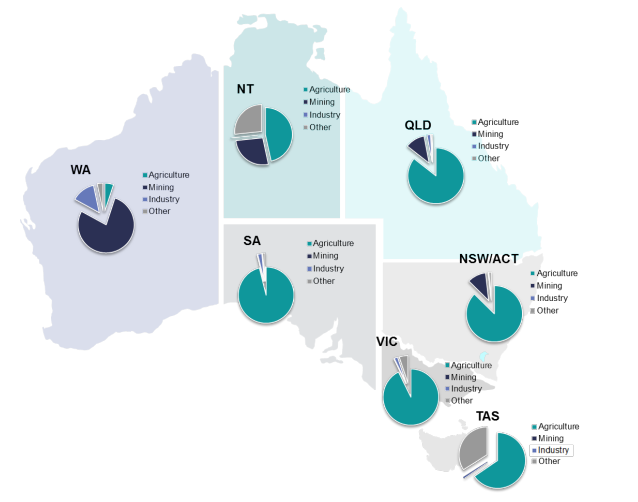
Looking at foreign ownership of our water on a state-by-state basis, foreign interests own 10% of water entitlements in the NSW-ACT, 19.2% of Queensland’s water, and about 7% of Victoria’s water. Foreign interests own almost 13% of the Murray-Darling Basin’s water. 

Foreign interests own 28.1% of North Murray-Darling Basin surface water and 7.8% of Southern Murray-Darling Basin surface water. Foreign interests own a 13% proportion of groundwater across the Murray-Darling Basin.

As Australia suffers more in the future from higher temperatures and lower rainfall in many areas, the risk of droughts will increase. We must not allow more of our water to fall into foreign hands!

Monday, August 11, 2025

Toe to toe with fossil fuel induced global warming

 Written by: Nick G. on 12 August 2025


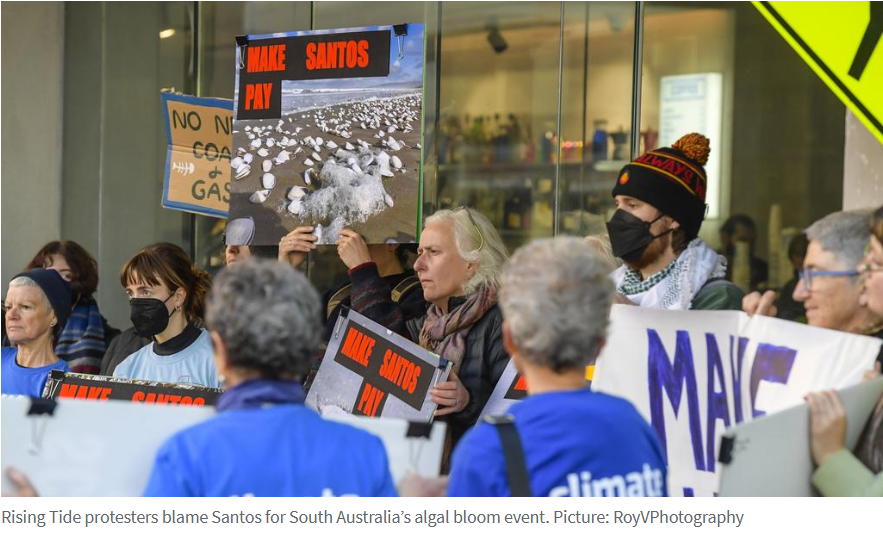
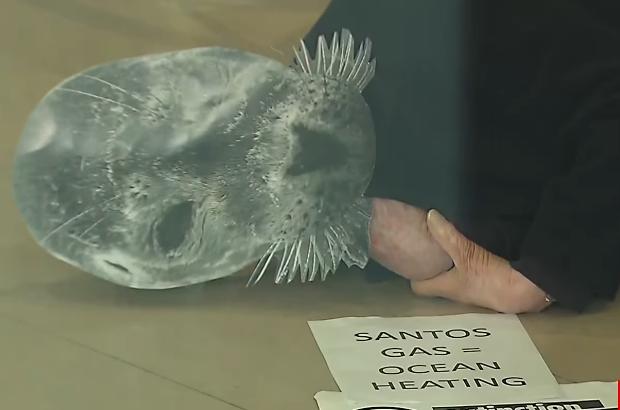
(July 30 protest against global warming at Santos offices in Adelaide. - source NT News)

Last week I went for a short walk along Seacliff Beach, one part of the unbroken stretch of suburban Adelaide beaches just kilometres form the CBD.

Every step of the way was littered with the washed-up bodies of dead marine life.

Most were benthic (bottom-feeding) species including masses of flathead, blue-swimmer crabs, abalone (with its much sought-after flesh still attached), mussels, razor fish, sea slugs, snails and worms.  There were lesser number of other species including trumpeters, toad fish, weedy whiting and red mullet.

And a dead swan.

Running parallel with the sea shore was a 50-metre width strip of brown murky water, part of the algal bloom which has turned much of Adelaide’s coastal waters to a marine graveyard.

The algal bloom first came to notice in March. Warmer waters and an absence of sea water disturbance during SA’s prolonged drought led to an explosion in the population of the toxic Karenia mikimotoi algae. We have reported several times on this.

In the immediate sense, nothing can be done until the bloom dissipates through natural means.

However, the SA algal bloom is a symptom of a sick ocean system that extends well beyond SA. On the day of my walk, news came through of a massive clean-up by volunteers of the beaches of Algiers where another algae native to the Pacific Ocean, Rugulopteryx okamurae, has found its way into the Mediterranean.  While the beach clean-up was underway on the southern side of the Mediterranean, on the northern side France and Greece were engulfed in massive wildfires that had caused loss of life.

The rise in global warming, brought on by carbon emissions from the use of fossil fuels, continues to endanger Australian coral reefs. 

The Great Barrier Reef has suffered mass bleaching in 2002, 2016, 2017, 2020, 2022, 2024 and now 2025. In the latest event, the Reef has suffered some of the most widespread coral loss ever seen and scientists warn that we’re approaching a moment where the coral may no longer be able to recover.

For the first time Ningaloo Reef on the opposite side of the continent suffered a bleaching event simultaneous with that of the Great Barrier Reef.  Once again, the word “unprecedented” has been used. 

Politicians ignore it at our peril.

Labor continues to wave through new coal and gas projects. The Nationals want to abandon net zero entirely. And the Liberals offer nothing. Australia remains the second-largest global exporter of fossil fuels.

Global warming is a part of capitalism’s destructive war on nature.

Capital must continue to accumulate by recreating its own value over and over again. In the process it exploits, ruins and diminishes the only two sources of that surplus value, human labour power and nature. The first can be kept alive and recreated at minimal cost to capital but the second can only be degraded and destroyed.

Biodiversity matters to the working class. Capitalism is the enemy of biodiversity and of workers. 

We must shutdown fossil fuel extraction, use and export.

We can only do that in an anti-imperialist independent and socialist Australia.

(On August 1, seven Extinction Rebellion members holding a marine life ‘die-in” were arrested at Santos offices in Adelaide.)


Sunday, July 27, 2025

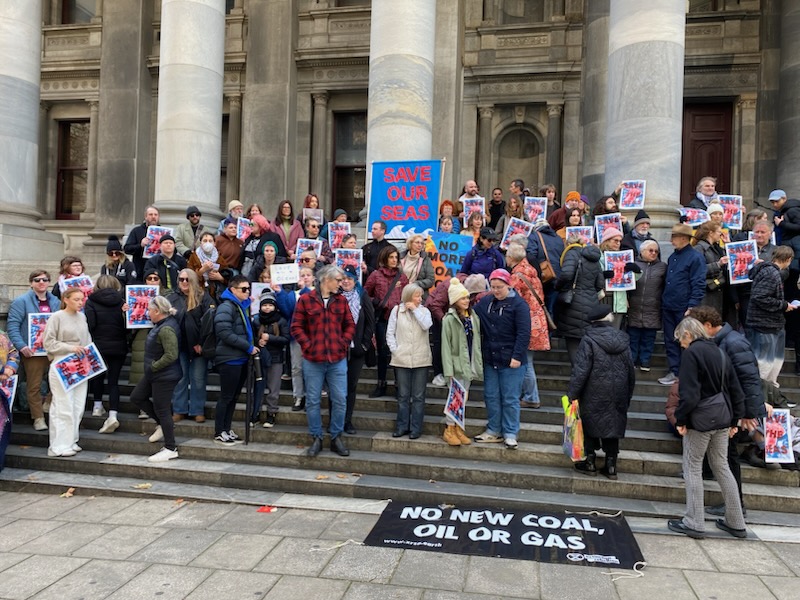
Save our Oceans rally in Adelaide

 Written by: Ned K. on 27 July 2025


On Sunday 27 July, about three hundred people from a number of grass roots environmental organizations rallied on the steps of SA Parliament House to heighten public awareness of the devastating impact of global warming and climate change on Earth's oceans.

Speakers included First Nations persons and scientists who have been warning governments for decades about the impact of algal blooms in the SA ocean waters.

The current algal bloom caused by rising ocean temperatures and changes in ocean currents has killed marine life in irreversible numbers as it spread along the coastal waters of the South-East of South Australia and gradually suffocated large areas of both the Gulf St Vincent and Spencer Gulf.

Speakers pointed out that when the previous algal bloom appeared in 2013 in coastal areas, marine biologists warned governments at state and federal level that the algal blooms would re-appear in larger more destructive forms due to the increasing impact of climate change on ocean temperatures.

In the week leading up to the Sunday rally, both the federal and state governments announced $14million each towards research about the algae and how to prevent it and also towards financial support for businesses and workers affected by the algae bloom's impact.

The federal government Minister Murray Watt did a "fly in, fly out" visit for a couple of hours with a photo shot of him on a suburban beach near some dead fish killed by the algae bloom.

The SA Premier belatedly expressed concern about the impact of the algae bloom, a brief respite from his obsession with Liv Golf and other sports events as saviours for the SA economy

Fund Our Future, Not Our Decimation

“Fund Our Future, Not Our Decimation" was one of the hand-written signs of one of the young people at the rally. It summed up what more and more young people think governments should be doing. Funding fossil fuel industries and spending money on the military industrial complex and Liv Golf for billionaire golfers are not top priorities for a growing number of vocal, active young people like those at this rally.

The devastating impact of climate change is affecting people in many walks of life. The algae bloom impact has seen united action by people from very different sectors of society.

First Nations people, commercial fishing people, recreational fishers, suburban and regional beach walkers, people who like swimming in the sea, surfers, environmentalists, tourism industry businesses and workers and whole small coastal town communities.

People from this diverse range of people were present at the rally in Adelaide. 

First Nations speakers at the rally said that people coming together from diverse backgrounds were a powerful force to save the oceans and indeed the planet.

Tuesday, July 22, 2025

Resistance to Capitalist Climate Disaster

 Written by: Sand G. on 23 July 2025


Source: www.australiangeographic.com.au/

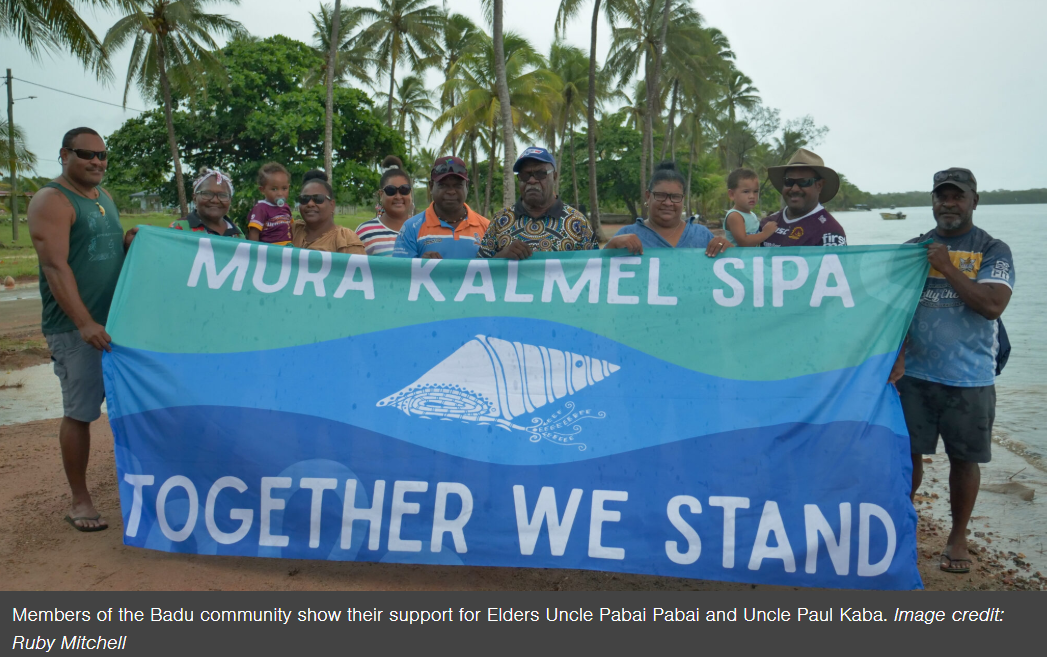
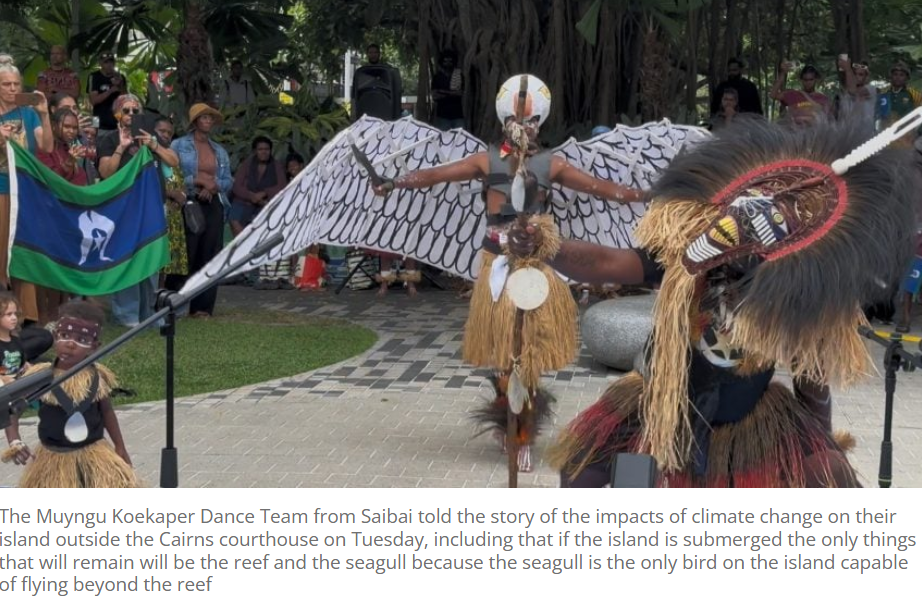
On 15 July the federal court dismissed a case brought by Torres Strait community leaders that aimed to require the government to prevent climate harm in their communities. The court found that the colonial-capitalist government of this stolen land has no ‘duty of care’ to Australians to prevent climate related harm. 

The Australian Government, constantly singing about reconciliation, has admitted that it has no real obligation to protect unceded Indigenous land and that it’s more than happy to let corporations destroy country. It might come as no shock to many, since the Australian government never seems to demonstrate a duty of care to the people, especially to First Nations people. 

But the ruling of the judge says a lot about the future of climate action. The judge, washing the court’s hands of responsibility, said ‘this is a matter of government policy, and should be decided through political processes’. 

Source: https://anglicanfocus.org.au/

What political processes are available to the people to make sure that government prevents this climate disaster? Surely, with around two thirds of Australians agreeing for the last 20 years that climate change is an extremely urgent issue and more needs to be done to prevent it, that proper political processes would have responded to that?

Instead we have the opposite. Despite the clear will of the people to prevent climate catastrophe and protect country, successive governments bend over to big businesses, criminalise protests, and change laws to limit community appeals on projects happening on their country. 

Many Australian state governments either have, or are introducing laws to override environmental protections and prevent the public from speaking up about it. Climate protesters have been jailed and fined huge amounts of money, simply for standing on bridges or blocking trains, while the governments that allow communities to be destroyed by climate disasters walk free. 

In Boorloo Perth, protesters had guns pointed at them by policy simply for standing outside the Woodside CEO’s home.  Clearly, the political processes for the people to make government listen are not there. 

The judge, in this ruling, admitted what communists know to be true: courts, Parliament, and the Australian Government are not accountable to the people – we are in a dictatorship of capitalists.

When injustice becomes law, resistance becomes duty.

Australian workers have quoted this for over 100 years, and it’s all the more relevant now. This revealing court case has shown that injustice is how government works. More and more doors are closed to the people as we stare down the barrel of climate induced disasters. Their answer to our calls for change is “shut up and piss off” while they let multinational corporations destroy our communities for the sake of profit. 

So how should the people respond? Our Party recently reiterated our stance on rejecting the rigged game set by the government and embracing revolutionary action. We disdain to hide this view, and we look to the example of First Peoples who have waged armed and unarmed struggle against the occupying government for over 200 years. 

Our government has no concerns about using state enforced violence on us, so how long are we going to take it? 

Our Party stands with First Peoples and other anti-imperialist anti-capitalist comrades as we work to evolve our struggle in protecting our communities from the threat of colonial capitalism.

Wednesday, July 9, 2025

Why Australia’s “deforestation” ranking ignores deforestation

 Written by: Leo A, on 9 July 2025


(Source Greenpeace,org)

Environmental activists across the country were left with disappointment and confusion in late May when the European Union released its long-awaited first list of country risk classifications under the EU Deforestation Regulation, marking a step towards the regulation’s implementation.  

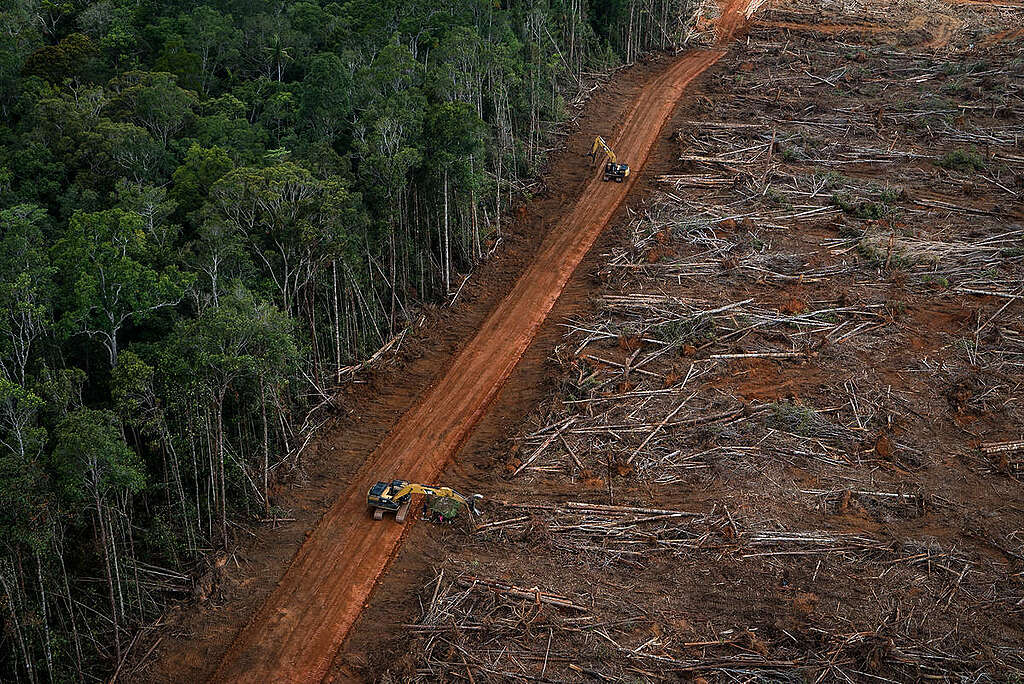
This listing classified Australia as “low risk”, subjecting it to the weakest requirements. This completely misrepresents the reality of the situation in Australia in regards to deforestation, and prevents the new EU law from placing any meaningful pressure on Australia’s logging industry. Freedom of Information documents obtained by the Wilderness Society confirmed that the Australian government actively lobbied for this misleading ranking.  

A closer look at which countries were labelled low-, standard- and high-risk reveals a strong pattern. Other major deforestation hotspots, such as Brazil and Indonesia, were only labelled “standard-risk”. In fact, the label of “high-risk” was limited to just four countries: The Russian Federation, the Democratic People’s Republic of Korea, Belarus, and Myanmar. There are two key characteristics that the first three of these countries, and even to a lesser extent the fourth, share. First, these countries are geopolitically aligned against the American imperialist bloc, which the European Union is a part of. The second characteristic, which is largely a result of the first, is that they don’t trade much with the European Union, due to sanctions and other barriers. It is also worth noting that every single American-aligned country in the Global North was given a “low risk” ranking.  

Considering these patterns together we can paint a picture of a decision-making process that was designed to minimize inconvenience as much as possible to logging and related industries while still being believable to an average audience as an objective ranking (hence why Brazil, Indonesia etc weren’t labelled “low-risk”), and of course use the opportunity to throw a casual punch at some of the American bloc’s opposition.  

Environmental organisations in Australia have been quick to point out that Australia’s ranking does not accurately reflect our deforestation crisis. But they have often not been able to put the other pieces of the puzzle together.  This creates a task for our party and anti-imperialists alike to systematically help raise their class consciousness alongside them in environmental struggles, and to point out that deforestation in Australia (and the world) is overwhelmingly the result of US imperialist domination and plunder. 

The construction of an Australian united front, combining environmentalist groups with other working-class struggles, with conscious anti-imperialist leadership, is a critical goal we must aim for. In mid-June the Wilderness Society began to search for “values-aligned organisations and groups” that could become “potential allies”. It’s a small but important step in the right direction.  

Monday, June 30, 2025

SA toxic algal bloom persists under wintry conditions

Written by: Nick G. on 1 July 2025


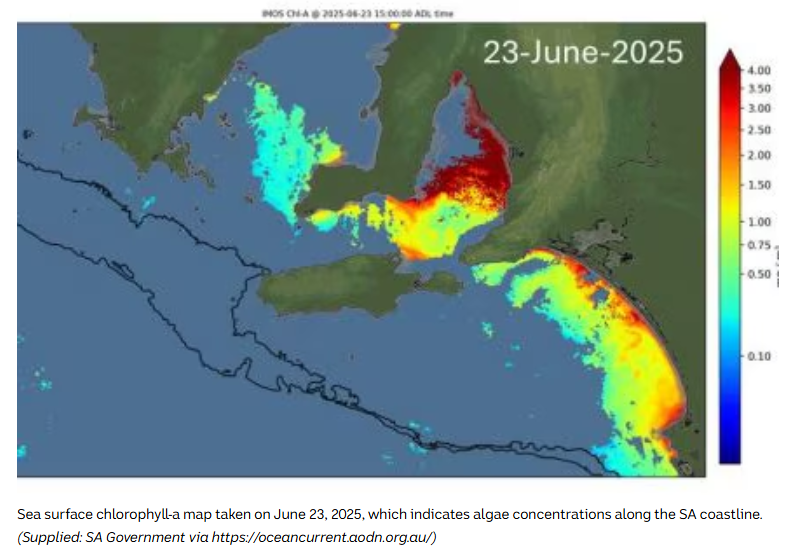
The SA toxic algal bloom, first reported in Vanguard on April 12 (see here) has shown no signs of an anticipated dissipation as colder sea temperatures and rougher seas set it.

The algal bloom began in March at the southern tip of the Fleurieu Peninsula with masses of dead fish washed up onto popular surfing beaches, and surfers and beachgoers complaining of headaches, nausea and loss of vision. 

Then the discoloured, frothy waters spread across to Kangaroo Island and parts of Yorke Peninsula. Divers at Edithburgh said all sea life was being killed. Some have described the effect as like an “underwater bush fire”.

There are various sea algae. This one was first reported in Japan in 1972 and has the scientific name Karenia mikimotoi.  

Algal blooms occur when sea water temperatures rise and there is minimal disturbance of the sea by winds pushed ahead of large rain-bearing clouds, creating the perfect conditions for the growth of algae. 

Algal blooms are normally dispersed when sea water temperatures return to normal, and winter brings stronger winds and stormy weather. Over the past month, both conditions have occurred. In the most recent storm surge a week ago, jetties along the SA coast were damaged, yet the toxic bloom was not.

Not only has it not disappeared, but storm winds carried the algal froth from the open beaches of the Coorong, where mass killings of cockles (pipis) had occurred, over the high sand dunes and into the Coorong, killing fish and a leaving a carpet of dead sea worms and other sea bed creatures.

In recent days, the algal bloom has travelled north to Adelaide’s suburban beaches, possibly in search of marginally warmer water.

Marine biologist Mike Bossley has spent thousands of hours roaming the beach in his lifetime, but since Tuesday has sighted species he's never seen on the shore.

"Different kinds of rays and sharks, lots of pipefish, things called ling, which is a very unusual thing. I've never seen them washed up on the beach before, and lots of species of fish that I don't even know the names of," he said.

Scientists say that if the bloom persists beyond winter, it will spread even further as warmer weather returns.

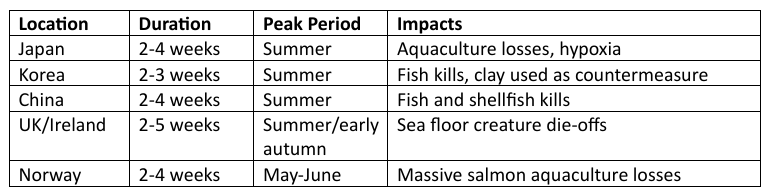
The bloom has already persisted for four months. Normally, it lasts for less than a month. The following table shows how other mikimotoi outbreaks have fared:

The SA algal bloom is longer and more intense than other mikimotoi outbreaks and is yet further proof that as carbon-induced global warming heats the planet, the scale of ecological disaster intensifies.

Capitalism, with the big fossil fuel corporations at its core, is waging a destructive war on nature in the drive for expanded accumulation of profits, of capital.

We cannot wait until we have only our proverbial chains to lose.

We are losing the war for a sustainable environment and for the prevention of the destruction of biodiversity.

With the SA government bidding to host COP31, the 2026 United Nations Conference of the Parties on Climate Change, participants will be able to choose between visiting the world’s largest renewable energy battery or the battered beaches and seas that are the evidence for urgent action, not talk-fests, to save the planet.


Sunday, April 27, 2025

The challenge of environmentalism in modern Australia

 Written by: Leo A. on 28 April 2025


In the 21st century, the accelerating environmental crisis both in Australia and globally has sparked increased interest among the masses in advocating for environmental preservation and protection. Notable relevant groups in Australia include the Australian Conservation Foundation, Lock The Gate, and perhaps most prominently The Wilderness Society. Unfortunately, the environmental movement in Australia has been hindered by several key flaws. 

Lacking a Marxist understanding of the environmental crisis and its root causes, these environmental organisations currently suffer from an all-too-common case of “focusing on the symptoms, not the disease”. As a result of this lack of a deeper understanding, they don’t know who their potential allies are, and work in isolation from other working-class movements. They seem more dedicated to organising events than to organising people. 

This lack of class consciousness hides a distant history of past successes, the methodology to which appears to have been ignored or forgotten by these organisations in their current form. For example, The Wilderness Society has gone from its successful thousands-strong mass campaign against what would have been the ecologically-devastating Franklin River Dam over forty years ago, to expecting thirty voicemail messages in the Premier’s office to save the Great Koala National Park this year.

The Wilderness Society also has runs on the board in respect of the campaigns to stop multinational oil companies from drilling for oil in the Great Australia Bight. This five-year campaign united Indigenous communities, regional Councils, the surfing and fishing communities and working people, and was successful. 

They still have a vague understanding that the masses have the power to make a difference, as evidenced by promotional material last year which claimed that millions-strong mass action could end Australia’s use of fossil fuels within a decade. But they appear to have lost the knowledge of how to build a mass movement, and are unaware of how to expand it to such a scale, how important doing so is, and the wider context the environmental struggle is a part of.  

Does the environmental movement in Australia have a good future ahead of it? If it can be guided in the right direction, yes. But that is a critical “if”, and in our age of accelerating catastrophe this matter is more important than it has ever been before. A Marxist understanding of the world, or a lack of it, can have real-world consequences even in our pre-revolutionary capitalist society. 


Friday, April 11, 2025

Fleurieu Peninsula marine deaths a sign of global warming’s existential dangers

Written by: Nick G. on 12 April 2025


South Australians are in the grip of a “canary in the coal mines” moment, although it is not a canary and it is not a coal mine.

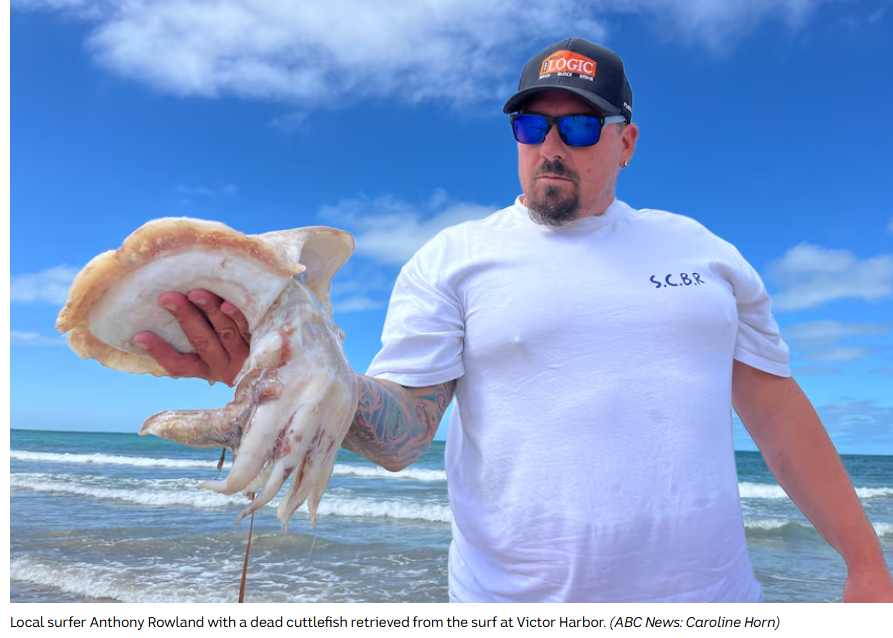
In early March, suffers at the popular South Coast beaches of Waitpinga and Parsons reported suffering headaches, coughing, skin rashes and blurred vision, whilst the beaches themselves began to be littered with masses of dead marine life. A sludgy thick brown foam began to accumulate along the shoreline.

The two beaches were closed by the Environmental Protection Authority which, after some time, declared that a species of microalgae, Karenia mikimotoi, was responsible.

The marine life washing up on the beaches, which soon included some on Kangaroo Island, and around the corner of the Fleurieu Peninsula at Encounter Bay, Victor Harbor and Bashams Beach, included the less attractive toad fish (aka the puffer fish) and the incredibly attractive tourist icon, the leafy sea dragon. They included a variety of reef fish, octopi and sea slugs. 

The devastation has spread across Gulf St. Vincent to places like Edithburgh on Yorke Peninsula. Underwater photographer Paul Macdonald, who has been diving at Edithburgh for "almost 30 years", said he went diving on the weekend but was heartbroken by what he saw.

"Pretty much everything was dead, it was really heartbreaking," he said.

"We could see the water wasn't quite right, it was a brown-y colour with no visibility.

"It was just devastating to see very few fish around, pretty much everything that we did see was dead or in the process of dying."

Just six days ago, as the EPA was preparing to reopen Waitpinga and Parsons, the marine deaths extended further along the coast in the direction of the Coorong, with tens of thousands of cockles (aka pipis) and other shellfish washing up on beaches around Goolwa. 

Goolwa has an annual seven-month cockle season from 31 October to 1 June when anyone can harvest cockles (bag limits apply) either for personal consumption or for fish bait. SA Health has advised people not to eat dead cockles.

But with reports that the toxic bloom appears to be spreading south of the Coorong to Kingston in the South-East, the recreational fishers' peak-body Recfish SA, says that close to 200km of coastline will be impacted by the latest die-off, and the deaths will be in the millions, “unfathomable amounts”.  A spokesperson said marine deaths along the coastline were now at an unprecedented scale.

Global warming and increased frequency of toxic blooms

In the current lead-up to the federal election, there is necessarily a concentration on the soaring cost of living. However, there is also the cost of living on an increasingly warming globe due to profit-hungry corporations continuing to use fossil fuels. 

Toxic algal blooms are increasing in scope and intensity around the globe. So are extreme weather events. Warmer oceans produce more evaporation leading to unprecedented rainfall events. Droughts are longer and temperatures are rising. 

South Australians watch in awe as parts of Queensland and New South Wales are flooded with daily downpours of hundreds of millimetres. Suburban Adelaide meanwhile has only had 29mm over 4 and half months: 14mm over 4 days in December, 3.5mm over 2 days on January, 0.5mm on one February day, 9.5mm on one March day, and 1.5mm so far on two days of April. 

Summer temperatures and the minimal disturbance of the sea by winds pushed ahead of large rain-bearing clouds create the perfect conditions for the growth of algae. The EPA described it as “an ongoing marine heatwave, with marine water temperatures currently 2.5C warmer than usual, as well as relatively calm marine conditions with little wind and small swell.” 

They are not infrequent, but they are getting worse, a factor that many scientists attribute to climate change. They have happened along 200 miles of Florida coastline in 2018, and in 2020 along Russia’s eastern coast. 

Many algal species flourish when water circulation is low and water temperatures are high.

The blooms can last from a few days to many months. After a bloom dies, the microbes which decompose the dead algae use up more oxygen, which can lead to die-offs of fish and other marine organisms. When these zones of depleted oxygen cover a large area for an extended period of time, they are referred to as dead zones, where neither fish nor plants are able to survive.

So long as capitalism incentivises large corporations to put profits from fossil fuels ahead of people and the environment, the cost of living on a planet that is dangerously warming will rise in tandem with the temperatures.

Capitalism’s destructive war on nature must be ended. 

Socialism is urgently required to enable harmony between people and nature.

Tuesday, March 25, 2025

Federal government breaks critical environmental promise

Written by: Leo A, on 25 March 2025


(Original image from the Australian)

On February 5, the Albanese Administration’s promise to create an environmental protection agency in the current parliamentary term was finally killed off. One Labor insider admitted to The Saturday Paper that this was due to the government having "the most powerful business interests in the country screaming" over the proposed legislation. 

In our current political system, it is easy for our so-called "leaders" to easily make promises that they know won’t be kept, and face no consequences in the aftermath. Similarly, it is easy for government to follow the will of big corporations and other fundamentally undemocratic forces, again without facing any consequences for betraying the interests both of the working masses and of our natural environments. Greens Senator Sarah Hanson-Young described the decision as "a stunning capitulation to vested interests in the mining and logging lobby". 

The legislation aimed to establish Australia’s first independent national environmental regulator to enforce environmental laws, improve transparency, and enact stronger nature and wildlife protections. This, of course, is within a context of ongoing environmental catastrophe both in Australia and across the planet. And this catastrophe is affecting both well-documented ecosystems and species, and those which have yet to be sufficiently understood. Across the Pacific, the presumed-extinct South American Tapir has recently been sighted for the first time in over a century, and this Hidden Threatened Species is just one of countless examples that demonstrate that even the long lists of wildlife at risk of extinction are incomplete.  

Under capitalism, environmental protection is an uphill struggle, as any promises can be broken and any progress can be reversed. But it is a necessary struggle. For every presumed-extinct species that turns up alive, a dozen more - perhaps even a hundred more - are truly lost forever. Under socialism vast changes to protect these species will finally become fathomable, but we must still do what we can until then.