Showing posts with label agriculture. Show all posts

Monday, March 23, 2026

The Ever-Increasing Foreign Ownership of Australian Agriculture

Written by: Duncan B. on 22 March 2026


The foreign takeover of Australia’s farmland, water and the supply chain linking farmers to consumers continues.

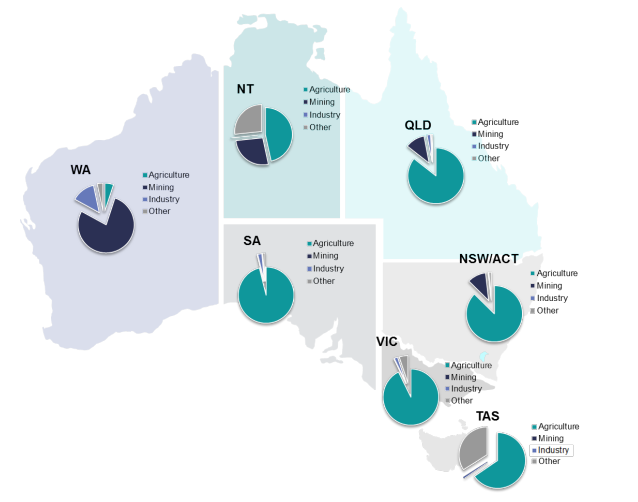
The Register of Foreign Ownership of Australian Assets report for 2024-25 shows that the total area of land in Australia with a component of foreign control increased in the past year from 49.12 million to 50.26 hectares as at June 30 last year. This is an increase from 12.7% of foreign-controlled land in 2023-24 to 13% in 2024-25. (Much of the land controlled by foreign interests is land leased from state or territory governments.)

The Northern Territory has the highest proportion of foreign-controlled land with 14.75 million ha or 27.8%. Tasmania comes next with 362,000 ha or 24%. The UK, China, Canada and the US are the four biggest holders of land in Australia, although Canada has the biggest share of investments in Australian agriculture measured by value.

The story is the same with water. Foreign ownership of Australian water entitlements in 2024-25 increased to over 5000GL, about 13% of the total. Canada, the US, the UK and China are the four biggest holders of Australian water, with Canada controlling 1066GL.

The supply chain which moves agricultural products from the farm gate to the consumer is also heavily foreign dominated. The dairy processing industry recently saw even greater concentration of ownership in foreign hands with the sale by New Zealand processor Fonterra of its Australian operations to French-owned Lactalis.

This leaves Lactalis and the Canadian-owned Saputo as the two major foreign players in Australian dairy processing. Bega, Norco and Bulla, plus some smaller operators are still Australian-owned.

The meat industry in Australia is dominated by Brazilian-owned JBS, and Teys Australia which is owned by the US company Cargill. Other foreign-owned companies are Chinese-owned Kilcoy Global Foods, Japan-owned NH Foods Australia, Bindaree Food Group which is 51% Hong Kong owned and Minerva Foods Australia/Australian Lamb Company which is a joint venture between Brazil-owned Minerva and the Saudi Agriculture and Livestock Investment Company.

JBS and Cargill also control a large slice of Australia’s beef feedlots where cattle are fed on grain instead of grazing in paddocks. JBS leases extensive feedlot operations from Australian company Rural Funds Group. Teys Australia has its own feedlots in Victoria, New South Wales and Queensland. The Japanese company NH Foods Australia also has its own feedlots in Australia. Having their own feedlots enables the meat companies to secure their supply of cattle, manage risk and tighten their hold on the market through vertical integration.

Other foreign companies have interests in various areas of Australian agriculture such as Canadian-owned PSP’s investments in cotton farms and the cotton gins where the cotton is processed.

Australian workers, whether in the cities or the country, and farmers must unite to oppose the continuing take-over of Australia’s agriculture by foreign companies.

Sunday, January 11, 2026

Net Zero targets – Peoples struggle against Green and Brown Capitalists

Written by: John G. on 12 January 2026


The political brawl over Net Zero has found voice. The coalition turned away from targeting net zero carbon emissions in November. 

Now Barnaby Joyce and Matt Kanavan aren’t the only dogs barking at the renewable transition passing them by. The Coalition has joined the chorus of howling canines. 

At heart is political opportunism. The carry on has in mind drawing in people sick of being pushed around by big corporate monopolies chasing the green dollar. 

The political would-be’s see an opening where people are peed off about having some huge corporate money factory dumped on their farm, dominating their local beaches, scarring their local landscape, hitting local wildlife for six. All the while, power bills head skywards despite government assurances of cheaper power ahead.     

Power bills are just one side of the problem. 

Great ribbons of farmland are being clear-felled, stripped of vegetation for hundreds of kilometres, making way for new high voltage power lines. Farm equipment reliant on sat-nav can’t be used beneath the lines and they limit aerial crop spraying, loading overworked farmers with reliance on 20th century methods in a 21st century industry. 


Seafronts and hilltops are being taken over as estates for windfarms owned by huge corporates, most of them foreign owned. People across the country are finding themselves stomped over as renewable robber barons build their green empires. The greenback is the nirvana they chase not the environment.  

In the case of farmers, significant financial inducements are payable for easements on their land. The process of consultation and negotiations are about as fair as union consultations in most workplaces. Government administrators have increased legal and police powers and punishments in their kitbag, and they wave that about.   

Farmers for Climate Change reckon NSW financial inducements may be OK. But with a lot of family farmers on the brink of insolvency, reductions in the land they can graze or cultivate, and restrictions on their activities, can be an existential threat to their living.  Transition plans needed by coal mining communities are also required for those farmers, where the lines are necessary for the nation’s programs. 

That’s not what the Coalition, One Nation, and other reactionaries propose. They opt for the nuclear option, both in fact and metaphorically. They have no resolution for those existentially threatened other than more climate change, keep the emissions.   

Opposing Green Capitalists doesn’t mean backing fossil capitalists

There is danger in moves by political opportunists to become the voice of people oppressed by green capitalists and state agencies working to force people to let the green capitalists to have their way. For donkey’s years the Coalition and One Nation leaders have stood with big corporates, working to divide people. 
People know things need to be done to deal with climate change. Those being trampled by corporate monopolies chasing the green dollar are rightly up in arms. 

The opportunists are keen to see the resisters abused as NIMBYs. They have paid party hacks to organise across the country for the last couple of years against windfarms and to promote nuclear power. They have long pursued advantage from mine closures as renewables gain ground. Not that they’ve done diddly squat about transition for communities, in government or out. They talk about city slickers looking down their champagne glasses in disgust at people in the regions closing their gates. 

Resistance to being frog-marched into ceding land to ‘green’ capitalists under oppressive laws and harsh punishments has become a cause celebre for climate change deniers to organise people into reactionary organisations.  

Division among the people is their game. They are one arm of the divide and conquer quest in their cynical parliamentary games.    

Robber Barons brawling over who governs chasing ‘green’ and ‘brown’ dollars

Some of the green robber barons, have jumped into the political game, touting renewables and transition to Net Zero.

“Twiggy” Forrest is well known for touring the globe selling green steel, the idea, not actual steel, to be made using hydrogen produced from renewable energy. There hasn’t been one tonne of ‘green’ steel produced yet. God only knows how many solar panels and wind turbines that will take. 

Front and centre are tariffs and sanctions on steel which isn’t green, making existing steel plants - his future competition - obsolete. Huge new plants will have to be constructed. More of Forrest’s iron ore will be needed for that. Competitors like Gina Rinehardt would have to avoid being boycotted out of existence. For the time being, Forrest gets a premium from investors for the potential windfall, if he can pull it off. 

Mike Cannon-Brown is another local boy made good, a multibillionaire in IT monolith Atlassian. He was partnering with Forrest and others in Sun Cable, a $35 billion renewables project set up in 2020 to produce electricity 800 kms south of Darwin. The initial idea was to export electricity to Singapore. It would be the biggest solar farm in the world, 120 square kms, 4,300 kms of undersea cabling, and enough battery power to run a million EVs. 

Cannon-Brown was one of the biggest funders of the Teals election campaigns Climate 200 fund – putting $2.5 million in with his Atlassian co-founder Scott Farquhar. 

Forrest is the other big holder in Sun Cable. The two multibillionaires fell out in 2023.  Cannon-Brooks wanted to pursue the original idea. Forrest wanted SunCable to power his ‘green’ steel and ammonia production. The two capitalists clashed over whether to power AI server farms (Cannon-Brooks) or steel mills and chemical plants (Forrest). The brawl exposed these ‘green’ capitalists’ rush for the green dollar bonanza. 

On the other side, mining billionaires Clive Pamler and Gina Rinehardt, put cash into campaigns to stop action on climate. Climate action builds up their competition, doesn’t send a zac their way, destabilises their markets and threatens to make their customers’ old tech operations obsolete. 

Former PM Keating’s advice to not get between a Premier and a bucket of money, applies even more seriously to capitalists. They’ve been known to start wars over such things. There’s no love lost between Forrest and Rinehardt nor Forrest and Cannon-Brooks.  

Neither side is baulked at the prospect they are having to stomp over people to get their way.  

Green capitalists’ tyranny doesn’t mean scientists are wrong

In standing against being swamped by the scramble for the green dollar, don’t fall for the global heating denier trap. 

Be clear about it. The climate is changing, getting more extreme. Bigger storms/cyclones, hotter summers and more intense bushfires, more and bigger floods are just a beginning. People need things done about it, flood mitigation, seawalls, lower carbon and other emissions. Seaside and mining communities need transition plans and support. 

The scientists aren’t wrong because some capitalists are tyrannically walking over people, devastating the environment, and dumping people in coal towns and old power stations and neglecting eroding seaside communities.  The problem is the “Twiggy” Forrests, the Mike Cannon-Brooks - the capitalists trashing farms and country, constructing new landed and sea estates, clawing their way over us to get at the bonanza of green dollars in renewables industries. 

The rest of us are left to pick up the bill as we try to keep out the cold in winter and run the air-con in summer, or rebuild after floods and bushfires. 

People aren’t just being trampled in the rush. They are standing up. They defy bureaucrats, police and gaol. They are right to rebel against ‘green’ capital.

Stand up to ‘green’ capitalists’ land grab. 

Support struggle for community and farmer transition plans   


Monday, December 1, 2025

Farm Numbers Down - Farm Debt Up

Written by: Duncan B. on 26 November 2025


The number of farm businesses in Australia has been falling for many years. In fact, since 1974, almost 100,000 farms have gone.

In 1990 there were 83,000 broadacre farm businesses. By 2024 there were 49,000. Despite the inroads of locally owned and foreign agribusiness investors, 95% of the remaining farms are family owned.

There are many reasons for the decline in farm numbers. In the 1990’s some politicians urged farmers to “get big or get out.” Droughts and floods took their toll as did rising prices for inputs versus static or declining prices for produce. Farms were sold as farmers died or retired. The changes in Government support to farmers and de-regulation in industries such as grain growing and dairying are other factors contributing to the fall in farm numbers.

At the same time as farm numbers are falling, farm debt is increasing at a rapid rate. In the year to September 30, farm debt was about $140 billion, up from $135 billion the previous year. These figures come from the 2025 Banking in Agribusiness report by the Australian Banking Association. 

According to this report, grain and beef cattle farmers have accounted for the largest increases in rural debt, with grain growers increasing their lending by 40.1 % between 2019 and 2024, from $36.2 billion to $50.8 billion. Credit to beef cattle farmers grew by 48.1% from $21.4 billion to $31.8 billion in the same period.

In 1996 the average farm debt was $304,776. In 2024 the average farm debt was $1.2 million. Reasons for the increase in debt include farmers expanding their operations by buying more land and new equipment. No doubt some farmers incur debt to struggle to stay afloat in tough times. 

Farmers have increased their average capital from $2.4 million to $14 million, because the value of farmland has grown at a record rate in recent years. Purchases by foreign investors, particularly Canadian pension funds have helped drive the demand for farmland.


Saturday, October 25, 2025

Grain farmers oppose sand miners

Written by: Duncan B. on 24 October 2025


The critical minerals deal between Trump and Albanese caused a massive spike in the share prices of critical minerals miners in Australia. These include the Gina Rinehart-backed companies Lynas and Arafura Rare Earths.

One group of Australians who won’t be celebrating are some grain growers in Victoria’s Wimmera and Mallee districts.  These farmers have been growing grain in these regions for 150 years but their farms lie above vast deposits of mineral sands. Mining companies are planning mineral sand mining operations which cover many thousands of hectares of farm land in various parts of north-western Victoria.

Farmers are concerned that the compensation being offered will not be enough to cover having to leave their farms and the effects of noise, vibration and contamination from toxic dust. They are also concerned at the likely effects on the environment and the amount of water that the projects will use. The proper rehabilitation of the land after the project end is another cause for concern.

The Horsham Rural City Council has stated that it will not support a project at Dooen, near Horsham, until it can prove environmental safety, community fairness and long-term benefits. The council has little confidence in the company’s rehabilitation trials.

Farmers have been forming groups to oppose mineral sand mining and are also taking direct action. Recently, 150 farmers and 80 machines gathered to stop trenching work for the water supply to the Donald Mineral Sands Project in the Wimmera. 

Victorian Farmers Federation president Brett Hosking, who is a grain grower in the Mallee, said the rush to dig up and process critical minerals shouldn’t come at the expense of the state’s food bowl. “This can’t be a free-for-all driven by global politics,” he said. “We might be small fish up against these huge mining companies driven by global superpower tensions, but this land and these farmers matter and help provide food for millions.”

We agree with Brett Hosking’s sentiments and wish grain farmers success in their struggle against the mining companies, but fear that they will be swept aside by governments and big corporations in the race for critical minerals.

Grain farmer numbers shrinking
On the subject of grain farmers, Australia has lost 3000 grain and cropping farms in the last two years. The latest Grains Research and Development Corporation annual report shows that there were 19,401 grain farms in 2024-25, 19,780 in 2023-24, 22,491 in 2022-23 and 24,000 in 2015-16. (A grain farm is defined as a business paying levies with a total value of production of more than $40,000 for the financial year.)

The fall in grain farm numbers is even more drastic when we note that there were 52,000 grain farms in 1988-90! The trend has been for grain farms to get larger as farms are consolidated into large aggregations. Foreign buyers, especially Canadian and US pension funds have been big buyers of grain and cropping farms in Australia. 


Oppose foreign ownership of Australia's water

 Written by: Duncan B. on 15 october 2025


Large areas of Victoria and South Australia are affected by drought. Some dairy farmers in drought areas have suffered about a 50% drop in their income compared to last season. Dairy farmers in southwest Victoria and west Gippsland are battling to survive. South Australian potato farmers are predicting that there will be a severe shortage of potatoes due to drought in potato growing areas in SA.

The Bureau of Meteorology is predicting warmer than average summer daytime temperatures in most of Australia with unusually high maximum temperatures in parts of Victoria and Tasmania. Overnight temperatures for November to January are very likely to be above average across almost all of Australia. The BOM predicts unusually high minimum temperatures across most of the country, especially in northern and eastern Australia.

With this disturbing scenario in mind, Australians should by extremely concerned at the level of foreign ownership of Australia’s water. According to the latest annual report of the Register of Foreign Ownership of Australian Assets, in the 12 months to June 30, foreign ownership of Australian water entitlements rose by 3.3% from 4775 gigalitres (GL) to 4932GL. The overal proportion of water entitlements with a level of foreign ownership rose by 0.5% from 11.8 to 12.3 % in that time.

Canadian and US investors control 1778Gl of water, equal to 36% of the water held by foreign interests. Canadian pension fund PSP Investments is the biggest player among the foreign owners of our water. Canada ranks as the nation’s largest foreign owner of our water with 1062GL, with the US second on 716GL. The UK is third with 352Gl. China is fourth with 351GL, and France comes in fifth with 207GL.

Looking at foreign ownership of our water on a state-by-state basis, foreign interests own 10% of water entitlements in the NSW-ACT, 19.2% of Queensland’s water, and about 7% of Victoria’s water. Foreign interests own almost 13% of the Murray-Darling Basin’s water. 

Foreign interests own 28.1% of North Murray-Darling Basin surface water and 7.8% of Southern Murray-Darling Basin surface water. Foreign interests own a 13% proportion of groundwater across the Murray-Darling Basin.

As Australia suffers more in the future from higher temperatures and lower rainfall in many areas, the risk of droughts will increase. We must not allow more of our water to fall into foreign hands!

Friday, October 10, 2025

Tasmanian potato growers spitting chips

Written by: Duncan B. on 8 October 2025


Tasmanian potato growers are locked in a fight with the US-owned food processing giant Simplot.
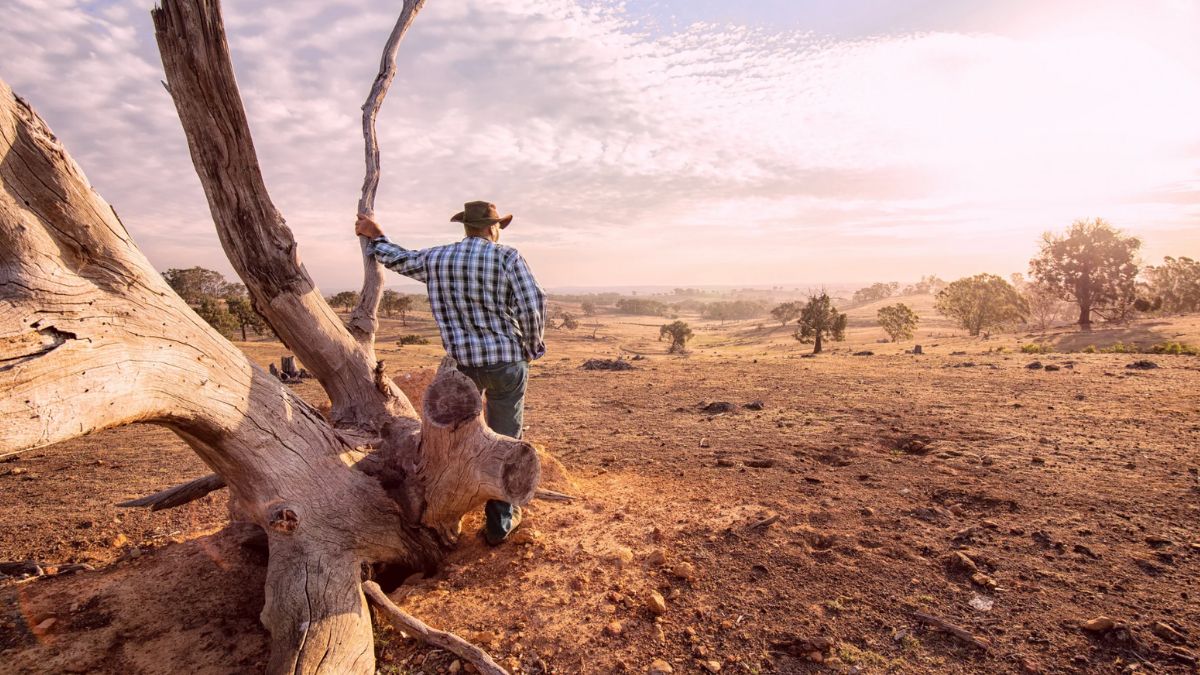
They are involved in negotiating a new contract for next year’s crop. In August, farmers rejected Simplot’s offer of a 6 cents per kilo cut on last year’s price. Recently the company came back with an offer of a 4 cent reduction. Growers have rejected this offer as well. They are seeking an increase of at least 2 cents per kilo to try to stay ahead of price increases in diesel fuel, fertiliser and other inputs.

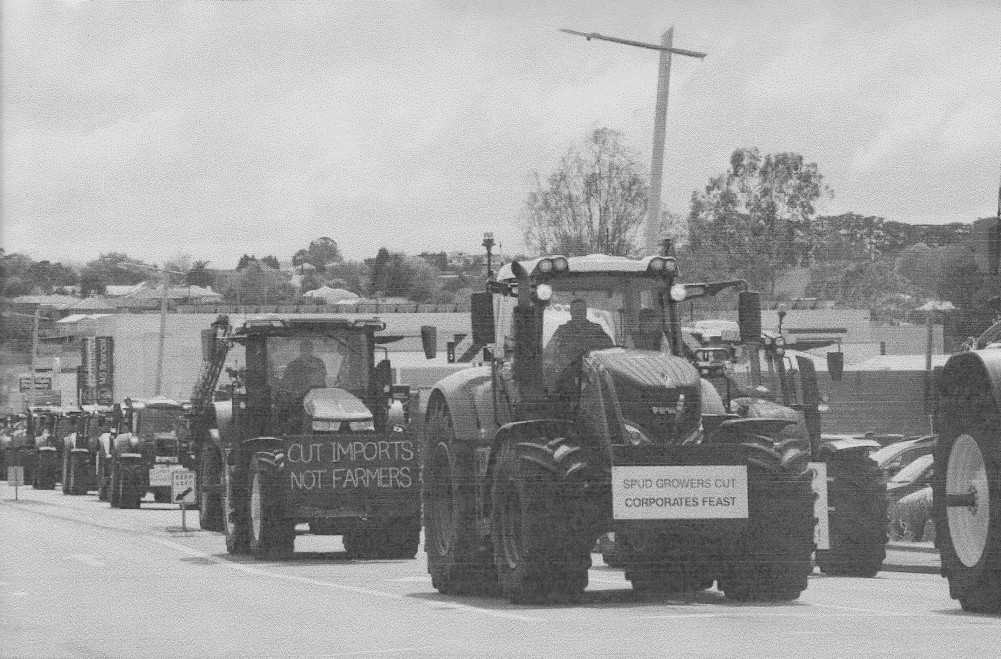
Farmers argue that Simplot’s offer would cost them hundreds of thousands of dollars, and force many out of the industry. It costs $22,000 in inputs to grow one hectare of potatoes. Recently farmers staged a protest at Deloraine in northern Tasmania, where 130 farmers in 58 tractors, trucks and other machinery arrived in a convoy to highlight their struggle.

The Tasmanian potato industry is worth $463 million, with $431 million of this for potato chips, hash browns and other potato products. These are processed at one of Simplot’s Tasmanian factories in Ulverstone, which employs over 450 people.

The Australian Manufacturing Workers Union, which covers many of the workers in Simplot’s factories, is supporting the farmers in their struggle. They recognise that the livelihood of their members is also at stake if farmers are forced out of business.

Simplot is perfectly capable of paying a fair price to farmers for their produce. Privately-owned US company Simplot ranks 54 th in the list of private companies, with revenue of US $7.6 billion. In Australia, Simplot has 5 factories in NSW, Victoria and Tasmania. Last year Simplot made a profit of $7.6 million from sales of frozen vegetables and other products sold under many well-known brands including Bird’s Eye, Edgell, Chicken Tonight, Chiko Rolls, John West, Leggo’s, I&J, Harvest and Sea Kist.

In 2024 the Australia-wide company generated total revenue of $1,750,270,000 including sales and other revenue. Like most US and other multinationals operating here, it can use any number of legislative loopholes to turn $1.75 billion in revenue to a measly $7.6 million in profits in order to minimise its taxation payments.

Simplot is blaming competition from imported potatoes coming into Australia from India, China and other countries for their attempt to reduce their payments to farmers. Last year over 100,000 tonnes of potatoes were imported from India and China. These are being used in supermarket house-branded products.

We wish the Tasmanian potato growers and workers victory in their struggle with this US-owned multinational.


Monday, August 25, 2025

Foreign ownership of Australian dairy industry to intensify

Written by: Duncan B. on 25 August 2025


The degree of the concentration of foreign ownership of the Australian dairy processing industry is about to intensify with the announcement by New Zealand-owned Fonterra that they are to sell their Australian operations to the giant French dairy company Lactalis in a $3.5 billion deal.

This will leave Lactalis and the Canadian-owned Saputo in control of a large section of the Australian dairy processing industry.

A bid by Australian-owned Bega was not enough to win the race for Fonterra. The ACCC has already indicated that it will not oppose the deal, but dairy farmers are worried that the combination of the two biggest players in the industry will reduce competition at the farm gate for their milk.

This comes as it was recently announced that total Australian milk production has fallen again. Australia’s total milk production in 2024-25 was 8.315 billion litres. This is predicted to fall to 8.147 billion litres this season. Reasons for this fall include droughts and floods in dairying areas, and more dairy farmers changing to other types of farming, or leaving farming altogether because of the  increasing costs of inputs, and farm-gate prices for their milk that are not enough to cover production costs.

As many Australian farmers are abandoning dairying, Canadian pension fund PSP is becoming a major player in Australian dairying through their subsidiary Aurora Dairy. They have 450 employees and 48000 cows producing 280 million litres of milk on 54 farms.

We must oppose the continuing take -over of Australian agriculture by foreign interests which is an  attack on Australian Independence. 

Sunday, June 29, 2025

Drought

Written by: Duncan B. on 26 June 2025


Henry Lawson called drought the “red marauder.” Climate-change deniers and National Party politicians love quoting Dorothea Mackellar’s land of “drought and flooding rains” try to convince us that droughts are normal and natural in Australia.

There is no doubt that Australia is a land of drought. Bureau of Meteorology records show that on average, Australia experiences a severe drought every 18 years. Many droughts have been recorded in Australia from the early days of colonisation to the present. They include the Federation drought of the early twentieth century, the World War 2 drought of 1937- 45 and the Millennium drought of 1996 - 2010.

At present, parts of South Australia, most of western Victoria and northern Tasmania are experiencing severe drought. The Federal and state governments have belatedly come to the assistance of drought-affected farmers with various cash grants and plans to improve farmers’ access to hay. The Victorian Government has paused the introduction of a higher Emergency Services levy on drought- affected farmers. As usual these band-aid measures are too little too late.

Droughts existed in Australia before colonisation, but indigenous Australians managed their lives to deal with them. They moved from place to place as the availability of food and water dictated, taking only what they needed and leaving sufficient supplies for other people and for future use. They set aside areas of food plants and game as sanctuaries which were left untouched to ensure food for the future.

With colonisation came farming practices which quickly began to degrade the land and worsened the effects of droughts. Sheep compacted the soil so that rainwater ran off instead of soaking into the ground. Large-scale clearing of trees led to a reduction in rainfall, and this, combined with the destruction of native grasses by sheep led to soil erosion and fierce dust storms.

The effects of climate change will make hot days hotter, increase the severity of extreme rainfall events and increase the likelihood of droughts in Australia. Government hand-outs to farmers will not solve the problem of drought. Only reducing and reversing the effects of climate change will achieve that.

Many farmers are deeply involved in developing innovative farming practices which seek to reduce the effects of agriculture on the environment and reduce the use of inputs such as fuel, electricity and water. Many have gladly accepted wind turbines and solar panels on their farms. In embracing action against climate change these farmers are working towards making agriculture sustainable in Australia. They are leaving behind the climate-change denying, nuclear power- loving dinosaurs of the National Party.


Monday, May 5, 2025

Farm ownership in Australia

 Written by: Duncan B. on 5 May 2025


The farm newspaper Weekly Times has just released the results of its annual survey of farm ownership in Australia. As always, these results make interesting reading.
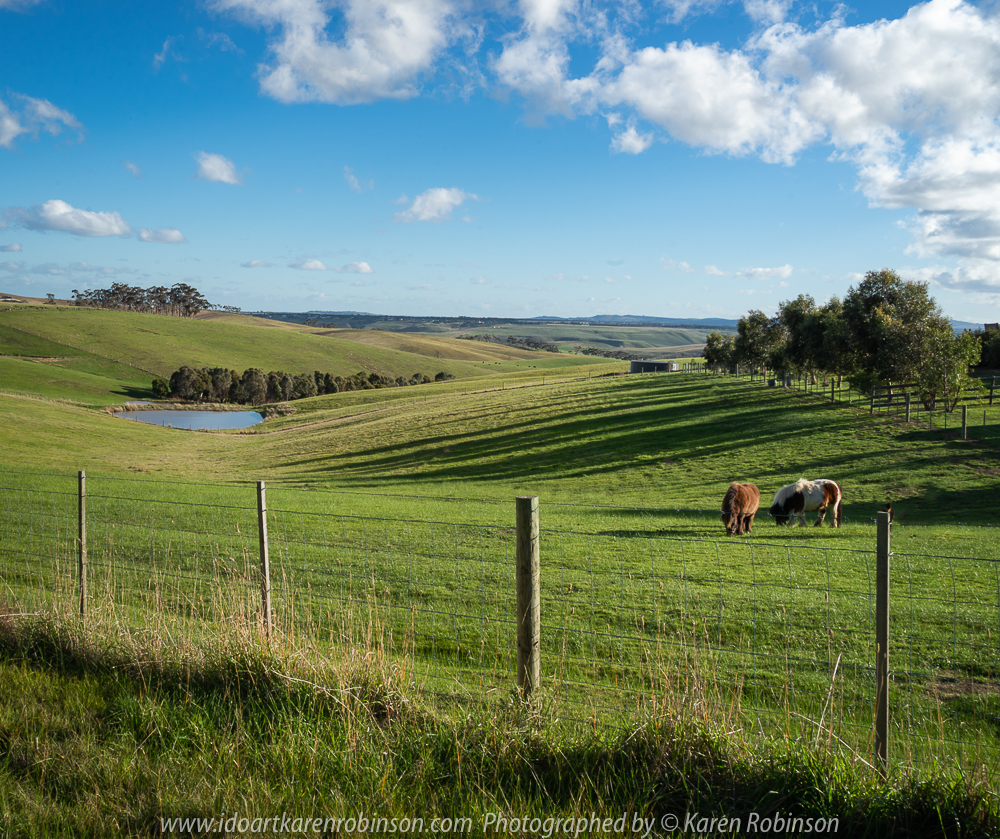
Top of the list and clear leader is the Canadian Pension fund PSP Investments, which now has Australian agricultural holdings valued at $8.5 billion. They continued to spend up big in the last year and have investments in a wide variety of farming including cropping, livestock, horticulture, vineyards, cotton and nuts across many different areas of Australia.

Second is the Australian-owned Macquarie Agriculture Fund, with $4 billion in assets also spread across Australia in a wide variety of types of farming.

A US-based pension fund, TIAA & Nuveen Natural Capital is third with $2.5 billion of well-spread assets in Australia. This company’s global portfolio includes 600-plus assets valued at US $13.7 billion in 10 countries.

Fourth is the Trump-loving Gina Rinehart. Her Hancock Agriculture and S Kidman & Co has $2 billion invested mainly in cattle raising in the Northern Territory, Queensland, NSW and Victoria.

Behind Gina come a number of companies with investments in the $1-2 billion range. They are a mixture of local investment funds, Canadian pension funds plus one US and one Hong Kong-based company.

One to watch is Farmland Reserve, which is an investment arm of the Church of Jesus Christ of the Latter Day Saints (Mormons). Acting through a local subsidiary Alkira Farms Inc., this company has been busy in the last year, spending nearly $500 million on acquisitions of Australian farms. Farmland Reserve has a world-wide investment portfolio valued at over A$300 billion. We will watch with interest at what this crowd is up to!

The wide-spread ownership of our agriculture by foreign interests puts at risk our food security and their hold over water rights will make it harder for Australian farmers to gain access to precious irrigation water.

Oppose the foreign take-over of Australian agriculture!


Saturday, January 4, 2025

2024 in Australian Agriculture

 Written by: Duncan B. on 4 January 2025


2024 saw billions of dollars worth of Australian farmland and agricultural businesses change hands in a market dominated by institutional buyers, overseas buyers and wealthy individuals.

Canadian and US pension funds were again among the biggest buyers of Australian farm assets. Even a Utah-based subsidiary of the Church of Jesus Christ of the Latter Day Saints paid over $300 million for a 26,885 ha cattle and cotton growing property in Queensland.

US investors were behind the three biggest agricultural property transactions for 2024, which saw more than 265,000 ha change hands for more than $1.2 billion. Canadian pension fund PSP was involved in some major purchases, as was US pension fund TIAA-CREF.
 
Canadian and US pension funds are control Australia’s largest summer and winter cropping operations. Canada’s PSP, the largest investor in Australian agriculture by value, control over 230,000 ha of cropping operations, producing winter cereals, oilseeds and cotton.
 
Although overseas purchase of Australian farmland continue at a high rate, Foreign Investment Review Board approved investment proposals for the agriculture, forestry and fisheries sector was $5.3 billion for 2023-24. This was a 34% drop on the previous year. FIRB approvals for agricultural investments have been valued at between $7 billion and $8.5 billion since 2016-17, except for the COVID year of 2020-21. One reason given for the fall in investment is the lack of suitable properties ($100 million or more) of the type that foreign investors seek.
 
Experts are predicting that foreign investors, especially from the US will be back in the market in a big way this year as the US corporate sector is posting record profits. The corporates will be looking to invest in international markets.
 
One factor making Australian farming attractive to foreign investors is the difference in the average value of agricultural land in Australia ($9184 per ha), compared to the US ($16,200) and Europe ($17,500). This difference allows foreign investors to make a healthy return on their investments.
This means that more of Australian land will pass into foreign hands!

Tuesday, October 8, 2024

Another Dairy Industry Casualty

Written by: Duncan B. on 4 October 2024


(Murray Bridge News  Photo: Peri Strathearn)

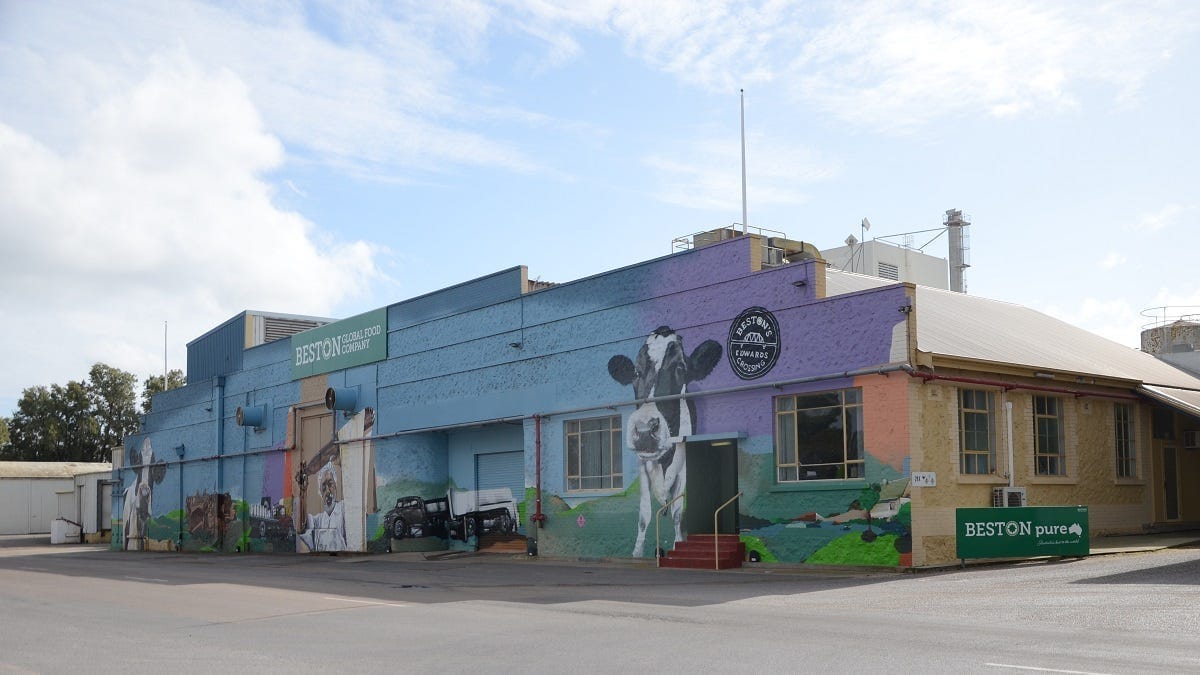
In late September this year South Australian dairy processor Beston Global Foods was placed into administration, making it the thirteenth dairy processor to suffer the same fate since mid-2022.

The company blamed high operating costs, including interest costs, energy, labour and the farm gate price paid to farmers for their milk. They also blamed a high level of dairy products being imported into Australia.

About 160 jobs in two factories are at risk, and farmers who supply the company are in limbo. In July the company sold its meat processing section, Provincial Food Group, to raise some cash to pay down some of its debt to the bank. Unfortunately for Beston, a proposed buyout of Beston’s dairy processing arm by Japanese company Megmilk Snow Brand fell through.

Beston joins other high-profile dairy companies in trouble, including the famous King Island Cheese factory, owned by the Canadian dairy giant Saputo, which wants to close the King Island factory down in mid-2025. King Islanders are worried about the effects this will have on jobs on the island, other King Island businesses and the prospects for the island’s young people.

Another famous Australian company at risk was dessert manufacturer Sara Lee, which went into administration last November. Fortunately for Australian sweet-tooths a rescuer was found for Sara Lee. It is also uncertain what the effects on dairy processing in Australia will be if New Zealand dairy company Fonterra goes through with its proposed sale of  its Australian assets.

As we have previously reported the Australian dairy industry has seen a reduction in the amount of milk produced in Australia, as many dairy farmers leave the industry due to rising input costs and receiving payment for their milk from processors that barely allows them to break even, let alone make a profit.

The chief financial officer of Saputo recently sparked outrage among dairy farmers when he said that the company wanted to keep farm gate prices low for as long as possible. He said, “We’re hopeful that this milk price will stick for as long as we can.”

In early September, ACTU secretary Michele O’Neil joined striking Saputo maintenance workers outside Saputo’s Burnie (Tas) plant. She lashed Saputo, saying that the company had badly treated workers and farmers time and time again. She said, “Saputo is a huge multinational. In the past two years they’ve made more than $1bn in profit globally. Between 2022 and 2023, they paid their CEO more than a 300% pay increase, where his pay went up from $1.6m to $5.1 m-so they’re not showing good faith. This shows a disrespect for farmers as well as workers.”

Michele O’Neil’s comments reinforce what Vanguard has been saying for a long time. Farmers and workers have the same common enemy. There is a strong basis for unity between these two important sections of Australian society.

Wednesday, July 10, 2024

Australian Dairy Industry News

Written by: Duncan B. on 9 July 2024


Twenty Australian Manufacturing Workers Union maintenance workers employed at the Burnie (Tasmania) plant of Canadian-owned dairy processor Saputo have been on strike for a month.

They are seeking to be paid the same as Saputo employees doing the same job on the mainland, claiming they are receiving 21% less than their mainland colleagues. They have called for a boycott of Saputo products, which include the Cheer, Devondale, Cracker Barrel, Mersey Valley and several other brands of cheese.

The majority of the Australian dairy processing industry is foreign-owned, with Saputo (Canada), Fonterra (NZ) and Lactalis (France) the main players. Bega is the only major Australian-owned dairy company, along with some smaller companies such as Norco.

The same dairy companies that exploit Australian dairy factory workers also exploit Australian dairy farmers. Recently the processors announced this year’s farm gate price offers to dairy farmers for their milk. The prices offered are actually less than last year’s, being around $7.80 to $8.30 per kilogram of milk solids. 

These prices are around the farmers’ cost of production or even less. It is estimated that dairy farmers will be $200,000 to $300,000 worse off, as they are also being hit by rising costs for water, electricity and all their other inputs. More dairy farmers are expected to leave the industry.

Dairy farm numbers last year were 4163, down from 4420 in 2022, and 6308 in 2014. Australia’s milk pool has shrunk to around eight million litres. It is not surprising that we are seeing a massive increase in the import of dairy products into Australia from Europe, the US and New Zealand. In 2022-23, dairy imports rose from around 293,000 tonnes to around 344,000 tonnes over the previous year. This was an increase in value from $2.1 billion to $2.7 billion.

Farm gate prices paid by processors to dairy farmers in New Zealand are about 30% lower than in Australia, giving New Zealand companies a considerable price advantage over Australian processors, allowing them profit from exports to Australia.  Last year Australia imported 47,500 tonnes of butter, mainly from New Zealand. Much of the imported butter and cheese is being sold by supermarkets under their own house brands. 

In a move which will shake up the dairy industry in Australia, New Zealand-based Fonterra has announced that it will put its Australian operations up for sale. Fonterra employs 1600 people at eight sites in Victoria and Tasmania and processes 1.4 billion litres of milk each year.

The Canadian-owned superannuation fund PSP is deeply involved in Australian dairy farming through its company Aurora Dairies. This company has 450 employees and has 48,000 cows producing 280 million litres of milk on 54 farms in Australia. Aurora’s economies of scale will allow them to make a profit from dairying while small farmers struggle to make a living. It will be interesting to see if PSP makes a bid for Fonterra’s factories. This would give them control over the whole dairy business from cow to consumer. 

Australia’s small farmers and workers have the same enemy. Only unity in struggle will end the exploitation.

Tuesday, June 11, 2024

Why we have a beef with capitalism…

Written by: Alan Jackson on 12 June 2024


(Above: Meat Industry Employees Union, 2007 Queensland Labour Day March. Photo by  David Jackmanson is licensed under CC BY 2.0.)

Do you remember the last time you saw the iridescent wings of a Christmas beetle bring in the summer? As much as I try to conjure the image or even the thought of the last time, I fall flat. In the younger years of my life, I remember them flying into my house in abundance. There were so many it was a normalised but appreciated event. 

Now their abundance has turned into its opposite, now I no longer see these harbingers of the summertime. What is the cause of this? Why is it that these beautiful, fluorescent scarabs have stopped showing? 

There’s a multitude of reasons with one root cause being the catalyst. What is this mysterious big bad? Capitalism! More particularly Capitalism and its destructive effects on nature and the exploitative agriculture practises it promotes in its procurement of profit. 

What other social, political and environmental effects does this haemorrhaging cause? 

What is one of the main drivers of deforestation in Australia? 

Looking through a report by Greenpeace, we will see that one of the worst contributors is cattle. Is this to say that cows are prancing on their cloven hooves holding our country at gunpoint? Absolutely not, that would be ridiculous. Although they are ‘cows’, the forces responsible are the multibillionaires and monopolies running this country to ruin for profit. 

Whether this is a conscious decision is irrelevant. The mere fact that they operate and exist in a Capitalist system forces them to exploit both land and people alike. 

Look at the main finds from the Greenpeace report. Some key findings from the get-go are “Australia… is the second largest beef exporter in the world behind Brazil. Beef cattle farming covers about 50% of Australia’s landmass, which explains the disproportionate impact of the industry on Australia’s forests and natural ecosystems.” (1.) 

In addition, “Approximately 30% of Australian beef is consumed domestically”. (2.) 

The report also tells us what companies are the main contributors. Those companies being Retailers – Aldi, Coles, Hungry Jacks, McDonalds, Metcash, Woolworths and Processors - JBS, Teys, Tyson and ComGroup Supplies. 

Those that are foreign multinationals, or tied to foreign capital, include:
Aldi -German
McDonalds – US
JBS – Brazilian (3.)
Tyson- US (4.)
Hungry Jacks – Australian/US (5.)
Teys – Australian/US (6.)

Startlingly put, Australia is undergoing a sustained, mostly hidden deforestation crisis of a globally concerning scale. WWF names eastern Australia among 24 global deforestation fronts, alongside places like the Amazon, the Congo and Borneo. This is because currently an MCG-sized area of forest and bushland is bulldozed every two minutes. This is killing tens of millions of native animals each year, while harming the land, polluting rivers and damaging the Great Barrier Reef. Australian deforestation also contributes considerably to Australia’s greenhouse gas emissions.” (7.) 

Many operations are centred in Queensland, the state I am from, that faces terrible bushfires yearly with one of the recent most devastating being the fires earlier this year and the bushfires of the 2019-20 black summer. For more see Vanguard Article – ‘For a United Front Against Fossil Fuels and Feral Species.’ (November 2023). 

The last devastating finding I’ll add is “This deforestation is occurring without state or Federal Government controls. In Queensland this is largely, but not exclusively, due to a loophole in the Vegetation Management Act 1999 that makes large areas of land previously cleared as exempt “Category X” land, even if the forest has regenerated to a healthy state and is home to threatened species. Meanwhile researchers have demonstrated that over the course of nearly 20 years the Federal Government has only assessed less than 10% of all deforestation under the national environment law.” (8.) 

Our reliance on the cattle industry results in us producing far more beef than needed for self-sustainability and leads to an overconsumption of beef socially pushed as a result. This puts us into the upper echelons of worldwide heart diseases, cardiac arrests and obesity worldwide. 

With our reliance on the cattle industry the myth of the Australian small farmer is invoked, the masses are appealed to in order to create a fake caricature of a true-blue Aussie farmer struggling on their farm instead of the reality of Corporations paying Migrants peanuts for labour due to their easily exploitable circumstance. 

A recent case was the horrible mistreatment of Chinese meatworkers in Australia’s Visa factories with one specific worker in mind bearing the scars, Wang. “The abattoir clock had ticked into overtime when Chinese meatworker Wang pressed his foot on a button to lower a platform to better cut into a cow carcass. Instead of gliding down, the platform shuddered to a stop and caused a tank of near-boiling water to spill over him. The next day, Wang turned up for work as usual: he did not want to disappoint his employer because soon he would become eligible for permanent residency in Australia. Months later, though, his body still in pain from the workplace accident, Wang found himself without a job anyway, his hope of a better life in Australia in ruins.” (9.) 

If you’re hoping for a happy ending there is none. “Wang is now back in China but is keen to speak out about his experience at Teys Australia’s Biloela abattoir in Queensland. He wants to tell Australians how vulnerable the migrant workers are who come to Australia to do jobs the rest of us shun.” (6.) Wang goes on to say “If you are Australian local people, you don’t have to worry about this. You have equal position with the factory like anyone else. We are poor people. We have no power when we talk with factory.” (10.) Links for more stories on the Migrant Workers plight for the right to work safely in Australia can be found below. (11.)

What stopped the Christmas Beetles? Insecticides, more particularly Imidacloprid and other terrible toxins known to cause ‘Insect Armageddon’ used to protect cotton. Who would’ve thought, inextricably linked to our terrible cattle practices are our cotton practices and with that our agricultural and industrial practices as well. 

This all comes down to Capitalism and its need for profit. With this need for profit, it will put all else before profit even the very thing that is making them profit whether they know it or not. 

Cattle can’t graze a land that is destroyed. The capitalists don’t care. Capitalists only think of profit in the quickest way possible. There is no time to grow trees that our children will see prosper under capitalism. We fell those trees so we can be comfortable, and our children can figure it out for themselves. This is not right. What is needed in Australia is the defeat of Capitalism and Imperialist domination. Economic freedom, self-sustainability, independence and Socialism is the only way we can be free of this turmoil. 


Sources – 
(1.)  Greenpeace Australia – Deforestation Crises on Their Watch 2024 (Page 8)
(2.) ibid
(3.) JBS is the Australian subsidiary of JBS S.A., a Brazilian company that is the largest meat processing enterprise in the world. The company has been regularly criticised for sourcing meat from farms that contribute to the destruction of the Amazon rainforest. JBS was initially established as a slaughtering business by José Batista Sobrinho, a rancher in Anápolis, Brazil, in 1953. His sons Joesley Batista and Wesley Batista share a controlling 42% stake in JBS through J&F Investimentos which, in 2017, agreed to pay US$3.2 billion in fines, for leniency from the Brazilian government "over 25 years after admitting to giving roughly $150 million—mostly in bribes—to Brazilian politicians. The Batista brothers escaped jail as part of the deal. In May 2021, it temporarily stood down 7000 Australian workers and up to 3,000 workers in Canada and the United States while it dealt with a cyber attack, eventually paying a ransom of $US11 million in Bitcoin.
In 2022, the ABC revealed how financial support from the Brazilian government, obtained as a result of bribery and corruption, had enabled JBS to purchase Australian Meat Holdings, the country's biggest beef processor, in 2007, and the following year to purchase Tasman Group, which owned abattoirs in Tasmania and Victoria plus a feedlot in NSW. The ABC said “if you buy Primo ham, Huon salmon, McDonald's burgers or meat from Coles, Woolworths or Aldi, you're likely eating JBS products.”
JBS Australia poor record on workers’ safety: Australia: Meat company JBS repeatedly fails to protect workers from injuries; convicted at least six times over serious safety breaches - Business & Human Rights Resource Centre (business-humanrights.org)
(4.) Tyson Foods, Inc. is an American multinational corporation based in Springdale, Arkansas that operates in the food industry. The company is the world's second-largest processor and marketer of chicken, beef, and pork after JBS S.A. Tyson Foods has been involved in a number of controversies related to the environment, animal welfare, and the welfare of their own employees. It has paid hundreds of millions of dollars to US competitors to settle price-fixing claims against it.
(5.) Hungry Jack’s is an Australian fast food franchise of the US Burger King Corporation. When Burger King tried to open up in Australia, it found that its name was already registered to a takeaway outlet in Adelaide, so Canadian-Australian businessman Jack Cowan, who had introduced KFC to Australia, entered a franchising arrangement with Burger King to operate their business under his name.
(6.) Originally established by four Teys brothers – all butchers – in Brisbane, it has since 2011 been in a 50-50 partnership with Cargill, the largest privately held company in the United States in terms of revenue.
(7.) (Ibid Page 9)
(8.) Ibid. (Page 6)
(9.) Ibid (page 6)