Showing posts with label Latin America. Show all posts

Wednesday, November 12, 2025

Away with the Yankee presence in the waters of the Caribbean

 Written by: ICOR on 13 November 2025
 

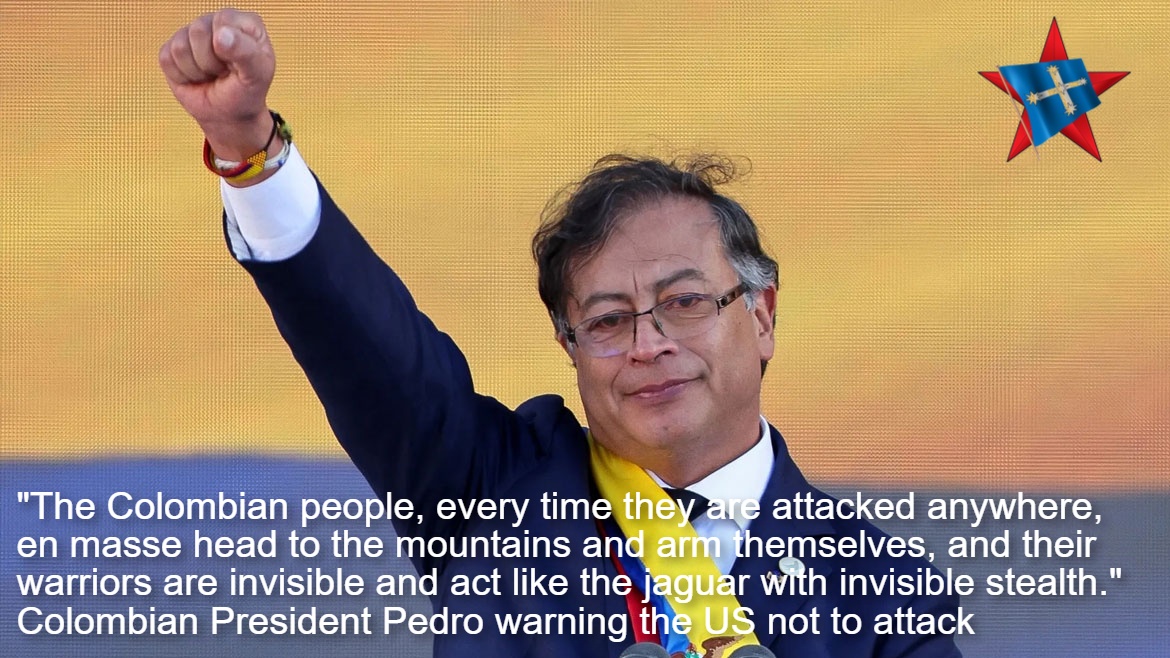
(Source: https://www.semana.com/)

The CPA (M-L) has signed a statement by the International Coordination of Revolutionary Parties and Organisations (ICOR) on US threats to the sovereignty of Venezuela -eds.

Away with the Yankee presence in the waters of the Caribbean

 
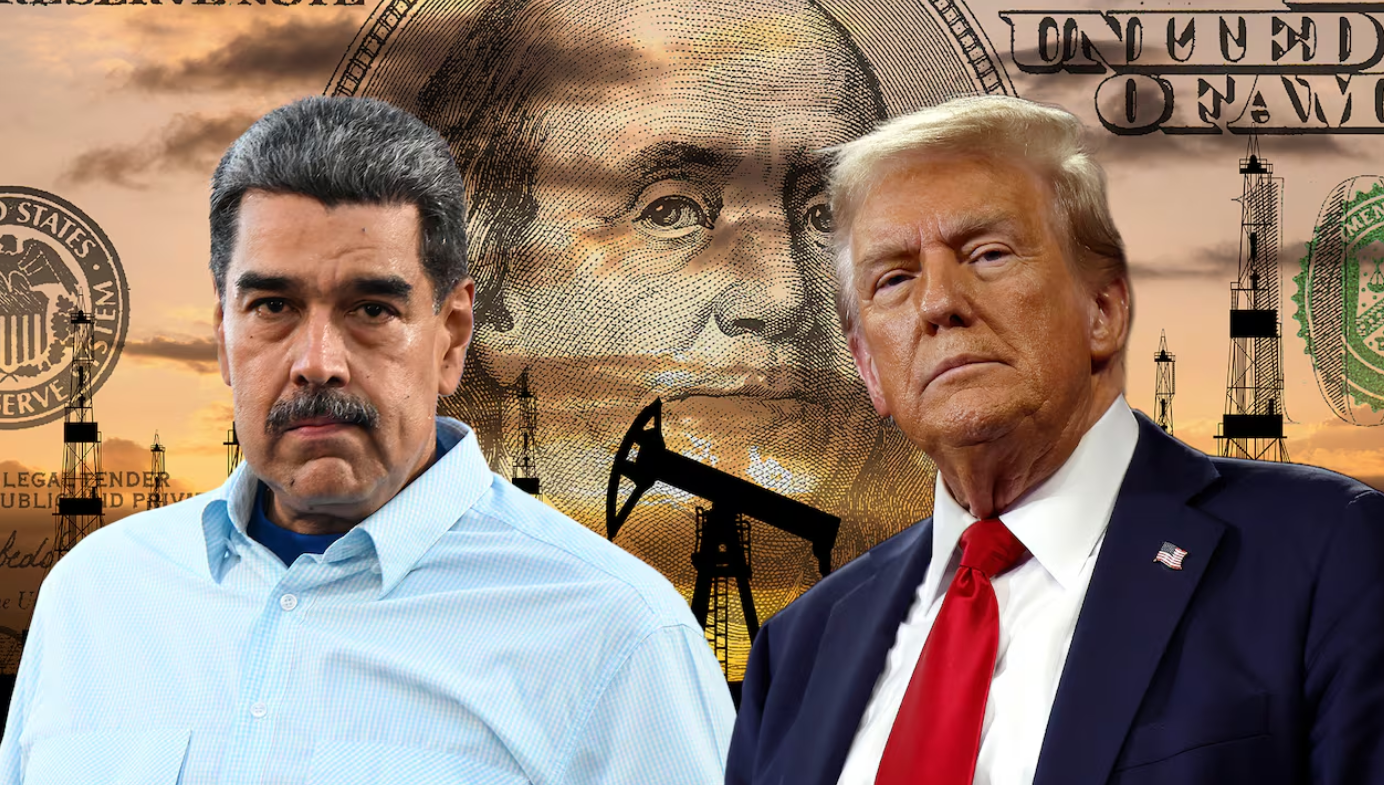
Once again, US imperialism is threatening to invade Venezuela, this time under the pretext that Nicolás Maduro is involved in international drug trafficking through the so-called "Los Soles" cartel - a pure invention of Donald Trump and the CIA. 
 
Contrary to international maritime agreements, since the beginning of September, the US has carried out at least six attacks on boats in Venezuelan waters, killing over 30 people after accusing them of transporting drugs. In addition, Trump sent three destroyers into the waters off Venezuela, a nuclear-powered submarine and several reconnaissance aircraft. A criminal threatening gesture shortly before a military intervention. 
 
Unfortunately for him, the world knows him only too well and knows that he is capable of the most implausible lies in his efforts to demoralize heads of state and governments hostile to him. America and the world remember only too well the invasion of Panama and the arrest of Manuel Antonio Noriega in 1989. Today, Trump is imitating the methods of President George H. W. Bush, whose accusations about Noriega’s links to drug trafficking served as a pretext for the invasion of Panama. Furthermore, his arguments collapse when one considers the trail of blood left by the dictators the US has supported, from Batista in Cuba, Augusto Pinochet in Chile, and Videla in Argentina  to Netanyahu in Israel. 
 
There is no doubt that the United States' interest in these maneuvers is not simply to overthrow Nicolás Maduro, their goal is to control the oil and other natural resources of this rich South American country. Venezuela has the largest oil reserves in the world and significant deposits of gold, iron, diamonds, copper and many other minerals, making the country one of the richest in the world in terms of natural resources. The presence of US imperialism in the Caribbean is not only a threat to Venezuela, but to the whole of Latin America, especially countries with progressive governments such as Cuba, Nicaragua, Colombia and Brazil. 
 
With this move, US imperialism is also trying to suppress any attempt at rebellion that might arise in any of the countries under its tutelage in the region. It also wants to warn China and Russia, who are competing with it for influence and markets in the region, that it is still alive. 
 
Stopping the interventionist aspirations of fascist Donald Trump and imperialism on Venezuelan territory is therefore a revolutionary obligation. Therefore, the International Coordination of Revolutionary Organizations and Parties (ICOR) urgently calls on the entire worldwide revolutionary movement to make the defense of Venezuela's sovereignty a current task in the face of the ongoing threats of invasion by US imperialism in the waters of the Caribbean. We also call for the strengthening of the anti-fascist and anti-imperialist united front as the only guarantee to stop the expansionist greed of the imperialist countries.
 
Yankees, get out of the Caribbean waters!
No Yankee presence among other peoples of the world!
Resist the fascism of Donald Trump and all fascists!
Imperialism is war! Down with all imperialists!
Long live the self-determination of the peoples!
 
Present signatories, further signatures possible. Current list of signatories at www.icor.info
1. PCPCI   Parti Communiste Proletarien de Côte d'Ivoire (Proletarian Communist Party of Ivory Coast)
2. ORC   Organisation Révolutionnaire du Congo (Revolutionary Organization of Congo), Democratic Republic of the Congo
3. UPC-Manidem   Union des Populations du Cameroun - Manifeste National pour l’Instauration de la Démocratie (Union of Populations of Cameroon - National Manifesto for the Establishment of Democracy)
4. CPSA (ML)   Communist Party of South Africa (Marxist-Leninist)
5. PCT   Parti Comuniste du Togo (Communist Party of Togo)
6. PPDS   Parti Patriotique Démocratique Socialiste (Patriotic Democratic Socialist Party), Tunisia
7. NCP (Mashal)   Nepal Communist Party (Mashal)
8. RUFN   Revolutionary United Front of Nepal
9. CPA/ML   Communist Party of Australia (Marxist-Leninist)
10. Krasnyj Klin   Аб'яднання беларускіх камуністаў «Чырвоны Клін» (Association of Belarusian Communists «Red Wedge»), Belarus
11. БКП   Българска Комунистическа Партия (Bulgarian Communist Party)
12. PR-ByH   Partija Rada - ByH (Party of Labor - Bosnia and Herzegovina)
13. MLPD   Marxistisch-Leninistische Partei Deutschlands (Marxist-Leninist Party of Germany)
14. UPML   Union Prolétarienne Marxiste-Léniniste (Marxist-Leninist Proletarian Union), France
15. KOL   Kommunistische Organisation Luxemburg (Communist Organization of Luxemburg)
16. RM   Rode Morgen (Red Dawn), Netherlands
17. UMLP   União Marxista-Leninista Portuguesa (Portuguese Marxist-Leninist Union)
18. RMP   Российская маоистская партия (Rossijskaya maoistskaya partiya) (Russian Maoist Party)
19. MLGS   Marxistisch-Leninistische Gruppe Schweiz (Marxist-Leninist Group of Switzerland)
20. MLKP   Marksist Leninist Komünist Parti Türkiye / Kürdistan (Marxist Leninist Communist Party Turkey / Kurdistan)
21. KSRD   Koordinazionnyj Sowjet Rabotschewo Dvizhenija (Coordination Council of the Workers Class Movement), Ukraine
22. UoC   Union of Cypriots, Cyprus
23. PCP (independiente)   Partido Comunista Paraguayo (independiente) (Paraguayan  Communist Party (independent))
24. PC (ML)   Partido Comunista (Marxista Leninista) (Communist Party (Marxist-Leninist)), Dominican Republic
25. SUCI (C)   Socialist Unity Center of India (Communist)

Sunday, October 26, 2025

US imperialism’s back yard blues

 Written by: (Contributed) on 27 October 2025


A series of diplomatic incidents between the US and countries in Latin America are best assessed in the wider context of present-day Cold War hostilities. The relationship between the northern US and the southern half of the Americas, however, has a long and troubled history. The emergence of China as a competitor to traditional US hegemonic positions, likewise, has also become an additional factor for consideration.

Allegations, by the Trump administration, that the governments of both Colombia and Venezuela were actively involved in drug-running have coincided with the largest US military exercises in the Caribbean in over three decades. (1) The former has provided the Trump administration with a means of deflecting unfavourable attention toward the Epstein scandal and a return to the days of the Reagan administration's War on Drugs; the latter is intended to send a strong diplomatic point toward the southern half of the Americas.

The fact that Reagan's War on Drugs was a convenient cover for widespread US complicity in international drug-running and the fated Iran-Contra scandal is clearly something Trump and his cohorts have forgotten, if they ever really accepted the facts in the first place which is doubtful. (2) The final section of the scandal involved the transportation of cocaine, in huge quantities, from Latin America into the US to fund the Nicaraguan Contra in Central America. (3) No evidence was provided by the Trump administration about recent allegations of drug-trafficking. Nor is it expected.

The fact that the countries of the southern half of the Americas have been moving away from previous US-led tutelage and economic dependence for decades, and forming closer diplomatic links with China remains a major point in question and has provided an explanation about the huge US military build-up in a sensitive area of the southern half of the Americas. Gun-boat diplomacy is the appropriate description of the psychological operations (psyops).

Much of the US history toward the Caribbean, Central and Latin America from the previous Cold War has provided a chilling glimpse of US connivance with regimes imposed to serve 'US interests'. (4) Their role model was General Pinochet who seized power in Chile in September, 1973, and used his position to impose economic rationalism in a test-tube like manner which subsequently became vogue economic thinking for US-led globalisation.

Globalisation was essentially intended to give the US economic domination with a monopoly of highly advanced technologies, control over the world's essential energy and mineral resources, the ability to exploit regions where profits were high and labour was cheap and finally, the right to decide the fate of millions of people.

It failed; in a spectacular manner.

The fact that General Pinochet, furthermore, was a notorious, and well-known drug-trafficker, has been conveniently forgotten by his apologists; he served his purpose. (5)

It was, however, the Bush administrations which sealed the fate of US hegemonic positions in the region; their attempt to foist a so-called Free Trade Area of the Americas (FTAA), stretching from Alaska to Chile met with fierce resistance from the southern half of the Americas who had no wish to cede their sovereignty to Wall Street and finance capital. The resistance also laid the basis of BRICs, which has proved to have far-reaching implications for the US in both the present-day and longer-term.

In recent decades China has entered the markets of the southern half of the Americas in a spectacular manner; at the turn of the century its influence was small, trade by 2008 grew at an average of 31 per cent annually, by 2021 it amounted to $450 billion and last year was $518 billion, reliable estimates cite it will grow to $700 by 2035. (6) China's growing influence in the region has been based primarily on 'soft power' and South-South Co-operation, marked by numerous trade agreements and participation in the One Belt, One Road, together with BRICs. (7)

Reliable studies of China's role in the region have concluded that it has been 'quietly reshaping the foundations of Latin American economic integration'. (8)

The developments have been closely scrutinised by the US, which regard them in a dim light. In fact, it has been noted that 'the US is losing ground to China in its own neighbourhood … and … China's growing presence in Latin America, including Colombia, has changed the economic and political dynamics in the region … and … the US has had to adapt to a new reality in its own backyard'. (9)

Foreign policy toward the region by the Trump administration has recently taken the form of their attempt to foster discord amongst different countries. Favourable diplomacy toward the far-right government in Argentina has been played against an attempt to exclude Nicaragua, Cuba and Venezuela from the forthcoming Summit of the Americas, in the Dominican Republic, scheduled for 4-5 December. It has already created the conditions whereby Mexico and Colombia have already announced they will also not be attending in protest at the exclusion of the three countries. (10) Others are expected to follow suit.

It is, however, the role of Colombia which has set the nerves of the US jangling; until 2022 it was one of the last bastions of US strategic influence in the region

Until 2022 Colombia was an important regional hub for the US to retain some hegemonic presence. Washington and the Pentagon turned a blind eye toward the right-far-right administrations ruling the country on their behalf; they had no qualms about the cocaine trade as the cartels, and their associates, served 'US interests'. Repression, therefore, was the order of the day. The present government in Bogota, however, is headed by President Gustavo Pedro, a former left-wing guerilla surrounded by a centre-left administration. It is typical of the changing balance of forces taking place across the wider region.

A noticeable development with the recent Cold War diplomatic hostilities waged by the Trump administration toward Colombia has been the decision to cut financial aid. Since the 1990s successive US administrations provided Bogota with over $14 billion in anti-drug and counter-insurgency assistance. (11) In practical terms it was historically used by the right-wing administrations to counter the influence of the left-wing forces and what was regarded by the US as subversion; the drug trade was regarded as a different matter. In fact, President Pedro has already stated that 'it was he who had exposed the ties drug traffickers had with the country's political establishment'. (12) The cutting of US aid has therefore been taken as an attempt to prevent the Pedro administration using it against supporters of the previous regimes and their right-wing subversion.

Washington and the Pentagon have been virtually reduced to only Paraguay as the last remaining supporter of traditional US hegemonic positions. It is also not a major player in Latin American politics or diplomacy and places the US at a distinct disadvantage when dealing with the region.

In conclusion, the Trump administration is waging psyops and other warfare techniques toward the southern half of the Americas; it is not particularly difficult to find the main reason.

To date, the combined share of the eleven members of the BRICs organisation in the global economy amounts to forty per cent, the developed countries, including the US and EU, have only 28 per cent. (13) The main organisation is also set to allow further countries to join which 'is widely viewed as an alternative to western-dominated institutions'. (14) The fact it has successfully enabled countries in Latin America to trade with counterparts in Africa, the Middle East and Asia, is evidence in itself, of their skilful diplomacy.

The final straw, however, for the Trump administration was the recent announcement from BRICs that they were intending reforming the World Trade Organisation (WTO) 'to make the multilateral trading system fair and reflective of today's global realities'. (15) The high-level diplomatic plan is likely to be successful; the BRICs members, and those associated with them, have the numbers in influential positions. The US, and their supporters, have been increasingly marginalised; they have passed the point of no return.

And an informed opinion on the matter, noted that BRICs, 'is important economically, but also politically, because it is a counterpoint to the hegemony of the US'. (16)

The countries of the southern half of the Americas, increasingly centred on Brazil, have successfully established the basis for a multi-polar world order, which the present Trump administration have no intention of accepting. In fact, they are being totally disruptive of the whole project; authorisation, by the Trump administration, for example, for the CIA to launch covert operations in Venezuela, leaves little to the imagination. (17)

The recent Cold War diplomatic hostilities by the US toward some governments in Latin America are best viewed in that light. Studies of the previous Cold War and US foreign policy, moreover, have suggested their significance for the present day should not be overlooked and, 'security in the Americas, so dear to the US, does not necessarily give democracy primacy. It would not take much for Operation Condor to rise from the ashes'. (18)

The analysis has provided a further insight and chilling warning about the real nature of the Trump administration. For both Washington and the Pentagon, the stakes remain very high indeed!

1.     US threat to cut aid to ally Colombia over drug-running, Australian, 21 October 2025; and, US in huge Caribbean military build-up, Australian, 16 October 2025.
2.     See: The Iran-Contra Scandal: The Declassified History, Edited, Peter Kornbluh and Malcolm Byrne, (New York, 1993).
3.     CIA's Drug Confession, The Consortium Magazine, 15 October 1998; and, America's Secret War, Third World Traveller, ref: http://www.thirdworldtraveler.com/CIA/secret_war.html ; and, 1980s, Nicaragua: Reagan's Contra Terrorists; and, 1980s, US / Central America: Contras, Gangs and Crack; and, 1980s, USA: Money laundering for Contras, Mob and CIA., A People's History of the CIA, (Ottawa, 2000), Issue 43, December 2000, pp. 35-38.
4.     See: 1976, South America, 'Operation Condor' cross-border killing, A People's History of the CIA, ibid., pp. 31-32.      
5.     See: Revealed – Pinochet Drug Link, The Observer (London), 10 December 2000.
6.     China's growing influence in Latin America, The Council for Foreign Relations, 6 June 2025.
7.     Ibid.
8.     Chinese investment shapes Latin America's economic integration, UPI., 28 June 2025.
9.     Council for Foreign Relations, op.cit., 6 June 2025.
10.   See: The president of Mexico refuses to attend the summit, Cibercuba, 14 October 2025; and, Colombia to skip summit, teleSur, 15 October 2015.
11.   US threat, Australian, op.cit., 21 October 2025.
12.   Ibid.
13.   BRICs GDP outperforms global average, BRICs Brazil 2025, 2 May 2025.
14.   BRICs meetings inflame Trump, Australian, 24 October 2025.
15.   Ibid.
16.   BRICs GDP, op.cit., 2 May 2025.
17.   Trump threatens airstrikes on Venezuela after B-52 show of force, Australian, 17 October 2025.
18.   Operation Condor Explained, Le Monde Diplomatique, August 2001, pp. 12-13.

Sunday, April 29, 2012

US imperialism despised and isolated in South America

Vanguard May 2012 p. 5
Bill F.

(Above: "I don't think they like us anymore....")

The recent meeting of the Organisation of American States in Cartagena, Colombia, did not go well for the manager of US imperialism, President Obama.


In spite of appeals from many of the 33 countries present, the United States and Canada refused to drop their veto on the attendance of Cuba at future meetings.

Ecuador and Nicaragua had already boycotted this year’s meeting over Cuba, and were joined by Bolivia, Venezuela and several others in declaring they will not attend next year without Cuba’s admission. Even host President Santos of Colombia, a close ally of US imperialism, said that Cuba needs to be included next year. “The isolation, the embargo, the indifference, looking the other way, have been ineffective.”
Obama and Canadian Prime Minister Harper were further exposed by their refusal to discuss Argentina’s claim against Britain for the Malvinas Islands (Faulklands). A furious President of Argentina, Cristina Nestor, walked out in disgust, followed by Evo Morales of Bolivia. Any chances of a ‘unifying’ final declaration also went out the door.

Adding to Obama’s discomfort came the news of US Secret Service and military personnel cavorting with prostitutes in a nearby luxury hotel.

Extracts from Cuban statement

A statement released by the government of Cuba put the isolation of US imperialism in perspective.

“The unitary and solid stand adopted by Our America on the blockade, the exclusion of Cuba and the Malvinas Islands was truly impressive. The resolve and dignity upheld by the President of Argentina in her strong defense of these causes were indicative.

“We felt proud when the President of Brazil, Dilma Rousseff, expressed with serene dignity, in front of Obama, that the Greater Homeland can only be treated as an equal and reaffirmed the common position in support of Argentina and Cuba.

 “The United States never wanted to discuss the terrible consequences of neoliberalism for Latin America and the Caribbean; or the situation of immigrants in the United States and Europe, who are separated from their families, cruelly deported or murdered at walls like the one that has been built along the Río Bravo. The U.S. government never agreed to talk about the poor either, who account for half of humanity.

“The novelty at the Cartagena meeting was that many of the governments, with natural differences and different approaches, demanded an alternative model that gives priority to solidarity and complementarity over competition based on selfishness; guarantees a harmonious relationship with nature rather than the plundering of natural resources or frenzied consumption. They called for the protection of cultural diversity as opposed to the imposition of values and lifestyles that are alien to our peoples. They asked for the consolidation of peace and rejected wars and militarization.

“They launched an appeal to recover the human condition in our societies and build a world that promotes respect for the plurality of ideas and models; the democratic participation of society in government affairs, including consultation about economic and monetary policies; the battle against illiteracy, infant and maternal mortality and curable diseases. They called for greater access to both free and truthful information and potable water. They recognized the existence of social exclusion and the fact that human rights are to be exercised by all and should not be used as a political weapon by the powerful.

“This time, the United States government was forced to listen, not to an almost unique voice as had been the case for decades or to a slender minority as occurred until very recently. Now it was the majority of peoples which expressed itself at the Summit to promote this indispensable debate either through their Presidents and Heads of Delegations or through the stand adopted by those who did not attend. The Summit was censored because the empire listens with deaf ears.”

....................
For further information, see Extractive Capitalism and the Divisions in the Latin American Progressive Camp by Prof. James Petras