Sunday, November 30, 2025

Criminalising Lenin - Putin’s attempts to stifle dissent

Written by: Nick G. on 1 December 2025


(Above- members of the Ufa Marxist study group)

On 25 November2025, Russian state prosecutors surprised no-one by demanding 20 to 24 years in a high-security penal colony for the members of a Marxist study circle in the city of Ufa, accusing them of “terrorism” and “conspiracy to overthrow the government.”

Ufa is the capital of the Republic of Bashkortostan, part of the Russian Federation, located between the Volga river and the Ural Mountains in Eastern Europe. 
Bashkortostan has a large minority nationality which formerly enjoyed autonomous rights in Lenin and Stalin’s Soviet Union when it was known as the Bashkir Autonomous Soviet Socialist Republic.

It is now a scene of ethnic and political unrest.

In 2024, local Bashkir activist Fail Alsynov was sentenced to four years in a penal colony following a speech he delivered in 2023 as locals opposed plans for the development of a gold mine. Supporters said the verdict was delayed revenge for his role in protests in previous years when activists successfully blocked plans to mine for soda on a hill considered sacred by locals.

His jailing led to fresh protests by thousands of people, at which a further four people were arrested on charges carry a potential sentence of 15 years.
Alsynov had previously been fined for criticising Russia’s invasion of Ukraine online, saying the war was not in Bashkortostan’s interests.

He heads Bashkort, a grassroots movement working to preserve the culture, language and ethnic identity of the region’s people that was banned as an “extremist organisation” in 2020.

In February 2022, five persons were detained in Ufa on charges of terrorism, but really for participating in a Marxist study group. They were part of a larger group of fifteen whose houses were searched. Security forces claimed to have found two grenades at one of the houses – those arrested said they had been planted by the security police – and this was used as the basis of terrorism charges. However, the indictment also accused the defendants of reading the works of Karl Marx, Friedrich Engels and Vladimir Lenin.

The arrests came a month after the “special military operation” directed at Ukraine. 

One of its members, Sergei Shapozhnikov — a former fighter in the armed formations of the so-called “Donetsk People’s Republic” — informed the security forces that the circle was supposedly “waiting for an unstable situation to seize power and kill police officers and politicians.” No material evidence was ever provided to support these claims.

The court instructed a panel of “experts” to evaluate whether the group’s lectures and reading material could be considered “terrorist activity.” Their conclusion was that Lenin’s foundational work “State and Revolution” was a “terrorist manual.”

Putin’s regime, which claims to have inherited the anti-fascist mantle of the War Against Fascism, is itself a fascist state.  

It is criminalising the works of human emancipation and freedom and equating the study of Marxism with terrorism. Such draconian moves surely indicate that Putin’s government is beset with more troubles than he knows how to deal with – without resorting to open repression.

Modern slavery contributes to Supercars championship profits

Written by: Ned K. on 30 November 2025


(Source: www.autoracing1.com)

The last weekend of November has seen the Grand Final of the Repco Supercars Championship held in the Adelaide Street Circuit and Victoria Park which in a previous life was a horse racing track.

The Supercars Championship event in Adelaide was the consolation prize when the Grand Prix moved to Melbourne several years ago.
The Supercars event in Adelaide is a popular event among local car racing enthusiasts. It also attracts many people from interstate and overseas, providing a boost to the Adelaide accommodation and hospitality industry.

This entertainment event, like Liv Golf and the AFL Gather Round with all 18 teams in Adelaide in the same week, have become important pillars for the fragile SA economy as far as the SA Government is concerned. 

The SA Premier is always emphasizing how important these events are for local business and for providing jobs for South Australians.

However, like every industry under capitalism, scratch the surface of the Supercars Grand Final and the shine disappears pretty quickly.

An "army" of "hidden" event workers makes the whole show possible. These workers include construction workers, hospitality workers, security workers, cleaners and more. 

The Supercars Championship of 13 car races per year including the Grand Final in Adelaide is operated by Racing Australia Consolidated Enterprises Ltd (RACE).

For the year ending 31 December, 2023, it increased profits by 16.2%. The chairperson, Barclay Nettleford, forecast "a strong outlook" for future Supercars Championships.

People who pay good money to this and other events no doubt assume that the workers making the event possible are at least paid the legal Award minimum rates.

This is often not the case. Below Award rates of pay and other dodgy arrangements enter in to the realm of what has become known as Modern Slavery.

The victims of Modern Slavery are usually new migrant workers on various forms of work visas.

RACE has several contract companies providing services at the Sportscar events, including the Grand Final event in Adelaide. The principal contract companies are often multinational or large national companies such as Pinnacle and Longreach Venue and Event Services.

Longreach won a contract for providing cleaning and waste removal services at the Adelaide event. However, it contracted out the cleaning services to a small Adelaide-based cleaning contractor who provided the cleaners to perform the work. 

Most of the cleaners were new migrant workers and to get the job they had to sign an "Agreement" with a below Award minimum flat rate of pay, no superannuation and no insurance coverage in the event of injury.

Some cleaners reject these "Agreements" as a sham contract arrangement and so don't get the job, but there are always those desperate for an income for a few days' work who agree to sign under the illegal terms offered by the immediate employer.

This is just one example of the wage swindle and super exploitation that occurs behind the limelight of the "event economy" which the SA Government and no doubt other governments have come to rely upon.

The irony of the Modern Slavery situations is that the state government/s actually are ripped off in the process as well, as the companies like Longreach and its smaller partner in crime local cleaning contractor pay less Payroll Tax to the government!


Tuesday, November 25, 2025

Pegasus: US and Israel strengthen connections

Written by: (Contributed) on 26 November 2025


The appointment of a top US spook to a high-level corporate position with an Israeli-based business entity has revealed far more than meets the eye of a casual observer. The US diplomatic relationship with Israel has many highly secretive links. The appointment has also shown the linkage between the military-industrial complex remains an important defence and security consideration; the former use business entities as front companies for a variety of purposes.

Australia has not been a passive bystander in the bigger picture of such pressing developments.

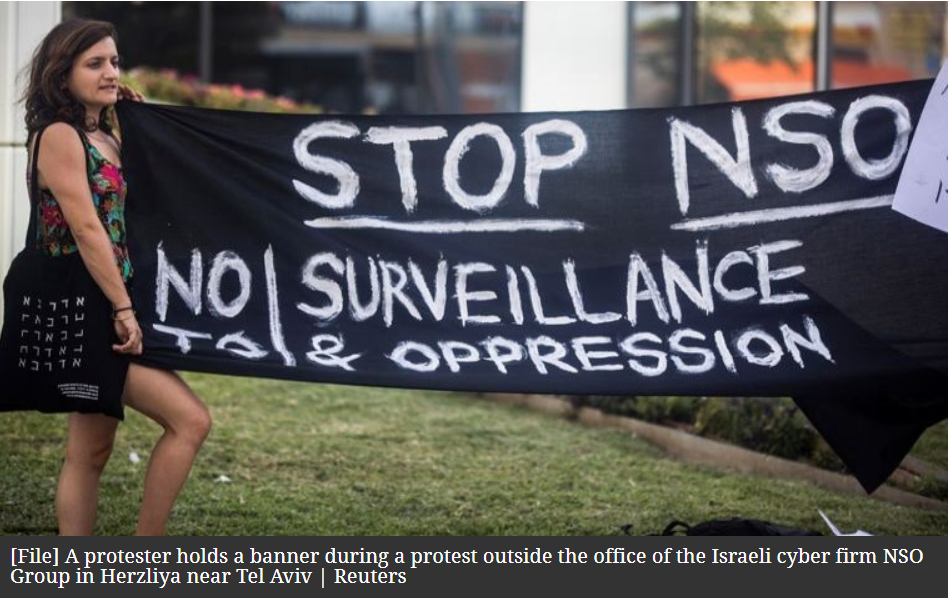
In early November the Israeli-based NSO Group announced the appointment of David Friedman, a former US ambassador to Israel and lawyer for Donald Trump, as their new executive chairman. (1) The corporate business is behind the Pegasus spyware: sensitive eavesdropping and surveillance technologies with facilities for hacking into mobile telephones and other devices through links in standard messages.

It has been noted that Pegasus spyware was programmed to use WhatsApp to hack into mobile phones automatically, without the target having to operate or tap into mail arriving on their handsets. (2) The spyware can convert a smartphone into an espionage device which can access files, message banks, microphones and cameras. (3) Pegasus is classic tradecraft for covert operations in the shadowy world of espionage; the data collected is then analysed, profiled and also used to establish networks which might be useful for further intelligence purposes and is therefore filed in vast troves for use at a later date and time.

NSO was established in 2010, just before the so-called Arab Spring, where supposed pro-democracy and anti-government protest movements sought to topple ruling administrations regarded as hostile to Israel. The protest movements included jihadists who sought the establishment of autocratic caliphates, backed secretly by the US for a variety of opaque agendas. (4)

Israel, as a hub for 'US interests' in the Middle East, quite clearly formed a substantial part of the hidden agendas. In fact, the senior nature of the US spook, together with his stated curricular background and non-stated extra-curricular roles, reveal two important considerations: the close working relationship between the two sides of the military-industrial complex and the close diplomatic links between the US and Israel.

Studies of the NSO organisation have revealed it has close working links with Unit 8200 of the Israeli Defence Force (IDF); established in the earliest days of the previous Cold War, the signals-intelligence (SIGINT) special unit, likewise, has strong links with the Israeli defence corporate sector. With a stated annual budget of above $3 billion, the unit employs several thousand personnel. (5) It has a long list of alumni who after military service find other employment in the secretive world of the defence sector. (6) 

Intelligence services have a long history of using businesses as 'fronts' for intelligence-gathering; IDF Unit 8200 would appear no different. (7) Legitimate-appearing businesses can be easily be established and used to provide cover for covert operations; the Sayanim, who are volunteers, likewise, provide MOSSAD with 'ground human' provision, and, 'without its Sayanim MOSSAD could not operate'. (8)

While US-Israeli diplomacy is also openly conducted and strongly based through official channels, other, more secretive diplomatic links, remain vital. The so-called Jonathan Institute, for example, founded in 1979 by Benjamin Netanyahu, 'became the emblematic think-tank of Israeli and US government officials'. (9) It has extensive links with MOSSAD, and has been noted for having 'provided the framework for the anti-UN sentiment that has consumed Washington'. (10) The institute remains the power-base for the Israeli far-right.

It would also be almost inconceivable that US intelligence facilities such as Pine Gap in Central Australia were not directly linked into Unit 8200. Research has established that there are seven separate intelligence-sharing agreements between the US National Security Agency (NSA) and Pine Gap, and the Israeli Signals Directorate, which provide intelligence for the Israeli military. (11) The issue of complicity, therefore, has arisen.

To what extent, therefore, the Israeli intelligence services, in their various capacities, are able to operate in Australia remains a matter of concern. They obviously do; but how?

A recent Australian military tribunal, for example, found that Israel was hosting secret training courses for Australians which, following their graduation and return home, 'could be considered a natural recruiting pool for MOSSAD'. (12) The fact the individual concerned, who was facing serious disciplinary charges and eventually lost his security clearance for not revealing the nature of the Israeli training, was employed by the Sydney Community Service Group (CSG), 'an organisation that provides security and intelligence services to the Australian Jewish community', has raised other considerations. (13)  

Whether the CGS is formally or informally linked into Israeli intelligence-based organisations was not revealed in official military and diplomatic documentation, although it remained more than a distinct possibility, in the shadowy intrigues of intelligence-gathering and covert operations: Sayanim?

Australia's close diplomatic relationship with the US, likewise, has also carried dilemmas which Canberra may have to deal with in the future: a statement issued by former UN High Commissioner for Human Rights, Navi Pillar, while addressing the National Press Club in Canberra, for example, that, 'if the Albanese government continued to be part of the supply chain that helped create weapons being used by Israel, they could be liable in the international court', has raised serious questions about passive involvement with genocide through active association and unquestioning participation with US-led military and intelligence facilities. (14)
 
And ignorance is no excuse in the eyes of the law: We need an independent foreign policy!  


1.     Israeli spyware maker gets new owners and seeks to mend reputation, Australian, 11 November 2025.  
2.     Ibid.
3.     Ibid.
4.     See: 9/11 and America's secret terror campaign, Andrew Gavin Marshall, Global Research, 10 September 2010.
5.     Official Website: Unit 8200, 7 June 2025; and, Wikipedia – IDF Unit 8200, SIGINT.
6.     Ibid., IDF Unit 8200, List of companies founded by alumni; and, From IDF to Inc., SecurityWeek, 28 February 2018.
7.     Front. Espionage, Spies and Secrets, Richard M. Bennett, London, 2002), page 110.
8.     Gideon's Spies, Gordon Thomas, (London, 1999), pp. 54-55.
9.     Covert Action, Edited by Ellen Ray and William H. Shaap, (Victoria, 2003), page 51.
10.   Ibid., page 3, page 164.
11.   Pine Gap is a place of counter-insurgency, Militarism in the NT, 2025, (California, 94104).
12.   See: Australian Army Reservist security clearance revoked over loyalty to Israel, Paul Gregoire, 5 March 2025, (Fact checked).
13.   Ibid.
14.   Labor M.P.s like Nazis: ex-UN commissioner, Australian, 5 November 2025.


Monday, November 24, 2025

Japan’s new PM drives tension in our region

Written by: Nick G. on 25 November 2025


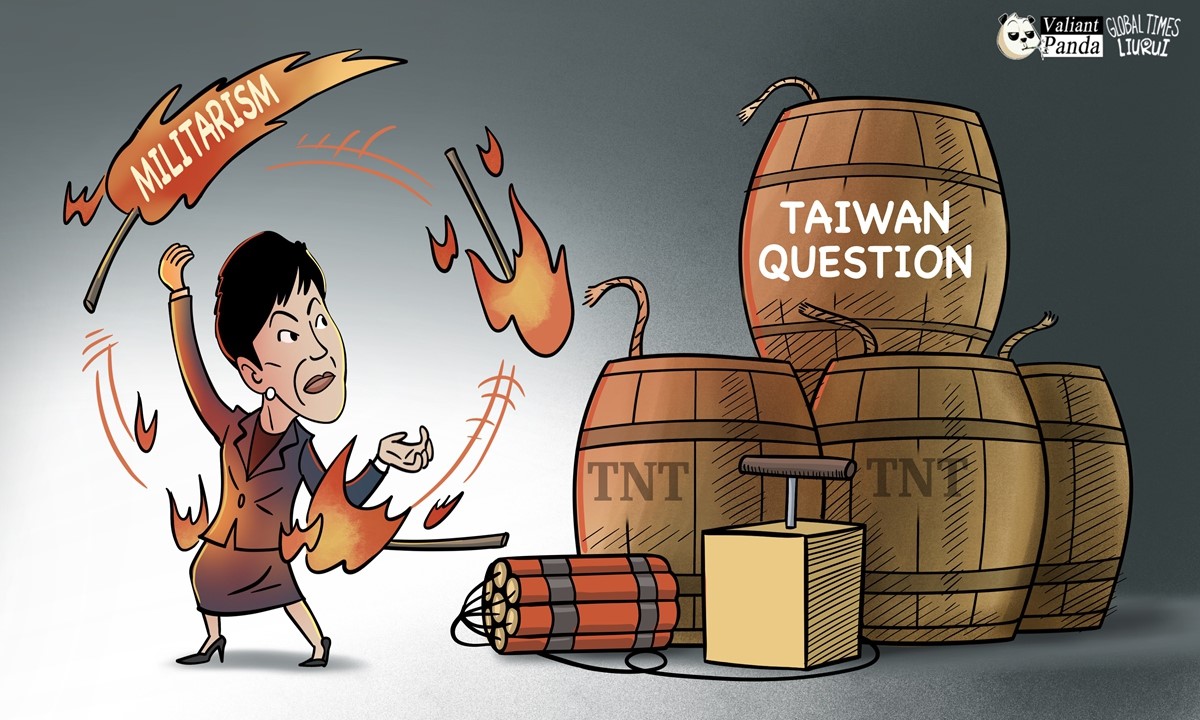
Less than a month after being sworn in as Japan’s new Prime Minister, Sanae Takaichi has ratcheted up regional tensions by declaring that any Chinese attempt at reunification with Taiwan Province would be a "survival-threatening situation" for Japan, implying that Japan would need to intervene militarily on the side of Taiwan.

Given Japan’s prominence as a member of the Quadrilateral Security Dialogue (the Quad), alongside India, Australia and the United States, the warning by former Australian ambassador to Japan, John Menadue, that “continuing on her current path would be a dangerous gamble with the peace and prosperity of the entire region” must be taken seriously.

Takaichi has matched her words with a provocative decision to deploy Type 03 Chu-SAM missiles on Yonaguni Island, just 110 km from Taiwan.

Who is Takaichi?

She was born to a petty-bourgeois family, was university-educated, and embraced far-right Japanese nationalist causes.  She entered politics and has held ministerial positions under several Prime Ministers, most notably Shinzo Abe.  She supported Abe’s anti-China policies and his attempts to rewrite the so-called pacifist constitution adopted by Japan after its defeat in WW2. 

As a supporter of the Japanese far-right, and as a then junior lawmaker, she endorsed a book about Hitler's electoral campaign tactics and in 2011was photographed with Kazunari Yamada who was then the leader of the fringe National Socialist Japanese Workers Party (NSJAP), whose insignia is a mixture of a swastika and a Celtic cross.

She was a member of, and retains ties to, far-right organisation Nippon Kaigi which believes that "Japan should be applauded for liberating much of East Asia from Western colonial powers; that the 1946–1948 Tokyo War Crimes tribunals were illegitimate; and that killings by Imperial Japanese troops during the 1937 Nanjing Massacre were exaggerated or fabricated".

Despite her gender, and being Japan’s first female Prime Minister and first female President of the ruling Liberal Democratic Party, Takaichi has taken conservative positions on social issues, such as opposition to same-sex marriage, to the recognition of separate surnames for spouses, and to female succession to the Japanese throne. She has criticised the Kono Statement, a statement released by Chief Cabinet Secretary Yōhei Kōno on August 4, 1993, after the conclusion of the government study that found that the Japanese Imperial Army had forced women, known as comfort women, to work in military-run brothels during World War II.

She has also continued the provocation of visiting the Yakasuni Crime where war criminals from WW2 are honoured. In January 2013, she said that "Japan should reconsider past apologies made for its wartime actions and expand its regional presence," and suggested that "Japan's leaders should pay annual visits to the Yasukuni Shrine."

Condemnation grows

On Wednesday November 19, protesters gathered in Kyoto to protest Takaichi’s dangerous call for military intervention in the event of a “Taiwan contingency”, and about a thousand rallied outside the PM’s office in Tokyo.  Protesters said they joined the rally to prevent a situation that could incite war. Some emphasized Japan's position as a defeated nation in World War II, while others warned that Takaichi's comments not only threaten China-Japan relations but also the peace and stability of the entire East Asia region.

Japan's main opposition Constitutional Democratic Party of Japan (CDPJ) leader Yoshihiko Noda said on Sunday that that in light of the deterioration in Japan-China relations following Takaichi's Diet statement on a potential Taiwan contingency, the prime minister should work to improve the relationship.
Protests were also held on the island targeted for missile installations. 

Condemnation of Takaichi’s remarks have also come from people in Vietnam, Malaysia, Myanmar and Korea.

Comrade Xiang Guanqi, Representative of the Chinese Communist Party (Marxist-Leninist-Maoist), denounced Takaichi’s comments for having “formally reneged on and tore up the surrender treaty signed by Japan when it announced its surrender in 1945.”

“History has repeatedly proven that the policy of repaying evil with kindness towards the reactionary forces and the reactionary government of Japan was nothing more than a well-intentioned but unrealistic and erroneous policy, and now it can be fundamentally and thoroughly corrected,” he said. 

Sanae Takaichi’s elevation to the Prime Ministership of Japan threatens to tie Australia further into US imperialist plans for war against China. A revived Japanese militarism has been demanded by Japanese capitalists because without it, the international expansion of Japanese capital cannot be securely carried out.

The Australian people want regional peace, and do not want to see a militaristic and expansionist Japan any more than they want to see an expansionist and militaristic China.

There is no good imperialism.  All people are entitled to live in peace and to engage with other countries on the basis of independence and sovereignty. 


Book Review: Turbulence

 Written by: Duncan B. on 23 November 2025


The author Clinton Fernandes is Professor of International and Political Studies in the Future Operations Research Group at the University of New South Wales. He is the author of several books about Australia’s foreign relations.

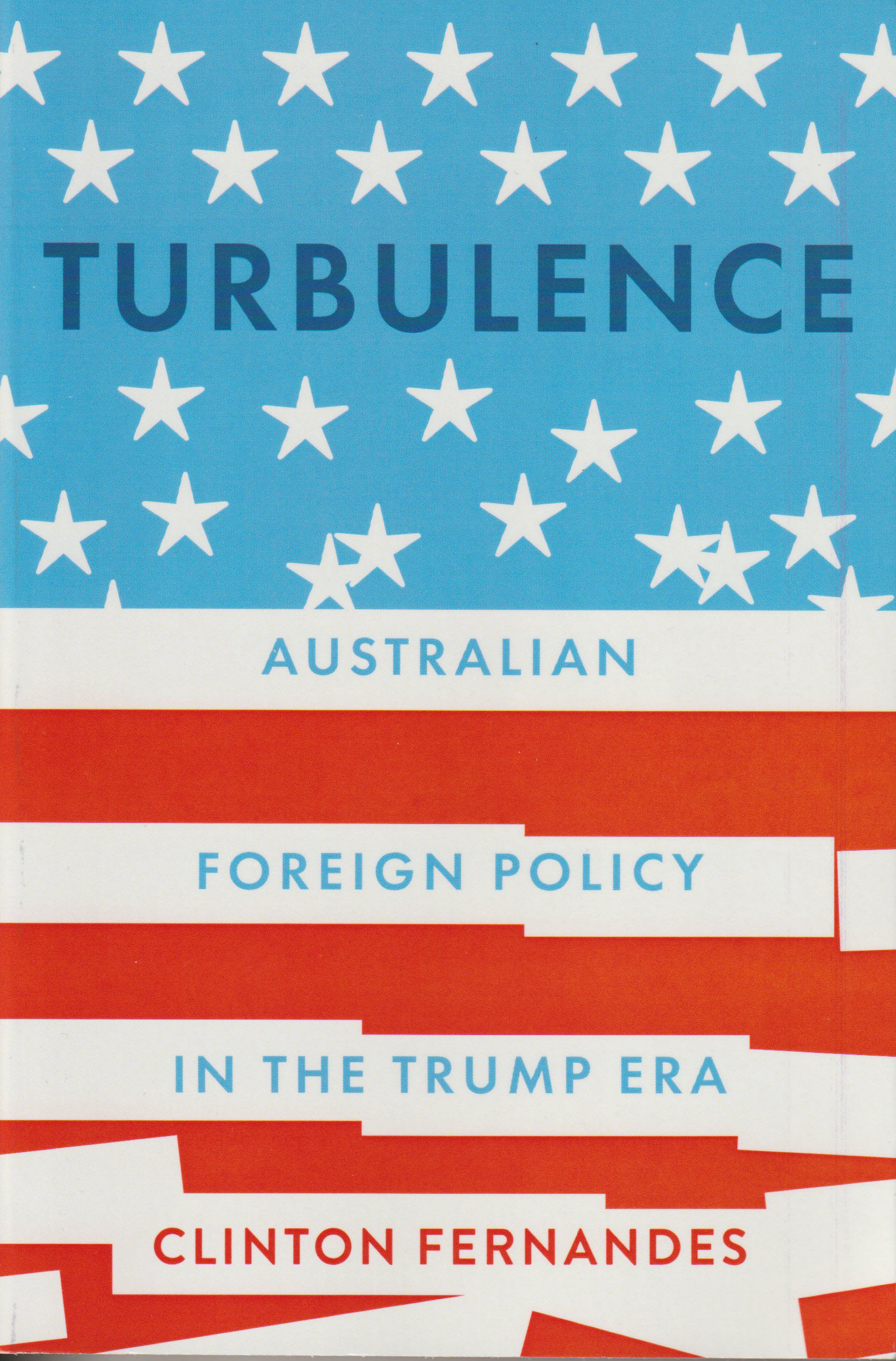
In this book Turbulence- Australian Foreign Policy in the Trump Era, Fernandes tries to make sense of the chaos which Trump has caused in international relations since his election and analyse Trump’s attitude to three important geopolitical regions of the world.

Trump wants to maintain US global primacy over China and seeks economic control over it. Failing that, he wants economic separation from China. As for Europe, Trump wants a Europe that is economically and politically subordinate to the US and militarily dependent on the US so that he can influence Europe’s relations with China.

Trump’s goals in the Middle East are military dominance of the region and control of Middle Eastern oil. Trump protects Israel because Israel’s actions help support this goal. Israel also helps to protect Saudi Arabia and the other pro-US monarchies in the region.

Where does Australia fit into this scenario? Throughout the book Fernandes makes the point that Australia’s policy is to demonstrate our relevance to the US. Ever since Prime Minister John Curtin’s “turn to America” in World War Two, Australia has loyally followed US foreign policy. Older Australians will remember with disgust Prime Minister Harold Holt’s “all the way with LBJ.” 

Australia has joined the US in wars in Vietnam, Iraq and Afghanistan, and has been America’s faithful “deputy sheriff” in our region. Fernandes explains at length how the AUKUS Treaty ties us firmly to the US foreign policy and the US war machine. The ramifications of the AUKUS Treaty extend far beyond the nonsense about “nation building” that its proponents have tried to feed us. Turbulence is required reading for all Australians who want to know more about AUKUS.


Thursday, November 20, 2025

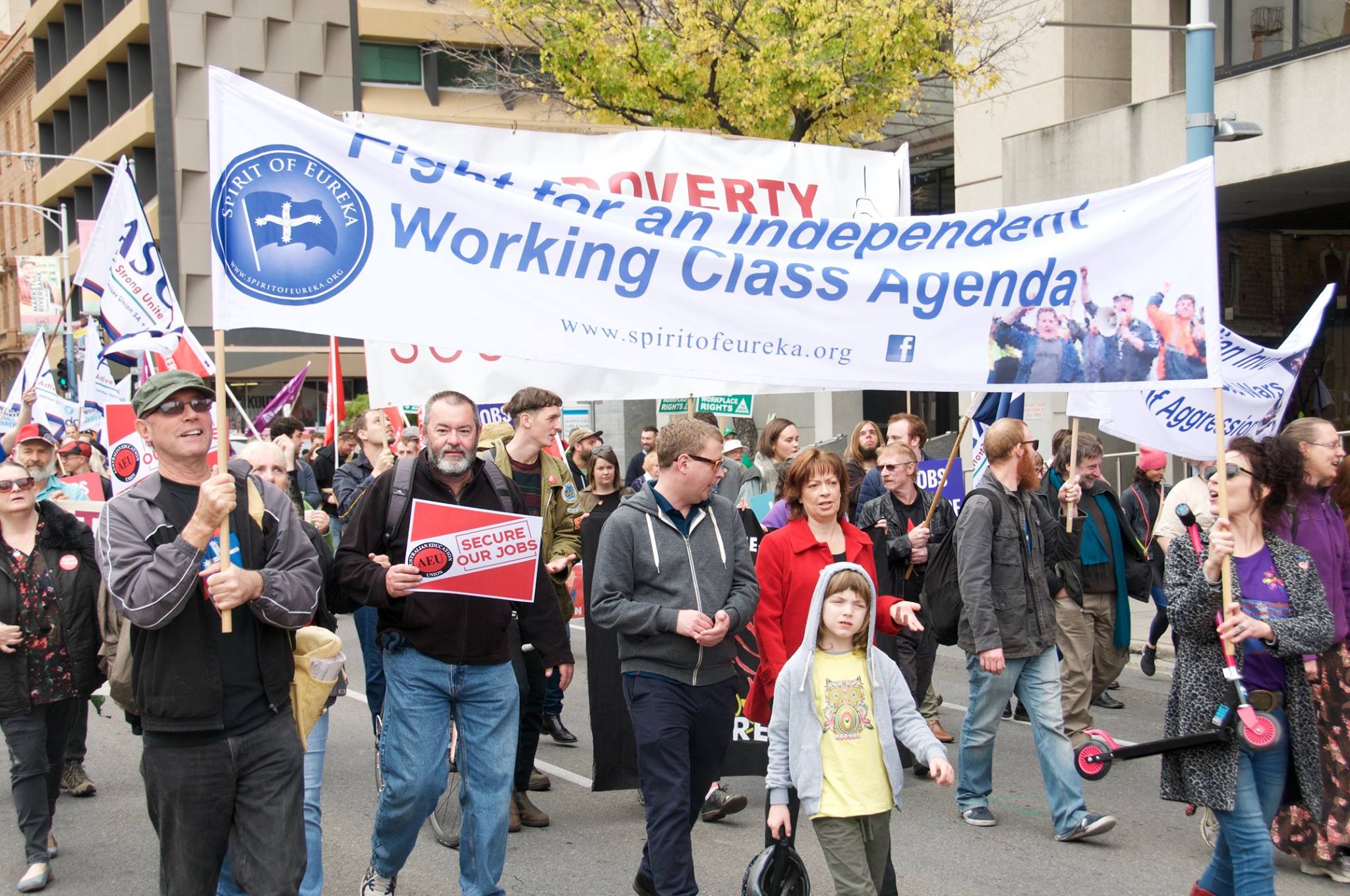
Building struggle around an independent working class agenda is the key

 Written by: Nick G. on 21 November 2025


Journalists for the ruling class media are excited to have found internal dissension within another important union.

They are digging deep into the internal affairs of the United Workers Union amidst allegations of an official’s links to what they call an “electoral slush fund”.

The allegations go back to a time when the official belonged to another union which subsequently amalgamated with what is now the UWU.

For our part, we refuse to interfere with or comment on the internal affairs of unions. It is better that problems are left to the members to sort out without interference.

In a general sense we can say that the attraction of union officialdom sometimes rewards the wrong sort of person.

Before the moves imposed by the ACTU in the 1980s and 90s to reduce the number of unions, it was usually the case that union officials were people who had come up through the ranks. Many unions were small outfits that operated out of rented premises and did not have the means to acquire and accumulate assets. Often union officials and organisers worked from their cars parked outside their members’ workplaces.  As an official with the BLF, and later President of the CFMEU – Victorian Branch, John Cummins was rarely inside his union’s office building, but typically found at a building site or outside the gates, organising workers.  Of course, there were careerists who sought to be bumped into parliament, but cases of large-scale financial corruption were rare.

Today’s unions are larger and their capacity to attract people straight from university courses into well-paid leadership positions has disenfranchised many of the rank-and-file from senior leadership positions.  Officials have union cars and union credit cards. The unions have their own property portfolios and investments to generate additional funds.  They have a lot more to lose than our chains when push comes to shove. As one retired union official with many years of intense militant struggles behind him, reflected recently, “Comrades, we (unions) have been co-opted.”  The further union officials are from their working class base the stronger the pull of capitalism.

Some take the easy way out. Much of this is tied to the particular Labor Party faction with which the union is aligned, hoping that the ALP will accept electioneering support in exchange for wage rises. Campaigns in sectors where workers’ wages are effectively funded by ALP governments take precedence over campaigns in the private sector. Some hope that by delivering workers’ vote to the ALP it will win them pre-selection into parliament.

This has worked with many sectors winning significant wage increases as either directly employed government workers, or through wage parity with government workers where the direct employer has been a contractor.

But it creates a reliance on the Labor Party in terms of both the immediate interest of the official and his/her longer-term political aspirations.

Essentially, problems in unions arise because the official union movement (ACTU) and their state bodies have not embraced an independent working-class agenda but maintained dependence on the ALP in government.

Workers must demand their unions pursue an independent working class agenda.

That means the pursuit of demands that reflect the needs of individual sectors of the working class as well as the overall interests of the whole class of workers, and in both cases going beyond what the ALP is prepared to sanction.

It means preparedness to go beyond the economic demands and to embrace the big political issues of the day.

It means maintaining the capacity to fight on issues regardless of which party holds office.

It means establishing workers’ right to withdraw their labour at a time of their choice.

It means strengthening rank-and-file leadership on the job, and demanding accountability by officials to the membership.

It is time to push past the barriers and restore the integrity of class struggle.

The key is the promotion of an independent working class agenda, not dependent on any parliamentary party.


Indian Maoists reject capitulation and surrender

Written by: Nick G. on 20 November 2025


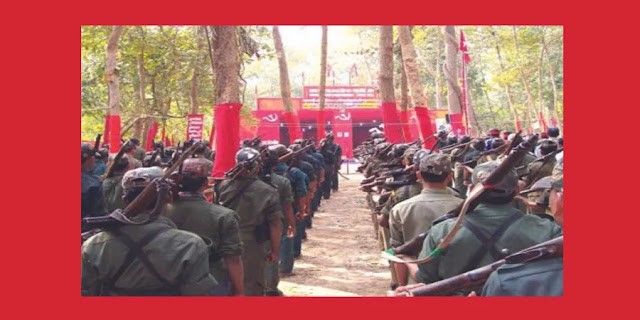
(Above: an assembly of People's Liberation Guerilla Army fighters)

Roughly three months ago, several leaders of the Communist Party of India (Maoist) issued a statement calling on their guerilla units to lay down their arms and accept a ceasefire with the Modi and several state governments.

Sonu, a member of the Central Committee and Politburo of the Communist Party of India (Maoist), and Satish, who is a member of the Dandakaranyam Special Zonal Committee (SZC), created a faction that argued that in the face of “changed conditions”, the party needed to adjust its strategy and participate in legal, above-ground politics.

Those “changed conditions” included the success of the government’s Operation Kagar (“Black Forest”), launched in April 2025 in guerilla-controlled areas between the states of Chhattisgarh and Telangana in central and central-southern India. Kagar is a murderous operation by security forces and has had considerable success in eliminating Party leaders and its followers among the masses.

The Sonu faction also argued that the development of capitalism in India had changed the basis for people’s war as the characteristic form of class struggle in India.

“When the enemy advances, we retreat” – Mao

People’s war follows the law of uneven development. It has successes and defeats. It attacks the enemy with arms, and in turn, is attacked by the enemy with arms. When it is attacked, the people’s army withdraws. It does not capitulate and surrender.

That is the difference between the Sonu faction and those continuing to wage armed struggle.

In early November, the Central Committee of the Communist Party of India (Maoist) issued a statement refuting the capitulationist line.  It reads in part:

“The Central Committee, which discussed the changes in the country’s circumstances, prepared the document ‘Changes in the relations of production in India – Our Political Program’ in 2021. It made it clear that although feudalism has weakened to some extent in the country, feudalism is still the main contradiction. It also explained that although there have been some changes in capitalist relations compared to the past, the majority of the people depend on agriculture and that the land issue is fundamental, and therefore the long-term line of people’s war should be continued. 

“It discussed in detail the changes brought about by imperialist globalization in the country in the past decades and formulated changes in strategies. It provided guidance on how to take action in each area depending on the specific circumstances. It answered the questions raised on this document. 

“Neither Sonu nor Satish disagreed with this document. Now they are openly expressing their views contrary to the document. In fact, it would have been useful for the party if they had studied the country's situation and given appropriate suggestions and advice. It would have been healthy if the internal discussion had continued in the party. But, they misled the cadres by using their responsible positions and the weakness in political studies among the cadres. They acted irresponsibly and violated their duties.”

Our Party will act together with other Marxist-Leninist and Maoist parties to campaign in defence of the CPI (Maoist) and people’s war in India. 

Smash Operation Kagar!

The CPI (Maoist) and the people’s war under its leadership is certain to prevail!

Wednesday, November 19, 2025

AUKUS prompts razor gang cuts to science and health

Written by: Nick G. on 20 November 2025


The Albanese government has been forced to announce electorally unpopular funding cuts to areas including science and health as it struggles to allocate resources to support commitments to fund AUKUS and related arms acquisitions.

AUKUS is estimated to require $368 billion over 30 years.  Broken down into a daily average that is just more than $30 million per day for 30 years.

That is a huge weight around the neck of Finance and Treasury, and forward planning must focus on an ability to pay that amount – and whatever other costs come from the inevitable delays and cost blowouts.

Labor’s dilemma

Despite the overwhelming support for Labor at the last federal election, it is aware of populist far-right parties running on issues like anti-immigration and sweeping to power around the world.

It must try to buttress its electoral support at the same time that it serves US imperialism’s quite open preparations for war with China.

To try and meet social expectations, it has announced measures such as reductions in student loan repayments, a tax cut to meet cost-of-living pressures (but provided to all taxpayers regardless of personal wealth or need), and an increase in food relief and financial wellbeing support to help ease cost-of-living pressures for half a million Australians.

In the case of the latter, over 300 organisations across every state and territory will receive a share of more than $460 million in funding over five years. That is, around $90 million per year, or three days’ worth of averaged AUKUS payments.

The cuts

The two recently announced cuts are to the CSIRO and a requirement that States and Territories cut the costs of running their hospitals.

The CSIRO is a publicly-funded and government-owned major research facility. Unlike private corporations, it should be capable of funding socially useful but not immediately profitable areas of research.

Up to 350 CSIRO researchers will be sacked under the new cuts. This is the latest in a series of cuts over the past 18 months. It started with the cutting of more than 400 science support roles, and more recently, 120 positions from CSIRO’s digital and data arm, Data61, were cut; the Agriculture and Food Research Unit has lost 30 staff, and Health and Biosecurity has lost 43.

Previously, the Abbott government cut approximately $111 million from the CSIRO over four years. This was around 10-12% of its funding. Around 700 jobs were cut across science, research, and support roles. The major areas affected were climate science, marine and atmospheric testing and environmental monitoring programs.  

Abbott’s cuts, delivered in the 2014-15 Budget, were strongly opposed, with thousands taking part in March for Science rallies. As a Spirit of Eureka leaflet distributed at these rallies pointed out: “…the attack on science throughout the Western world is continuing unabated. Massive political interference is rife against scientists and science whose conclusions might reduce multinationals’ profits.”

Ten years later, and Albanese is the vehicle by which the “unabated” attack on science is being driven. 

The situation with health is a consequence of the compromise reached at the time of Federation between the separate British colonies and the proponents of a national government.  The colonies surrendered various powers such as the right to raise their own armies, but clung to important areas such as health and education which were excluded from areas under the control of the federal government. 

The federal government has agreed to provide funding to health and education, but with strings attached. Hence the latest announcement by the Albanese government is that if the States and Territories want a public hospital federal funding commitment implemented, they must slash growth in hospital spending. 

“A growing population that is aging, sicker will need more spent on health not less”, said Dr Margie Beavis, a former GP who spoke on behalf of the Independent and Peaceful Australia Network.
 
“The federal budget is not a magic pudding. We urgently need an independent review of the unrealistic and wasteful AUKUS scheme, rather than further stripping of the health care system,” said Dr Beavis.

Unite to oppose the Albanese razor gang

There is a growing dissatisfaction with the direction of Labor government policy on a number of fronts.

Within the Labor Party, activists are organising and new organisations are emerging outside of the ALP.

There is room for considerable unity here, even though we do not wish to see people’s movements diverted into the quicksand of parliament. 

It is time to put sectarianism and the seeking of parliamentary careers aside, and seek to build unity in our workplaces, communities, and in the streets with rallies and demonstrations.

Undoubtedly, there will be more cuts as further AUKUS payments loom.

Our answer is to fight for anti-imperialist independence and socialism.

Vale Ron Owens

 Written by: Michael Williss on 14 November 2025


On November 3, 2025, the working class lost an outstanding leader, and our Party lost an outstanding member.

Comrade Ron Owens, 90, came to Adelaide from Broken Hill as a young man seeking work.  He already had eight years of experience working in the Broken Hill mines when he came to Adelaide. He started at a factory where conditions were terrible, left, and walked up to a construction site offering to do labouring.  He was taken on and stayed for six years, gaining experience as a rigger and as a pile-driving crane operator.  In that capacity, he was sent to Sydney to drive piles for the expansion of the new Sydney Airport runway out into sea water. While there, he had a brief discussion with Norm Gallagher about working in the Builders Labourers’ Federation (BLF)

When he returned to SA, he worked all over the state as a rigger and crane driver. Then, in the late 60s, when Les Robinson came to SA from NSW to lead the SA Branch of the BLF, he was taken on as its sole organiser. He and Les soon became a working class tag team in an ongoing wrestle with the boss class over union rights and workers’ gains.

The SA BLF had been very poorly run prior to Les Robinson’s arrival, and had only 300 members when Ron started organising.  Ron had to go as far as Ceduna on the West Coast, and down to the South-East, signing up members and collecting their membership fees.  By the time of the BLF’s joining other construction unions in the CFMEU, it had 4.500 labourers as members.

Cleaning up the industry included stopping the use of the hod, a wooden structure on a long shoulder pole, used to carry bricks or mortar up ladders. It was dangerous and backbreaking. Ron also put a stop to riding the hook, also very dangerous, although there was a certain bravado in being a “doggie” and riding the plank.

As Party members, Ron and Les worked closely with former Ironworkers SA State Secretary and Central Committee member Charlie McCaffrey, as well as welcoming and mentoring the growing numbers of left-wing students wanting to expand the Worker-Student Alliance and integrate with the working class.
In October 1969 they had shown their support for students protesting against the US War of Aggression Against Vietnam by defying a United Trades and Labour Council (UTLC) ban at the official Labour Day procession on the carrying of slogans attacking police brutality. They organised their members, and together with the students and other militant workers, they had marched as a large separate group. 

On another occasion, Ron and a group of BLF members present at a Vietnam Moratorium march repelled a group of Nazis who had tried to disrupt the anti-war demonstration. That is an example worth reflecting on today.

As a young uni student and a recently joined member of the Party, I was always welcomed at the BLF office, and looked after when I had holiday jobs in the industry. On one occasion, there were a couple of us working on digging foundation trenches at the Institute of Technology Levels campus, and I told Ron that we had no facilities on site.  We had to sit on our backsides in the dirt to eat our sandwiches. There was no shade. The next day, Ron pulled up in his car, and got out holding a handkerchief to his right eye, and looking quite distressed. He introduced himself to the site supervisor and asked him if he had anything for his eye.

“Yeah, I’ll have a look. What have you done to it?” said the supervisor.

“Me, nothing,” said Ron. “But there’s something bloody wrong with it, ‘cos I can’t see a lunch shed for those three blokes over there. Get one by tomorrow!”

And it was there the next day.

One of the other blokes on the job had done some work on the wharves in Melbourne.

“Did you ever come across Ted Bull?” I asked.  Ted was the WWF Victorian branch secretary.

“Hell yeah,” he laughed. “Only a thin, wiry bloke, but the toughest bastard I’ve ever met.”

Les Robinson was a small bloke, but also very tough.  When he and Ron went into a struggle, they went in to win.

In June 1970, the membership drive was in full swing. Les and Ron were both arrested on the new Modbury Hospital site, which they had entered to sign up members. There was no law against them doing so, and any penal provisions against unions had been smashed the previous year through the great struggle to free Clarrie O’Shea, so the police arrested them under laws never intended for use in an industrial dispute. Les was charged under the Road Traffic Act and Ron under the Police Offences Act and the Lottery and Gaming Act.

More significantly, both faced charges issued by the Chamber of Manufacturers of having breached orders made in the SA Industrial Commission that the union should stop hindering the business operations of certain building companies and three sub-contractors. This use of civil proceedings in an industrial dispute was a new ruling class tactic following the defeat of the penal powers of the Arbitration system in the O’Shea struggle. 

When the BLF officials sought the support of the UTLC, its acting secretary, J Calnan, wrote back denying that “the arrests were ordered by the construction companies…it cannot be said that the charges are in the nature of an industrial matter.” 

Ron later told 3CR’s Construction Gang radio interviewer that he had not been scared.

“The most frightened bloke was Hawke. He was a dog, that bloke, working behind the scenes...he was going to do wonders, but he did bloody nothing.”

His treachery was revealed when it was disclosed that the Australian Council of Trade Unions’ (ACTU) Bob Hawke had been in secret negotiations with the UTLC, Collaroy Constructions, the Chamber of Manufacturers and the Australian Labor Party (ALP)-led Plasterers’ Union (which claimed the labourers as their members), and had approved a strikebreaking proposal whereby a supervisor from the construction company would be enrolled as an FEDFA member (a union contesting coverage of crane drivers on construction sites) and placed on standby to operate the crane should the BLF member driving it walk off during a concrete pour.

When their court case resumed on September 9, the two refused, as trade union leaders, to recognise the authority of the bosses’ court and were fined and jailed for three weeks.

Bosses look for new penal powers 

The try-on in the capitalist courts emboldened the employers. They were desperate for new penal powers to replace those smashed in the O’Shea struggle in 1969. Again, they focused on the BLF. It was the most militant union in SA. After Les and Ron began recruiting members in 1967, they had grown the union from 300 to 3000 members. But the recruitment often involved picketing worksites and taking advantage of contradictions between competing employers and contractors.
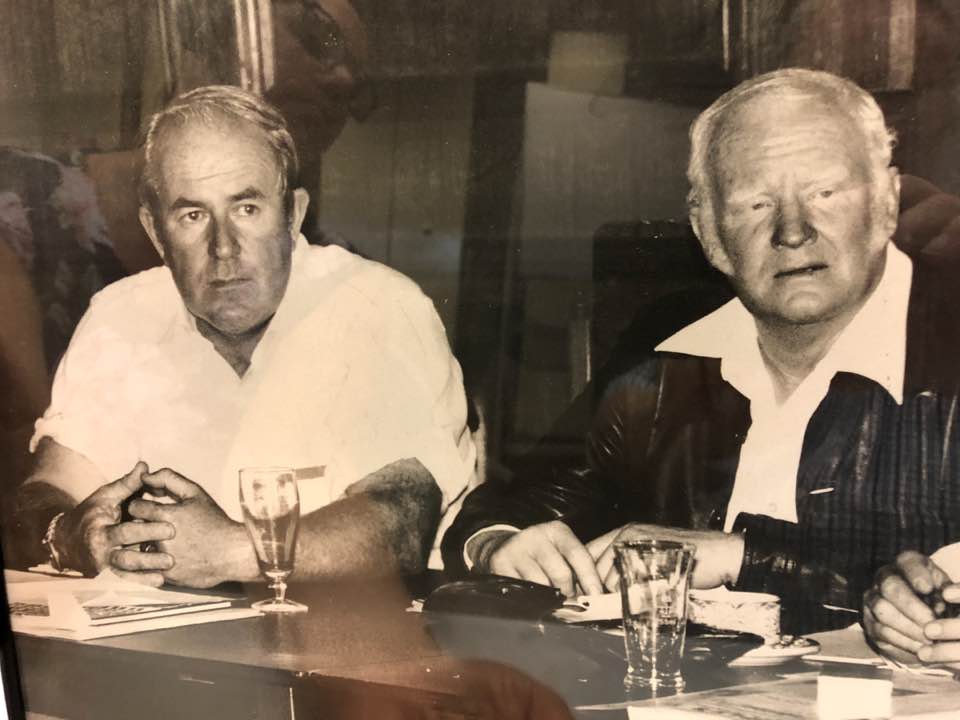

 
(Ron and SA BLF President Snowy Cameron, c. 1971)

In 1972, a dispute arose between the union and Adriatic Terrazzo and Foundation which went to the courts seeking an injunction against the union on the basis of another civil law, the law of torts. A tort is a harm or damage caused by the action of another person who, if found guilty, is liable to make good the harm or damage, typically by a payment to the successful claimant. It was intended to resolve matters between persons in the civil arena, not between unions and employers in the industrial arena. 

Les and Ron refused to appear to answer the charges and instead concentrated on reestablishing picket lines broken up by police the previous day and strengthening those at Adriatic sites. Concrete deliveries to Adriatic sites were blocked. This was despite a director of Adriatic, Mario Candeloro, admitting in the Supreme Court that he had threatened to blow Robinson's head off with a shot-gun if concrete deliveries to the firm were stopped or the men were forced to join the union.

Having defied the court, Les and Ron were arrested within days and jailed indefinitely for contempt of court. Les and Ron adopted an attitude of proletarian defiance and firm class resolve. "I will stay in as long as is necessary to win this dispute,” said Les. “I will not purge myself to the court unless it means we can win the dispute.”

"By winning, I mean that Adriatic Terrazzo & Foundations Pty. Ltd. agree to employ union labour. I will settle for nothing else." 

"This is the policy of our members and it is paramount that we uphold this policy, even if it means going to jail." 

Ron agreed. "Nobody likes the thought of going to jail,” he said. “However, I'm defending union principles and I'll stay inside indefinitely. I won't purge myself, either." 

Although sent to jail for an Indefinite period for contempt of the Supreme Court, Les and Ron were heartened by support from prison officers who, at a meeting the previous week, declared unanimously that they would not process any union official arrested under the tort law. Non-processing of prisoners meant that they would not be documented, escorted, locked in a cell or supervised by the officers. 

Further heartening support came from CPA (M-L) leaders Ted Hill, Clarrie O’Shea and Ted Bull, who sent a message of encouragement to them in jail. 
Ron was certainly heartened by the action of his wife Bev, who went to building sites to gain support for the two jailed officials.

The federal executive of the ABCEF (ie. BLF) also sent three Victorian comrades to assist the SA branch while Les and Ron were inside. Marco Masterson wrote in May 1973 that “1972 ended a year of great struggle by the Federation on many fronts: wages, and against the war in Vietnam, building Unionism and job improvements…But I feel our best effort was in South Australia.” 

With Les and Ron in jail, builders’ labourers decided at a strike meeting that, for every day the two officials were in jail, members of the union in SA would do no work. The workers were all the more incensed because of the arrest of 11 unionists who were picketing the job which was the source of the dispute. 

In the same week, about 40 key concrete batching operators stopped work indefinitely in protest at the jailing of the two officials. The batchers were members of the AWU, and the AWU secretary, Jim Dunford, said: "We are prepared to back any efforts to get the two union men out of jail. The company, Adriatic Terrazzo & Foundations Pty. Ltd., must be stopped from employing non-union labour."

While rank and file members kept up the struggle to free Les and Ron, the response from other sections of the union movement was less than satisfactory. Placing their hopes on an ALP win in the federal elections, they feared that the dispute would play into the hands of the conservatives. That hostility continued even after the Whitlam (ALP) win.

The so-called “progressive” Labor State Premier Don Dunstan led the attack. He claimed that Robinson was not prepared to negotiate and wanted to use his union to defeat a Labor Government, both State and Federally. The Premier's statement had no word of criticism of Adriatic. Angry labourers marched on Parliament house and confronted Dunstan over his statement.

It was only after eight days of jail time that the UTLC met and decided to support the BLF on the principle of opposition to the use of tort in industrial disputes. A unanimous vote banned all Adriatic Terrazzo and Housing Industry Association work until the tort action was dropped and, on that basis, Les and Ron agreed to purge their contempt and were then released from jail. Every member of the union in SA had been on strike, and a national stoppage by construction labourers was imminent. 

However, the promised support from the UTLC failed to materialise. Dunstan was facing a state election in March and worked to cool things down. That left Les and Ron vulnerable to further attacks by the capitalist builders, and they were back in court again on February 13, 1973 where their union (now the Australian Building and Construction Workers Federation) was slapped with a permanent order banning it from "interfering with or threatening by illegal means the business of Adriatic Terrazzo and Foundation". 

Industrial action had now been established as “illegal means”. 

Historian Humphrey McQueen concluded that the lack of action by the organised union movement in support of the ABCWF “opened the door for a strategic attack on the labour movement…What began as a try-on around Adelaide set a battle plan to disorganise labour” (McQueen, We Built This Country p. 226).

Ron’s commitment to socialism extended to his appreciation for what Chairman Mao and the Chinese Communist Party were doing in building New China and fighting revisionism. Ron was President of the SA Branch of the Australia-China Friendship Society for several years in the early 70s. 

Deregistration by the bosses

By 1973, the BLF was in the vanguard of union strength in the construction industry.  The bosses needed to destroy its influence and filed an application for its deregistration on 21 October 1973.  Deregistration was granted on 21 June 1974.  It had little effect. There were still 35,000 construction labourers loyal to the union. However, the NSW Branch leadership was hostile to Gallagher and its tactics provided some of the grounds for deregistration. The hostility was a two-way street, and Gallagher had the federal management Committee of the union decide on an intervention into the NSW Branch.

In 1975, Les was sent by the Federal Executive back to Sydney and appointed to lead the NSW Branch of the BLF. Ron was appointed acting state secretary of the SA Branch. Ron was part of a team of interstate BLF officials sent to facilitate the intervention. At one stage, a supporter of the removed Mundey team on a job Ron attended pulled a knife and threatened him.

A misconception fostered by some of Jack Mundey’s supporters was that “green bans” were only implemented by Mundey’s NSW Branch of the BLF. But the Victorian and SA branches were always prepared to stand with community members when they requested assistance to protect areas of cultural and heritage value.

A case in point was a SA government proposal to build police communication towers on mt Barker in the Adelaide Hills.  At the time of unsettlement in 1839, it was estimated that 600 Peramangk people lived around the Mt Barker area. Genocide had reduced their numbers by 1984, but surviving families objected to the police towers as their construction would drive away the mingka, a small bird that lived on Mount Barker, one of the most sacred places in the Hills area, and announced the approach of visitors and the imminent death of a loved one. They set up a protest camp at the top of Mt Barker and the BLF put a ban on the towers. 

Together with the Plasterers’ Union, the BLF put a stop to the destruction of heritage buildings in Mt Barker. The BLF also fought and saved the facade and part of building of the first women's creche by the Central Market, although it has since been demolished. Together with the BWIU, Ron ad the BLF fought and saved the last bit of natural sandhills by Escourt House, Tennyson that connect with the Semaphore Beach sand dunes, now a protected area.

Ron was always a straight talker and his word was his bond. Back in SA, in a conflict with one builder, the man complained to Ron, “You’re just a bloody stand-over merchant!” Quick with his reply, Ron said “That’s right mate, and I’m standing right over you. Get x, y and z fixed up or you’ll get squashed.”  They were fixed.

Of course, Ron was not a one-man band.  Shop stewards on jobs knew if they took action up to and including breaking concrete pours, that Ron and his organisers had their backs.

As its right to coverage within the industry grew, and to get around deregistration, the SA Branch of the BLF was rebadged as the Australian Building and Construction Workers Federation (ABCWF). When a new award was won in 1979 to bring SA wages in line with eastern states, the union agreed not to interrupt concrete pours with on-the-job action. The Arbitration Commission decision meant an extra $14 a week over the next two years for 7,000 workers.

Deregistration by Hawke and Labor

The argie-bargie continued in the industry with a spectacular campaign to win superannuation and increased workers’ compensation. By the mid-1980s, finance capitalists were demanding protection from the BLF by the Hawke Government. The Hawke government and the ACTU were threatened by the union’s opposition to their wage-cutting “Accord”. 

In 1985, Hawke announced that he and his government would “smash” the BLF. In 1986, the BLF was deregistered federally and in NSW, Victoria and the ACT, then its areas of largest membership. It would have been deregistered in SA as well but for Ron’s good relations with officials of the Australian Workers’ Union (AWU), the Plumbers’ Union and some other small unions in the Trade and Labour Council (TLC) and the ALP that stopped the SA government and the TLC from supporting Hawke.

Partly, those good relations had been built over time and through skilful handling of demarcation disputes with other unions. It also reflected the advantages that tradespersons’ unions had gained by not standing in the way of BLF action on the job over wages and conditions. These unions had learned, as Ron put it, to “keep their mouths shut’ when the BLs were blueing over wages, because any gain by the labourers would have to flow onto the higher paid skilled tradies to keep their relativities intact.  

The first deregistration had been initiated by the bosses; the second by the former head of the ACTU and a Labor PM.

Ron had never had any doubts about the treachery of the ALP.  He had stopped work at the Swanport Bridge, near Murray Bridge, when a worker had his hand caught and mangled in a pile-driving accident, and the SA Labor government took him to court over the stoppage. 

“We never had a lot of support from the Labor Party,” Ron said recently in an interview with the Concrete Gang on radio 3CR.

He knew where he stood with the Liberals, how they would attack and when. They openly served the construction bosses, whereas Labor had to pretend it was a working class party and disguise the nature and timing of its attacks.

“We didn’t get much out of the Labor Party; we were better off under the Liberals,” he told 3CR.

“Whatever we did we had to battle for.”

Federal President and acting general-secretary

In 1985, Gallagher was jailed on charges of having accepted corrupt payments from bosses. He was released after four months on appeal and a retrial was scheduled. With Gallagher in jail, Ron had been appointed acting general-secretary of the BLF. In July, he attacked Hawke’s proposed legislation to deregister the union, declaring that the proposed legislation put the trade union movement back more than 100 years.

When Gallagher was reconvicted and jailed again, Ron retained his position as the union’s national leader.

The NSW Branch was now led by Steve Black. In September 1986, Steve and Ron went into a building site run by Sabemo to sort out some problems with workers’ compo payments. Sabemo called in the cops, and Ron and Steve were arrested for trespass. They remained in Long Bay jail for refusing the bail condition that they undertake not to commit trespass at the Sabemo site.

They were kept in jail for a month on a charge that carried a maximum penalty of $50 before being released on the condition that they not “trespass” again at Sabemo. They had been brought into court handcuffed together, and were greeted by 50 union members.

By the early 90s, it was evident that the attacks on the BLF could only be defeated by a stronger and more extensive unity of workers, skilled and unskilled, in the construction industry.

It was generally agreed it would be wrong to seek re-registration or even appear to want it. Instead, calls were made for one industrial union of building workers, registered or unregistered.

This was supported by Ron and Victorian comrades led by John Cummins, but was opposed by Gallagher.

The union's Victorian branch removed Gallagher from the position of Victorian state secretary, and in a meeting of the union's federal council in Adelaide in May 1992, Ron, who was federal president of the BLF, was again appointed to replace him as acting general secretary.

Ron and Cummo knew that labourers and other construction workers needed each other’s strength, knew that it was time to move on from the BLF, and saw that through to the creation of the CFMEU.

Norm Gallagher was a great working class leader and a Communist of great distinction who defied the ruling class time and again.  But he was out of step with the need to find new ways of organising construction workers to ensure their survival as a fighting core within the whole working class. 

It did not surprise Ron that it was a Labor Government, with the connivance of the ACTU, that has launched the latest attack on the union, opting not for deregistration, but for placing the union under Administration and replacing fighting leaders with tame cat officials forced to do the bidding of the Administrator.

What great leaders were the comrades like Ron Owens, Gallagher at his best, Les Robinson, who died on April 3 2025, and the great John Cummins.

Their place in the history of the Australian working class will always be remembered.