Showing posts with label Japanese imperialism. Show all posts

Monday, April 20, 2026

Japan: the South-West foreign policy, 2026

Written by: (Contributed) on 21 April 2026
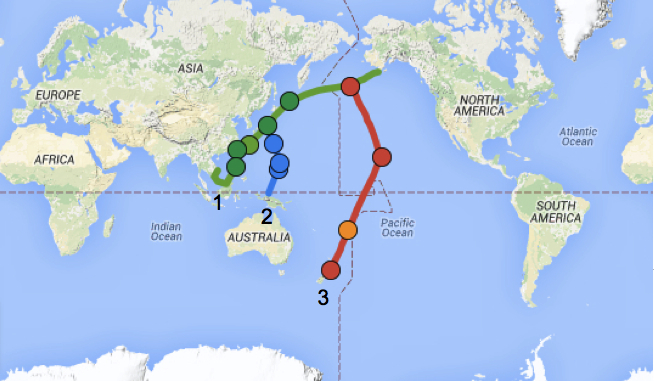
 

The three island chains of US military control

A Pentagon military plan to strengthen the top end of the First Island Chain has included increased reliance upon Japan. The present Takaichi government appears only too willing to oblige; couched in misleading diplomatic terminology; however, the new South-West foreign policy has a wider arc of influence than merely islands south-west of key strategic military facilities, which serve 'US interests'. The foreign policy position has, moreover, raised questions for Australia, as Japan's military partner in the Indo-Pacific region.

A major diplomatic statement from Japan, issued in early April, drew attention to it developing a South West foreign policy toward strategic islands, as it increasingly has become a front-line for the US-led Indo-Pacific Strategy (IPS) toward China. (1) In recent years the Pentagon has reverted to previous Cold War regional defence and security provision with Island Chain Theory; it has subsequently been revamped to serve 'US interests' with the onset of the present Cold War, and expanded into the Indian Ocean with fourth and fifth chains centred on Diego Garcia. (2) The Indian Ocean intelligence facility is
directly linked to similar Australian-based facilities at Pine Gap, Central Australia.  

The US-Japan alliance has also been upgraded in the present Cold War to a 'global alliance'. (3) It marked the culmination of US diplomatic moves to shift Japan away from a pacifist constitution imposed immediately after the Second World War, toward a fully-fledged military power to serve 'US interests'. The moves have been accompanied by Japan's defence budget doubling during the past decade, to $77.8 billion by 2024. (4)

The position of the Takaichi government has been one of total compliance; a recent diplomatic statement issued from Tokyo announced their intentions to push for policies of 'a normal country capable of war'. (5) The issue of the 're-interpretation' of Japan's pacifist constitution, however, has proved highly contentious, amongst other countries and inside Japan itself. While the moves have been supported by other US allies, they have raised serious concerns in some Asian countries previously occupied by Imperial Japan, and also some Japanese people who fear the problems associated with militarism.
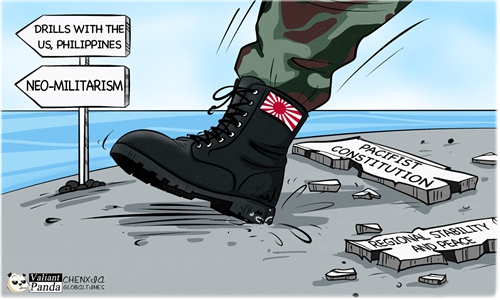
Source: Global Times

And Taiwan, and its precarious defence and security provision, has conspicuously formed part of the US-led agenda for Japan; assessments have noted that 'Taiwan is moving towards the centre of world affairs', and a regional flash-point. (6) Tokyo-Taipei diplomacy is close.

It is not difficult to calculate the extent to which the Pentagon have pushed Cold War agendas during the recent period. During the period between 1991 and 2016, Taiwan initiated about 42,000 investment projects in China; in fact, it was central to China's rise to prominence. (7) Since 2016, however, most Taiwanese businesses have relocated their China operations to other ASEAN countries, in compliance with US-led directives. (8)

The East China Sea and Miyko Strait have now also been assessed as sensitive for the wider First Island Chain, which include small islands and other outcrops which have become highly strategic. Runways are under construction on Mage Island, for example, whereas missile defence batteries and surface to air missile units have been placed elsewhere. (9)   

Japan has also stationed military personnel on some islands; defence officials have verified that 'more than 10,000 Japanese military personnel are in the south-west, but several hundred each on at least four other islands'. (10) It is as if the Takaichi government has followed similar examples of policies pursued by pre-war and wartime Imperial Japan, common during the fascist period while pursuing their own far-right political agendas.

The Takaichi government has also been keen to push for the military upgrading of Japan's defence and security provision; it has followed initiatives over a decade ago for Japan to nationalise about 280 remote islands as part of military planning, despite sovereignty of some of the landmasses being contested. (11) The 'new' foreign policy has a long history.

What the recent diplomatic statement did not divulge, furthermore, was the arc from US military facilities to the islands south-west of Japan also swings northerly to the Kuril Islands and Sea of Okhotsk, which mark the beginning of the First Island Chain. (12) It has become highly sensitive in recent years with the thawing of Arctic waters, exposing sea passages north of Russia from the Chuckchi Sea and away from southerly routes. (13) The recent high-level diplomatic discourse and disagreements about Greenland are best assessed in the context. The vast landmass forms part of the access and egress into Arctic waters.

While the US has continued to fortify their First Island Chain, with military upgrading of military facilities in Japan, Taiwan and the Philippines, to restrict China's access and egress into the wider Indo-Pacific region, the northerly route, for the Pentagon, has become extremely problematic. It is largely beyond normal bounds for any direct US military involvement apart from regular spy flights from satellite systems.

These developments, with the militarisation of Japan and rapid deployment facilities, have far-reaching implications for Australia which is bound by various diplomatic agreements with Tokyo. The US-led IPS, for example, rests upon the so-called 'Quad', which has been planned to contain and encircle in China, together with other diplomatic considerations between Tokyo and Canberra. Compliance, by all concerned, remains the order of the day.

It is not idle speculation, therefore, to note that Australia could be drawn into 'real-war scenarios' by the Takaichi government eagerly following directives from the White House concerning Taiwan, or elsewhere in any one of several serious regional flashpoints:
                                        
  We need an independent foreign policy!

1.     Japan races to fortify island chain, Australian, 1 April 2026.
2.     Websites: Island Chain Theory.
3.     The reasons behind Washington's push for GSOMIA., Hankyoreh, 12 November 2019.
4.     Australian, op.cit., 1 April 2026.
5.     Bracing for the fallout as Japan's Iron Lady shows some mettle, Australian, 6 February 2026.
6.     Australian, op.cit., 1 April 2026.
7.     Ibid.
8.     Ibid.
9.     Ibid.
10.   Ibid.
11.   Japan to nationalise 280 islands, The Age, 10 January 2014; and, Japan puts disputed islands on school curriculum, The Age, 13 January 2014.
12.   See: Map of the World, Peters Projection, Actual Size.
13.   Ibid.


Monday, November 24, 2025

Japan’s new PM drives tension in our region

Written by: Nick G. on 25 November 2025


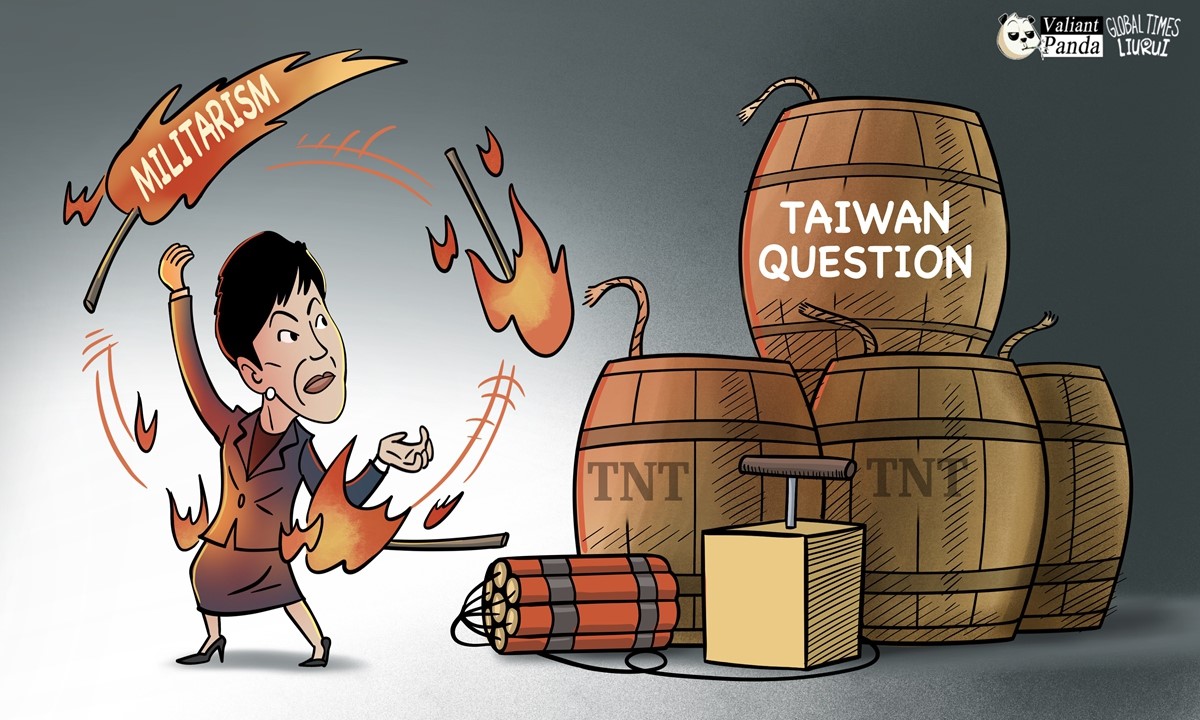
Less than a month after being sworn in as Japan’s new Prime Minister, Sanae Takaichi has ratcheted up regional tensions by declaring that any Chinese attempt at reunification with Taiwan Province would be a "survival-threatening situation" for Japan, implying that Japan would need to intervene militarily on the side of Taiwan.

Given Japan’s prominence as a member of the Quadrilateral Security Dialogue (the Quad), alongside India, Australia and the United States, the warning by former Australian ambassador to Japan, John Menadue, that “continuing on her current path would be a dangerous gamble with the peace and prosperity of the entire region” must be taken seriously.

Takaichi has matched her words with a provocative decision to deploy Type 03 Chu-SAM missiles on Yonaguni Island, just 110 km from Taiwan.

Who is Takaichi?

She was born to a petty-bourgeois family, was university-educated, and embraced far-right Japanese nationalist causes.  She entered politics and has held ministerial positions under several Prime Ministers, most notably Shinzo Abe.  She supported Abe’s anti-China policies and his attempts to rewrite the so-called pacifist constitution adopted by Japan after its defeat in WW2. 

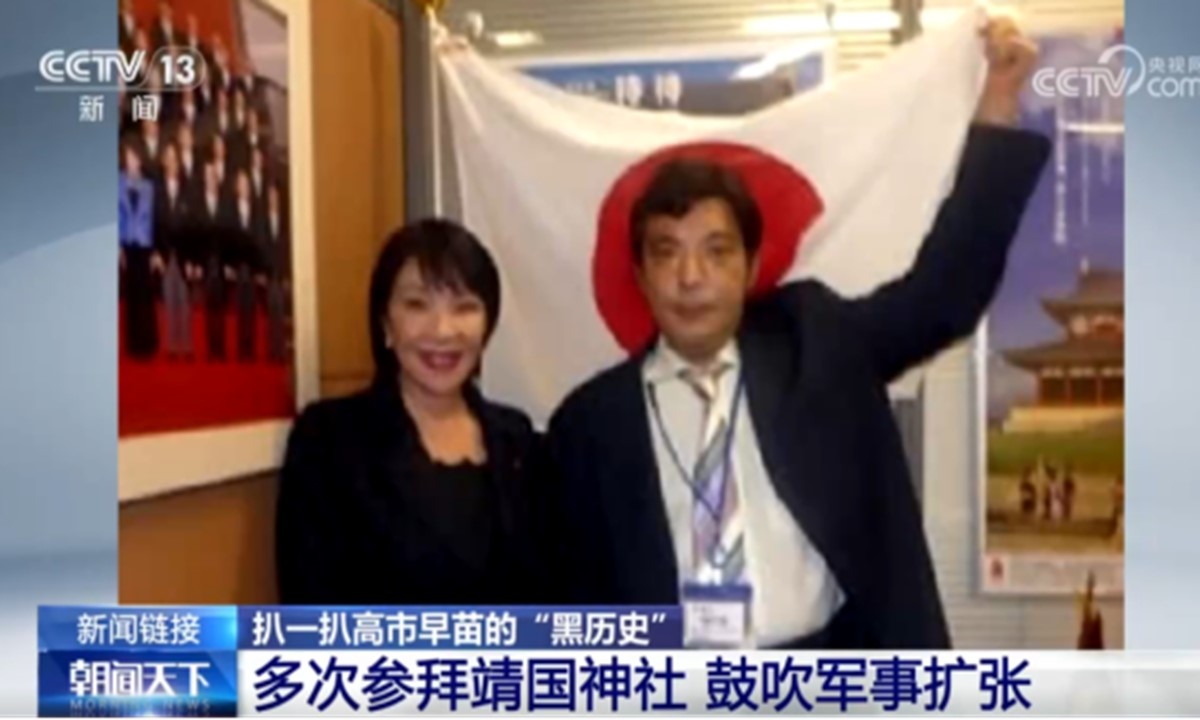
As a supporter of the Japanese far-right, and as a then junior lawmaker, she endorsed a book about Hitler's electoral campaign tactics and in 2011was photographed with Kazunari Yamada who was then the leader of the fringe National Socialist Japanese Workers Party (NSJAP), whose insignia is a mixture of a swastika and a Celtic cross.

She was a member of, and retains ties to, far-right organisation Nippon Kaigi which believes that "Japan should be applauded for liberating much of East Asia from Western colonial powers; that the 1946–1948 Tokyo War Crimes tribunals were illegitimate; and that killings by Imperial Japanese troops during the 1937 Nanjing Massacre were exaggerated or fabricated".

Despite her gender, and being Japan’s first female Prime Minister and first female President of the ruling Liberal Democratic Party, Takaichi has taken conservative positions on social issues, such as opposition to same-sex marriage, to the recognition of separate surnames for spouses, and to female succession to the Japanese throne. She has criticised the Kono Statement, a statement released by Chief Cabinet Secretary Yōhei Kōno on August 4, 1993, after the conclusion of the government study that found that the Japanese Imperial Army had forced women, known as comfort women, to work in military-run brothels during World War II.

She has also continued the provocation of visiting the Yakasuni Crime where war criminals from WW2 are honoured. In January 2013, she said that "Japan should reconsider past apologies made for its wartime actions and expand its regional presence," and suggested that "Japan's leaders should pay annual visits to the Yasukuni Shrine."

Condemnation grows

On Wednesday November 19, protesters gathered in Kyoto to protest Takaichi’s dangerous call for military intervention in the event of a “Taiwan contingency”, and about a thousand rallied outside the PM’s office in Tokyo.  Protesters said they joined the rally to prevent a situation that could incite war. Some emphasized Japan's position as a defeated nation in World War II, while others warned that Takaichi's comments not only threaten China-Japan relations but also the peace and stability of the entire East Asia region.

Japan's main opposition Constitutional Democratic Party of Japan (CDPJ) leader Yoshihiko Noda said on Sunday that that in light of the deterioration in Japan-China relations following Takaichi's Diet statement on a potential Taiwan contingency, the prime minister should work to improve the relationship.
Protests were also held on the island targeted for missile installations. 

Condemnation of Takaichi’s remarks have also come from people in Vietnam, Malaysia, Myanmar and Korea.

Comrade Xiang Guanqi, Representative of the Chinese Communist Party (Marxist-Leninist-Maoist), denounced Takaichi’s comments for having “formally reneged on and tore up the surrender treaty signed by Japan when it announced its surrender in 1945.”

“History has repeatedly proven that the policy of repaying evil with kindness towards the reactionary forces and the reactionary government of Japan was nothing more than a well-intentioned but unrealistic and erroneous policy, and now it can be fundamentally and thoroughly corrected,” he said. 

Sanae Takaichi’s elevation to the Prime Ministership of Japan threatens to tie Australia further into US imperialist plans for war against China. A revived Japanese militarism has been demanded by Japanese capitalists because without it, the international expansion of Japanese capital cannot be securely carried out.

The Australian people want regional peace, and do not want to see a militaristic and expansionist Japan any more than they want to see an expansionist and militaristic China.

There is no good imperialism.  All people are entitled to live in peace and to engage with other countries on the basis of independence and sovereignty. 


Monday, August 4, 2025

Japanese imperialists disheartened by election results


Written by: (Contributed) on 5 August 2025


The spectacular collapse of support for the ruling Liberal Democratic Party (LDP) in recent elections in Japan can be attributed to two significant factors: their failure to identify important issues in domestic politics which include living standards for the mass of the population and an unresolved corruption scandal; their failure to act effectively with important foreign policy considerations which include tariffs and the Trump administration and increasing militarisation of the former pacifist country.

Japan has been governed since the mid-1950s by successive LDP administrations, apart from a few isolated instances. It has provided the political elite with a consolidation of long-term class and state power, and the ability of the US to use the country as a major hub for 'US interests' in the northern part of the vast Indo-Pacific region. In fact, the US-Japan alliance has been upgraded in recent years to be a formal global alliance; an illustration of the significance of the country for US-led defence and security provision. (1)

In recent elections, however, the ruling LDP lost control of the upper house, which followed their demise last October when they also lost control of the lower house. An official explanation about the election results has included reference to voters frustrated with price increases larger than wage offers from employers, and a younger generation who have regarded traditional leaders as ignoring them. (2)

Behind the scenes, however, a long-time corruption scandal haunts the traditional ruling elite of Japan. It carries all the hallmarks of unresolved business from yesteryear, with far-reaching implications for the present.

The assassination of former prime minister Shinzo Abe in July, 2022, shook Japan. The
traditionally conservative country has, since that time, had difficulty adapting to political affairs without reference to Shinzo Abe. The ruling LDP has continually floundered without his dominant role. The circumstances surrounding his assassination have also remained curious. The assassin, Tetsuya Yamagami, confessed immediately after the killing, to long-held grudges against the Unification Church, of which Shinzo Abe retained some involvement. Later investigations established that the shadowy religious cult had a strong foothold inside the LDP. (3) The motives for the assassination are clouded in shades of grey.

What was not so well publicised, for example, was the linkage between the Church and its leader, the so-called Rev. Sun Myung Moon, and the World Anti-Communist League (WACL), later renamed the World League for Freedom and Democracy (WLFD). The two organisations were closely associated: established in the darker days of the previous Cold War in 1966, the WACL evolved from the Asian People's Anti-Communist League (APACL), which had been established by South Korean intelligence agents in collusion with their counterparts in Taiwan. (4)

An early WACL operation, soon after its founding, included moves to 'create in Japan a Korean-style anti-communist movement under the umbrella of the WACL and that would further Moon's global crusade and lend the Japanese yakuza leaders a respectable new facade'. (5)

Shinzo Abe eventually rose to become a dominant part of the respectable facade and successfully appeased the Japanese far-right with not well publicised visits to war-shrines for war-criminals and oriental fascists. The LDP turned a blind eye toward far-right members in their midst; political expedience was the name of their game.

The WACL also enabled a proliferation of new right-wing organisations globally and studies have concluded that it became a 'worldwide network of fascism … League conventions afford the opportunity for old-guard war criminals to meet, advise, and support the new-guard fascists'. (6) Japan was a central consideration; its Imperial past made it important.

It is, therefore, not surprising to find the emergence of the Japanese far-right Sanseito in recent elections. Without Shinzo Abe to provide them with cover inside the LDP, they now seek to establish their own foothold in the Japanese political system. Their popularist and xenophobic campaign slogans of anti-immigration and 'Japan First' carry all the hallmarks of fascists linked to their Imperial past pulling the puppet-strings on a younger generation of Japanese people. The far-right party, furthermore, finished fourth in the elections, and its newly elected fourteen M.P.s may eventually side with the minority LDP.  

The re-emergence of Trump in the US has also been an important factor to explain the outcome of recent elections in Japan. The country has a large manufacturing and automotive sector, which has been seriously affected with threats from the Trump administration to impose tariffs. While high-level diplomatic talks between the two countries have resolved some of the problems with a trade deal, the fate of prime minister Shigeru Ishiba hangs in the balance. He is strongly tipped to resign, and is unpopular. (7)  

A further factor being played out in Japan has been the re-emergence of militarism. Previously the country was held by a pacifist clause in their constitution restricting all military activity to only self-defence. It was conveniently ignored, however, by those who were previously associated with Shinzo Abe. A decade ago, the US and Japan subsequently reached agreement on defence and security co-operation which effectively extended Japan's reach into the wider Indo-Pacific region, on the basis of 'allowing it to act when the US or countries US forces are defending are threatened'. (8)

It was accompanied with high-level diplomatic initiatives between Japan and Australia; Shinzo Abe actively promoted the creation of an 'Australia-Japan Defence Co-operation Office' inside Japan's Ministry of Defence in April, 2014. (9) The initiative provided enhanced joint intelligence-gathering linked to US-led defence and security provision. (10)

To date, a total of 39 US-led joint military exercises between Australia and Japan have taken place during the past twelve months. (11) The fact the two countries are conducting joint military exercises every nine days has revealed strongly co-ordinated Pentagon planning for regional objectives, marked by wave upon wave of militarism.

In conclusion, the ruling LDP has been closely associated with US-led Cold War diplomatic positions since the 1950s. It has never been particularly popular with some electors who fear the re-emergence of Japanese militarism and Imperial designs, which continue to remain a taboo subject area and denial.

The outcome of recent Japanese elections remains evidence of serious disquiet taking place amongst an enlarged proportion of the electorate on issues they regard as significant.


1.     The reasons behind Washington's push for GSOMIA., Hankyoreh, 12 November 2019.
2.     Japanese PM tipped to resign after US tariff pact, Australian, 24 July 2025.
3.     See: What are 'the Moonies', SBS News, 27 September 2022; and, 'How the Moonies took over Japan', UnHerd, 20 July 2022.
4.     Inside the League, Scott Anderson and Jon Lee Anderson, (New York, 1986), pp. 46-47.
5.     Ibid., page 69.
6.     Ibid., page 45.
7.     Australian, op.cit., 24 July 2025.
8.     Japan to extend military reach beyond self-defence, The Age, 29 April 2015.
9.     Ties with Japan amount to quasi-alliance, says Tokyo, The Age, 27 October 2014.
10.   Japan: Espionage, Spies and Secrets, Richard M. Bennett, (London, 2002), pp. 163-64.
11.   Japanese ambassador pitches manufacturing boom with $10 bn frigate bid, Australian, 23 July 2025.

Monday, September 23, 2024

US, Japan and the Indo-Pacific Strategy

Written by: (Contributed) on 24 September 2024


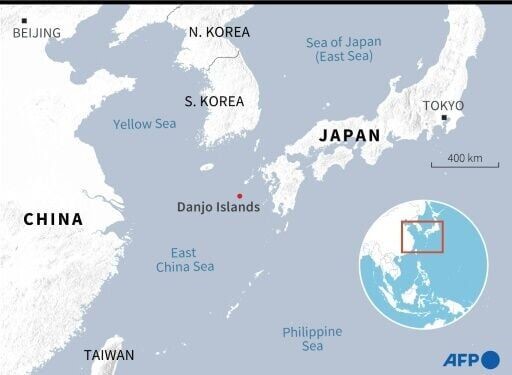
(Above; Danjo Islands  Source: voiceofalexamdria.com)


A big increase in Japan's defence budget can be regarded as a move by the Pentagon for allies to make substantial contributions for involvement in US-led military and security provision and the Indo-Pacific Strategy. Recent diplomatic hostility by Japan toward China, over an alleged incursion into airspace of strategic islands in the East China Sea, is best viewed in the context of the IPS as the basis of US regional foreign policy.

In August, Japan's defence ministry requested 8.5 trillion yen ($87billion) for the next fiscal year; it has amounted to their largest ever request, forming part of a five year 43 trillion yen budget, to March 2028. (1) The request was approved, although appears to have been a significant factor in the resignation of Prime Minister Fumio Kishada, whose approval rating slumped drastically. (2) Moves by successive Japanese governments to re-interpret clause 9 of their pacifist constitution have not proved particularly popular with many voters.  

The 2024 Japanese defence also rested upon a previous one, whereby a 16.5 per cent increase the previous year, was allocated for realignment with US military forces. (3)  

It is important to note that an estimated third of the 2024 defence budget has been allocated for 'satellite constellation', aimed at China, Russia and the DPRK. (4) Espionage and intelligence-gathering has become a Cold War obsession with the Pentagon; the US-led IPS, for example, also includes the General Security of Military Information Agreement (GSOMIA), 'which effectively allows for unlimited sharing of all military information'. (5) What actually constitutes military information is also categorised by what might be useful, not what is necessarily the case.

Elsewhere, across the vast Indo-Pacific region, many countries are following similar military upgrades, with increased budgets. In Australia, defence budgets are likely to place huge burdens on successive generations, effectively placing the country into almost unpayable long-term debts.

The moves closely follow the US-led Indo-Pacific Strategy (IPS) which has included Japan being upgraded to the diplomatic position of a global alliance partner; the IPS then rests upon the 'quad', encircling and containing China from all sides. (6)

The significance of Australia within the IPS should not be under-estimated; recent high-level diplomacy between Canberra and Tokyo has included an official invitation for elite marines from the Japanese Rapid Deployment Brigade to participate in trilateral exercises with Australian and US counterpart in northern Australia. The move was accompanied by an official statement that 'this is a really huge opportunity for our three defence forces to operate in an amphibious context'. (7)

Other countries as US allies are then placed inside the IPS framework as lower-level partners, with specific responsibilities for hosting sensitive US military facilities. (8) The placing, by the US, of networks of precision strike missiles on island chains, has become commonplace; the so-called Pacific Deterrence Initiative (PDI), has formed part of a large budget allocation of $27.4 billion. (9)

A recent official media statement from the US acting Under-Secretary for the Navy, Tom Mancinelli, has left little to the imagination: the Indo-Pacific has been described as the US 'priority theatre … and … the US Navy was laser-focussed on the Pacific region'. (10)

US intelligence assessments have continually drawn attention to the closer diplomatic relations between China and Russia as problematic. The balance of forces is swinging away from traditional US hegemonic positions; China has become the largest trading partner of most countries across the Indo-Pacific region.

A recent allegation by Japan that a Chinese Y-9 surveillance aircraft had violated their sovereignty off the strategic Danjo Islands, however, has shown just how tense diplomatic relations have become between US-led positions and China. The tiny Danjo islands, in the East China Seas, are uninhabited although close to China's Exclusive Economic Zone (EEZ). (11) Situated at 32 degrees north and 128 degrees east, the sovereignty of the Danjo islands is not contested and face the important Chinese port of Shanghai; the five islands are not inhabited and cover an area of 4.7 square kms, rising to 281 metres above sea level.

Other islands in the area are contested between China and Japan and other countries, and remain sensitive and potentially problematic. Moves by the US to establish the IPS, for example, were accompanied by Japan nationalising 280 islands, of a total of an estimated four hundred strategic land-masses which have served as demarcation lines for territorial waters; they were referred to in government papers as 'important national territories'. (12)

While the alleged Danjo incursion was of only two minutes duration, the Japanese air force scrambled a full alert. Later commentary suggested the incursion had taken place as 'China was probing Japan's air defence network, seeking to obtain intelligence … as Japan … expands defence co-operation with the US and other countries in the region'. (13)

The speed of the Japanese air force reaction to the alleged incursion would tend to indicate the whole area of the East China Sea was under close surveillance. Japan is known to possess extensive Signals-Intelligence (SIGINT) facilities and a network of listening stations with extended range. (14) Whether sensitive military facilities are based on the Danjo islands was not, however, officially divulged. The fact the alleged incursion was also given high-level media coverage in Australia has, nevertheless, also remained a factor in assessing its diplomatic significance in the context of the IPS.

1.     Back off, Japan and Philippines tell China, Australian, 2 September 2024.
2.     Japanese PM jumps before he's pushed, Australian, 15 August 2024; and, Japan's Defence Ministry seeks record budget, Military,com, 30 August 2024.
3.     Japan approves 16.5 per cent increase in defence spending for FY 2024, The Diplomat, 22 December 2023.
4.     Military.com, op.cit., 30 August 2024.
5.     The reasons behind Washington's push for GSOMIAS., Hankyoreh, 12 November 2019.
6.     Ibid.
7.     Top End to host elite Japanese marines, Australian, 6 September 2024.
8.     Hankyoreh, op.cit., 12 November 2019.
9.     See: US to build anti-China missile network along first island chain, Nikkei Asia, 5 March 2021; and, US Indo-Pacific Command proposes new missile capabilities to deter China, RFA., 5 March 2021.        
10.   Indo-Pacific is our priority theatre: US Navy boss, Australian, 4 September 2024.  
11.   Australian, op.cit., 2 September 2024; and, Chinese spy plane, The Sydney Morning Herald, 27 August 2024.
12.   Japan to nationalise 280 islands, The Age (Melbourne), 10 January 2014.
13.   Japan says Chinese aircraft incursion, The Star, 27 August 2024; and, Janes: Chinese Y-9 electronic warfare aircraft infringes Japan air space, 27 August 2024.    
14.   See: Japan – Naicho – Cabinet Research Office, Intelligence Services, Espionage, Spies and Secrets, Richard M. Bennett, (London, 2002), pp. 163-65.

Friday, December 22, 2023

Dirty deeds done dirt cheap: political scandal in Japan


Written by: (Contributed) on 23 December 2023

An unfolding political scandal has placed the Japanese Liberal Democratic Party (LDP) government of Prime Minister Fumio Kishida in panic mode. It sacked four cabinet ministers in mid-December as the government struggled to cover the main scandal: long-time political corruption stretching back decades with connivance from far-right groups, spurious pseudo front organisations, organised crime and seemingly non-legitimate business practices as standard operations.  The relative silence accompanying the scandal from US-led mainstream media outlets is evidence, in itself, of US concerns about their main partner in their Indo-Pacific foreign policy.

In mid-December an announcement that Japanese Prime Minister Fumio Kishida was planning to sack four of his cabinet ministers, who, within hours, tendered their resignations, escaped the attention of most mainstream media outlets despite being senior government members. The resignations were also accompanied by a special advisor to the PM and five deputy ministers also quietly leaving office. Diplomatic silence, on the part of the US, however, would appear to have been the order of the day; all the Australian newspaper, the mouthpiece of Canberra, could manage was 75 column centimetres over two days. They were also evasive about the main reasons for the political crisis.

While the stated explanation for the resignations was financial corruption of an estimated $5.26 million, the real reason was the ongoing investigation into the assassination of former Prime Minister Shinzo Abe last year; for example, 'media reports suggested prosecutors were about to begin raiding offices and start interviewing dozens of M.P.s'. (1)

The LDP is known to be bitterly divided into factions and the fact those allegedly receiving the corruption were from the largest faction which was formerly headed by Shinzo Abe has thrown light on the shadowy nature of the inner workings of the Japanese political system and culture. (2) The LDP has ruled Japan, effectively, for decades; political opposition is largely ignored.

In recent years the US has upgraded its diplomatic relations with Japan to that of a fully-fledged global alliance: the Indo-Pacific Strategy (IPS) is now a central feature of US regional and global foreign policy. (3) Japan, together with the US, India and Australia, form the 'quad', effectively hemming in China on all sides, with other countries, including South Korea, Singapore, Vietnam, China’s breakaway province of Taiwan, and others as lower-level partners. (4) Under such circumstances the US, clearly, does not want any unfavourable publicity about Japan.

Japan, however, has had a troubled history which continues to hang like a shackle: many countries in Asia have difficulty forgetting the period of Imperial Japan, militarism and its horrific human rights abuses. Soon after the Second World War, however, the US quickly developed Japan as a major player in their foreign policy. Those associated with Imperial Japan were allowed to slip away, as if unnoticed.

The far-right figures also quickly re-grouped.

It was noted that, 'just as they did with the Nazis in Europe, the American occupation authorities had a change of heart about Japan's war criminals. As the Cold War began, the enemy was no longer the fascists but the communists … war criminals were quietly released from prison in 1948 and became some of the prime movers, organisers, and funders of the LDP, a conservative pro-American party that has controlled the political life of Japan ever since'. (5) The LDP soon emerged as the 'respectable' party of the Japanese middle-classes.

The nature of the recent corruption investigation threw light upon the inner workings of the LPD and the prevailing long-engrained political culture of their supporters and associates: party members were required to sell tickets for fund-raising, if they exceeded their quota the extra money was retained as a personal 'kick-back'. (6) The method of operation revealed a compliant power-base of supporters who, 'had their M.P. to look after their interests', along the lines of the 'big man at the top'; an almost tribal political culture. Tax evasion would appear another side of the political corruption; it was noted in the inquiry, for example, even the faction of the LDP until recently headed by Fumio Kishida was suspected of failing to declare more than 20 million yen between 2017 and 2020. (7) No wonder Fumio Kishida became P.M.; those in the know wanted a compliant leader to serve their interests!   

Another organisation they used for more covert operations was the Asian People's Anti-Communist League (APACL), established in 1954, which later merged to become the World Anti-Communist League (WACL) in 1966. Studies of the organisation have concluded that it was, 'the most sinister of all the internationally active extreme right-wing organisations … and the … main conduit for funds for extreme right-wing organisations throughout the world'. (8) It later became a dominant player in the Iran-Contra scandal. (9)

The Japanese APACL/WACL league chapter was also controlled by the shadowy Unification Church or 'moonies' led by the Reverend Sun Myung Moon; a seemingly pseudo 'front-type' organisation based on devoted followers. (10) It 'has kept close to its Yakusa origins', that of organised crime. (11)

The fact that a recent parliamentary inquiry found that nearly half of the LDP's M.P.s, 'had some connection with the Moonies', has raised serious questions about their credibility. (12) Reference to the, 'deep, historical ties between Japan's ruling LDP and the Unification Church … and … the groups alleged predatory fund-raising practices', has serious implications for the ongoing corruption inquiry in Japan. (13)

Studies of the Yakusa have proved particularly revealing and throw light upon a turf-war type mentality where organised crime has been able to control large sections of the Japanese economy. During the 1980s, for example, the Yakusa moved into real estate to launder 'their ill-gotten profits from drug sales, prostitution, gambling and extortion. Yakusa's annual income is estimated at $10 billion'. (14) Japan is a centre of the global pornography industry.

Later studies, in 2020, revealed the Yakusa had increased their wealth to an estimated US$50-100 billion a year, with legislation passed in the Japanese parliament merely forcing the criminal organs underground, where they operated with relative impunity. (15) A further study conducted in 2023, likewise, revealed the organised crime body had increased its wealth still further with an annual income of an estimated $200 billion. (16)

The increased wealth amassed by the Yakusa has revealed they have been able to control their own turf very effectively; and they also evade detection. They form part of a relatively closed political system and a culture whereby questions are not asked and items pushed to the bottom of government agendas to avoid lifting the lid on non-legitimate business practices, in fear of creating widespread political turmoil. 'Yes, Minister', write large.

Japan, nevertheless, is a country in relative decline: only criminals appear in ascendency and prospering, the rest of Japan's population appear to be paying a high price for little.

Domestically Japan used to have a high standard of living: recent studies, however, have revealed many grievances with falling living standards and inflation; recent tax cuts appear to have fallen on deaf ears with 'real wages are still in decline'. (17) As a regional player for US foreign policy, Japan used to be the, 'biggest supporter of ASEAN's economic growth and industrialisation'. (18) In recent years its position has been eclipsed by China, which also pushed Japan into third place as an important part of the global economy.

In conclusion, the recent corruption inquiry in Japan has produced evidence of a political system under strain, although commentary about the forthcoming general election has already stated, that, 'there is no realistic proposition it … the LDP … could actually lose power', despite the fact the Kishida government has approval ratings of less than thirty per cent. (19)

The LDP has become a permanent feature of Japan's political culture, and is also Australia's partner in US-led regional military and security provision:

                                    We, therefore, need an independent foreign policy!


1.     Four Japanese ministers quit, Australian, 15 December 2023.
2.     Japanese PM tipped to sack four ministers, Australian, 14 December 2023.
3.     The reasons behind Washington's push for GSOMIA.,Hankyoreh, 12 November 2019.
4.     Ibid.
5.     Inside the League, Scott Anderson and Jon Lee Anderson, (New York, 1986), pp. 62-63.
6.     Australian, op.cit., 14 December 2023.
7.     Australian, op.cit., 15 December 2023.
8.     Website: In Latin America, libcom.org - 38025
9.     See: The Iran-Contra Scandal: The Declassified History, Edited by Peter Kornbluh and Malcolm Byrne, (New York, 1993), reference – Retired Major-General and former Commander of US Forces in South Korea, John K. Singlaub, Chair of WACL., page xxx.
10.   See: Inside the League, Scott Anderson and Jon Lee Anderson, op.cit., pp. 124-25.
11.   Ibid., page 125.
12.   Fumio Kishida orders probe of Moonies, The Financial Times, 17 October 2022.
13.   Could former P.M.s assassination end the Moonies in Japan?, CBC News, 7 December 2022.
14.   The family that preys together, Jack Colhoun, Covert Action, Edited by Ellen Ray and William H Schaap, (Victoria, 2003), pp. 192-205.
15.   Yakusa alive, The Asia Times, 3 December 2020.
16.   How rich is the Yakusa?, NAVI / 33 Square, 28 October 2023.
17.   See: Kishida's popularity in free fall, The Japan Times, 16 October 2023; and,     Kishida is so unpopular, The Japan Times, 7 November 2023.
18.   Missile test 'threat to region's stability', Australian, 19 December 2023.
19.   Japan Times, op.cit., 7 November 2023.


Tuesday, August 29, 2023

Australian armed forces – guardians of the Bushido


 Written by: Nick G. on 29 August 2023

US imperialism created it and now wants to get rid of it – the so-called pacifist Constitution of Japan.

It wants to clear the way for the greater deployment of Australian and Japanese forces as its cat’s paws – agents of provocation – against its rival, Chinese social-imperialism.

The current Japanese Constitution came into effect after Japanese imperialism’s defeat in the Second World War.
 
Drafted by the occupation US armed forces under General MacArthur, it imposed non-belligerence on the Japanese when it took effect in 1947. Article 9 of the Constitution states:
 
1)    Aspiring sincerely to an international peace based on justice and order, the Japanese people forever renounce war as a sovereign right of the nation and the threat or use of force as means of settling international disputes. 
2)   In order to accomplish the aim of the preceding paragraph, land, sea, and air forces, as well as other war potential, will never be maintained. The right of belligerency of the state will not be recognized.
 
Article 9 was well-received by the Japanese people whose major cities had been fire-bombed to oblivion by Allied aircraft, followed by the dropping of the two atom bombs on Hiroshima and Nagasaki.
 
However, the US imperialists and Japanese militarists soon regretted imposing a pacifist constitution on the defeated nation.
 
The Japanese attempted to sidestep the Constitution in 1954 by creating an armed force under the name of the Japan Self-Defence Force, but it was still forbidden from engaging in fighting outside of Japan.
 
During the 1960s and 70s, when US imperialism was seeking allies for its war on Asian liberation movements, led by Communists, attempts were made to revive Japanese militarism and the Self-Defence Forces were expanded and various “security” arrangements were entered into by the two countries. Despite the stationing of large numbers of US troops and naval vessels in Japan, the Constitution remained in force with the support of the Japanese people.
 
A more aggressive push for amending Article 9 arose during the time of Shinzo Abe as Japanese Prime Minister between 2012 and 2020. The JSDF's first postwar overseas base was established in Djibouti (July 2010). On 18 September 2015, the National Diet enacted the 2015 Japanese military legislation, a series of laws that allow Japan's Self-Defence Forces to defend allies in combat. The JSDF can now provide material support to allies engaged in combat overseas, as they did with the US in Iraq.
 
Since 2018, Japanese forces have increasingly participated in joint military exercises with the US and countries loyal to it, including India and Australia.
 
US imperialism has made it known that Australia and Japan are its southern and northern outposts for the maintenance of its declining hegemony over the Pacific.
 
The Australia-Japan Reciprocal Access Agreement – were you consulted?
 
Under former Australian PM Scott Morrison, negotiations for a Reciprocal Access Agreement (RAA) were begun, and signed in January 2022. The RAA came into effect on 14 August 2023.  The RAA creates a framework for the two cooperating countries to move their military force whenever required through access to one another’s military bases and ports, and also provides a pathway for goods to be imported and exported from one country to the other through following the movement of visiting military forces.
 
Specifically, its measures will include:
 
Japanese F-35s will deploy to Australia, to RAAF Base Tindal for the first time at the end of August;
 
Exercise Bushido Guardian, where Australian F-35s will be deployed to Japan for the first time in early September; and,
 
Australia will participate in Exercise Yama Sakura as a full participant for the first time with more than 150 personnel travelling to Japan in December.
 
This means that Tindal will not only host US nuclear-armed B-52 bombers, but also Japanese fighters under the sort of “rotation” fig-leaf that now makes US marines a permanent presence in the NT. The first two Japanese planes, and 55 personnel, arrived at Tindal on August 26.
 
The reference to Exercise Bushido Guardian was not well-received by some in the Australian armed forces community. Bushido was the “way of the warrior” expounded in the Japanese feudal-era text the Hagakure, which guided the behaviour of Japan’s Imperial Armed Forces during its aggression, firstly against Korea and China, and then during the Pacific phase of WW2.
 
The following comment was made by a reader of the online Australian Defence Magazine, relying to an earlier comment:
 
A little unfortunate you made no mention of the 8th Division 2A.I.F. and their experiences with the Japanese Military.
 
Or even the 5th, 6th, 7th, and 9th Divisions might possibly exist in your World of Australian/Japanese Lovefests?
 
My Grandfather and his mates from the Thai – Burma Railway might have some news for you regarding ”Aussies repaying debts”.
 
Still, who cares anymore about the Diggers used for bayonet practice, the machine-gunned Nurses, the decapitations, cannibalism, the mass rapes, executions, torture and innate cruelty of the Japanese Military?
 
Bygones can be bygones I guess, yeah in fact, f*ck those Diggers!
 
As long as we follow the U.S. into yet another senseless slaughter for Freedumb and Dumocracy, we can enjoy that warm fuzzy feeling of gathering in mobs, getting pissed and singing. . . . . . .
 
Aussie Aussie Aussie. Oi Oi Oi !!!
 
Makes ya proud, don’t it?
 
The current generations of young Japanese do not have to carry the guilt of their WW2 warrior ancestors. They are amongst the foremost defenders of Article 9. Nevertheless, many Australians will find the deployment of “our” F-35s to “guard” the Bushido as offensively insensitive as did the author of the comments above.
 
Albanese-Wong-Marles are in lock-step with the aggressive war plans of US imperialism.
 
The Australian and Japanese people must enhance their cooperation and work together to prevent the co-opting of their respective countries into another unwinnable US war of aggression.

Monday, March 20, 2023

US pushes Japan and South Korea into unwelcome relationship


Written by: (Contributed) on 20 March 2023

Those who follow how influence is brought to bear in diplomatic relations will have found recent US-led initiatives toward South Korea (ROK) particularly interesting. The Biden presidential administration has successfully pushed their ROK counterparts in the Blue House in Seoul toward a pro-US defence and security position, away from the more independent diplomatic line of the previous Moon Jae-in presidency.

Serious implications for South Korea’s domestic politics have arisen following the US formally placing the ROK inside the new Indo-Pacific Strategy.

The address by President Yoon Suk-yeol at the ROK annual celebration of their independence movement on 1 March was met with widespread criticism and condemnation by many citizens. The address included the statement that 'Japan has transformed from a militaristic aggressor of the past into a partner that shares the same universal values with us … and … co-operation between South Korea and Japan is incredibly important on all fronts, including diplomacy, economy and defence'. (1) Diplomatic relations between the two countries have historically been tense, following the controversial occupation of the Korean peninsula from 1910-45 by Imperial Japan; the period was marked by horrific human rights abuses, atrocities and repression.

Several years ago, the two countries reached an agreement whereby Tokyo agreed to contribute to a fund to pay compensation to Korean women forced to have sex with Japanese soldiers. The deal, however, fell apart. Subsequent legal rulings in Seoul re-opened the whole issue of compensation, although Japan refused to accept the legal decision and forward any compensation.

The legal verdicts proved particularly controversial as they overrode a 1965 treaty where Tokyo had paid hundreds of millions of dollars in grants and loans to the South Korean government of the time. Threats by the previous Moon Jae-in presidency, to enforce payments through liquidation of assets of Japanese companies resulted in tense diplomatic stand-offs.

The Yoon Suk-yeol administration also used the 1 March public holiday to announce that 'a South Korean fund will compensate Koreans forced to work for the Japanese in Japan during World War Two … as … part of an arrangement that will boost efforts to counter China and North Korea'. (2) The political announcement overrode legal decisions.

Behind the scenes influence has been brought to bear by the US upon the ROK: the US has imposed their Indo-Pacific Strategy (IPS) upon allies throughout the wider region. (3) The Yoon Suk-yeol presidential administration has been keen to follow the US-led initiatives: on 13 March, for example, the ROK embarked upon their largest joint military exercise with the US for five years, with the ten-day 'Freedom Shield' war-games. The exercise followed an earlier joint exercise, Teak Knife, which included Special Forces conducting simulations for strategic precision missile strikes on North Korean (DPRK) key facilities. (4) The two joint military exercises have also included a statement from President Yoon Suk-yeol that the DPRK was 'an enemy'. (5)

On March 13, hundreds of peace activists gathered near the presidential office in central Seoul to demand stopping the Freedom Shield joint military exercise.

Holding banners and placards with the slogans of "Stop the Korea-U.S. joint exercise that brings on war" and "What we want is peace" in their hands, the participants shouted, "We want to live. Stop the war exercise."

The previous Moon Jae-in administration sought a more conciliatory diplomatic relations with the DPRK, which caused noticeable diplomatic tensions between the ROK and US.

The main stumbling block during the Moon Jae-in presidential period was the US implementation of the General Security of Military Information Agreement (GSOMIA). The intelligence agreement was responsible for elevating Japan to a major hub for 'US interests', and a major player in the new IPS alongside Australia as the two regional 'linchpins'. (6)

It replaced a previous US strategy primarily for East Asia, marked by the ROK and Japan being fundamentally on an equal footing: US forces were stationed in the ROK for rapid deployment with the Defence of Japan doctrine. The IPS has downgraded the ROK alongside other participants including Taiwan, Singapore, Vietnam and other allies. (7)

While the US demanded the Moon Jae-in administration declare its full participation in the Indo-Pacific Strategy, a diplomatic statement from Seoul noted, 'South Korea needs to first demand a concrete list from the US in terms of how it is supposed to participate in the Indo-Pacific Strategy, examining it closely and choosing only those areas that are acceptable'. (8)

The ending of the Moon Jae-in presidential period subsequently allowed the US new openings with the more conservative and pro-US administration of President Yoon Suk-yeol, which has proved more accommodating of Japanese counterparts, particularly in the domestic political arena when dealing with demands for compensation.

While the US has succeeded in winning over the ROK government to their side, the country itself is increasingly polarised between supporters of the previous presidential administration and that of the present administration. The victory for the US may well prove temporary and impossible to maintain in future years. Reliable commentary from Seoul has noted 'relations between the two Koreas are at one of their worst points in decades'. (9)

And diplomatic relations between the ROK and Japan remain decidedly volatile as the US prepares for 'real-war scenarios'.

1.     Deal on forced labour reached, Australian, 7 March 2023.
2.     Ibid.
3.     The Reasons behind Washington's push for GSOMIA., Hankyoreh, 12 November 2019; and, Change your ways or else, Beijing warns US., Australian, 8 March 2023.
4.     US, South Korea kick off largest drills in five years, Australian, 14 March 2023; and, N Korea calls for end to drills, Australian, 6 March 2023; and, Kim prepared to turn Pacific into 'firing range', Australian, 21 February 2023.
5.     South Korea labels North the 'enemy', Australian, 17 February 2023.
6.     Australian, op.cit., 8 March 2023.
7.     See: Hankyoreh, op.cit., 12 November 2019.
8.     Ibid.
9.     Kim orders 'real war' drills, puts soldiers on mission notice, The Weekend Australian, 11-12 March 2023.