Monday, March 17, 2025

DOGE firings may not AID Trump’s survival

 Written by: (Contributed) on 12 March 2025

 

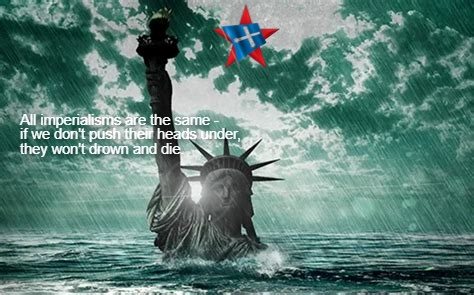
(Above: sourced from thetonymichaels.substack.com)


An internal memo from inside the Trump administration in Washington has revealed most of the USAID foreign programs are not scheduled to re-open after their ninety day suspension. It comes as no great surprise for informed observers, particularly in the Indo-Pacific region.

News that about a third of staffers employed by the DOGE have resigned in protest at government cuts, however, was not anticipated; it shows a substantial groundswell of public opinion opposed to the presidential administration and its policies is taking place.

Information contained in a memo has revealed the Trump administration intend to save an estimated US$60 billion from closing about ninety per cent of the present USAID program, cutting 5800 of the 6200 existing programs. (1) The move marks a dramatic shift away from traditional US diplomacy which was based in foreign assistance to safeguard 'US interests'.

With the Indo-Pacific becoming a theatre for aggressive diplomacy against China, the moves, at face value, appear contradictory and nonsensical. They appear to have taken place in an air of right-wing popularism couched in terms of criticisms that the existing programs advance liberal agendas which have been assessed as not being compatible with the position of the Trump administration and its far-right policies.

The aid programs in the region have, historically, been designed to provide assistance to the most needy sections of Pacific Islands, many of which have little, if any, sustainable economic development provision. In the period 2012-2022 the US provided US$1.5 billion with the US-Pacific Co-operation program, together with a further US$810 million for expanded programs. (2)

Pacific Islands' governments have tended to remain dependent upon neo-colonial financiers which invariably exploit the mass of the population. Programs which have concentrated upon food and medical provision together with governance to provide political stability have been a useful contribution for millions of people.

Whether Australia and other countries now move in to occupy the aid vacuum created by the Trump administration remains to be seen; a statement from Canberra has already noted 'it was unrealistic to think Australia – already the Pacific's largest aid donor – could totally fill the gap left by the US … the announcement has left Australia racing to identify the South Pacific's most pressing funding needs … Australia had started auditing which Pacific programs were most at risk, with a view to shouldering some of the burden'. (3)

The moves by the Trump administration have been accompanied by similar developments in the domestic sphere inside the US; planning to literally gut government spending have already taken place, with further rounds planned in due course. (4)

The unease over DOGE cuts has extended to sections of the military. Kelly Hammett, director of the US Space Rapid Capabilities Office, said his organization risks being “inordinately impacted" by workforce reductions underway with the Trump administration. 

In a Mad magazine Spy vs Spy scenario, he revealed that the Space Force has had a secretive, orbital tool that can gather information on China’s own network of sensors that monitor American satellites. 

As a small organization with roughly 50 civilian and 20 military employees, some in at-risk categories like probationary workers, Hammett warned his office could be disproportionately affected by labour cuts that are underway by the Trump administration. He said he was losing staff, but could not “hire people back because we’re under a hiring freeze”.

Rob Joyce, former director of cybersecurity at the NSA, said "Eliminating probationary employees will destroy a pipeline of top talent essential for hunting and eradicating threats”. 

“I want to raise my grave concerns that the aggressive threats to cut US government probationary employees will have a devastating impact on cybersecurity and our national security,” he said.

Oh, wouldn’t it be a shame if the man who tried to incite a coup was overthrown in one by a military determined to maintain its numbers in the face of DOGE cutbacks.(5)

What has received little publicity, however, is that an open revolt has already started against the position of the Trump administration. In late February a third of the staffers employed by DOGE resigned their positions on the grounds that the spending cuts 'endanger millions of Americans who rely upon these services every day'. (6) Despite employees in government departments receiving emails from DOGE a mass movement of government employees have ignored the correspondence or 'downplayed the risks of not answering it', in defiance of the directive. (7) Basic trade union principles are being re-born.

The moves taken by the Trump administration also remain reminiscent of the Thatcher administration in Westminster, over forty years ago. Their initial economic rationalist policies were on the premise that the economy would 'bottom out' following drastic government spending cuts. Their distorted vision was that a new economy would then arise like a phoenix from the ashes, with trickle-down economic advantage for lower socio-economic groups. It never happened. In fact, in common-sense terms, economies do not reach rock bottom but continue to deteriorate indefinitely without responsible government support.

It is particularly interesting to note, therefore, that the statements from the Trump administration have marked a significant shift away from usual bravado and displays of splendour; they have tended to convey a view that the US is already in terminal decline and not able to lead or defend the west. Their costings appear quite drastic cast against a backcloth of hyper-delusion and megalomania.

It is, ironically therefore, a time when the demand for Australia to pursue an independent foreign policy is winnable!


1.     US to cut 90pc of foreign aid packs, Australian, 28 February 2025.
2.     Fact Sheet: US Embassy and Consulates in Australia, 30 September 2022.
3.     Australian, op.cit., 28 February 2025.
4.     DOGE exodus: one-third of Musk's staff resign in protest, Australian, 27 February 2025.  
5.    Details from US online magazine Breaking Defense
6.     Ibid. Doge exodus…
7.     Ibid.

Forget Plan B – just dump AUKUS now.

Written by: Nick G. on 18 March 2025


The united front against AUKUS is definitely growing, with retired Admiral and former head of the Australian Defence Forces (ADF) Chris Barrie calling for a Plan B, and former Liberal Prime Minister Malcolm Turnbull calling it “a really bad deal”.

These developments are unconditionally welcomed and strengthen the movement against AUKUS.

At the same time, they require genuine anti-imperialists to ensure that the movement is led by people whose view of Australian independence goes further than a re-tweaking of the so-called Australia-US “Alliance”.

This leadership in turn requires the involvement of the working class in the fight to dump AUKUS.

Labor Against War’s letter to all Labor MP’s, and the passage of motions questioning AUKUS by some 150 ALP sub-branches assist in the mobilisation of Australian working people.

The Plan B calls reflect a growing awareness that the AUKUS nuclear-powered submarine arrangements are fatally flawed. 

The US Congressional Research Service says the US can’t build Virginia SSNs at a rate needed to transfer subs to us. The UK Infrastructure & Projects Authority says delivery of AUKUS SSN reactors is unachievable. Even the Australian Navy agrees AUKUS is high risk; yet they stumble on. Trump adds to the uncertainty.

But Plan B proponents generally speak from a belief in the continuing value of the “Alliance” and seek better ways to protect it.

For example, Admiral Chris Barrie, calling for a Plan B on March 13, said the “US is no longer a reliable ally”. He said he had previously supported the idea of acquiring nuclear-powered submarines because of their superior capabilities but was worried there was no guarantee they would arrive under the current AUKUS strategy.

However, he did not criticise the “Alliance”.

Likewise, Turnbull’s comments did not advocate independence from the US stranglehold.

The positive message was that “The most likely outcome of the AUKUS pillar one is that we will end up with no submarines of our own.” 

“There will be Australian sailors serving on US submarines, and we’ll provide them with a base in Western Australia.

“We will have lost both sovereignty and security and a lot of money as well. That’s why I say it is a really bad deal.”

Turnbull’s prediction about how AUKUS will be implemented echoed an opinion piece in the US online Breaking Defense journal.

Under the heading "It’s time to ditch Virginia subs for AUKUS and go to Plan B", Henry Sokolski, referring to the Australian Government’s recent gift of $800 million to help pump-prime US shipyards, said “Because the submarine deal is unlikely to overcome budgetary, organizational, and personnel hurdles, that payment should be Australia’s last.”

His Plan B would cancel the sale of nuclear-powered submarines to Australia “in light of Australia’s budget, organizational, and personnel shortfalls.” Instead, “US and UK subs operating from Australia with RAN sailors and maintained by Australian workers would serve as a sufficient deterrent. The first element of a Plan B is already underway, with US and UK nuclear submarines regularly visiting HMAS Stirling near Perth, including conducting maintenance with a visiting US Navy tender.”

This is just what Turnbull was suggesting might happen.

Sokolski then outlined how an expanded AUKUS Pillar 2, with additional partners South Korea, New Zealand and Canada, should develop “innovative projects” like uncrewed systems, AI, quantum computer science, and hypersonic weapons, which “could deliver technologies that provide most of what the Virginia-class subs would offer for Australia.”

Sokolski’s Plan B, with Turnbull’s warning of its likelihood, shows that more than a Plan B is needed.

What is needed is a break with the US and the removal of its military presence in Australia. This movement needs sufficient strength to last beyond Trump’s four-year term of office, and a recognition that whoever or whatever replaces Trump will try and maintain Pine Gap, North-West Cape, US marines in Darwin, nuclear-armed US bombers based at the Tindal RAAF base outside Katherine, nuclear-armed US and UK submarines based near Perth, US fuel dumps, access to satellite surveillance…and the list goes on.

The only alternative to AUKUS, according to former Australian Ambassador to the US John McCarthy on March 6 is Plan A. “This should not be a Plan B but rather a new Plan A – with the A standing for Australia and not ANZUS, let alone AUKUS.”

For us, Plan A means an independent and peaceful Australia that protects its own sovereignty without the aggressive belligerence that both Labor and Liberals are completely committed to. 
 

Tuesday, March 11, 2025

Duterte’s ICC arrest a victory for the Filipino people, but struggle for justice continues

Written by: National Democratic Front of the Philippines International Office on 12 March 2025


The arrest of former President Rodrigo Duterte by virtue of a warrant issued by the International Criminal Court (ICC) is a victory for the Filipino people, particularly the thousands of victims of his bloody “war on drugs” and his fascist attacks on the revolutionary movement. It affirms what the people have long known – that Duterte is a mass murderer who must be held accountable for his crimes. However, this does not absolve Marcos Jr. of his own blood debts as he continues the reactionary state’s counterrevolutionary war against the Filipino people.

While we welcome the ICC’s move against Duterte, we also reiterate the crimes of the Marcos Jr. administration. The 2024 International People’s Tribunal (IPT) found both Duterte and Marcos Jr., as well as the US government, guilty of grave violations of international humanitarian law. The findings of the IPT reinforce the fact that state terror and impunity persist under Marcos Jr. and that the fight for justice must extend beyond Duterte’s arrest—it must challenge the continuing fascist repression being waged by the current regime.

The ICC warrant focuses on Duterte’s “war on drugs,” but his crimes extend far beyond this. His regime carried out the systematic killing of NDFP peace consultants, aerial bombings of civilian communities, and the torture and execution of captured Red fighters (hors de combat), all in blatant disregard of the laws of war. These war crimes were not just Duterte’s policy—they remain central to the Marcos Jr. regime’s counterrevolutionary war against the Filipino people. Under Marcos Jr., indiscriminate bombings, enforced disappearances, forced evacuations, and extrajudicial killings continue, proving that the reactionary state will stop at nothing to crush the people’s resistance.

Furthermore, Duterte’s crimes were not his alone, nor were they simply the product of local reactionary politics. US imperialism has long propped up Philippine fascist regimes, providing military aid, training and intelligence to the Armed Forces of the Philippines (AFP) and the Philippine National Police (PNP). The US-funded “counterinsurgency” programs directly contributed to Duterte’s reign of terror. Even now, under Marcos Jr., US-backed military operations continue to target both revolutionary forces and the legal democratic mass movement. The people’s movement must continue to expose and resist the imperialist role in enabling fascist rule up to this day.

We call on the international community to sustain pressure for Duterte’s immediate prosecution. At the same time, the ICC must exert all necessary measures to compel the Marcos Jr. government to surrender Duterte to ICC jurisdiction. The NDFP International Office stands firmly with the Filipino masses in their fight for justice and genuine national and social liberation. Duterte and his cronies must face the full weight of their actions – not just for their past crimes but to end the continuing reign of impunity in the Philippines. 

Duterte’s arrest, or even his potential conviction, will not dismantle the semicolonial and semifeudal system that breeds fascist rulers and US puppet regimes. Only through a national democratic revolution with a socialist perspective, led by the working class, can the roots of fascist violence be eradicated.


Sunday, March 9, 2025

Learning from history – workers’ collective action decisive in defeat of imperialist powers

Written by: Ned K. on 10 March 2025


(Above: background image sourced from iai.tv)

Since the election of Trump as US President, the two global powers, USA and China are intensifying their rivalry. The USA, an imperialist power in decline, is fighting to hold off the rising imperialist power of China. At the moment, the main arena of struggle is trade with threat and counter threat since Trump first announced an intended 25% tariff on goods and services imported from China.

This has alarmed some close allies of US imperialism, including Australia. When Trump included Australia on his list of countries regarding tariffs on their imported goods and services to the USA, Prime Minister Albanese was on the phone to Trump pleading for an exemption for Australia and the Defence Minister Marles followed up with a trip to the USA to seek assurance about US imperialism's commitment to nuclear -powered submarines.

At the same time Prime Minster Albanese has stated the importance of Australia's relationship with the rising imperialist power China, especially on the trade front.

Albanese though is locked into loyalty to the declining US imperialism when it comes to the crunch, while Dutton, the so-called " Leader of the Opposition", is an even stronger supporter of US imperialism in its rivalry with rising China. 

Neither the Albanese government nor the "Opposition" led by Dutton have a vision of an Australian independence economically, militarily and politically. 

The Black Armada

The only class that has the power to lead decisive action in the interests of the Australian people on a consistent basis is the working class.

The difference between the working class and parliamentary party leaders when it comes to decisive action against imperialist powers was demonstrated during and just after the end of the Second World War.

The declining Dutch imperialist power was losing its grip on its East Indies empire due to the rising tide of struggle by Indonesians for a Republic of Indonesia.
In the mid-1940s the Labor government allowed extensive use of Australian ports by the Royal Netherlands Navy and the setting up of a Netherlands Indies Government In Exile The government in exile tried to muster enough support while based in Australia to overthrow the new Republic in Indonesia.

The Labor Curtin Government under Chifley did not know which way to turn with pressure from British imperialism to support the continued Dutch East Indies. 
The decisive blow to the declining Dutch East empire over-turning the new Indonesian Republic was the power of the Australian and Indonesian working class.
Indonesian maritime workers went on strike, refused to carry Dutch troops or munitions and were joined by seamen from India, China and Malaya. 

Australian maritime workers put black bans on the movement of 36 Dutch merchant ships, passenger liners, troop ships, two tankers and 35 other oil industry craft.

There also black bans on the movement of aircraft and submarines and two vessels of the Royal Netherlands Navy that were built to track down submarines.

The black bans were so extensive and lasted for over 6 months. The workers were able to have such effect because the Dutch empire in the East Indies had become so dependent on Australian ports.

As Rupert Lockwood in his book, Black Armada, explained,

"All delays are dangerous in wars...The first blow for the Republic of Indonesia against the Royal Netherlands armed forces, delivered at Australian wharves, warehouses, military camps, airports, naval depots and shipyards, was one from which the Dutch could not recover."

In 1946, the Communist-led Waterside Workers Federation of Australia commissioned Dutch Communist film-maker Joris Ivens to direct a film of the struggle.  The 23-minute Indonesia Calling can be seen on Youtube here (Indonesia Calling ) 

The decisive collective action of Australian workers saw the defeat of the declining Dutch empire in this part of the world. It occurred as British and French control in South East Asia, India and China was also in decline.

The decisive action by the Australian workers was so strong that Prime Minister Chifley decided the days of the declining Dutch empire to the north of Australia and in Australia had to come to an end if his desire to maintain British and American interests in the region was to be achieved. 

However, his support for workers was short-lived, as in the interests of British and US imperialism in Australia in 1949, he turned on the coal miners.

In the coming increased struggle between the declining US imperialism and Chinese imperialism, the current Australian government and previous governments have allowed more than "governments in exile" to operate from Australia. They now allow and support US troops and bases in Australia and US domination of most aspects of the economy, following in the footsteps of Prime Minister Menzies who waved the flag for white Anglo-American "protection" for white Australia from the "yellow hordes " from Asia!

Certainly, the ruling class constantly reviews its tactics in relation to class struggle. Black bans and sympathy strikes were on their hit list, but the great 1969 struggle to defeat the penal powers of the industrial laws, led by our Party vice-Chair and Secretary of the Victorian Tramways Union, Clarrie O’Shea left the employers powerless for more than a decade. They then decided to legislate to make unions the same, legally, as persons and used the civil law of tort to begin prosecutions of unions in disputes like Mudginberri Abattoirs (1984-5) and Dollar Sweets (1985). The Trade Practices Act outlawed secondary boycotts making black bans and sympathy strikes illegal.

The Australian working class, remembering their Black Armada actions of the 1940s against the declining Dutch empire, and determined to restore their democratic right to strike, will be up to the challenge of freeing Australia from the clutches of the declining US imperialism and any of its rivals.  

Saturday, March 8, 2025

SA Government Workers in Action in Struggle Against Rising Cost of Living

 Written by: Ned K. on 8 March 2025


South Australian Government employed cleaners, food service attendants in public hospitals and disability community and home carers are leading the struggle of public sector "blue collar" workers against the rising cost of living. They imposed work bans which did not interfere with patient care but put the Government on notice they were prepared to escalate their action if necessary to win a decent wage increase.

The Government's initial wage offer of 3% per year triggered the industrial action,

In an interview on ABC radio one of the workers' leaders said that the SA Government's wage offer amount to the miserable sum of just an 83 cents per hour pay rise for most workers. She said that hospital and disability workers were in the lowest paid group within the public sector and workers were taking action to win wage increases that took into account the rising cost of living over the last two or three years.

Negotiations for a new Enterprise Agreement had dragged on since mid-2024. The workers action received a lukewarm response from the Government. What made disability sector workers more determined was the knowledge that some of the major private sector disability providers had agreed to wage increases up to 5% higher than what the Government paid!

The industrial action is sure to escalate until the Government makes an acceptable wage offer to some of the lowest paid workers in the SA public sector workforce.

This is only one headache for the Malinauskas Government on the wages front, as other public sector workers such as Ambulance service Paramedics are also in negotiations this year for new Enterprise Agreements with wage increases and cost of living high on the list of logs of claims.

Rising Cost of Living A Key Issue For Workers On Eve of Federal Election

The industrial action taken by government support services workers is an indication of a rising tide of struggle of workers against the rising cost of living, While the official ACTU election campaign leading up to the federal election is about " Don't Trust Dutton", the resistance of Labor State Government's to wage claims of State Government workers' wage claims has many workers asking themselves -"Can I trust either a Dutton Government or the current Labor Government?" 

Friday, March 7, 2025

8th March - International Women’s Day - Salute Women’s Struggle

Written by: Mary P. and Alice M. on 7 March 2025


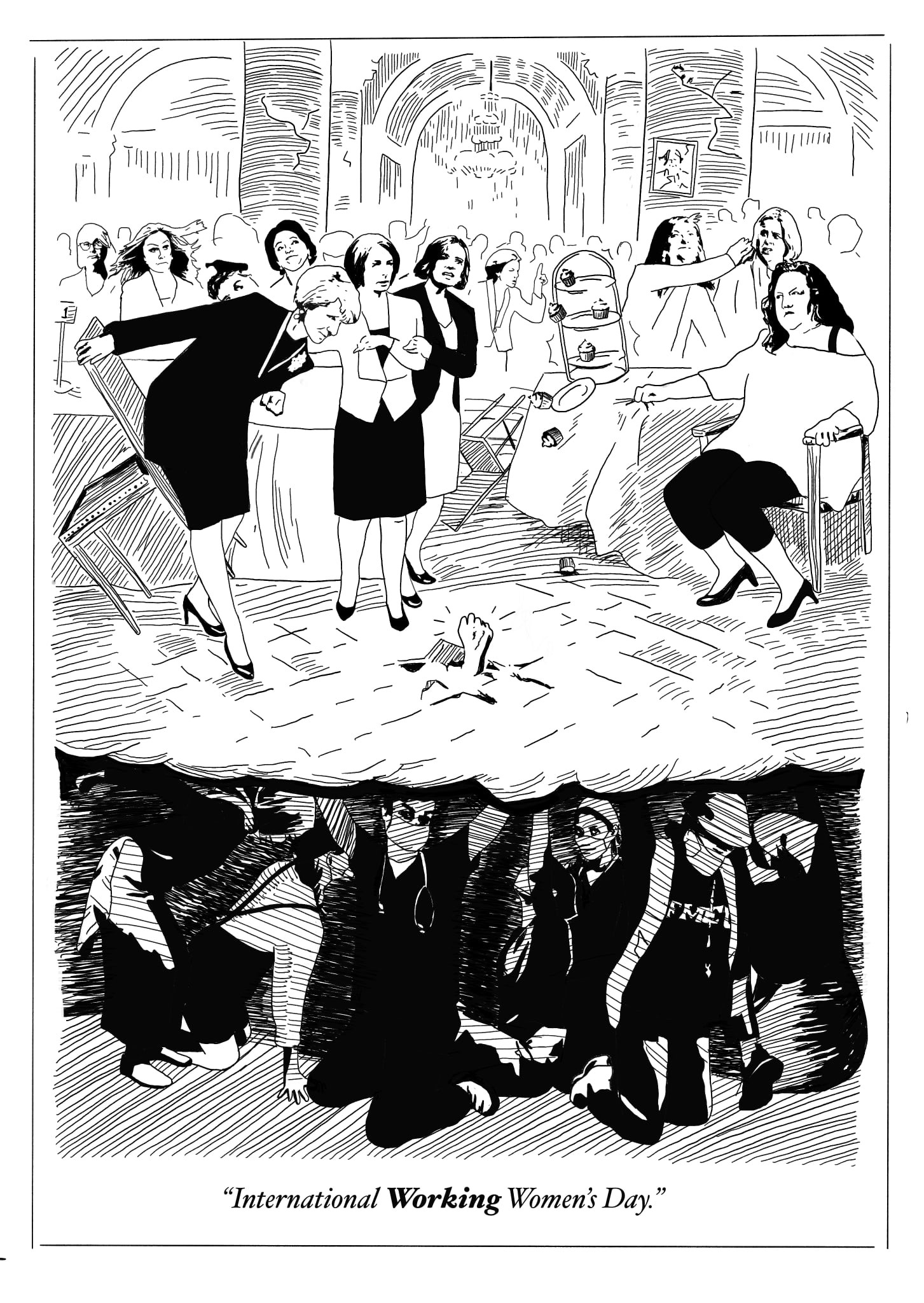
(Above: artwork by Hollie Moly)

On this International Working Women’s Day the Communist Party of Australia (Marxist-Leninist) extends our warm and militant solidarity to the women of the world in their struggles against oppression, exploitation and imperialist wars.  Women of Australia stand in solidarity with our international sisters in our common struggles to end injustices, inequality and the violence of capitalism against women.   Like all working women around the world, women in Australia are fighting dual battle in the workplaces and in the social sphere!

The history of IWWD is the history of working women’s liberation movements struggling against capitalist and imperialist exploitation and wars, and in the fight for socialism. 

International Working Women’s Day grew out of working class women’s struggles for decent wages and conditions, equality and against exploitation and imperialist war.  Its communist roots have been obscured through its more recent appropriation by bourgeois political sectors with their long corporate breakfasts and high teas.

 IWWD was first proposed by German Marxist Clara Zetkin at the International Socialist Women’s Conference in 1910, which brought together burgeoning women’s movements from various countries concerned with universal suffrage, women’s labour rights and gender equality in all aspects of life. Later Zetkin and her women comrades, including socialist leaders Rosa Luxemburg in Germany and Sylvia Pankhurst in England, were at the forefront of the fight against the imperialist slaughter of WW1 and its ruthless conscription of young working-class boys and men as cannon fodder.

Capitalism, Exploitation and Oppression of Women

 The CPA (ML) views the contemporary oppression of women as stemming from capitalism; its exploitation of all workers for profit, and its requirement that (largely) women perform unpaid labour to sustain the current, and reproduce the future, generation of workers, necessary for continued capitalist exploitation. This means that as well as being exploited in their workplaces, performing some of the lowest paid, insecure work, women labour for the capitalist class for no wages in housekeeping, child-raising, and fulfilling the social needs of family and community, like volunteering. This is the ‘hidden engine’ of capitalism necessary for the creation of profit for the entire capitalist class. To pull off such a swindle as getting women to work for no wages, the capitalist system is constantly generating its ideology, culture and media which serves to reinforce their role in the labour force, social reproduction and the nuclear family, socialising and conditioning women and men to comply with their designated roles as wage slave labourers, creators of surplus value and profits for the capitalist class.  

So, when capital demands female and feminised labour it’s all ‘girl power” and when they aren’t required it’s ‘look after your family’. Often, it’s both at the same time. In the process the system exploits women’s genuine love and commitment to their children, partners, their extended families and communities. We recognise that while the family under capitalism is structurally a site of inequality and additional burden carried by women, it is often too a site of refuge and selfless care, nurturing and love in a heartless world.

Despite this, women involved in class struggle in their workplaces and communities, can loosen their chains and overcome the obstacles of capitalist and imperialist oppression.  It is in the struggle for socialism that women find the path to women’s liberation, and the liberation of all humanity.

Working women shoulder the heavy costs of capitalist economic crises and imperialist wars

The world today is in deep capitalist economic and social crisis.  This crisis is intensifying the economic and political competition between imperialist powers redividing the world amongst themselves.  This is leading to military conflicts and wars in all corners of the world. Fascism and state  repression by ruling classes is on the rise worldwide. 

Throughout history women have always fought and led struggles against the ruling classes shifting the economic crisis onto the shoulders of working people. Women are the nurturers and fighters for life.  We are the unacknowledged engine powering the day to day running of society.

Women are always at the forefront of liberation struggles against colonialism, imperialism and imperialist wars.  We are indispensable in the fight for socialism and building a socialist society.

Women in Australia 

In Australia today economic conditions for working people are deteriorating.  The rising cost of living crisis and the struggle to make ends meet is putting extra burdens on working class women juggling family budgets, their jobs and trying to keep their heads above water.  Over 50% of working women are in low paid, insecure and part time work.  Most single parent women and their children live below the poverty line.  The rising prices of food, utilities, healthcare, housing, education, childcare, the basic needs of life, are creating more hardship in the day to day struggle of working class women. 

In the family it is more often women who must balance the budget and try to make it stretch to meet everyone’s food, health and educational needs. In a cost-of-living crisis this puts even more strains on women than usual.

Poverty and homelessness amongst working class women, especially amongst elderly single women, makes them the fastest increasing demographic experiencing this.

The housing crisis and housing debt hits women hard.

Exploitation of women in the workplace intensifies.  

All workers are exploited in a capitalist society.  This exploitation is intensified with women earning 22% less than men annually, including significantly less superannuation. Women earn 78 cents in every dollar men earn overall. In Australia this means on average women earn $28,428 annually less than men. And that’s an overestimated figure for the majority of lowest paid women workers who are the majority of low paid workers.   The disparities between the cost of living and lower wages hit women hardest.

First Nations Women

For Australia’s Indigenous women the oppression and exploitation is doubled and far worse.  For 237 years, from the first day of brutal colonial occupation, dispossession and racism, Indigenous women have refused to succumb to the devastating effects of colonialism on their people and communities. First nations women are pillars of strength, keeping their communities together, instilling pride in their culture and heritage.  The countless deaths in custody of their children, families and community only strengthens their resolve to continue the fight against oppression, racism and for self-determination and sovereignty. A new generation of young Indigenous women are stepping up, leading militant First Peoples struggles, teaching and inspiring the non-Indigenous young people.

Women and imperialist wars 

Just as women for centuries have fought against brutal colonial occupations and imperialist wars, today women continue to mobilise and lead the anti-war and anti-imperialist struggles and movements for justice and peace.  Globally, women are at the sharp end of the wars mainly generated by imperialist powers, fleeing the devastation, poverty, displacement and persecution to protect their children and families.

As control of Australia’s economy, politics and military is tightened in US hands it is harder for women to fight for higher wages, more social services and a redistribution of wealth.

Australia’s US puppet governments have committed to spend over $400 billion of public funds on AUKUS, the aggressive US-led military pact to contain the rise of China.  This money will be spent on 8 US nuclear powered submarines over the next 30 years.  That’s more than $30 million a day diverted from the Australian people’s social and economic needs, and the Indigenous people’s sovereignty and land rights, to prepare Australia as a US military base and a proxy in a US- led imperialist war with China. 

Meanwhile these $billions are being denied for critically needed funding for women’s health, homelessness, child care, single parents’ payments, women’s workplace rights and women fleeing domestic violence, amongst other urgently required funds to meet human needs in Australia.  

Domestic and Social Violence against Women

Despite ideology which claims that women are liberated, capitalism still designates women as inferior to men and commodifies our bodies as sexualised objects for male gratification, control, and profit making.  This leads to sexual abuse, harassment, domestic and social violence across the society.

Marxist Feminists argue that violence against women is relatively normalised by the capitalist state, its legal system and commercialised popular culture to subjugate women into accepting their submissive roles.

International Solidarity

On this International Women’s Day we pay tribute to women of Palestine, the Philippines, Myanmar, Rojava, and all other women fighting in their people’s heroic armed struggles for liberation from imperialism, colonial Zionism, capitalism and all reactionary forces.  We pay tribute to women in all corners of the world.  

We recognise the women tirelessly fighting for reforms within the capitalist system to alleviate the burden of oppression and exploitation it employs.  History has taught us that the real and lasting end to the exploitation and oppression of women cannot be achieved without abolishing capitalism and replacing it with a new socialist society where women’s potential is fully liberated.

We fight for:

Funding for decent and secure public housing

Living wages for all

Full and secure employment for all

Properly funded free public health, education and child care

Sovereignty and Liberation of Australia’s First People

Equal pay and end to gender exploitation

Scrap AUKUS and spend $368+billion on people’s needs and the environment

End the US-Australia Alliance 

No imperialist war – peace with justice

For an anti-imperialist independent and socialist Australia

Wednesday, March 5, 2025

Albanese to weaken environment laws for foreign salmon farmers

 Written by: Nick G. on 6 March 2025


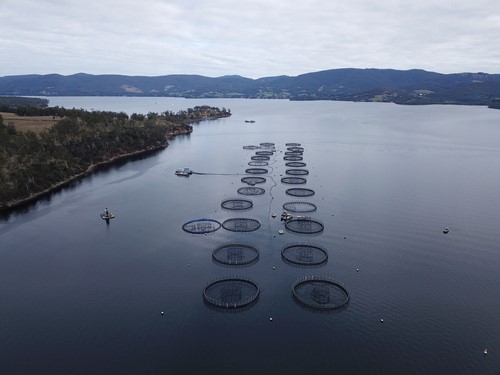
(Above: Salmon farms off Bruny Island.   Source: Environmental Defenders Office)

In a move that caught environmentalists by surprise, PM Albanese has intervened in a controversy over salmon farming in western Tasmania’s Macquarie Harbour by promising to weaken environmental laws to guarantee the future of the industry. Albanese wrote to industry owners in February promising to “introduce legislation to ensure appropriate environmental laws are in place to continue sustainable salmon farming in Macquarie Harbour”.

Last November, Albanese injected a further $28 million into the industry to improve oxygenation levels in the harbour following a request by conservation groups to Environment Minister Plibersek to reassess salmon farming approvals under the Environmental Protection and biodiversity Conservation Act.

Their concern was the future of the endangered Maugean skate – a stingray-like creature whose only known habitat is in the harbour. Studies had shown its numbers were falling due to low oxygen levels in harbour waters caused by the salmon pens. Another $9 million of federal funds is to assist a skate captive breeding program. This money too, should come from the companies threatening the skates’ existence.

Albanese’s intervention has effectively sunk the expected decision by Plibersek’s department to raise the skate’s threatened species level from endangered to critically endangered. Their decision has been postponed until after the federal election.

Public concern over the nature of salmon farming

Concerns over salmon farming – the raising and harvesting of fish from large pens located in open sea water – are as old as the salmon farms, but the publication in 2021 by Penguin Books of respected novelist Richard Flanagan’s Toxic – The Rotting Underbelly of the Tasmanian Salmon Industry gave opponents of the farms the ammunition they needed for a widespread campaign. Some people claimed that Flanagan’s devastating exposé of the industry, with its destructive practices, diseases and fish kills, and use of synthetic chemicals to dye the fish flesh, had put them off eating salmon forever.

The main problem with salmon pens is that they let fish faeces and food waste fall directly onto the ocean floor where the build-up of excess nutrients can destroy marine ecosystems. It can lead to harmful algal blooms that reduce oxygen levels in the water killing fish on the pens and marine life in adjacent waters. Diseases associated with fish in poor health are then treated with hundreds of kilograms of antibiotics which leach into surrounding waters. There they are taken in by wild fish above the allowable level for human consumption. Use of broad-spectrum antibiotics for particular fish diseases, rather than safer vaccines, could lead to antimicrobial resistance beyond the target bacteria. Despite these problems, the Tasmanian government is proposing to increase the area of permitted significant environmental impacts on sea floors under salmon farms from the current 35 metres by an extra 100 metres of legally permitted pollution.

Driven by profits and returns to overseas shareholders, the 3 foreign companies in the industry have been allowed to self-report to the Tasmanian Environmental Protection Authority and have concealed reports on nutrients, fish deaths and fish escapes, diseases and antibiotics. Lack of transparency, of secrecy, is a matter of great concern to Tasmanians.

Multinationals served by government

Tasmanian salmon farming is entirely in the hands of three foreign multinationals. They are Tassal, owned by Canadian company Cooke Inc, since 2022; Huon Aquaculture, owned by notorious Brazilian meat processors JBS, since November 2021; and Petuna Seafoods, 50% owned by Maori nations and 50% by Japanese Nissui.

According to Tax Office data, the companies have paid no tax since 2019.

However, both the Tasmanian and federal governments are bending over backwards to ensure these foreign companies are not placed on an endangered list. From reworking and weakening environmental protection laws, to injecting public funds to save these private companies to have to clean up their own mess, to hiding all of this under a professed concern for jobs – it all comes down to governments in open service to capitalism.

The industry has claimed greater numbers of jobs than really exist. The Australia Institute has criticised the figures based on census data and has been supported by Tasmanian Senator Jaqui Lambi who described industry figures as “bullshit” saying that “It’s all robotics. It’s just feed. They carry on. They overestimate.”

And on the other side of Tasmania…

Just three days after Albanese’s letter of support for the Macquarie Harbour fish farmers, the companies kicked an amazing own goal in south-eastern waters between Bruny Island and regions south of Hobart.

On February 20, masses of salmon carcasses and globules of rotted fish fat washed up on the southern beaches. This was despite large quantities of dead fish taken from pens and dumped in landfill east of Hobart.

Alistair Allan, Greens candidate for Lyons in the forthcoming federal election said, “This is now solid proof that the industry has completely lost control of the disease outbreak that is causing so much death and suffering on these factory fish farms.”

Jacqui Lambie, characteristically, says that she has had a gutful of the salmon industry, and said it must stop its Macquarie Harbour operations and either move further out to sea and transfer to land-based tanks, with the federal funding better spent on supporting the deployment of affected workers.

“You’ve made more than enough money off the arse of Tasmania. Move it on,” she said.

Postscript: Prize Catch

Capitalism’s destructive war on nature, its profit-driven disregard for the environment, its secrecy and corruption were brilliantly captured last year in Alan Carter’s novel Prize Catch, published by Fremantle Press. Needing to facilitate a takeover by a foreign company, a Bruny Island salmon farmer employs SAS war criminals blooded in Afghanistan (under the control of a very Ben Roberts-Smith type leader) to undertake a campaign of murder and intimidation of local environmentalists. Police corruption assists their endeavours. It’s as good as Australian crime fiction gets.