Monday, August 11, 2025

Productivity: of what? from whom? for whom?

Written by: Humphrey McQueen on 11 August 2025
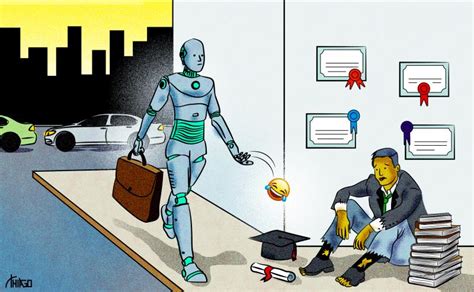
 

The Anti-labour Party administration is holding a Productivity gabfest in Canberra 19-21 August. Humphrey McQueen sets ‘productivity’ as a driver for the structured dynamics of how the exploitation of every wage-slave must be intensified if the rule of capital is to persist. 

Productivity: of what? from whom? for whom?


The drive for so-called productivity raises a central aspect of Marxism, namely, surplus-value. Militants need to understand the ramifications of that key to capitalism if we are to push back the current offensives. 

Labour-time

To win the battle of ideas in the latest contest over productivity, we should go back to what WorkChoices aimed to do for the expansion of capital. The ALP and most unions ran the line that WorkChoices combined a nasty man and wrong thinking with a fondness for wage-cuts.  Howard remains a nasty liar. However, his policies were more than another personality defect. Nor was he driven by bad ideas. Every social practice carries an ideological aspect. Neo-liberalism, for example, was more than a bad idea in the heads of nasty people. Like WorkChoices, it expressed the needs of capital, which is why we branded it WorstChoices. The needs of capital go beyond cutting wages. 

Neo-liberalism was a splendid idea for most sectors of global capital. Like Keynesianism and Monetarism, its days were numbered. How next to serve the interests of rival corporates, and their supporting nation-market-states, is being hammered out in Trump’s trade-wars.

WorkChoices was about the disciplining of labour-time. Capital buys our labour-power in units of labour-time. The productivity of capital is measured by how much value the boss-class can extract from those units.  Capital, therefore, drives up the rate of output per unit of labour-time that it subsumes as variable-capital. Managers do this through intensifying the discipline over us as their wage-slaves who embody the capacity to add value. 

Capitalists struggle to get rid of every obstacle to their freedom to have value added at any hour and under any condition. Even weak unions are a brake on the rate of exploitation of our labour. Hence, WorkChoices set out to universalize ABNs and individual contracts as barriers to our collective strength. 
Firms stand down workers without pay if there is a break in the reproduction or circulation of surplus-value. Bosses want to be free to call us in for random and/or broken shifts. That control over hours delivers a double advantage to capital. First, it pays for our labour-power only when we wage-slaves are adding value. Secondly, the uncertainty of shifts bullies unorganized employees into doing whatever they are told for fear of not getting enough shifts to eke out a living. The bosses lie that flexibility makes life easier for single mums.

Wages

On average, the personifications of capital pay us in full for the socially-necessary costs of reproducing our labour-power. That is what bosses mean by a fair day’s pay. Of course, they battle to keep all the value that is surplus to that amount. On top of enduring exploitation in spite of an equal exchange, workers know only too well how much swindling goes on. In practice, the bosses do everything they can to pay below that socially-necessary average. They will not pay super or penalty rates unless we are organised enough to force them. Here is one of the reasons why WorstChoices set out to disorganize working-people.

Of course, firms would rather pay us no wage at all, but then they would have no living-labour to exploit or buyers for those producing consumer goods, and, in the longer term, no orders would be placed with the firms that make the machines on which we make both kinds of commodities. 

Capitals are not just involved in a race to the bottom on wages. There is no point in paying a dollar a day for one pair of shoes if a worker with a machine can make ten pairs in an hour. The low-wage factories, here and abroad, combine longer hours, more intense discipline and hazardous conditions. Factory disasters in Bangladesh are driven by deadlines for foreign orders. Deadlines indeed!

The rate of our exploitation is not measured by wage-scales. A skilled worker on $130,000 a year can deliver more surplus-value than a peasant trained to snap parts together. Hence, the best-rewarded employees can be more exploited than the worst paid. 

Absolute surplus-value

Two ways to extend the length of the working-day are unpaid overtime and abolishing smokos. Bosses are also notorious for owning clocks which run fast in the morning and slow in the afternoon. Women at call centers in the U.S. of A. are forced to wear diapers instead of going to the lavatory. Stepping up exploitation by a longer day is becoming more pervasive now with mobiles, i-pads and home computers which keep workers on call 24/7. 

Capital increases its take of surplus-value by extending the number of hours we work. Its owners can benefit even if these extra hours are paid for at overtime rates. This is possible because equipment is not idle and so the overhead for each unit of output is lowered. Best of all for capital is unpaid overtime, and there is plenty of that. 

The greater the value of the plant, the more pressures on the agents of capital never to let it stand idle. Mining is a prime example, with twelve-hour shifts. Computer-controlled equipment sees RioTinto operating around the clock in the Pilbara.

Relative surplus-value

At the same time, the agents of capital try to extract more surplus-value during the standard hours. They strive to do this through piece-rates, speed-ups, and bullying.  

Occupational health and safety fall victim to productivity drives. Through speed-ups, capital passes the cost onto the worker through injury and death. The law backs them up. As Marx puts it: killing is not murder when done for profit. Year in and year out, supermarket-chains drive truckies to drugs and death to meet delivery schedules. Rio is pushing to cut sick-leave entitlements from forty-five to fifteen days a year.

Because capitalists install machines to extract more surplus-value, they invest in new technologies if they promise to lift the rate of exploitation, or to ward off rivals. The bosses favour innovation only when it protects profit. Labourers with picks and shovels produced as much surplus-value as the driver of a front-end loader when those navvies were on the dole in the 1930s.   

‘Your prize for saving time at work with AI is more work,’ declares a headline in The Wall Street Journal, July 7, 2025. Who ‘owns’ the time saved? Labour or capital? The answer depends on whether we are working for wages, or are on piece-rates. If we have exchanged timed units of our labour-power for an agreed wage, all the time saved still belongs to the buyer of our capacities to add value. If you are on piece-rates, the time is yours. The catch is that the agents of capital will force down the price they pay per unit so that you will need to work longer to take home the same weekly income. By wages or by piece? Same difference.

Accumulation

Under the rule of capital, the only way to add value is through our exploitation to fund expansion. To do so, the personifications of capital first has to exploit labour to extract surplus-value; secondly, their agents has to sell the goods and services we supply so that as much surplus-value as possible can be realised as profit; thirdly, they have to invest much of that profit in resources for reproduction to hold off competitors. Only then can capital go on to extract ever more surplus-value. … and so on …. until the next crisis.

Profit-taking is not an end in itself, just as exploitation is but one step towards the expansion of capital. ‘Accumulate! Accumulate!’ Marx writes. ‘That is Moses and the Prophets.’ A capitalist who puts self-indulgence above re-investment soon ceases to be a capitalist.

Marx explains how money-capital goes into the production of commodities, which must be sold to secure a greater sum of money-capital to re-invest. The most important component in these new commodities is that they carry more value than went into their production. That extra comes from our labour. 

Excess capacity
 
Each capital strives to get a bigger share of its market. To do so, it produces more units to sell at a lower price per item. Each commodity unit therefore carries less surplus-value. That smaller portion means less potential for profit-taking out of each sale. To make up for that shrinkage, each firm tries to sell a larger number of units. The result is overproduction. Hence, capitalism is inherently wasteful.  In addition, the more goods that the system produces the more unstable it becomes. 
 
Workers are the largest group of potential buyers of consumer goods but, because of exploitation, we cannot afford to buy all that we produce. After the 1940s, the agents of capital sought to bridge that gap by hire-purchase and credit cards. The 2006- economic implosion was delayed by pushing up debt-levels among working- people. The sub-prime crisis in the U.S. of A. was the froth on a tsunami of mass-marketing. The so-called Global Financial Crisis (GFC) crashed out of over-production.
 
By then, the capacity to make autos in North America was greater than the effective demand across the world. The closure of all the car-makers in Australia was one more backwash from that excess capacity. Crises from over-production lead to the destruction of physical capital. With that loss comes the destruction of people’s lives. 
 
In 2008, Central Banks again rode to the rescue of the entire system upon which depends on its financial sector for flows of money-capital and credit.
 
Unproductive?
 
Productive and unproductive are scientific terms. To say that some kinds of labour are unproductive is not just a moral judgement. For capital, ‘productive’ means labour that is productive of surplus value. As Marx puts it: ‘To be a productive worker is therefore not a piece of luck, but a misfortune.’ (Capital, I: 644)
 
Take the example of an operative painter. When she goes to her paid work, she sells her capacity to add value to capital. Its agents discipline the application of her labour-power at work to extract as much surplus-value as possible. 
 
Now contrast that situation with one where she helps to repaint her friend’s house. She uses the same skills as she does at paid work, but she produces no surplus-value. Why not? Because she has not sold her labour-power to capital. According to the needs of capital, that labour is unproductive. At work, she produces a use value and an exchange value. At her friend’s home, she produces only use-values. 
 
Service sector
 
We often hear that the service sector has displaced manufacturing. White-and pink-collar jobs for public servants, bank clerks, nurses, teachers, shop assistants and barristas are our future. It is truer to say that many service workers have moved from what for capital is unproductive across to productive labour. A hundred years ago, Australia had 150,000 domestic servants. They were known as ‘slavies,’ on call round the clock with perhaps one day off a month. Nonetheless, they were unproductive. None of them added surplus-value. Rather, they were paid out of the surplus-value extracted from wage-slaves elsewhere in the system.
 
What has changed is that most service-workers now produce surplus- value. In 1913, domestics worked for an allowance and their keep in return for putting a roast chicken on the dinner table. In 2025, people sell their labour-power to KFC to put chicken nuggets into take-away cartons. They service capital, not households. Putting less labour-time into each meal is the spice in capital’s finger-lickin’ recipe for profit.
 
Quality service 
 
To boost labour productivity, capital has to measure output which is difficult for the service sector. Human services have a twofold character: one is quantitative while the other is qualitative. Take the example of a library. Some of its tasks are like process-work, for example, the restacking of books. Here, it is possible to set targets as a manager would do on an assembly-line. However, libraries have a second function. Some users seek help to understand what a resource offers them. These inquiries can take two minutes - or two hours. The call for quality overtakes the drive for quantity.
 
That rule applies more broadly. For instance, it is madness to say that placing a stent into an artery should take forty-seven minutes and not one second more. Similar complications arise for teachers. Each child has individual needs but providing that level of attention is costly. Budget-cutting governments, therefore, drive schools into rote-learning and Gillard’s standardized NAPLAN tests are serial child-abuse.  Education is reverting to instruction which undermines creativity in adulthood.
 
Self-servicing capital
 
Capital shifts costs onto customers by making us pay with our time. We see that tactic in supermarkets with self-checkouts, while banks installed ATMs and on-line transactions. Or we are made to queue for longer because Coles and Westpac employ fewer staff.
 
As a result, we customers provide our time for free to replace the counter-staff. We are told how convenient the new arrangements are for us as customers. We are not told how much of our time we give to the corporates as unpaid labour.  Self-service thereby boosts profit. Banks take their billions from interest rates, fees and from sending work off-shore. They also coin more money through treating us as unpaid hands.
 
Practical theory
 
Communists show why capital is driven to boost its rate of exploitation. Marx’s account of exploitation applies in every workplace. Nonetheless, exactly how surplus-value is extracted and circulates is peculiar to each hour and location. Militants enrich Marx’s scientific discoveries by investigating how surplus-value is produced in millions of situations.
 
Communists work out ways to relate the truth about productivity to hour-by-hour issues around the job. Hence, our twin tasks are to study Marx’s critical analysis of the political economy of the capitalist mode of reproduction and exchange on expanding scales, while attending to everyday conflicts in each workplace. We learn from our collective study and from the shared experience of struggle. Organising becomes an education for agitators as much as for the rank-and-file in a living unity of theory and practice.
 
One task is to discover how the buzzword ‘productivity’ strikes other workers. Some will already see through it as propaganda for more exploitation. Militants can spread those insights. Among some of the rank-and-file, however, there will be uncertainty. Some will assume they ‘unproductive’ applies to others. Some might see positive features in the rhetoric. ‘Shouldn’t we all contribute?,’ they’ll wonder. Yes, and our class does so, but the bosses are forever on the take, and give only when we force them to do so. 
 
Self-deception
 
Confusion about the substance of ‘productivity’ exists on both sides of the class divide. Because the boss-class dare not own up to the fact that the expansion of capital depends on our exploitation, they need to believe in their own propaganda.
 
The hired-pens of capital are no longer game to admit the truth even among themselves. Before the 1820s, bourgeois political economists - Adam Smith and David Ricardo - owned up to exploitation. Once workers got organised, the promoters of capital had to mask that truth. Yet bourgeois economists still had to advise capitalists on how to expand, and so marginalized production to focus on consumption. 
 
Smith and Ricardo accepted that only living-labour added value. The current crop of apologists claim that value is decided by consumer preference. They reject the law of value in favour of their so-called law of supply and demand. They deny that prices gyrate around the value of the labour-power that goes into commodities. One side-effect is that many believe that selling shares to the greater fool is productive of value.


Market-value

If productivity is down, how is it that the ASX is going gang-busters through all previous records? And why is that happening if price/earning ratios on shares are also through the roof?

When capitalists are not rabbiting on about ‘productivity’ as if it were a universal good, they babble about ‘adding value’, blurring the one into the other. Accountants have long grappled with how to put a monetary value on businesses. One rule is to deduct liabilities from assets. But what counts as an asset? Should auditors embrace goodwill and brand recognition? If so, how to put a number of those intangibles? Nowadays, they are paid to accept whatever a corporation’s Chief Information and Financial Officers claim their ‘values’ are, and paint the bullseye around the arrow.

Piero Sraffa’s 1926 “The Laws of Return under Competitive Conditions” pondered how to measure the value of capital? In terms of its profit? If so, how to measure profit? If it is measured as a percentage of the value of capital, the process is circular. The professoriate abandoned attempts to resolve the paradox. Economics undergrads will never hear of Sraffa’s article, and most of their lecturers won’t have either. Ignorance is bliss.

Upon the announcement of China’s Deepseek in late January, the media reported that billions had been wiped off NVIDIA’s value with. Most of those billions never existed, but were one form of fictitious capital. Such figures are arrived at by multiplying the price of the last share traded by the total number of shares. Speculators erect Babel Towers of marked cards.

No sector in recent capitalism has been more innovative in this regard than finance. Yet, the world’s most successful investor, Warren Buffett, refused to buy into derivatives or collateralized-debt obligations because he could not understand them. The crash of 2007-8 suggests that traders did not understand them either. What they did understand was they had invented new ways to collar cash without going through the tiresome and risky business of making and selling commodities. Most of these financial instruments are parasitical on the capitalists engaged in exploiting us directly do so.

And so are all rent-takers, of whom two-dollar Rinehart is the exemplar. Until recently, she did not exploit mine-workers directly. Instead, she had lived off the rents that Rio paid her for the whack of leases nicked by her father from his partner Peter Wright. She had been unproductive in the worst sense. 

Producing barbarism

Under capitalism, even the most destructive enterprises are deemed productive so long as they add surplus-value. Wars and drugs are prime examples.
It is easy to see how war is productive of profit for individual corporations from Haliburton to Boeing. But war can also be productive for the whole capitalist system. The biggest example is how military expenditures kicked the U.S. out of its 1930s deflationary cycle. 

Drugs also benefit more than Big Pharma. Western imperialists used opium in the nineteenth-century as a weapon against the Chinese people to open China up to unequal ‘free-trade’ treaties. Today’s drug trade is productive of profit with cocaine and heroin just other commodities, like Coca-Cola and Holden cars. In addition, more drug money goes through the banks and other casinos than governments ever confiscate as the proceeds of crime. 

Producing communism

Within capitalism, unproductive labour is morally superior to productive labour since the latter is grounded on exploitation. Under communism, all labour will become unproductive in the sense that there will no longer be exploitation.

Communists raise tough questions about productivity: what kind of society is produced? We draw a line between what is productive under the rule of capital and what should be produced to serve the needs of working people. For capital, productivity means the addition of surplus-value. Workers struggle to produce a world without the want, the wars and the waste that capitalism over-produces.

Boosting ‘productivity’ under capitalism has landed the world with a super-abundance of material goods. Their over-production plunders the wealth of nature, leaving mountains of garbage and oceans polluted with islands of plastic waste. 

Surplus-value comes from the collective efforts of working people everywhere. Hence, no individual is responsible for all of the value that he or she adds. A lone craftsperson depends on workers in transport and power supply. Under socialism, all workers will be paid the full cost of reproducing our labour power. Some of that reward will come to us as money-wages. The closer we move towards communism, the more of our needs will be supplied as social goods, such as free public-transport, education, health and housing. 

When communists speak of boosting productivity, we hold to a vision about the kind of society that we can build together. Our collective efforts promise to enrich individual creativity, protect the wealth of nature, and meet our collective needs. Engels explained the part played by labour in the transition from ape to man. Putting the highest social value onto the productivity of social labour will make us more human.

 Appendix on the Productivity Commission

Abbott pledged in 2013 not to bring back WorkChoices. Capital had less need for its attacks on our conditions since the Rudd-Gillard Anti-labour Party (ALP) had kept most of its teeth as un-Fair Work Australia. ‘Protected Acton’ protects the bosses from our taking action.
 
They followed from Keating who, late in 1993, had invited the CEOs of the biggest corporates to a slap-up at Canberra’s Hyatt Hotel where he assured them that he would remove all ‘impediments’ to their productivity – that is, all the protections our class had won across 150 years and which the Anti-labour Party’s deforms had not abolished during the previous decade. 
 
Moreover, the boss-class has other laws to use against us. Their aim is to corner unions into being able to do next-to-nothing. The ones that do stick up for their members will be placed under ‘Administration,’ as with the CFMEU. 
 
But, in 2013, Abbott referred ‘industrial relations’ to the Productivity Commission which is stuffed with votaries of ‘the Market’s’ going around the globe doing good, in practice, exercising the market power of global oligopolizers. Even when a couple of its 200 staff do first-rate research, the Commissioners rewrite the conclusions to prove that ‘the Market’ knows better. 
 
Calling on the Commission for ‘expert’ advice is a fraud. Its recommendations are predicable since its econo-meretricious models never stray far from what the Business Council struggles to enforce around the jobs.
 
The Commission put out a paper in 2013 arguing that disadvantaged students are genetically disabled so that implementing Gonski would be a waste of taxes. Professor Ian Morgan’s “No evidence for ‘Rich Genes’ “ accessible on the Save-Our-Schools website saw off this viciousness. (July 26, 2013)
 
Even the Commission’s name is a blind. The organisation had its origins in the Tariff Board. When Whitlam slashed tariffs by 25 percent in 1973, he replaced the Board with an Industries Assistance Commission. That body soon became known as the Industries ‘Destruction’ Commission when it removed protection. In 1998, Howard rebadged the Commission with ‘Productivity.’ 
 
Two recent manifestations of its faith in ‘market forces’ are its attack on the government’s plan for industry interventions as an act of sacrilege.
 
In the lead-up to the Productivity gab-fest in Canberra on 19-21 August, the Commissioners are railing against copyright protection for the Australian workers whose creativity surely will contribute to improvements in productivity.
 
The Commissioners know next-to-nothing about what it labels ‘AI,’ proceeding as if there were no distinction between generative AI and Artificial General Intelligence. They have swallowed the media hype from venture capitalists to the extent that they suppose that a seventy-year-old technology is ‘new,’ when what is changing is the sprawl of its applications. Sam Altman did not invent the algorithm, nor had a NVIDIA gamster.
 
Abstracting from the abracadabra of its algebraic models, the Report confabulated that some undifferentiated AI will add $168bn to the Australian economy in the coming decade. Should that turn out to be the case, the question for our class remains: whose coffers will swell with the profits from the growth in the relative surplus-value that we shall be forced to supply?


Tuesday, August 5, 2025

Thought you could stop us? On August 24, we’ll fill the worlds’ streets!

 Written by: Louisa L. on 6 August 2025


How can you measure a crowd? The cops said 90,000, while protest leaders estimated 300,000 marched for Palestine in Sydney on August 3. 

Frequent protesters can measure crowd size by how many friends they meet (apart from those they went with).

For this writer, it was one person in the long wait before the march, another walking back on the bridge, and another heading home. GIGANTIC!

My brain compares it to other Sydney protests: first, the Vietnam Moratoriums (though strengthened by mass strikes) were much smaller; second, it was about three times bigger than the 80,000 in the Domain in 1988 against Minister Metherell’s sweeping attacks on NSW public education; third, half the size of Walk against the War on Iraq of 500,000 (estimated by the maths teacher marshal, on people passing each minute times length of time, plus aerial images of citywide human gridlock and thousands stranded roadside on route as bus after overloaded bus sailed by). So, 260,000 or so.

Guadian Australia employed an expert and came up with a similar figure.

With 94 percent of Australians opposed to war on Iraq, lack of industrial strength and worker organisation made it less powerful than the moratoriums. Some say it failed. But if you don’t fight, you’ve already lost. Our peoples united against US imperialism and its puppets. We understood our friends and our enemy. A battle was lost, but not the war.

Now, back to the bridge march.

“We’ve been instructed”

Cops systematically underestimate protest crowds. This time they did it with malice. They didn’t want that aerial picture showing wall to wall people from Sydney streets to North Sydney. 

Their much-publicised whinge “we averted a catastrophic crowd crush” at the northern end meant turning the crowd back on itself. This fake catastrophe was belied by the crowd’s self-discipline and patience, by first hand questions to cops about why they blocked access to a trickle at the northern railway station, “Isn’t it more sensible to move the barrier further back?” “Yes. But we’ve been instructed to have it here.” 

Ah! Neither common sense nor kindness will budge a cop instructed to do something, unless they have no other option. They must obey orders. They must be compliant. They are part of a force. They are organised, drilled to act for their masters.

Their role is to suppress the many on the orders of the few. 

On the Bridge, we watched train after southbound train fly by alongside us almost empty. Crowd crush, du’h.

Remember this!

For decades, police rarely tried to stop a large protest.  

In Covid, they tried it twice, the first Black Lives Matter protest, where every participant wore a mask. Then Invasion Day, where a compromise saw thousands seated in set groups in the Domain, and no march. Like August 3, police refused protest rights, and courts (still with vestiges of peoples’ rights won in historical struggles, plus a belief in a democratic façade) ruled to allow protest. 

Each time organisers said events would go ahead with or without permission.

Had permission not been granted, there’s no doubt police (drilled and armed with horses, body armour, batons and tear gas) would have systematically attacked in surroundings favourable to division and control by an organised force. But at what cost to them?

Many protesters dismissed ideas of police attack. “It’s too big.” “Why would they do it?” But they have done it again and again in this writer’s life, in the second Moratorium, the anti-apartheid protests against South African rugby tours, the first land rights protests, the Tent Embassy, and on and on it goes. Police create chaos and violence, and blame the victims. 

This time their court application failed. So, commanders ‘proved’ the protesters had to be saved from themselves and a non-existent crowd crush.

Instead of trains home, or a voluntary walk back to the city, or a drink of water or 4pm lunch or a toilet queue at Milsons Point or North Sydney, we had to walk all the way back.

Little children were exhausted, parents carrying them in relays. “What a strong girl (or boy) you are!” Tears became smiles, backs straighter. “Your little sister won’t remember this. You have to tell her! This is an important day! And you were here.”

We were all there. In downpours, we knew our footsteps were writing a small damp page in history. The next protest on August 24 will be far bigger. All those you could not come this time, because they were worried about police or the notice was too short, will be there.

Whatever the police force does, whatever its masters demand, we’ll unite for justice!

We stand with Mary!

 Written by: Louisa L. on 6 August 2025


An injury to one is an injury to all.

The day before the Sydney Bridge March, people stood for journalist Mary Kostakidis against Zionist political and legal attacks. 

While 140 early birds and oldies filled the seats in inner Sydney Atlas Club, a hundred or so more stood around the edges or on the stairs. Unlike Atlas, we didn’t have the world’s weight on our shoulders. We were elated the court had recognised both the just cause and overwhelming community support, and ruled in favour of the next day’s rally across the bridge. 

What a beautiful warm up for Sunday. Some rushed from a small Hiroshima Day march to the Defence Department in Sydney, but tiredness evaporated with brilliant speeches and inspiring music representing the cultural wealth of diasporas from South America, Greece and other places. 

Antoinette Lattouf asked a rhetorical question in the face of what (with tough personal experience) she called ‘lawfare’, ‘What can one person do?’ A lot!
It was also answered in song. ‘Well, if you stand for freedom, we can too.’

It was the answer to what investigative journalist and filmmaker, Peter Cronau, described as a series of legal prosecutions designed to ‘terrify and pacify the larger group.’

‘Mary was chosen’ he said, for telling of the bloodbath in Palestine, its history, the crimes of the IDF, of genocidal statements by Israeli leaders, for exposing lies, ‘for doing actual journalism.’

‘Our colleagues are terrified,’ he said, ‘but take heart at the battles fought.’ 

Anything you can

Iranian Kurd Mansour Razaghi from Pen Sydney condemned the Zionist ‘network of supporters’ that ‘shape what is called “the truth”’ and ‘monitor and threaten even small community outlets.’ 

‘This is everyone’s fight,’ he said, and asked about ‘the kind of society are our children going to live in.’ 

‘We need a strong network of allies,’ Razaghi said. 

From Jews against the Occupation, an Australian Jew of Armenian descent sang in Yiddish, ‘a lament for people not doing anything, telling them “You need to do anything,”’ anything you can.

Journalist and Pullitzer Prize winner, Chris Hedges, spoke from the US by prerecorded video, saying they have ‘weaponised antisemitism to shut down free speech.’ 

He stated proposed laws in the US mean ‘any kind of dissent is criminalised …  We have to stop this creeping fascism now. We are in a very precarious place. Mary’s fight is our fight.’

Mary Kostakidis herself spoke last, radiating strength and optimism. She doesn’t stand alone. She stands with, and for, all of us. 

Access video of the meeting here  https://standwithmary.org/news/


Monday, August 4, 2025

Japanese imperialists disheartened by election results


Written by: (Contributed) on 5 August 2025


The spectacular collapse of support for the ruling Liberal Democratic Party (LDP) in recent elections in Japan can be attributed to two significant factors: their failure to identify important issues in domestic politics which include living standards for the mass of the population and an unresolved corruption scandal; their failure to act effectively with important foreign policy considerations which include tariffs and the Trump administration and increasing militarisation of the former pacifist country.

Japan has been governed since the mid-1950s by successive LDP administrations, apart from a few isolated instances. It has provided the political elite with a consolidation of long-term class and state power, and the ability of the US to use the country as a major hub for 'US interests' in the northern part of the vast Indo-Pacific region. In fact, the US-Japan alliance has been upgraded in recent years to be a formal global alliance; an illustration of the significance of the country for US-led defence and security provision. (1)

In recent elections, however, the ruling LDP lost control of the upper house, which followed their demise last October when they also lost control of the lower house. An official explanation about the election results has included reference to voters frustrated with price increases larger than wage offers from employers, and a younger generation who have regarded traditional leaders as ignoring them. (2)

Behind the scenes, however, a long-time corruption scandal haunts the traditional ruling elite of Japan. It carries all the hallmarks of unresolved business from yesteryear, with far-reaching implications for the present.

The assassination of former prime minister Shinzo Abe in July, 2022, shook Japan. The
traditionally conservative country has, since that time, had difficulty adapting to political affairs without reference to Shinzo Abe. The ruling LDP has continually floundered without his dominant role. The circumstances surrounding his assassination have also remained curious. The assassin, Tetsuya Yamagami, confessed immediately after the killing, to long-held grudges against the Unification Church, of which Shinzo Abe retained some involvement. Later investigations established that the shadowy religious cult had a strong foothold inside the LDP. (3) The motives for the assassination are clouded in shades of grey.

What was not so well publicised, for example, was the linkage between the Church and its leader, the so-called Rev. Sun Myung Moon, and the World Anti-Communist League (WACL), later renamed the World League for Freedom and Democracy (WLFD). The two organisations were closely associated: established in the darker days of the previous Cold War in 1966, the WACL evolved from the Asian People's Anti-Communist League (APACL), which had been established by South Korean intelligence agents in collusion with their counterparts in Taiwan. (4)

An early WACL operation, soon after its founding, included moves to 'create in Japan a Korean-style anti-communist movement under the umbrella of the WACL and that would further Moon's global crusade and lend the Japanese yakuza leaders a respectable new facade'. (5)

Shinzo Abe eventually rose to become a dominant part of the respectable facade and successfully appeased the Japanese far-right with not well publicised visits to war-shrines for war-criminals and oriental fascists. The LDP turned a blind eye toward far-right members in their midst; political expedience was the name of their game.

The WACL also enabled a proliferation of new right-wing organisations globally and studies have concluded that it became a 'worldwide network of fascism … League conventions afford the opportunity for old-guard war criminals to meet, advise, and support the new-guard fascists'. (6) Japan was a central consideration; its Imperial past made it important.

It is, therefore, not surprising to find the emergence of the Japanese far-right Sanseito in recent elections. Without Shinzo Abe to provide them with cover inside the LDP, they now seek to establish their own foothold in the Japanese political system. Their popularist and xenophobic campaign slogans of anti-immigration and 'Japan First' carry all the hallmarks of fascists linked to their Imperial past pulling the puppet-strings on a younger generation of Japanese people. The far-right party, furthermore, finished fourth in the elections, and its newly elected fourteen M.P.s may eventually side with the minority LDP.  

The re-emergence of Trump in the US has also been an important factor to explain the outcome of recent elections in Japan. The country has a large manufacturing and automotive sector, which has been seriously affected with threats from the Trump administration to impose tariffs. While high-level diplomatic talks between the two countries have resolved some of the problems with a trade deal, the fate of prime minister Shigeru Ishiba hangs in the balance. He is strongly tipped to resign, and is unpopular. (7)  

A further factor being played out in Japan has been the re-emergence of militarism. Previously the country was held by a pacifist clause in their constitution restricting all military activity to only self-defence. It was conveniently ignored, however, by those who were previously associated with Shinzo Abe. A decade ago, the US and Japan subsequently reached agreement on defence and security co-operation which effectively extended Japan's reach into the wider Indo-Pacific region, on the basis of 'allowing it to act when the US or countries US forces are defending are threatened'. (8)

It was accompanied with high-level diplomatic initiatives between Japan and Australia; Shinzo Abe actively promoted the creation of an 'Australia-Japan Defence Co-operation Office' inside Japan's Ministry of Defence in April, 2014. (9) The initiative provided enhanced joint intelligence-gathering linked to US-led defence and security provision. (10)

To date, a total of 39 US-led joint military exercises between Australia and Japan have taken place during the past twelve months. (11) The fact the two countries are conducting joint military exercises every nine days has revealed strongly co-ordinated Pentagon planning for regional objectives, marked by wave upon wave of militarism.

In conclusion, the ruling LDP has been closely associated with US-led Cold War diplomatic positions since the 1950s. It has never been particularly popular with some electors who fear the re-emergence of Japanese militarism and Imperial designs, which continue to remain a taboo subject area and denial.

The outcome of recent Japanese elections remains evidence of serious disquiet taking place amongst an enlarged proportion of the electorate on issues they regard as significant.


1.     The reasons behind Washington's push for GSOMIA., Hankyoreh, 12 November 2019.
2.     Japanese PM tipped to resign after US tariff pact, Australian, 24 July 2025.
3.     See: What are 'the Moonies', SBS News, 27 September 2022; and, 'How the Moonies took over Japan', UnHerd, 20 July 2022.
4.     Inside the League, Scott Anderson and Jon Lee Anderson, (New York, 1986), pp. 46-47.
5.     Ibid., page 69.
6.     Ibid., page 45.
7.     Australian, op.cit., 24 July 2025.
8.     Japan to extend military reach beyond self-defence, The Age, 29 April 2015.
9.     Ties with Japan amount to quasi-alliance, says Tokyo, The Age, 27 October 2014.
10.   Japan: Espionage, Spies and Secrets, Richard M. Bennett, (London, 2002), pp. 163-64.
11.   Japanese ambassador pitches manufacturing boom with $10 bn frigate bid, Australian, 23 July 2025.

Sunday, August 3, 2025

Forewarned is forearmed: Economic Reform Roundtable

Written by: on 4 August 2025


An “inclusive” Australian Labour Party initiated conference, The Economic Reform Roundtable (ERR) will be held between August 19 and 21, targeting taxation and other means of making the Australian economy more dynamic.

“Inclusive” is perhaps something of a misnomer: attendance is by invitation only. Peak union and civil society organisations will be present, but the agenda will be driven by keynote speakers: the Reserve Bank on Day 1, the Productivity Commission on Day 2, and the Department of the Treasury and the Grattan Institute on Day 3.  

So here we have a focus on addressing the economic stagnation and downturn of capitalism in Australia. The Labour government, with their recent electoral victory are now setting out to reinvigorate the economy and ensure a more equitable outcome for Australian workers. At least that is how this initiative is being interpreted by a broad section of the intelligentsia and is increasingly being supported by the established media.

For example, in the Age on the 21st of July, Peter Hartcher, editor of the Sydney Morning Herald produced an article titled: “Advance Australia, richer fairer”. Hartcher, an advocate for confrontation and war with China has never been an opponent of economic rationalism and yet here we have an article extolling the

We are seeing an increasing number of articles that refer to the exploitation of workers and the need to address this through a greater proportion of the overall wealth being produced being distributed through wages.

There is a deliberate change in the messages being conveyed to the Australian people and it represents an attempt to build support for capitalism by presenting it with a more humane and caring face. For capitalism, it is a means of disguising its exploitative nature to enable and reinvigorate that exploitation going forward.

Capitalism's productivity crisis

For the Labour Party and reformists in general, this is a very good example of the role of Social Democrat parties and their followers in times of economic downturn and crises. We have a position where capitalism is experiencing what has been defined as a lack of growth in productivity.

It is important to understand how the issue of productivity is defined within capitalism. Basically it is in terms of the GDP relative to the total wages. In other words it is an issue of the price that can be realised on what is produced over the cost of its production.

To clearly demonstrate that productivity has fallen you would need to compare the actual output of commodities with hours worked over a particular period of time. And in doing this you would also need to be very clear about what components of work are actually contributing to commodity production and surplus value.

If we have a situation of over production, which is the case at the moment, capitalism needs to find a means of increasing production while lowering item costs. Initially the focus is on extracting more from workers without increasing wages. When this can’t be achieved through extending the time worked, or if it is socially difficult then increases in productivity will depend on investment in new technology.

Marx pointed out that in times of economic crisis, three changes are necessary for capitalism to revive; i) lowering of wages (the only source of profit through labour expended by labour power exceeding the labour involved in its production), ii) innovation through the introduction of new technology (AI), and iii) the resultant concentration and centralisation of capital. 

The focus over the last couple of decades has been on stagnant and reduced wages. This will continue but the emphasis is now moving to technological innovation and taxation reform.

Capitalism needs social democratic parties

In periods of economic crisis, the social democratic parties become an important tool within capitalist countries. They are the means of carrying out the changes necessary to facilitate the revival of capitalism without creating excessive social unrest. Keynesian economics after WW2 is a classical example of this. The reformist ideology of social democratic parties is an effective means of deadening the population’s understanding of what is taking place.

It is this way of presenting the issue that disguises the true nature of capitalism and encourages struggle around improving conditions with for example the common slogan “a fair day’s pay for a fair day’s work”. It never addresses the issue that this is an impossibility as it is meaningless. To use the term fair in a relationship based on exploitation is a nonsense and simply enables the continuation of that exploitation.

Given the “cost of living” crisis of capitalism, it becomes necessary to move the focus from wage reduction to economic innovation. This is how the ERR should be understood and explained and provides the real meaning of the term “capital deepening”.  When looking at the second requirement of technological innovation for capitalism to overcome economic crises, the Labour Party is facilitating the introduction of AI and this will result in significant improvements in productivity. All the chatter about the personal impact of AI is a diversion from its real value to capitalism in terms of establishing a new base for the ongoing expansion of capitalism and exploitation of workers.

There are numerous articles related to the concept of capital deepening. An article in the Age newspaper on the 1st of August by Shane Wright, “Big cut in company tax – but it would come with a sting” draws heavily on a proposal by the Productivity Commission. An essential aspect of this proposal is a 20% cut in company tax for companies with revenues less than 1 billion and channelling investment into areas that will increase productivity. Wright quotes deputy chair Alex Robson “..the tax proposals were aimed at encouraging businesses to spend more on investment that would lift overall productivity”.

The fundamental issue here is that the Labour Party is doing what is required of capitalism at this point in time. Tax reform and technological innovation will take place within capitalist relations of production. It has nothing to do with value to individuals and everything to do with trying to rescue capitalism. 

That is not to say it will succeed. However, these strategies have succeeded in the past and they may going forward. 

Older workers will remember the Hawke government’s introduction of the Accord, which lasted in various forms from 1983 to 1996. It was Labor’s response to the inability of the previous Fraser Liberal government to successfully freeze wages. With the support of the ACTU, Hawke implemented a wage freeze in return for a “social wage” – increased expenditure on items like health and education, and wages indexed to the Consumer Price Index. The latter lasted two years. By the 3rd Accord in 1987, the move towards determining wages on productivity had been made. Workers were forced to agree to “multi-skilling”, or one worker doing the job of two or three in a scramble to boost productivity  and hence justify a wage increase. Profits were secured, but wages were not. In 1991, enterprise bargaining, related to productivity, saw unions weakened further as they were forced to negotiate at individual workplaces instead of on one industry-wide Award.  Thus weakened, unions had to face the onslaught of John Howard’s “work choices” after the 1996 election.

The scale of the current crisis is incredible as is apparent through the climate catastrophes and the escalation of wars as the different imperialist powers attempt to mitigate their decline as is the case with America or further their ascendence as is the case with China. Based on these developments there is no guarantee that capitalism can be revived, at least in its current bourgeois democratic form. There is the real possibility of overt dictatorship in the form of fascism.

Hence the need to counter such outcomes through exposing what is taking place. The social democratic proposals, supported by institutions such as the formal role of the unions needs to be understood and countered through appropriate mass work.


For Palestine: Marching on a bridge


Written by: Louisa L. on 8 August 2025


(Photo Sky News)

What joy to march on the Harbour Bridge! To see those giant girders overhead, made by long dead workers, still remembered. 

History in 1932. Opening celebration in those dark Depression days. A forgotten fascist slashed the ribbon. Those workers, the real history. 

Jack Lang recut that ribbon. British overlords already preparing to sack him as NSW Premier, for refusing to slash wages ten percent. Refusing to repay ‘our’ Bank of England debt. Earned in blood and money. Earned in British loans to fight England’s war to ‘our last man and last shilling’. Debt ‘earned’ as Australia fought imperialist Britain’s first world war. 

A third one now on the horizon. A newer imperialist master today. And we refuse to pay!

More than one hundred thousand marched on Sunday August 3. Two lots of police told their bosses’ 100,000 estimate. By end of day downgraded by commanders to 90,000. That truthful extra zero deleted in their petty media lies. But we know!

We arrived from across Sydney, from Canberra, Blue Mountains, Wollongong, just those this writer met. The metro shut, light rail, some trains and buses too.

But still we came. Some still at 3pm, two hours after the stated start. 

And we waited. Quietly, laughingly, chatting, or shouting chants. Fifteen minutes to exit Wynyard Station, because streets were too full. On York Street or George or Grosvenor, 90 minutes or more, we waited. Few even knew there were the speeches, let alone heard them. 

In our hearts Palestine and its people. No one complained. We knew what others face. For nearly two years. We’ve seen. We’ve heard. We know! Truth cannot be hidden forever. In every mind and every heart, we knew this march to be a signal, that the tide has more than turned.

US imperialism. Zionism. Their end days are coming. Sanctions now. 

Whether blood or money, we refuse to pay US imperialism’s price. We fight on the other side.

For we are all Palestinian.