Thursday, July 10, 2025

Thailand: Always close to a crisis

Written by: (Contributed) on 10 July 2025


The political crisis in Thailand is best viewed in the context of the present Cold War; its origins, however, lie in the earliest days of US-China regional rivalry and the previous Cold War. Emerging social, political and economic forces have challenged the status quo inside the conservative kingdom, facilitating a political environment marked by constant stand-offs. The popularist forces have, nevertheless, successfully challenged traditional class and state power, and correspondingly, US-led hegemonic positions.

Thailand, previously, an important part of US-led regional operations, is now regarded by Washington and the Pentagon as a serious problem. The US, therefore, appears to have reverted to covert operations reminiscent of the previous Cold War. With later military assessments now regarding China as rivalling the US, the present crisis in Thailand can, therefore, be regarded as the forefront of Cold War regional rivalries, inside their US-Indo-Pacific Strategy.

Thai prime minister Paetongtarn Shinawatra was suspended from office in early July following an investigation into a leaked telephone call with Cambodian leader, Hun Sen. (1) 

The pro-royalist conservative Asian country's Constitutional Court ruled to immediately suspend the PM after a petition of 36 senators alleged she had breached 'ethics' during the high-level diplomatic telephone call.

The removal of the popularist PM has plunged Thailand into further political chaos and it was noted that 'the Thai political system is grinding to a halt'. (2) The coalition government headed by the Thai People's Party was already experiencing economic problems and plans to negotiate tariffs with the Trump administration in Washington proved problematic. Earlier, in mid-June it was noted the Thai government was already on the brink of collapse following a key coalition partner quitting, leading to increased instability. (3)

Thailand is, therefore, facing a political crisis with increased instability, security considerations with separatist attacks in the south of the country, economic challenges and continued political upheaval. The Thai People's Party has already agreed to vote for a new prime minister to establish a temporary government with fresh elections to be organised at a later date. (4)

Behind the scenes, however, a great deal more is happening in Thailand than meets the eye of the casual observer. And Thailand is a country of 'trained eyes', educated by previous experience; elections come and go, the struggle continues.

Reliable sources have already noted that 'the conservative establishment don't know how to take power themselves because their proxies can't win elections. But the people that do win they don't like so they want to take them down. Every time there is an election, it gets subverted or manipulated'. (5)

The present drama has seen 'ruling coalition partners to withdraw support for her government, already teetering on the edge of collapse after coalition partner Bumjaithai withdrew support in June'. (6)

It is not difficult to establish the hidden hands of the US behind the malaise. And it has a long history. Connivance, and all which accompanies it, is the name of the game for Washington and the Pentagon.

Thailand, in fact, was the only country in south-east Asia where the military elite openly collaborated with Imperial Japan, to the extent of declaring war on both the US and UK during the Second World War. (7) After the war the US merely stepped in to fill the vacuum and maintain the military apparatus, subsequently increasing military aid to increase its viability. (8) It served 'US interests', and still does. The past has merged with the present.

Later military coups and involvement in Thai civil society were specifically intended to defend and secure 'US interests'. During the US fiscal years, 1973-77, the US were responsible for training 2,655 Thai military personnel, together with military aid, sales credits, arms sales, and further economic aid. (9) It was noted that 'increased military aid in 1976 'no doubt facilitated the counter-revolutionary coup of October 1976'. (10)

Repression and gross human rights abuses became the order of the day.

Thailand was exposed to the US Army Foreign Intelligence Assistance program, under which the notorious AR Regulation 381-20 was widely used. Declassified in November, 1993, it has provided a chilling account of the US-led counter-intelligence training. (11) It was focused upon all those regarded worldwide as against 'those who oppose the US Defence Department … during peacetime and all levels of conflict'. (12)

Whole populations were profiled with the program, and placed upon black, grey or white-lists for immediate identification; no difference was made between 'insurgents and political adversaries'. (13) Political opposition, in Thailand, tends to be secretive, past and present.

In an attempt to rid itself of its own sordid and squalid past during the period of the so-called New World Order, the Pentagon eventually purged large numbers of foreign agents with 'sordid records … the CIA seemed to specialise in hiring murderous thugs and military officers'. (14) It was merely a token gesture, however, to legitimise and enable US-led neo-colonial policies pursued through international financial institutions controlled by the US, to fling vast troves of finance capital into subject economies.

Thailand was one such economy. Its significance was largely due to the ability of the US to deeply penetrate civil society and government institutions, another was the importance of the Bangkok Stock Exchange as a central conduit for Asia.
  
And Thailand prospered; the Thaksin family also became central players. They continue to the present day, challenging the traditional power centres and authority patterns in the conservative nature of the country. The present political crisis in Thailand is merely a continuation of decades of stalemate as the two sides attempt to win power and establish a stable government.

It is not particularly surprising to find that one of the comments in the leaked telephone conversations between Paetongtarn Shinawatra and Hun Sen was her reference to the present-day political opposition to her government as 'a Thai military commander'. (15)

There remain numerous conspiracy theories about the present Thai political crisis. While it is generally accepted that Hun Sen was responsible for the actual leak, his motives remain a matter of speculation. He might have been concerned at the threat of another military coup in Thailand and US-led puppet forces on his borders; the conservative forces quickly seized upon it to serve their own agendas and remove yet another member of the Thaksin family.

Hun Sen was a long-time friend and associate of Thaksin Shinawatra, former Thai political leader, the father of the present prime minister. (16) Deposed in a military coup in September, 2006, Thaksin Shinawatra lived in exile for fifteen years. During that time, he gained full diplomatic status as a representative of the government of Nicaragua, and advisor to Hun Sen in Cambodia.

Some have suggested that Thailand's recent crackdown on on-line scam centres or the government's move to legalise casinos have been responsible for undermining Cambodia's support for the Thai government. Another matter of speculation has also been the concerns raised about the possibility that the MH370 that was shot down while passing over secret US-Thai military exercises and actually crashed in Cambodia. (17) The diplomatic silence surrounding the whole issue can be explained due to the secrecy involved. While the official position of the Malaysian government in the final July 2018 report noted they 'did not know what happened to the plane', its final resting place was allegedly found on a contested Google Map in Pursat Province, Cambodia. (18) Subsequent underwater investigations in the Indian Ocean, thought to be where the plane crashed, were quietly shelved without official explanation.

In conclusion, in light of the latest military assessments of China's rise stating that 'China is an Asia super-power, the strength of the Chinese People's Army now rivals that of the US military', the struggle in Thailand has become increasingly intense. (19)

With the US intent on imposing its Indo-Pacific Strategy upon the region, it seeks compliant governments. Anything directly or indirectly linked to the Thaksin family, however, is generally regarded as unsuitable for 'US interests' and moved aside. A substantial proportion of the people of Thailand, nevertheless, tend to see the whole matter rather differently.

A great deal more than open campaigning is likely to accompany forthcoming elections in Thailand; a trained eye in such matters, however, should be able to identify the characteristics, without too many problems. Magnifying glasses to the fore!


1.     Thailand in crisis as PM sidelined, Australian, 2 July 2025.
2.     Ibid.
3.     Thai political crisis, The Laotian Times, 19 June 2025.
4.     People's Party offers way out, The Bangkok Post, 3 July 2025.
5.     Australian, op.cit., 2 July 2025.
6.     Ibid.
7.     The Washington Connection and Third World Fascism, Noam Chomsky and Edward S. Herman, Boston, 1979), page 218.
8.     Ibid.
9.     Ibid., page 45.
10.   Ibid., page 46.
11.   Army Foreign Intelligence Assistance Program, The Army Counter-Intelligence Program, AR 381-20, Declassified: 15 November 1993.
12.   Ibid., Section 1.5, Mission and Policy, page 1.
13.   Army's Project X had wider audience, The Washington Post, 6 March 1997.
14.   'The CIA cleanses itself', Lead Editorial, The New York Times, 4 March 1997.
15.   Australian, op.cit., 2 July 2025.
16.   Ibid.
17.   See: Did MH370 crash in Cambodian jungle, WION, fact-check, 6 September 2023; and, Was the MH370 shot-down, FMT., 29 January 2021; and, MH370, The Independent (London), 30 July 2015.
18.   WION, ibid., 6 September 2023.
19.   See: Northern bases key to regional security, Defence Report,  Australian, 16 June 2025.

The excessive cost of the US-led policies of "constructive chaos"

 Written by: (Contributed) on July 9, 2025


The US peace initiative between Israel and Iran is to be welcomed although it cannot be regarded as an example of skilful diplomacy by Washington. It is more in line with an act of desperation by the Trump administration; a changing balance of forces across the Middle East has had serious implications for traditional hegemonic and diplomatic relations. The terminology used by the US has carried the hallmarks of a panic stations mentality.

Secondly, the recent problems in the Middle East, caused by Israel, have been the outcome of a failed US-led regional policy. Washington and the Pentagon, therefore, plan to move on, halting too much damage to Israel, and its regional role as their loyal 'hub' for 'US interests'.

 The hasty and problematic US peace initiative between Israel and Iran in late June has shown how serious the limited war between the two countries was for Washington and the Pentagon. Conducted in a blaze of Trump-style diplomacy following his hasty departure from the G7 summit, it was what was not openly stated that was, and remains, of vital significance and importance.

It was openly stated, for example, that Trump and his entourage left early 'because of what's going on in the Middle East'. (1) In some ways it was, but not completely due to the Israel-Iran war. Other factors were at play, raising serious considerations for the US.

A changing balance of forces has taken place across the Middle East, with far-reaching implications for US-led regional diplomacy and traditional hegemonic positions.

The rise of BRICS, and their ability to recruit further members, including Iran, has presented a serious challenge to NATO countries and their traditional allies. (2) Iran is a centre of Islam. The second-tier recruits to the BRICS international trade organisation also include Saudi Arabia, UAE, Egypt and Indonesia, together with further additional 'partner states'; about forty countries have already expressed an interest in BRICS (3) One application, Palestine, is already under consideration, with a vote due to take place in the United Nations over its existence and international status, which will enhance its BRICS application.

While the Middle Eastern additional members of BRICS will enable a challenge to US ready access to oil reserves, Iran has the second biggest natural gas reserves in the world, and Gaza has similar reserves offshore. (4)

In fact, the BRICS countries, collectively, already have 41 per cent of global GDP; the G7, by comparison, have only 29.08 per cent. (5) The growing imbalance is set to grow. In the short-to-medium term it will act as a pincer upon the US and its allies, in the long-term it will render them as being on the wrong side of history. The position of the US is increasingly untenable, as the combined weight of the G7 have difficulty getting into the first hundred league of countries and their GDP growth rates.

It has caused the Trump administration to seriously re-think its options, which were traditionally based in regional foreign policy implemented decades ago.

While Israel was always intended as a regional hub for 'US interests', part of its role was to implement a policy of 'constructive chaos' designed to weaken other countries regarded as adversaries to traditional US hegemony.

During the Bush administration twenty years ago, then Secretary of State, Condoleezza Rice, stated the US military operations in the region were designed to create the conditions for 'the birth pangs of a new Middle East'. (6) The US sought to create a new order which they could control more effectively. It emerged from the intelligence premise and assessment that 'real power cannot be exerted if one remains in the status quo, but only, quite the contrary, in the act of destroying all forms of resistance. It is only by plunging the masses into chaos, that the elites can aspire to ensure the stability of their position'. (7)

And that is what Israel has precisely done on behalf of the US across the Middle East: destabilising, bombing and illegally occupying neighbouring countries. Until, that is, a credible challenge took place from BRICS and Iran. It, therefore, sent the US into damage control, searching for further options. They continue to search.

It is no coincidence that the Trump administration has demanded NATO member countries increase their contributions to the organisation, immediately, and later, by at least five per cent of GDP by 2035. It is a way in which the US can challenge opposition. In fact, it remains the only way. The reaction of the NATO members to the demands of the Trump administration has, however, been a spectacle in itself. Most have been extremely reluctant to commit their governments to substantial increases in defence expenditure.

The fact that Iran was able to successfully bomb Israel by damaging its Iron Dome system by launching large-scale bombardments overloading the sophisticated radar has also sent the Pentagon scuttling away with their tails between their legs. (8) It was noted with alarm, for example, that, 'those new threats', had serious implications. (9) And they have, with evidence not particularly difficult to establish. The world's media are full of it.

Once able to bomb other regional countries with impunity while pursuing the constructive chaos policies, Israel is now, however, faced with its own bill for 'hundreds of buildings have been destroyed or heavily damaged, and will cost hundreds of millions of dollars to rebuild or repair'. (10) Much of Israel's economy has also been 'shut-down … as a result of the Iranian strikes'. (11)

The cost of the constructive chaos policy has also proved very expensive: it was noted from reliable sources that, 'the mounting costs add to pressure upon Israel to wrap up the war quickly'. (12) Which is what happened. The media coverage of the role of the Trump administration in the cease-fire between Israel and Iran has been couched in terminology more characteristic of an act of desperation. It was not level-headed diplomacy.

But with the scale of the problem confronting the US, it was to be expected.

The fact that the Trump administration, subsequently, had to deal with a leak of sensitive intelligence material from inside the Defence Intelligence Agency which noted the US 'strike on Iran did not destroy its nuclear program', has revealed a chaotic state of affairs at the highest levels of administration in Washington and the Pentagon. (13)

The costs, for the US, likewise, have acted as a brake upon their foreign policy: a substantial part of their US$939 billion defence budget has been allocated toward the defence and security of Israel. (14) It has not proved an investment, but to the contrary, a serious drain upon their increasingly limited resources. The so-called US Operation Midnight Hammer 'saw the deployment by the US of 125 aircraft and 75 precision-guided weapons in strikes on three Iranian nuclear facilities'. (15) It was not a peripheral costing.

Continued US diplomatic initiatives to defend Israel have also added to their increased diplomatic isolation in forums. Even Albanese has to pretend to be adopting greater “independence within the Alliance”.

In conclusion, with Indonesia, as a prominent BRICS member and the world's most populous Muslim nation, now pushing for 'international recognition of Palestine as a sovereign state', in a major diplomatic forum for Islamic Co-operation, the pincers are already closing tightly upon US involvement in the Middle East. (16)
 
Countries across the Middle East, excluding Israel, likewise, now appear to be weighing up their options and diplomatic positions, in terms of the dominant religion and future trade relations, between themselves and outside countries.


1.     Trump abruptly leaves G7, Politico, 16 June 2025.
2.     Medium – The rise of BRIC's and decline of NATO., Information Warfare Magazine, 4 February 2025.
3.     Ibid., and, 'Which new countries', The Birch Gold Group, 2 May 2025.
4.     Behind Israel's 'end games' for Gaza, The International Action Center, 14 November 2023.
5.     BRICS expands with new partner states, G.E., 25 December 2024.
6.     The Neo-Conservatives and the Policies of Constructive Chaos, Voltairenet, 28 July 2006.
7.     Ibid.
8.     How Iran broke Israeli air defences, VOX., 19 June 2025.
9.     Ibid.
10.   Golden drain: Bibi's $620m-a-day war, The Weekend Australian, 21-22 June 2025.
11.   Ibid.
12.   Ibid.
13.   'Loser': White House, The New Daily, 25 June 2025.
14.   Counting the huge cost of Trump's hammer blow, Australian, 25 June 2025.
15.   Trump's 24 hours of turmoil, Australian, 26 June 2025; and, Counting the cost, ibid., Australian, 25 June 2025, which has provided a full list of costs for Operation Midnight Hammer.
16.   Jakarta call for Islamic unity to halt conflict, Australian, 24 June 2025.

Wednesday, July 9, 2025

Why Australia’s “deforestation” ranking ignores deforestation

 Written by: Leo A, on 9 July 2025


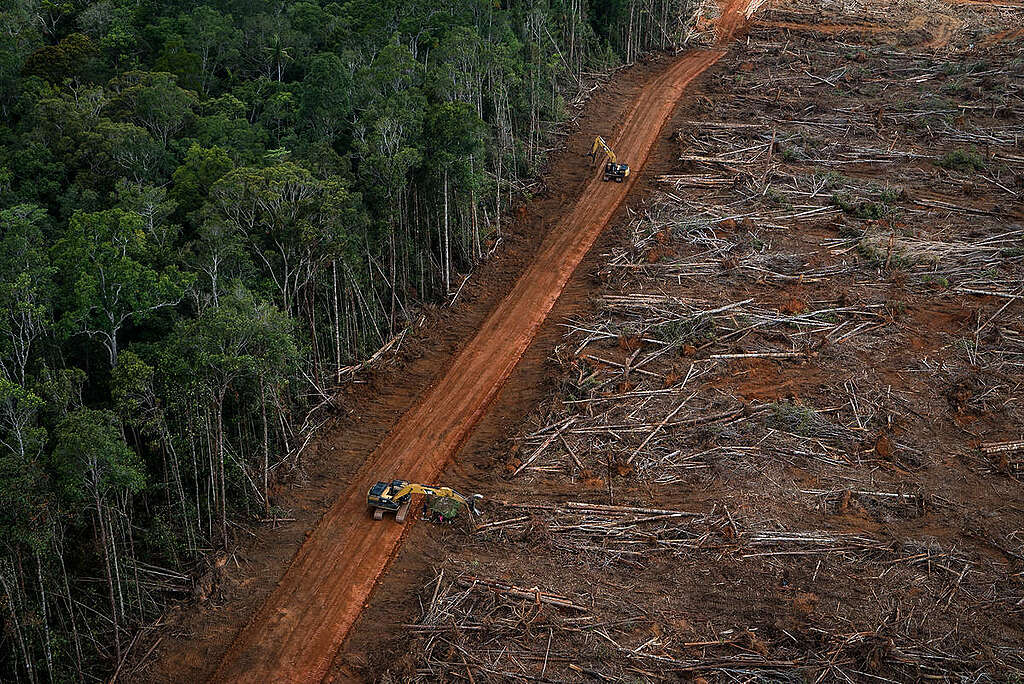
(Source Greenpeace,org)

Environmental activists across the country were left with disappointment and confusion in late May when the European Union released its long-awaited first list of country risk classifications under the EU Deforestation Regulation, marking a step towards the regulation’s implementation.  

This listing classified Australia as “low risk”, subjecting it to the weakest requirements. This completely misrepresents the reality of the situation in Australia in regards to deforestation, and prevents the new EU law from placing any meaningful pressure on Australia’s logging industry. Freedom of Information documents obtained by the Wilderness Society confirmed that the Australian government actively lobbied for this misleading ranking.  

A closer look at which countries were labelled low-, standard- and high-risk reveals a strong pattern. Other major deforestation hotspots, such as Brazil and Indonesia, were only labelled “standard-risk”. In fact, the label of “high-risk” was limited to just four countries: The Russian Federation, the Democratic People’s Republic of Korea, Belarus, and Myanmar. There are two key characteristics that the first three of these countries, and even to a lesser extent the fourth, share. First, these countries are geopolitically aligned against the American imperialist bloc, which the European Union is a part of. The second characteristic, which is largely a result of the first, is that they don’t trade much with the European Union, due to sanctions and other barriers. It is also worth noting that every single American-aligned country in the Global North was given a “low risk” ranking.  

Considering these patterns together we can paint a picture of a decision-making process that was designed to minimize inconvenience as much as possible to logging and related industries while still being believable to an average audience as an objective ranking (hence why Brazil, Indonesia etc weren’t labelled “low-risk”), and of course use the opportunity to throw a casual punch at some of the American bloc’s opposition.  

Environmental organisations in Australia have been quick to point out that Australia’s ranking does not accurately reflect our deforestation crisis. But they have often not been able to put the other pieces of the puzzle together.  This creates a task for our party and anti-imperialists alike to systematically help raise their class consciousness alongside them in environmental struggles, and to point out that deforestation in Australia (and the world) is overwhelmingly the result of US imperialist domination and plunder. 

The construction of an Australian united front, combining environmentalist groups with other working-class struggles, with conscious anti-imperialist leadership, is a critical goal we must aim for. In mid-June the Wilderness Society began to search for “values-aligned organisations and groups” that could become “potential allies”. It’s a small but important step in the right direction.  

If you destroy children, you destroy hope

 Written by: Louisa L. on 9 July 2025


Sexual abuse inside childcare centres has outraged Australians. Now 1200 children will need invasive tests for sexually transmitted diseases. It’s horrible. Those innocent little children. What despair, grief and underserved guilt their families must feel. 

Imagine their anger when they learn some centres apply minimum legal worker-to child-ratios that leave babies alone with one staff member; that most childcare workers are paid so poorly that half have less than three years’ experience and are unable to recognise warning signs; that even if they do, some feel scared to raise concerns; that some training providers churn students through online courses, where face-to-face TAFE once provided all qualifications, and TAFE teachers and other staff were often able to identify those unsuited to childcare before they graduated.

All this was exposed by Guardian Australia’s Lisa Bryant in late June. She and others had known it for years. ‘Constant turnover creates exactly the kind of instability in which misconduct can go unnoticed. A stable, valued workforce is a safer one – for everyone,’ she wrote.    

Bryant doesn’t mention that a privatised system breeds capitalism’s compulsion to chase the highest possible profit by pushing down costs.

But it’s implicit in her questions, ‘If someone wanted to harm children, might they be able to work out which settings offer them the best opportunity? The ones running on the bare minimum of staff, with constant turnover, lots of trainees, and as few qualified staff as regulations allow?’ 

A war on children

Only once before has mass testing of children for sexually transmitted diseases been proposed. It was demanded during the 15-year NT Intervention, by John Howard – with bipartisan support. Legislation was proposed and passed in just one late night sitting in 2007. 

Most doctors and many parents and caregivers refused to allow children to subjected to the abuse of mass testing.

Based on lies, it was another wave of genocide. Disguised as concern for children, the legislation didn’t mention the words ‘child’ or ‘children’ once. It was a land, water, gas and mineral grab. 

As the army poured unannounced into some bush communities, terrified adults ran to hide children, thinking they’d be stolen. Eventually they were stolen, in record numbers, there and Australia wide. 

Since then, by every measure including suicide, incarceration, illness, cultural and educational deprivation, intense poverty, housing stress, removal from families, the lives of those Children of the Intervention have been negatively impacted. It was war on children.

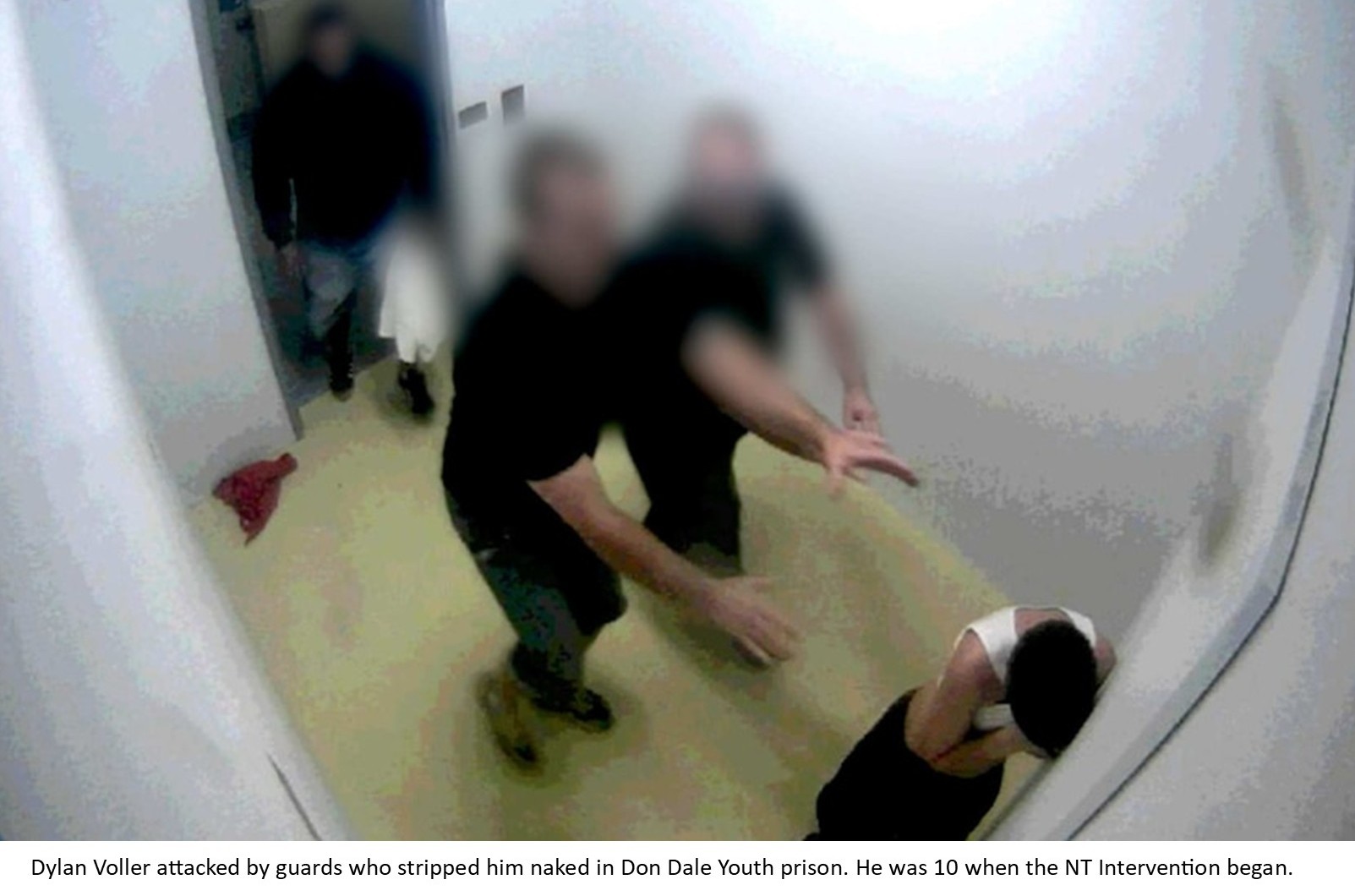
We know children are more likely to be sexually or physically abused in prison than outside it. Remember the footage? Young Dylan Voller, cowering in a cell alone, attacked stripped naked by guards. As a teen, strapped to a chair, a hood over his face like a wartime ‘terrorist’ suspect being tortured. 

And governments and media blaming the young victims for the despair they created! ‘Young violent criminals run wild,’ they rage. This year the NT Government lowered the age of criminal responsibility to ten.

Now every state and territory except the ACT jails ten-year-olds. They’re nearly all Black. 

If you destroy children, Black or white or brown, you destroy hope, you destroy the future. But more and more people begin to understand the truth. They know Australia, by almost every measure, is run for profit, for trillionaires, for war. 

They know Australia is a crime scene. They’re fighting back. 

The excessive cost of the US-led policies of "constructive chaos"

 Written by: (Contributed) on July 9, 2025


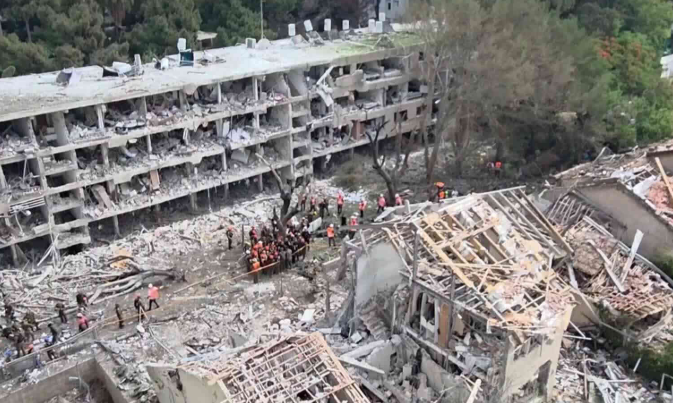
Above: Damage to Tel Aviv from Iranian missile strikes       Source: www.msn.com


The US peace initiative between Israel and Iran is to be welcomed although it cannot be regarded as an example of skilful diplomacy by Washington. It is more in line with an act of desperation by the Trump administration; a changing balance of forces across the Middle East has had serious implications for traditional hegemonic and diplomatic relations. The terminology used by the US has carried the hallmarks of a panic stations mentality.

Secondly, the recent problems in the Middle East, caused by Israel, have been the outcome of a failed US-led regional policy. Washington and the Pentagon, therefore, plan to move on, halting too much damage to Israel, and its regional role as their loyal 'hub' for 'US interests'.

 The hasty and problematic US peace initiative between Israel and Iran in late June has shown how serious the limited war between the two countries was for Washington and the Pentagon. Conducted in a blaze of Trump-style diplomacy following his hasty departure from the G7 summit, it was what was not openly stated that was, and remains, of vital significance and importance.

It was openly stated, for example, that Trump and his entourage left early 'because of what's going on in the Middle East'. (1) In some ways it was, but not completely due to the Israel-Iran war. Other factors were at play, raising serious considerations for the US.

A changing balance of forces has taken place across the Middle East, with far-reaching implications for US-led regional diplomacy and traditional hegemonic positions.

The rise of BRICS, and their ability to recruit further members, including Iran, has presented a serious challenge to NATO countries and their traditional allies. (2) Iran is a centre of Islam. The second-tier recruits to the BRICS international trade organisation also include Saudi Arabia, UAE, Egypt and Indonesia, together with further additional 'partner states'; about forty countries have already expressed an interest in BRICS (3) One application, Palestine, is already under consideration, with a vote due to take place in the United Nations over its existence and international status, which will enhance its BRICS application.

While the Middle Eastern additional members of BRICS will enable a challenge to US ready access to oil reserves, Iran has the second biggest natural gas reserves in the world, and Gaza has similar reserves offshore. (4)

In fact, the BRICS countries, collectively, already have 41 per cent of global GDP; the G7, by comparison, have only 29.08 per cent. (5) The growing imbalance is set to grow. In the short-to-medium term it will act as a pincer upon the US and its allies, in the long-term it will render them as being on the wrong side of history. The position of the US is increasingly untenable, as the combined weight of the G7 have difficulty getting into the first hundred league of countries and their GDP growth rates.

It has caused the Trump administration to seriously re-think its options, which were traditionally based in regional foreign policy implemented decades ago.

While Israel was always intended as a regional hub for 'US interests', part of its role was to implement a policy of 'constructive chaos' designed to weaken other countries regarded as adversaries to traditional US hegemony.

During the Bush administration twenty years ago, then Secretary of State, Condoleezza Rice, stated the US military operations in the region were designed to create the conditions for 'the birth pangs of a new Middle East'. (6) The US sought to create a new order which they could control more effectively. It emerged from the intelligence premise and assessment that 'real power cannot be exerted if one remains in the status quo, but only, quite the contrary, in the act of destroying all forms of resistance. It is only by plunging the masses into chaos, that the elites can aspire to ensure the stability of their position'. (7)

And that is what Israel has precisely done on behalf of the US across the Middle East: destabilising, bombing and illegally occupying neighbouring countries. Until, that is, a credible challenge took place from BRICS and Iran. It, therefore, sent the US into damage control, searching for further options. They continue to search.

It is no coincidence that the Trump administration has demanded NATO member countries increase their contributions to the organisation, immediately, and later, by at least five per cent of GDP by 2035. It is a way in which the US can challenge opposition. In fact, it remains the only way. The reaction of the NATO members to the demands of the Trump administration has, however, been a spectacle in itself. Most have been extremely reluctant to commit their governments to substantial increases in defence expenditure.

The fact that Iran was able to successfully bomb Israel by damaging its Iron Dome system by launching large-scale bombardments overloading the sophisticated radar has also sent the Pentagon scuttling away with their tails between their legs. (8) It was noted with alarm, for example, that, 'those new threats', had serious implications. (9) And they have, with evidence not particularly difficult to establish. The world's media are full of it.

Once able to bomb other regional countries with impunity while pursuing the constructive chaos policies, Israel is now, however, faced with its own bill for 'hundreds of buildings have been destroyed or heavily damaged, and will cost hundreds of millions of dollars to rebuild or repair'. (10) Much of Israel's economy has also been 'shut-down … as a result of the Iranian strikes'. (11)

The cost of the constructive chaos policy has also proved very expensive: it was noted from reliable sources that, 'the mounting costs add to pressure upon Israel to wrap up the war quickly'. (12) Which is what happened. The media coverage of the role of the Trump administration in the cease-fire between Israel and Iran has been couched in terminology more characteristic of an act of desperation. It was not level-headed diplomacy.

But with the scale of the problem confronting the US, it was to be expected.

The fact that the Trump administration, subsequently, had to deal with a leak of sensitive intelligence material from inside the Defence Intelligence Agency which noted the US 'strike on Iran did not destroy its nuclear program', has revealed a chaotic state of affairs at the highest levels of administration in Washington and the Pentagon. (13)

The costs, for the US, likewise, have acted as a brake upon their foreign policy: a substantial part of their US$939 billion defence budget has been allocated toward the defence and security of Israel. (14) It has not proved an investment, but to the contrary, a serious drain upon their increasingly limited resources. The so-called US Operation Midnight Hammer 'saw the deployment by the US of 125 aircraft and 75 precision-guided weapons in strikes on three Iranian nuclear facilities'. (15) It was not a peripheral costing.

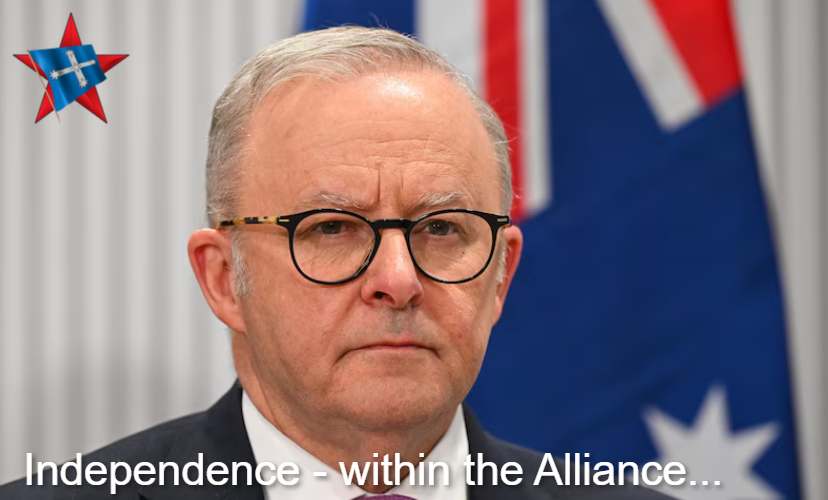
Continued US diplomatic initiatives to defend Israel have also added to their increased diplomatic isolation in forums. Even Albanese has to pretend to be adopting greater “independence within the Alliance”.

In conclusion, with Indonesia, as a prominent BRICS member and the world's most populous Muslim nation, now pushing for 'international recognition of Palestine as a sovereign state', in a major diplomatic forum for Islamic Co-operation, the pincers are already closing tightly upon US involvement in the Middle East. (16)
 
Countries across the Middle East, excluding Israel, likewise, now appear to be weighing up their options and diplomatic positions, in terms of the dominant religion and future trade relations, between themselves and outside countries.


1.     Trump abruptly leaves G7, Politico, 16 June 2025.
2.     Medium – The rise of BRIC's and decline of NATO., Information Warfare Magazine, 4 February 2025.
3.     Ibid., and, 'Which new countries', The Birch Gold Group, 2 May 2025.
4.     Behind Israel's 'end games' for Gaza, The International Action Center, 14 November 2023.
5.     BRICS expands with new partner states, G.E., 25 December 2024.
6.     The Neo-Conservatives and the Policies of Constructive Chaos, Voltairenet, 28 July 2006.
7.     Ibid.
8.     How Iran broke Israeli air defences, VOX., 19 June 2025.
9.     Ibid.
10.   Golden drain: Bibi's $620m-a-day war, The Weekend Australian, 21-22 June 2025.
11.   Ibid.
12.   Ibid.
13.   'Loser': White House, The New Daily, 25 June 2025.
14.   Counting the huge cost of Trump's hammer blow, Australian, 25 June 2025.
15.   Trump's 24 hours of turmoil, Australian, 26 June 2025; and, Counting the cost, ibid., Australian, 25 June 2025, which has provided a full list of costs for Operation Midnight Hammer.
16.   Jakarta call for Islamic unity to halt conflict, Australian, 24 June 2025.

Sunday, July 6, 2025

Did Albanese really champion Australian independence?

 Written by: Nick G. on 7 July 2025


In his John Curtin Oration on July 5, PM Albanese is said to have invoked the WW2 Labor PM John Curtin to call for an “Australian Way” independent of pressure from certain great powers.

There is certainly a growing sentiment for greater independence from the US and Albanese has seen that it is a sentiment that he must do something to placate.

In fact, nothing in his speech lived up to the headlines in the pro-US capitalist media.

According to the ABC on July 4, “Albanese to champion 'Australian independence' within US alliance”.

The next day, it was Nine News predicting “Prime Minister tipped to 'ruffle feathers' in Washington with keynote speech”.

And on the day after the speech, when it should by then have known better, the Daily Mirror reported that “Anthony Albanese sends very unsubtle message to Trump in incendiary speech: ‘The Australian Way’”.

You can read this “incendiary speech” here.

The ABC headline at least identified the Catch-22, that the so-called “independence” would be confined to and constrained by the “US Alliance”. It was like a prisoner declaring that he was free – within his cell.

Of course, there was no mention of Labor’s slavish acceptance of the AUKUS arrangement, no apology for the sell-out of sovereignty in the Force Posture Agreement, and no commitment to an independent position on the Israeli Zionists’ campaign of genocide against the Palestinian people.

Even his invocation of Curtin and his defiance of Roosevelt and Churchill over the relocation of Australian troops from the Middle East to Australia during WW2 could not hide the fact that Curtin was not the great symbol of independence that Albanese made him out to be. He would have happily kept serving Britain had that country not walked away from us following the Japanese capture of Singapore. His statement that Australia now looked to the United States meant swapping one great power that kept us in dependency for another.

Real sentiment for independence can be seen in many who would in no way subscribe to our objective of socialism and Communism, but do subscribe to the need for a capacity for independent decision-making in matters of foreign policy and economic direction. 

These people are in all corners of social media, deriding Albanese for not matching his words with action.

For anti-imperialist independence and socialism!


Friday, July 4, 2025

Unions should conduct anti-far right training

 Written by: Nick G. on 5 July 2025


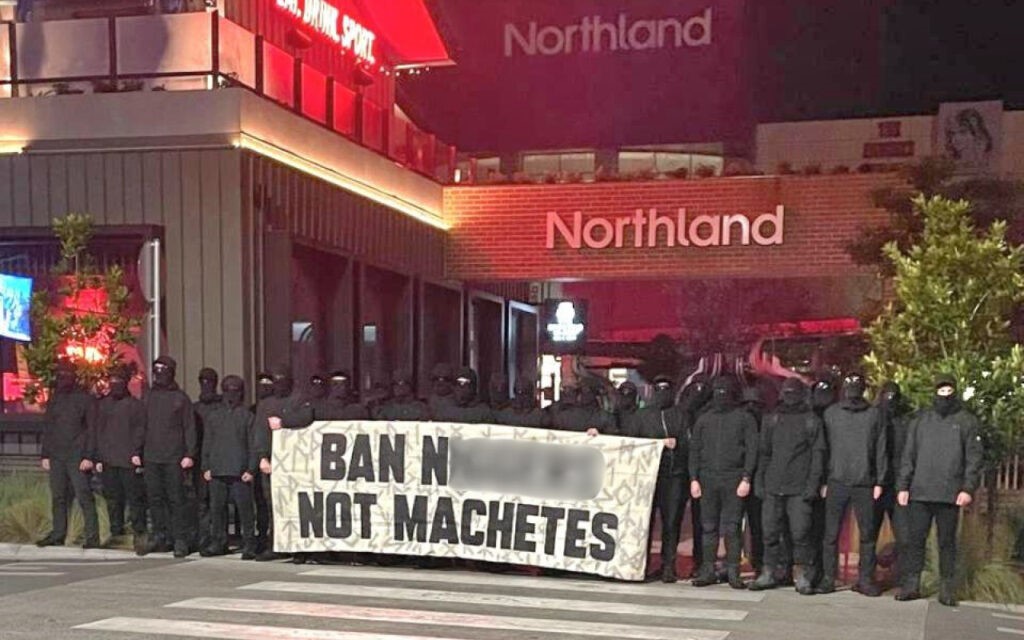
Above:  Following a gang fight in which some, including African youths, used machetes, Nazis capitalised on the event, calling for a ban on “Niggers”, not machetes.

A group of retired unionists in South Australia, the Democracy Alliance Australia (DAA), is calling on the ACTU and State and Territory peak union bodies to conduct anti-far right training.

The growth of right-wing forces is part of global phenomenon. Although serving the interests of the most reactionary sections of imperialist finance capital, fascism appeals to white working class youths who blame immigrants and followers of so-called “woke” causes for problems endemic to capitalism. They elevate men’s aggressive identity, shaped by membership of “fight clubs” in certain gyms, to a virtue, and assemble in black-clad uniforms and face masks in order to strike an intimidatory pose.

Far-right racism and attacks on migrants, demonising of “woke” issues, and the assertion of aggressive male identity serve to divide the working class. A divided working class is a weak working class. The right had success in targeting disgruntled workers when it organised a section of the CFMEU membership to attack the Melbourne offices of the union in an anti-vaxxer demonstration during the Covid lock down.

In parallel with the street thugs are the parliamentary servants of capitalism and imperialism who pass a range of anti-democratic and anti-union legislation.
The combination of these two forms is sometimes referred to as “two-track fascism”.  There does not need to be a formal connection between them: they operate from different platforms but serve the same ends. 

Overseas, several peak union groups are conducting anti-far right training. The British Trade Union Council has anti-far right training courses. The local off-shoot of a British group, All Together Now, offers paid training to challenge far-right extremism. These are welcome developments, but they are also limited in their scope to training people to identify misinformation and disinformation spread by extreme right-wing lobby groups and largely concentrate on the street thug track of fascism, ignoring the role of the parliamentary track in creating anti-people and anti-union laws.

The DAA has written to ACTU leaders Sally McManus and Michelle O’Neill seeking to discuss anti-far right union training, but so far without a response.

We believe that the voice of rank and file workers should be raised in support of the DAA’s call. Workers through their unions should call for two-track anti-fascist and anti-far right training courses to be conducted by their own union and peak bodies of unions at the State, Territory, and federal levels.