
antiWritten by: (Contributed) on 21 April 2026
Two separate statements issued in the past couple of weeks underline the depth of the crisis that bourgeois governments face. The first came from the International Monetary Fund (IMF) and its increased demand for austerity as the world heads toward global recession. The second came from the Australian government and its announcement of increasing military spending.
The Australian government announcement was accompanied by muted calls by Treasurer, Jim Chalmers that, in the face of a looming recession, there might be some ‘assistance’ in the coming budget. He was also seeking to appease the IMF assuring his financial masters that restraint will be the order of the day and cuts will be made where necessary.
The IMF calls for austerity. All capitalist governments have shown a preparedness to cut social spending but all are rapidly pumping more into their respective armed forces. It is entirely illogical, but then any claim to logic that capitalist governments have is, at best, a mystery.
The latest IMF report shows just how close the global economy is to recession. IMF Managing Director, Kristalina Georgieva, indicated that global economic growth will further shrink to a point perilously close to two per cent. Austerity was demanded. This has serious ramifications for the working class, already saddled with rising prices, lowering real wages and now the added pressure from the US war on Iran and the inevitable oil crisis.
The Georgieva call for spending cuts was made in the lead up to the Australian Federal Budget. She made it clear that the Australia should avoid ‘untargeted’ cost-of-living relief spending. Inflation is likely to rise in the coming months and recession is no longer a potential threat but is being spoken of as an almost inevitable consequence of the war against Iran.
Economic growth in Australia is now predicted to slow to just 2 per cent this year and fall to 1.7 per cent in 2027. Treasurer Chalmers continues to downplay these figures. Chalmers has pledged to juggle both the demands of the IMF and the necessity of not cutting too viciously in the budget. A dangerous hire-wire act. The government has indicated it is navigating a ‘narrow path’ to avoid recession while managing a ‘weakened’ economy. We shall all have to wait and see, but there is little room for optimism.
Chalmers, like all Treasurers, does his best to deflect from the crisis that capital lives with. While the war in Iran certainly exacerbates the immediate problems facing global capitalism, the real problems lie in the fragility of the capitalist system itself and the crisis that haunts capital; the tendency for a fall in the global rate of profit.
This crisis drove the capitalist world to globalise. It didn’t resolve the problem. The backlash to economic nationalism and trade war politics has not solved the problem. Things get worse and imperialist war looms as a last throw of the dice to save a sclerotic economic system.
Chalmers said Treasury was still working through the consequences of the conflict for the Australian economy, ‘which are already serious and could become severe.’ Indeed, it could!
Economists knit their brows and wring their hands. The Australian government announced that spending for the military was to skyrocket. There is a madness to all this, but economic downturn, capitalist crisis and the striving for military ascendancy are hardly rational endeavours.
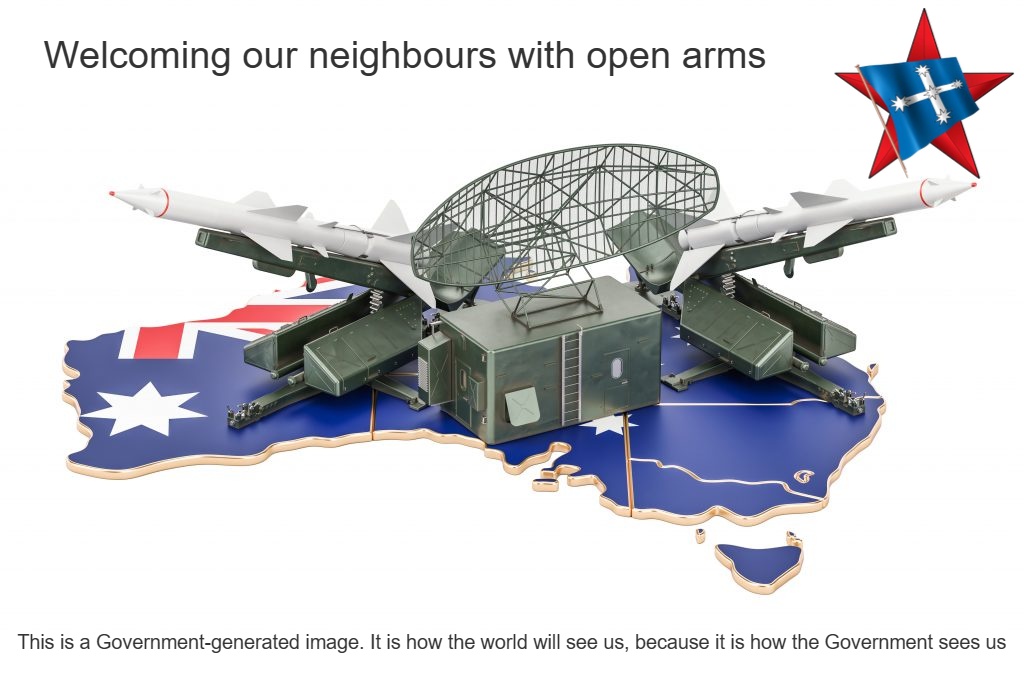
By 2033, fully three per cent of the Australian GDP will go to the military. The ALP government never tires of making proclamations to the effect that a rise in military spending somehow boosts the economy. There is a twisted logic that tries to equate a militarisation of society with economic and industrial policy. This is seen in the boast that the AUKUS outlay of hundreds of billions of dollars will lead to thousands of jobs. This is a ludicrously expensive job creation scheme and especially so when people cannot get decent housing or healthcare. The spending on those quite possibly mythical submarines would effectively resolve all social issues that face Australia and its working class. But no; the new boost in spending can only make things worse.
The ‘new guns before butter’ economic plans will see military spending reach $887 billion dollars by 2035-36. The industrial ‘benefit’ will come from shipbuilding, the manufacture of drones and the technology required to make Australia a worthwhile target in the event of war.
Our economic ‘masters’ have decreed that the private superannuation sector will be tapped in order to find the cash for the new $53 billion military spending just announced. Those same super funds are at least officially used to fund major ‘nation-building’ projects and large-scale expenditures.
The lurch into arms spending and arms manufacture is not a uniquely Australian phenomenon but is a central component of capitalist economies as the very system crumbles before their eyes.
Most recent figures indicate that 50 per cent of all countries are increasing their military spending. Forty per cent of nations are now spending 2 per cent or more of GDP on their respective military budgets.
The extra spending on the military capacities of all countries is a drain on all economies but is good for the business of the war profiteers and the arms traders and manufacturers. The top 100 arms manufacturers have doubled sales in the past two decades. Profits are up. Business is booming. While this has gone on unchecked, the already strained economies of capitalist nation-states become more fragile. Social spending has been slashed, debt has risen and global inflation has been steadily climbing.
Against this backdrop, the IMF, as the banker for global capitalism, stands more than a little exposed. It routinely calls for austerity when governments frame budgets and offers mealy-mouthed calls for restraint when speaking of military expenditure. The best it seems to be able to offer is a declaration that governments need to ‘carefully coordinate’ military spending with monetary policy.
This allows for the Australian government to allow the militarisation of the economy as a direct benefit for the national economy. This is a ‘careful’ coordination indeed. The premise is to spend big, offer lucrative contracts to private capitalist enterprises, sell the materiel overseas in order to make profits while prolonging the suffering of the world’s working class. Central to the thinking of bourgeois governments is the requirement to serve imperialist demands and find a suitable scapegoat to blame for failure of the economy at any given moment.
Capitalism shudders and staggers toward the abyss. As it staggers, it threatens the lives of all on the planet.


No comments:
Post a Comment