Friday, March 8, 2024

International Women's Day and Palestinians' Struggle

 Written by: Ned K. on 8 March 2024


In Adelaide, celebration of International Women's Day starts early with the now traditional International Women's Day Breakfast at the Adelaide Convention Centre.

Each year thousands of women arrive at the Convention Centre from about 6.30am for a 7am start.

Many school children also attend the Breakfast and there are women from many different backgrounds and occupations in attendance.

This year the guest speaker was Annabelle Crabb and as in previous years, the Breakfast was attended by politicians including Foreign Affairs Minister Penny Wong who hosted the Breakfast.

Nothing different about that.

The difference this year was that as women approached the Convention Centre from north Terrace's footpath they saw police paddy wagons. Once up the escalator and on the plaza they would have seen more paddy wagons and a large contingent of uniformed police spread across the plaza in a straight line.

Were they there to protect the people entering the Breakfast? Possibly.

Or were they there to keep an eye on the small group of mainly women carrying large Palestinian banners standing behind a blockade especially placed to separate them from people entering the Breakfast, especially Penny Wong, the Foreign Affairs Minister so supportive of Zionist Israel?

Many women entering the event would have put two and two together to see the Palestinian flags behind barriers, a row of police nd Penny Wong being the host of the Breakfast.

International Women’s Day lifts struggle for liberation of women and socialism!

 Written by: Central Committee, CPA (M-L) on 8 March 2024

All power to women of Palestine resisting the occupation!

On 8 March, International Working Working Women’s Day, women all around the world demonstrate their determination to struggle for the liberation of women and humankind from the shackles of colonialism, capitalism, imperialism and its wars.  Women resolutely oppose fascism in all its disguises.

We fight for our rights as women workers, as carers, cleaners and society’s nurturers, indispensable for the profit making by the capitalist class.  We stand as equals in the long struggle for a revolutionary change. We fight against gender exploitation, commercialisation, abuse and violence against women.  We lead numerous struggles for our livelihoods, for our kids, for the environment, for peace and a better future for humanity and the earth.   
 
Many struggles for women’s rights and liberation are joining the widening stream of people’s struggles flowing in the direction of socialism.  We welcome and celebrate the growing numbers of women joining the revolutionary struggle for socialism and communism.
 
We are inspired by the resilience and tenacity of generations of working women overcoming extraordinary obstacles and hardships of oppression and subjugation, only to rise stronger, and more determined to pass on the baton of struggle for liberation and revolutionary change to the next generation of women.   
 
Palestinian women
 
We dedicate this International Working Women’s Day to the courageous women of Palestine who, after 76 long years resisting the brutal Zionist colonial occupation and genocide, refuse to give up their struggle for the liberation of their people and country from brutal Zionist colonialism propped up and supported by US imperialism.
 
76 hard years of brutal occupation, intimidation, genocide, torture and rotting in Israel’s gaols, has not held back the Palestinian women’s lifelong resistance, many joining the armed resistance and charting the Palestinian people's revolutionary road to liberation.  Women in the struggles for liberation can break the chains of patriarchy.
 
Around the world women weep and rage in solidarity with the women of Gaza and occupied territories, for their unbearable grief and loss of children, families, friends, neighbours and entire communities.  We are inspired by their courage, resilience and generosity, and draw on their strength for our struggles.  
 
We stand in solidarity with the women of Israel who defy the fascist Israeli state in opposing the Zionist colonial occupation and genocide of Palestine. These courageous women are themselves exploited, attacked and vilified by the fascist Zionist capitalist state.   They long for friendship and solidarity with the women of Palestine. 
 
More Palestinian and Jewish voices are calling for one truly democratic, equal and secular state for the people of Palestine, Israel and all peoples, that can guarantee lasting equality, peace and security for all.
 
We also pay special tribute to revolutionary women of the Philippines and India engaged in their people’s armed struggles against colonialism, fascism and imperialism.  
 
Working women of Australia
 
Day in, day out, the great majority of working women are burdened with the rising cost of living, many struggle to make ends meet, in constant fear of losing jobs, unable to pay for roof over their heads, healthcare, education and child care.  Rising homelessness is endemic, especially amongst women.   Equal pay is still unattainable.  Recent figures show the gender pay gap in Australia is on average 29%. Foreign controlled banks and finance sector monopolies have the largest pay gap between women and men workers.  Women still overwhelmingly dominate in insecure and part time jobs.
 
For over a hundred years women in Australia have struggled to alleviate the economic and social burdens on their lives.  The few progressive reforms we’ve achieved to alleviate the burdens on women have only been won through women’s long struggles for better pay and working conditions, affordable child care, legal abortion, laws on sex discrimination and violence against women.  Many are now being take away or made unenforceable by the capitalist state.
 
These are permanent problems and burdens of capitalism, and can never be solved within the capitalist system that totally relies for its survival on the exploitation of people and the environment.  
 
As long as the capitalist exploitation and discrimination of women goes on, generations of women inevitably continue this fight.
 
The First Nations women are leading the militant fight against the settler colonialism and imperialism, demanding land rights and self-determination. They spearhead campaigns to stop the disproportionate incarceration and deaths in custody of young Aboriginal people, against the poverty and dispossession of their people and country.   
 
The First Nations peoples’ long struggles for self-determination is gathering wide support from non-indigenous Australia.
 
Working women - organise and mobilise in workplaces and communities!
  • Equal pay for equal work and work of equal value
  • Lift wages of all workers
  • Bring child care into public hands – make it affordable
  • More public and affordable housing
  • Increase Single Parents’ Benefits
  • Implement and enforce anti-discrimination legislation across society
  • Ban commercial profit-driven culture that commodifies women as sex objects
  • Oppose involvement in imperialist wars
 
Make the multinationals pay!
 
 “Socialism will create the necessary conditions for women to achieve their full potential, economic independence, equality and respect in all sectors of society.  In a socialist system, working women will be empowered to run the society as equals for the benefit of all working people”.  General Programme of the Communist Party of Australia Marxist-Leninist.
 

Tuvalu’s Taiwan ties remain, but seeks to regain sovereignty from Australian security pact

 Written by: (Contributed) on 7 March 2024


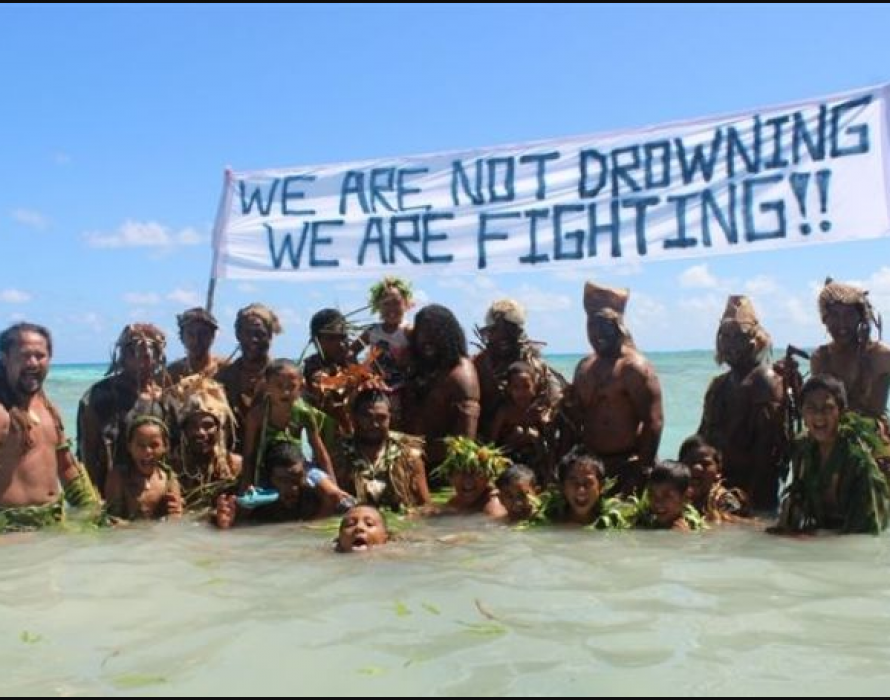
Above: People of Tuvalu protest Australia's indifference to global warming in 2019

Concerns arising about the new government of Tuvalu led by incoming Prime Minister Feleti Teo switching diplomatic ties from Taiwan to China appear to have been resolved, at least for the time being. A diplomatic note from Taiwan's ambassador to Tuvalu stated he had assurance ties with Taipei would be maintained in line with existing defence and security provision. While Tuvalu is a tiny Pacific Island country, it has important geo-strategic significance for US-led regional diplomacy and Taiwan.

In late February the Taiwanese Ambassador to Tuvalu issued a brief diplomatic statement that the incoming government of Prime Minister Feleti Teo in Funafuti would continue to maintain existing links with Taiwan. Concerns had arisen about a possible diplomatic switch to China, following a statement from former Finance Minister, Seve Paeniu, that 'Tuvalu's new government … would review … its Taiwan ties'. (1)

Tuvalu, a small country strategically placed in the Pacific has, historically, maintained full diplomatic ties with Taipei in return for a 'large assistance program'. (2)

Tuvalu achieved independence in the mid-1970s and although it has low levels of economic development, its membership of the British Commonwealth, the Pacific Islands Forum (PIF), together with a treaty of friendship with the US, nevertheless, have shown its vital strategic importance for regional western military and security provision. 

Its security pact with Australia, likewise, has revealed its continued significance for Canberra. (3) The Falepili Union, signed last year, allowed for increased migration to Australia, while surrendering veto power over Tuvalu's security arrangements to Canberra. Tuvalu still broadly supports the deal but wants to make changes it says will make the arrangement more "workable" and will safeguard the "integrity of the sovereignty" of the country. Its decision to revisit the pact has dealt a blow to Australia's signature foreign policy initiative in the Pacific. (4)

A major issue arising during recent election campaigning during the New Year was climate change and the very real fear Tuvalu could eventually submerge with rising sea-levels in a few decades. The offer by China, therefore, to create artificial island projects to protect Tuvalu from submerging was taken very seriously by the peoples of Tuvalu. (5) While China's offer was eventually not accepted, the problem, nevertheless, remains unresolved.  

In fact, informed opinion has already noted it was too early to expect the Teo administration to categorically maintain its ties with Taiwan, thereby creating continued disquiet amongst those linked to US-led militaryand security provision. (6)

Studies of Tuvalu reveal little about the role of US-led regional diplomacy, which in itself may be an indication of its highly sensitive nature. The US Department of State, however, acknowledge Tuvalu is part of its Indo-Pacific Strategy (IPS). (7) The IPS is based on the global alliance established between the US and Japan, which, in turn, rests upon the Quad. (8) Tuvalu is situated approximately in the centre of the Quad and also strategically-placed at the inter-section of the equator and International Time/Date line. (9)

As Tuvalu also rests on an arc from sensitive signals facilities in Queensland, it would appear an important part of US-led regional military and security provision, particularly for the South and Western Pacific.

The Quad is also composed of numerous lower-level partners inside the main alliance, and Tuvalu would appear part of the regional IPS provision. Part of the US-led IPS strategy has been to build an anti-China missile network along sensitive island chains, used to restrict access and egress of adversaries across the vast region. (10) The geographical, political and diplomatic position of Taiwan is, furthermore, central to the US-led Island Chain Theory.

1.     Tuvalu PM 'rock solid with Taiwan', Australian, 27 February 2024.  
2.     Tuvalu, GlobalSecurity.org – March 2024.
3.     Pact with Tuvalu in the balance, Editorial, Australian, 30 January 2024.
4.     Tuvalu's new prime minister indicates he will revisit deal…, ABC News, 28 February, 2024
5.     See: Fears of Tuvalu turn to China, The Weekend Australian, 20-21 January 2024.
6.     Australian, op.cit., 27 February 2024.
7.     US Relations with Tuvalu, Website: US Department of State, 23 June 2023.
8.     The reasons behind Washington's push for GSOMIA., Hankyoreh, 12 November 2019.
9.     Ibid., and, See: Peter Projection, World Map, Actual Size.
10.     See: US to build anti-China missile network along first island chain, Nikkei, 5 March 2021; and, US Indo-Pacific Command proposes new missile capabilities to deter China,        RFA., 5 March 2021.

Indonesia: Shadowy hands, shady dealings

 Written by: (Contributed) on 6 March 2024


A carefully worded high-level diplomatic statement recently released from Canberra regarding regional trade organisation has revealed how Australia has followed US-led initiatives to undermine ASEAN in favour of the OECD.

Fears exist that ASEAN has proved ineffective at confronting China's regional influence.

The statement appears to show how US-led regional diplomacy has pushed hard against the BRICs, with other considerations played down to avoid unnecessary publicity and controversy.

The announcement that the OECD has been willing to accept Indonesia as a full member was greeted with enthusiasm from Canberra. (1) The sprawling 38 member countries, largely from the advanced, industrial west, appeared to accept Indonesia on the basis that it was an emerging economy destined to become 'an advanced economy by 2045'. (2) While the country has had involvement with the OECD from 2007, the move toward full membership has important implications. The fact that China has remained Indonesia's largest trading partner has not caused undue concern, at the present time.

Behind the scenes, however, the shadowy hands of those well-placed in Canberra has been duly noted.

The present OECD secretary-general, Mathias Cormann, has remained a well-placed Australian Liberal Party member from the National Right faction; a former senator from 2007-20, he was also finance minister, spanning the three successive administrations of Abbott, Turnbull and Morrison in Canberra. (3) In fact, it was Morrison who actually nominated Cormann for the elite OECD position in lavish display of patronage. (4)

The patronage chain linked to Morrison has also included his membership of the board of the so-called International Democrat Union (IDU), which has been aligned with the 'intolerant far right', linked to pro-Trump political groups in the US. (5) The IDU has had a long-time involvement with the Australian Liberal Party and their coalition 'friends'; John Howard was chair of the organisation for more than a decade, while serving as Australian Prime Minister. (6) The period was marked by a particular sycophancy toward the US with his nearly every political move.

In recent times a major push has taken place from Canberra to establish more amenable diplomatic relations with Indonesia, largely due to its geo-strategic position in the neighbouring region. Allegations of war-crimes by leading Indonesian political and military figures, particularly in East Timor and West Papua, have been played down.

Indonesia, historically, has also been more closely associated with ASEAN, an important regional trade body composed of neighbouring countries. In recent times, however, concern has been raised about the continued usefulness of ASEAN for US-led regional diplomacy. Its member countries all retain important trade links with China, and they have little time for choosing either side in the rising diplomatic hostilities between the US and China. They have vested interests in maintaining the present diplomatic status quo.

Indonesia, therefore, has been taken by the OECD as a test-case; it is an important part of Australia's defence and security concerns and Canberra has noted 'it will also have a ripple effect through other countries across South-east Asia in terms of encouraging a greater alignment to OECD standards at a time when China seeks to assert its influence throughout the region'. (7)

Indonesia has also chosen not to apply for membership of the BRICS trade body last year, which came with a sigh of relief from Canberra. The BRICS, composed of China, Russia, and other strategically-placed countries has in recent years dramatically expanded its diplomatic influence across emerging economies. At its Pretoria Summit last year, the BRICS began high-level diplomatic discussions with the Palestinians and called for a State of Palestine with East Jerusalem as the capital. (8) Australia clearly did not want a BRICs member country geographically close in the neighbouring region.

While the BRICs initiative enhanced the diplomatic standing of the Palestinians, it met with complete silence from the West. There was no official media coverage, which was duly noted with interest.

It is, therefore, revealing to also note the recent Canberra diplomatic statement included three references to Israel, and concerns raised by Tel Aviv about Indonesia's support for the Palestinian people. The OECD leadership, nevertheless, appear to have provided encouragement for Indonesia to join the trade body. It was noted, for example, that Cormann was the 'driving force behind getting the other 38 OECD member nations on board. This wasn't easy. Israel was staunchly opposed'. (9)    

What relevance this political chicanery has in connection with developments which took place on 7 October and afterwards has yet to be accurately clarified and established.

1.     See: Jakarta in a nickle pickle amid its bid for OECD membership, and, Talks signal a key shift towards the West, Australian, 22 February 2024.
2.     Ibid.
3.     Wikipedia: Mathias Cormann.
4.     Ibid.
5.     See: Scott Morrison signs on, The New Daily, 14 September 2022.
6.     Ibid.
7.     Australian, op.cit., 22 February 2024.
8.     BRICS Summit, Pretoria, WAFA News Agency, 20 July 2023.  
9.     Australian, op.cit., 22 February 2024.

Monday, March 4, 2024

We support the international campaign to free Ecevit PiroÄŸlu

 Written by: CPA (M-L) on 5 March 2024


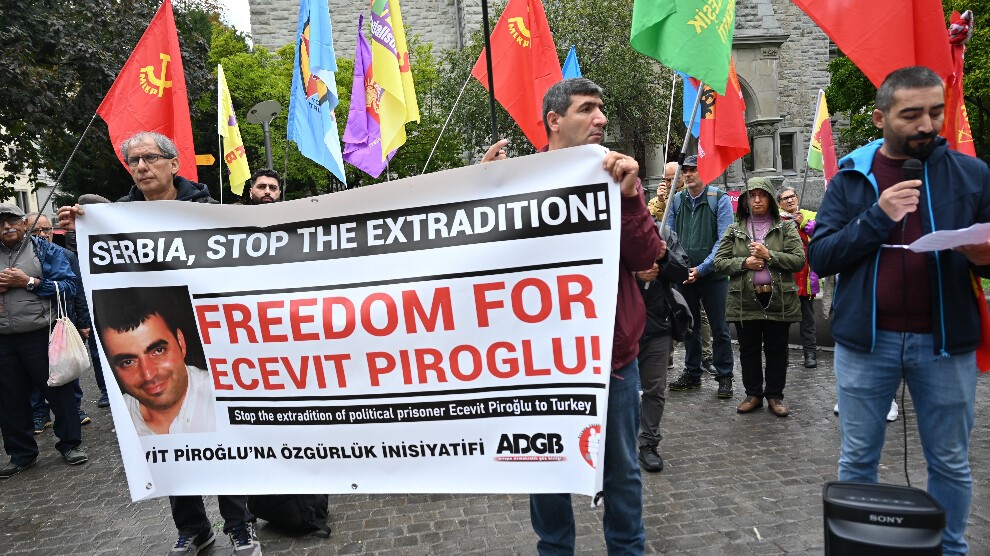
At the request of the Marxist-Leninist Communist Party (MLKP) Turkey/Kurdistan, we have petitioned the Serbian Ambassador to Australia for the release of Kurdish prisoner Ecevit PiroÄŸlu. Our letter follows:

H.E. Ambassador Mr. Rade Stefanovic
Embassy of the Republic of Serbia in Canberra

Your Excellency,

On June 4, 2022 I wrote to you in relation to the Turkish national Ecevit PiroÄŸlu who is currently facing an extradition request by Turkey for his return to that country from Serbia.

Since 1 June 2022, Kurdish political activist Ecevit PiroÄŸlu has been in detention in Serbia following an extradition request from Turkey. He was denied his legitimate right to asylum. Last year, he went on a 136-day hunger strike in protest. An international campaign stopped his extradition.

On 12 January 2024, Ecevit PiroÄŸlu was released, but the Serbian immigration police were already waiting outside the prison to unlawfully arrest him again and take him to another extradition camp. PiroÄŸlu, who does not accept these unlawful practices, has since gone on another hunger strike for his freedom. 

This illegitimate action by the Serbian judiciary, which indicates close cooperation with Ankara, has been going on for 32 months. Turkey is known for systematic human rights violations and attacks on democratic institutions and organisations. The extradition of Ecevit PiroÄŸlu to Turkey would jeopardise his life. With great concern the democratic world public is following the illegality of the Serbian state and is calling for immediate compliance with international and Serbian law. Lawyers from all over the world are informing themselves about the situation and condemning the arbitrariness of the Serbian judiciary.

We protest in the strongest possible terms against these actions of the Serbian state, which violate all human rights. Extradition to Turkey would be a serious violation of Article 3 of the European Convention on Human Rights. It states: "No one shall be subjected to torture or to inhuman or degrading treatment or punishment."  This means that extradition to a country such as Turkey, where there is a risk of such treatment, is prohibited. The imprisonment of Ecevit Piroglu is therefore already a gross violation of the law.

We respectfully request that Ecevit PiroÄŸlu be allowed to seek asylum in Serbia and that the extradition order made on behalf of Turkey be quashed.

Nick G.
Chairperson,
Communist Party of Australia (Marxist-Leninist)
5 March 2024

Tuesday, February 27, 2024

US imperialism has no friends, only ‘interests’


Above - Island chain theory - see reference in article

Written by: (Contributed) on 28 February 2024

Those observing the dysfunctional nature of US politics may have overlooked one of the serious side-effects of the irrational behaviour. Three Pacific countries which remain dependent upon US foreign aid, have been kept waiting for financial support to materialise with no sign it will take place at some future date. It has been noted from more sensible quarters the three countries, at present diplomatically linked to Taiwan, are, in effect, being pushed closer to switching to China, and thereby, creating greater problems for US regional foreign policy and foisting likely military options upon their allies

Decision-maskers in Washington, supposedly operating in line with Pentagon military planning, can hardly be described as behaving in a rational manner and pursuing a straightforward agenda; they are pushing policies which are clearly counter-productive. Other countries, also dependent upon US foreign policy, including Australia, should perhaps take notice of the highly questionable political and diplomatic behaviour, and evaluate it accordingly. The US budget impasse has thrown elements of AUKUS planning into doubt, according to some in the Australian military community.

With US presidential elections looming later this year the spectacle of an ageing president with cognitive problems being confronted by a far-right buffoon backed by red-necks and gun clubs has become a daily event. It is hardly worth speculating their next move; in fact, it is difficult to take the spectacle seriously.

The latest political chicanery has included pro-Trump supporters wanting to re-introduce an amendment about funding for security on the US border with Mexico into the budget; they have actively campaigned for building a wall to prevent asylum-seekers from Central America as a central part of their increasingly racist and nationalistic political agendas.

Behind the scenes, however, they are pursuing a peculiar and devious agenda, which contributes to undermining US leadership positions in the Pacific; the region is a centre of geo-political battles between the US and China. The US budget impasse has hindered US foreign policy toward Palau, the Marshall Islands and Micronesia, effectively cutting their financial support. Dependent upon US foreign aid, the three countries have been kept waiting for months for vital foreign aid. (1) There is no sign the budget impasse will be resolved in the near future.

In fact, reliable observations about the debacle have noted the three Pacific countries signed a twenty-year agreement last October with the US which cost Washington $7.1 billion, designed to safeguard sensitive shipping lanes in competition with China; the cost of replacing the agreement with military options has been estimated to cost $100 billion. (2)  

Most of the Pacific islands had neo-colonial economic relations foisted upon them with independence; their economies have never been sustainable without foreign aid. The mass of the populations live subsistence lifestyles. Essential services are usually provided by foreign aid.

Elsewhere in the region, countries such as the Solomon Islands which made the diplomatic switch in 2019, were rewarded with extensive support from China. Beijing, historically, has been generous with its regional aid programs. It has, therefore, been noted by the President of Palau, Surangel Whipps Jnr., that he was 'coming under domestic political pressure to shift his country's allegiance from the US to China, dropping support for Taiwan'. (3) He further noted that 'every day … the US budget is not approved … plays into the hands of China'. (4)

Similar concerns have also been raised in neighbouring Tuvalu following recent presidential elections where the pro-Taiwan leader lost his seat. Nauru, likewise, made the diplomatic switch from Taiwan to China following recent presidential election last month.

The three Pacific countries, Palau, the Marshall Islands and Micronesia, also form a strategic component part of Taiwan's New Southbound Policy, based on forging closer links with countries in the region and using their diplomatic links to gain access to regional dialogues and trade organisations. (5)

Taiwan, however, has become increasingly diplomatically isolated with a declining number of countries supporting Taipei, none of the remaining countries can be regarded as diplomatically significant. In fact, Taiwan stands the very real risk of total diplomatic isolation as countries switch allegiance to China. In practical terms, as the number of countries diplomatically recognising Taiwan dwindles, decision-makers in Taipei have fewer supporters to assist them at UN level.

Taiwan, however, is diplomatically important for Washington and the Pentagon, marking the centre of Island Chain Theory, used for regional foreign policy with tiny Pacific countries having huge significance by providing strategic access and egress across the vast waterways. (see diagram) Each diplomatic switch from Taiwan to China also enables Beijing to gain access to exclusive economic zones, rich in minerals and natural resources. (6)

Other regional defence and security considerations include the Pentagon planning to build a radar base on Palau and the Marshall Islands hosting the Space Fence, a sensitive space surveillance system. (7)

Returning to the budget impasse in Washington, it is perhaps appropriate to see the whole spectacle as a collapse of political will at the imperial centre being played-out inside a constitution which one side does not even regard as legitimate; it has far-reaching implications for Australia and other US allies.

The US appear to be abandoning Taiwan, if not in word, then by their actions; both Washington and the Pentagon, it should be noted, appear to expect their allies within the Indo-Pacific Strategy (IPS) to take greater responsibility for regional operations. (8)

Bound ever closer to the US through the 'alliance' and numerous military agreements, Canberra, for example, has been forced to accept greater responsibility for regional 'US interests'; the defence and security of strategic Pacific countries, therefore, is a major concern foisted upon Australia. The recently published list of military acquisitions reveals longer distance deployments outside of Australia's usual areas of concern, already been planned by the Pentagon.

In order to increase US production of nuclear-powered submarines and thus have several to pass onto Australia, both countries agreed to provide US$3.3 billion – or A$4.6 billion from our side – but the US payment has been delayed by Congress.  Editor of the online Asia Pacific Defence Reporter Kim Bergmann commented: ‘So while Australia remains on the hook for a contribution of $4.6 billion – which neither the government nor the RAN can justify – the Americans refuse to spend their own money to speed up submarine production. What an ally! Unless Virginia class submarines are being built at a rate of 2.33 per year, Australia will receive nothing.’

The vast Australian defence budget is also set to increase dramatically, lifting spending from 2.05 per cent of present GDP to 2.3 per cent by the end of the decade. Much of the increased expenditure is based on military systems and equipment with designed interoperability with the US under their command; little thought or consideration has been given to the defence and security of Australia itself. (9)

The IPS, likewise, has established an agenda to only serve 'US interests', not those of its allies:  

We need an independent foreign policy!


1.     See: US budget impasse driving Palau into arms of China, Australian, 21 February 2024.
2.     Ibid.
3.     Ibid.
4.     Ibid.
5.     See: Beijing keeps a wary eye on new Taipei outpost, Australian, 18 June 2018.
6.     US v. China, Japan Forward: Politics and Security, Dr. Rieko Hayakawa and Jennifer L. Anson, 14 February 2020.
7.     Ibid., and, Australian, op.cit., 21 February 2024.
8.     See: The reasons behind Washington's push for GSOMIA., Hankyoreh, 12 November 2019, with details about the US regional policy for allies taking responsibility for US-led operations.
9. Introductory remarks to APDR Podcast no. 37


 

Cancel the Elbit contract!

Above - the Hanwha Redback   PHOTO Andrew Green via Australian Ministry of Defence

 Written by: Nick G. on 28 February 2024

Israel’s Elbit Systems announced yesterday that it had been awarded a $600 million contract by the Australian Department of Defence for the supply of systems to South Korean company Hanwha. 

Hanwha is to produce 129 Redback Infantry Fighting Vehicles (IFVs) for the DoD at Geelong. 

Hanwha and Elbit last year signed an agreement to cooperate on the manufacture of the IFVs which already include the Redback Turret, which is based on the latest generation of Elbit’s 30 mm manned turret with the COAPS gunner sight, additional electro-optic systems, Iron Fist active protection system, Elbit's Iron-Vision advanced situational awareness head mounted display system, and Elbit's ELAWS laser warning system.

The contract for the IFVs is worth $7 billion AUD ($4.6 billion USD), of which will go to Elbit, in addition to the additional $600 million. 

All of this was negotiated by the DoD last year after the Zionist army attacked Gaza, and is a totally unwarranted reward for Israeli genocide against the Palestinian people.

The significance of the contract was omitted from today’s online Australian Defence Magazine’s announcement, but was prominent in yesterday’s US online Breaking Defense report.

The US report said that the contract ‘expands Elbit’s role in Australia. It is also the largest contract announced by the Israeli firm since the Hamas attack on Israel on Oct. 7, 2023.’

The Australian report did not say why we needed the IFVs, but the US report was less coy, quoting the DoD as saying that ‘The acquisition of these infantry fighting vehicles is part of the Government’s drive to modernise the Australian Army to ensure it can respond to the most demanding land challenges in our region.’

What ‘land challenges’ there might be ‘in our region’ were not specified, although it strongly suggests preparation on the part of the DoD for military action in other people’s countries in the South Pacific.

This contract must be cancelled. There should be no purchases of military equipment from the genocidal Zionists, nor should there be any arms sales to them.
By way of a postscript, the Wikipedia page on Elbit documents other countries that have taken a moral stand against dealing with the company.

Ethical concerns and divestment

A number of financial and investment organizations have divested their interests in Elbit.

On September 3, 2009, the Government Pension Fund of Norway's ethical council decided to sell the fund's stocks in Elbit due to the company's supply of surveillance systems for the Israeli West Bank barrier. At a press conference to announce the decision, Minister of Finance Kristin Halvorsen said "We do not wish to fund companies that so directly contribute to violations of international humanitarian law". The Norwegian Ambassador to Israel, Hans Jacob Biørn Lian, was called to a meeting at the Israeli Foreign Ministry where the decision was protested.

In January 2010, Danske Bank added Elbit to the list of companies that fail its Socially Responsible Investment policy. A bank spokesman noted that it was acting in the interests of its customers by not "placing their money in companies that violate international standards". The Danish financial watchdog DanWatch placed Elbit on its ethical blacklist in 2011. In 2014, one of Denmark's largest pension fund administrators PKA Ltd announced it will no longer consider investing in Elbit, stating "The ICJ stated that the barrier only serves military purposes and violates Palestinian human rights. Therefore we have looked at whether companies produce custom-designed products to the wall and thus has a particular involvement in repressive activities."

In March 2010, a Swedish pension fund, not wanting to be associated with companies violating international treaties, boycotted Elbit Systems for its involvement in the construction of Israel's West Bank barrier wall.

In December 2018, HSBC divested from Elbit following Elbit's acquisition of IMI Systems. HSBC cited IMI's manufacturing of cluster bombs, which violated the bank's ethics policy of not investing in companies linked to the manufacturing or marketing of cluster munition.

In 2019, Axa partially disinvested from Elbit Systems following pressure from the Boycott, Divestment and Sanctions movement. The move followed several years of campaigning by NGOs, including an April 2018 petition launched by SumOfUs that received 140,000 signatures. Axa "quietly reduce" its investments in Elbit and Israeli banks. Axa remains indirectly invested in Elbit and Israeli banks through a non-controlling interest in its former subsidiary Alliance Bernstein.