Monday, August 25, 2025

Australia and Japan pushed by US to further fund its Indo-Pacific ‘interests’

Written by: (Contributed) on 25 August 2025


(Above  Source: www.drishtiias.com )

Proposals by the Pentagon to expand the defence and security provision of their Indo-Pacific Strategy (IPS), have far-reaching implications for Australia. The hidden agenda behind the proposals is particularly revealing; if implemented, it is likely to foist a huge financial burden with increased diplomatic and military responsibilities upon Australia at the behest of the United States.


Throughout August a series of media releases pushed for closer diplomatic relations between Australia and Japan. It included proposals for the two countries to establish a 'formal security alliance', between the two regional hubs in the IPS for 'US interests'. (1)

The matter has entered discussion stage in Canberra, with policy considerations taking place in due course.

The moves, however, reflect the Pentagon's regional planning and their IPS: implemented over recent decades, it has placed the US-Japan alliance as an upgraded global alliance. (2)

Australia, likewise, remains an important consideration for US regional foreign policy, hosting a number of highly sensitive military and intelligence facilities which include Pine Gap.

Recent political and economic turmoil in Japan has caused the US disquiet; recent elections saw the ruling Liberal Democratic Party (LDP) lose its majority. Japan, for the US, ‘for decades, has been the pillar of pro-western, democratic stability in our region'. (3) Its position is now shaky, with the ruling elite fearing opposition groups.

The Japanese economy has also not been performing well in recent decades. In fact, after reaching a peak in 2010, it has entered a period of prolonged decline. Projections for future years offer a dismal scenario whereby it has failed to even reach one per cent growth rates each year to 2030. (4) Viewed in comparison to a global average of 3.25 per cent, Japan's economic performance could be quite accurately regarded as mediocre. Official economic assessments have noted it remains in a ‘technical recession danger zone'. (5)

The US historically, however, has used Japan to maintain a ‘formidable economic presence in South-east Asia since the late 1960s'. (6) The presence, however, did not last forever.

In fact, the problem confronting the US is that ASEAN has now virtually replaced Japan as the regional economic powerhouse with serious defence and security considerations.

In 2022, for example, ASEAN members had already established a combined GDP of $3.6 trillion, 85 per cent of that of Japan. (7) Two years later the ASEAN group drew level with Japan, which proved a turning point with a $4 trillion total. (8) Projections now assess ASEAN as surpassing Japan with a nearly $6 trillion economic base by 2030. (9)  

Studies of the changing balance of forces have noted 'ASEAN and the Chinese economies are becoming inseparably intertwined'. (10) The proposals for a formal security alliance between Australia and Japan are best viewed in that light. The agenda is quite clear.

Its proposers, in fact, have already stated such as security alliance 'would help keep the Americans in the region'. (11)

The US Defence Department have also elaborated on the grand plan with a request that Australia should 'integrate … with … other Asian allies into a stronger defence framework focused on deterring Beijing'. (12) The US agenda is, however, far from straightforward.

It has begun with a demand from the White House that Australia increase its defence budgets; much of the increased expenditure has already been allocated for equipment which has facilities for 'inter-operability' with US-led mainframe equipment. The Trump administration appears to be openly pushing for increased defence budgets in preparation for 'real-war scenarios', and keeping Wall Street and the military-industrial complex afloat.

As 1,600 personnel from the Australian Defence Forces joined Philippine counterparts for Exercise Alon 25 in August, the official media release from Canberra contained much of the same dreary commentary initially presented by the Pentagon. One of the biggest ADF war-games for 2025, it was publicised along the lines that 'this is a strategy of collective deterrence against Chinese aggression … the ADF was not in the Philippines by happenstance of coincidence', as stated by Strategic Analysis Australia in Canberra. (13)

As ASEAN increases it viability over and above that of Japan, we are likely to see more and more demands on Australia to pay for the US, as the balance of forces continues to turn against it.  

By December, for example, Canberra will already have paid A$3 billion to the US-based shipbuilding industry for submarine production. (14) The AUKUS agreement is also likely, furthermore, to cost far more and be very, very expensive:

                                         We need an independent foreign policy!

1.     It's time we formalise the Australia-Japan defence compact, Australian, 8 August 2025; and, Australia should push for alliance treaty with Japan, Strategic Analysis Australia, 10 August 2025.
2.     The reasons behind Washington's push for GSOMIA., Hankyoreh, 12 November 2019.
3.     Japanese election harms region, Editorial, Australian, 22 July 2025.
4.     GDP Japan, 1960-2024, World Bank Group; and, Japan: Economic Growth Forecast, The Global Economy.
5.     Japan records modest growth, Australian, 19 August 2025.
6.     Towards an equal partnership, East Asia Forum, Volume 15, Number 3, September 2023, pp. 3-5.
7.     Ibid.
8.     GDP Japan, World Bank Group.
9.     GDP of the ASEAN countries from 2020 to 2030, Statista, 27 May 2025.
10.   Towards an equal partnership, op.cit., 2023.
11.   Australia should push for alliance treaty with Japan, op.cit., 10 August 2025.
12.   No free ride in defence of free world, Australian, 14 August 2025.
13.   Philippines exercise ADF's 'biggest for year', The Weekend Australian, 16-17 August 2025.
14.   Australia quietly pays US., The Sydney Morning Herald, 23 July 2025.

Thursday, August 21, 2025

Demand for Australian independence grows as US is increasingly isolated

Written by: Central Committee, CPA (M-L) on 22 August 2025


(Above: source ABC News)

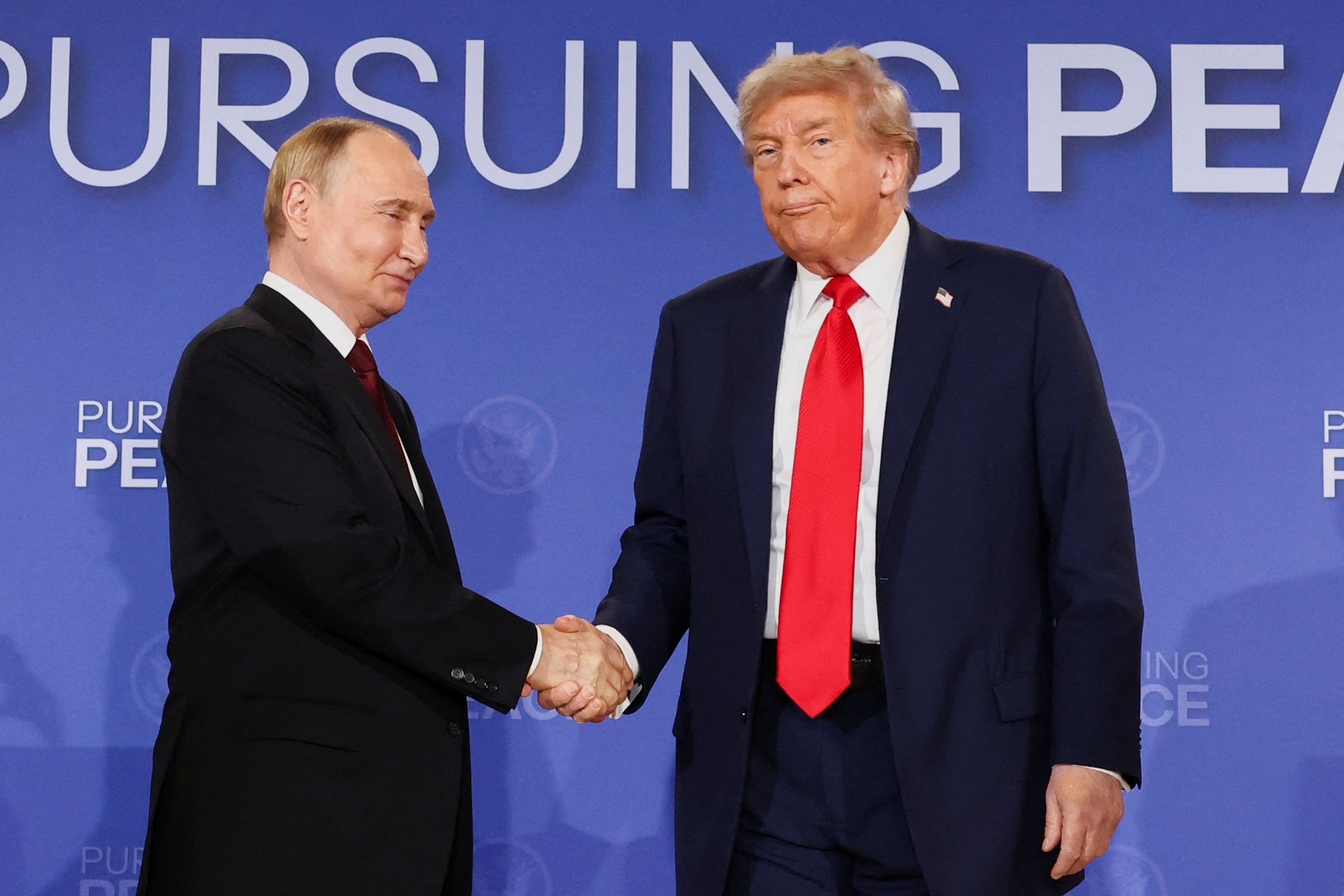
The meeting in Anchorage, Alaska, between Presidents Trump and Putin was a setback for the arrogant and boastful US leader.

It came just 9 days after a 10-day deadline for a ceasefire by the Russians, demanded by Trump, had expired without any cessation of hostilities.

In what little we do know of the discussion between the two leaders, it appears that Trump gained nothing, and Putin gave nothing up. Indeed, for many observers, it would seem that Trump’s greatest achievement was getting Zelensky to wear something approximating a suit at their meeting a few days ago, given the criticism of his dress sense the last time the two met.

Putin was able to tell reporters after the Anchorage meeting that the war would only end when the conditions that caused it had been removed. Those conditions, including NATO’s eastwards expansion, the existence of Nazis in Ukraine, and complaints about the treatment of Russian-speakers in the Donbass, were the justification for Putin’s “special military operation” against Ukraine. Putin has made it clear that they will only be removed with a Russian victory over Ukraine.

Much was made of the symbolism of Anchorage as the venue. The closeness of this US city to Russia, just across the narrow Bering Strait, was said to typify the closeness of the Putin-Trump personal relationship.

What was more symbolic was the fact that Alaska had once been Russian territory, bought from the Czar in 1867 for US$7.2 million, equivalent to $162 million in 2024. It is reflective of Trump’s imperialist mindset that international conflicts can be settled by “deals” over territory. Hence his support for a French Riviera-style development of an ethnically cleansed Gaza, and his “deal” for the end of the Ukrainian war which involves recognition of Russian control of the Crimea and Donbass regions of Ukraine.

At least in the case of Crimea, there is some historical basis for its reabsorption into Russia, although not by the aggression used by Putin. When the US imperialists forced a regime change via the Maidan coup in Ukraine in 2014, Putin drew on the justifications of “protection” for ethnic Russians to retake the Crimea. It had been part of Russia since 1783 when it was seized from the Ottoman Turks. Khrushchev had gifted it to the Ukrainian Soviet Socialist Republic in 1954 in a move seen as trying to win allies for his usurpation of power following Stalin’s death. It remained populated by a majority of Russian-speakers who are believed to have welcomed its seizure back by Putin in 2014.

Now, we are watching to see what plays out in the meetings between Zelensky and Trump, and between Trump and the Europeans. The contradictions between the US and Europe over both Ukraine and Palestine are growing and resulting in a significant diplomatic and political isolation of US imperialism and a weakening of its international influence. 

The US now has a significant economic stake in Ukraine. On April 30, 2025, the United States and Ukraine signed a deal to establish a joint investment fund for the reconstruction of Ukraine. The focus of the deal is access by the US to Ukraine’s mineral deposits. 

However, the indications are that Trump wants the US to disengage militarily from Europe and settle the conflict with Russia, if need be, at Ukraine’s territorial expense, so that it can continue its focus on war preparations with China.  

Those preparations directly involve Australia as a US proxy in a war with China. The AUKUS arrangements ($30 million a day for 30 years for a handful of submarines to be deployed interoperably with the US Navy), the Force Posture Agreement which cedes Australian territory to US forces, Pine Gap, and US intelligence agents embedded within Australia’s – all point to US intentions towards our region.

In effect, Australia’s acquiescence embeds our country in US preparations for war with China. 

For years we have been conned with the lie that ANZUS guarantees that the US will protect us if we are ever attacked.  That is not what ANZUS actually says, nor should it be believed given US vacillation and lack of principle in relation to the ending of Russian aggression against Ukraine.

In World War Two, Britain abandoned Australia to Japanese aggression, while our troops were fighting in north Africa. History must not repeat itself.  

If there are lessons in Ukraine for Australia, they are that we must have genuine independence from imperialism, meaning control over our economy, removal of all foreign bases from our territory, and political control vested in the people, not in the puppets of US vested interests.

We stand for an independent, socialist Australia with a peaceful foreign policy.

We must end the US stranglehold of Australia.

"Productivity" for workers means job losses and higher workloads

Written by: Ned K. on 21 August 2025


(Above: There's not so much to laugh about out in the real world   Image: ABC News)

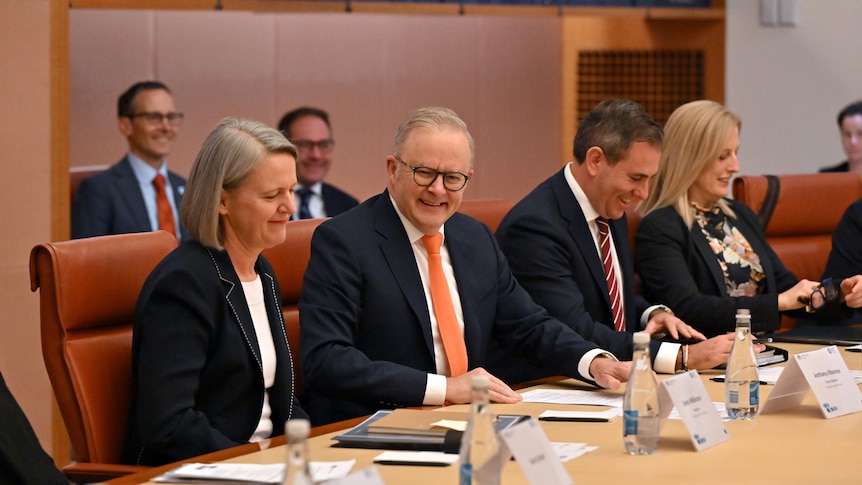
This week the federal government held its Productivity Round Table talkfest in Canberra.

In the same week the second largest stevedoring multinational DP World announced it intended automating its port operations in Australia to "lower running costs". The result will be greater profits and hundreds more MUA members out of work. The MUA members will fight this all the way. Stevedoring jobs are full time and relatively well paid "blue collar" jobs.

At the other end of the employment spectrum, some contract cleaners employed by a multinational cleaning company in an isolated outer suburban government-owned worksite started off as a cleaning team of 15 a couple of years ago. Two years later there are only 10 cleaners doing the work of 15. The multinational is in a public private partnership with a state government. These cleaners grimace when they hear the word "productivity". They experience it daily in the form of higher workloads.


Let Palestinians decide!

 Written by: Central Committee, CPA (M-L) on 21 August 2025


\Various proposals are circulating in relation to the recognition of a Palestinian state.

On the one hand, the Australian government’s decision is a welcome break from the slavish following of US protection of Israel at the United Nations where the US has used its Security Council veto 49 times to block resolutions critical of Israel. That veto, together with billions of dollars of arms and cooperation between the US and Israel governments and the CIA and Mossad, has been the principal source of Israel’s existence and its genocide of Palestinians.

The Australian government’s decision is an attempt to appease the growing opposition within Australian public to the genocide in Gaza.

However, the so-called democracies which have followed France’s lead in deciding to recognise Palestine as a state, have imposed impossibly anti-democratic conditions on their recognition. They include disarming Hamas and barring it from any presence in a new Palestine, and insisting that the West Bank-based Palestinian Authority be authorised to administer the combined West Bank and Gazan state of Palestine.

This is a blatant denial of the right of Palestinians to self-determine their own future.

No such prohibitions have been placed on Israel as a condition for its acceptance of a Palestinian state which presumably must be a factor in the two-state “solution” being proposed.

The governing party in Israel is Netanyahu’s Likud, supported by other far right parties. 

The 1977 original platform of the Likud Party began with the heading The Right of the Jewish People to the Land of Israel (Eretz Israel) and continued with the two following points:

a. The right of the Jewish people to the land of Israel is eternal and indisputable and is linked with the right to security and peace; therefore, Judea and Samaria will not be handed to any foreign administration; between the Sea and the Jordan there will only be Israeli sovereignty.

b. A plan which relinquishes parts of western Eretz Israel, undermines our right to the country, unavoidably leads to the establishment of a "Palestinian State," jeopardizes the security of the Jewish population, endangers the existence of the State of Israel. and frustrates any prospect of peace…

The term “Eretz Israel” originated in the Torah and was adopted by Zionists to refer to the Mandated Territory of Palestine, that is, to the entire area from the River Jordan to the Mediterranean Sea. Judea and Samaria specifically refer to the area designated today as the occupied West Bank.

Continuing Israel’s expansion and occupation of the West Bank by over 800,000 violent and heavily armed Israeli settlers, backed by the IDF and Israel’s government, is intended to make the reality of a Palestinian state unviable.

It is inconceivable that conditions can be placed on the Palestinians which are not applied to the Israelis. Under these circumstances, a two-state “solution” is doomed to failure, and the only long-term basis for peace and justice from the river to the sea is a single secular state in which the rights of Jews, Muslims, Christians and people of no faith are protected by law.

For its own reasons of using Israel as a guarantor of US hegemony in the Middle East, US imperialism will never relinquish its connection with and support for the genocidal apartheid Israeli state. 

Despite the “recognition” rhetoric, Australia remains complicit in Israel’s genocide against the Palestinians so long as we refuse to apply sanctions against the Zionists, and continue to allow the export of arms and armament components either directly to Israel or through a third country.

A number of Palestinians have warned that the Australian government’s recognition of Palestine without ending the military trade with Israel, without condemning Israel’s apartheid, genocide and occupation, and without imposing sanctions against Israel, is a political fig leaf.

We must continue to exert pressure for the rights of Palestinians, such as the continuing rallies and great events like the Sydney Bridge march, but we must also target US imperialism in our own country and our own region. 

US imperialism dominates Australia economically, militarily, politically and culturally. It takes our subservience for granted. When US Ambassador to Israel, Mike Huckabee’s stated that the Australian decision to recognise Palestine was greeted within the Administration “with an enormous level of disappointment and some disgust”, he was not speaking of us as an independent nation, but as a disobedient puppet which had the temerity to try pulling its own strings.

We must fight harder to achieve anti-imperialist independence and our sovereign right to assert our own views and policies in matters of foreign policy.

The Australian people freed from the grip of imperialism and able to make our own decisions will finally be able to really support the rights of Palestinians to make their own decisions.


Wednesday, August 13, 2025

AUKUS and the Australian American Leadership Dialogue

 Written by: Nick G. on 14 August 2025


The Australian American Leadership Dialogue (AALD) currently meeting in Adelaide has brought two US congressmen to Australia to try and breathe life into the ailing AUKUS arrangements.

The AALD was established in 1992 by comprador capitalist Phil Scanlon as a “private diplomatic initiative” bringing together Australian and US leaders from a range of backgrounds.

Scanlon is currently working as adviser to London-based Greater Pacific Capital and New York-based P3 Global Management. From 2009 to 2013, he held the role of Australian Consul General in New York. He has been on the Business Council of Australia and spent more than three decades as a Governor of the Australia-Israel Chamber of Commerce.

Although promoting itself as an NGO, the AALD’s principal partner is the Australian Government’s Department of Defence. Other principal partners are multinational arms manufacturers Thales, Raytheon, Lockheed Martin, as well as Deakin and Adelaide Universities, BHP and Doordash.

The two congressmen are both tied to US military expansion. The first, Republican Trent Kelly is the House Seapower and Projection Forces sub-committee chairperson.  His electorate includes a shipyard, as does the electorate of his Democrat partner in crime Joe Courtney. In his case it is a nuclear submarine shipyard at Groton, Connecticut.

Accompanied by SA Premier Malin-AUKUS, the two toured the Osborne shipyards 

Courtney, who is also a member of the Seapower and Projection Forces sub-committee of Congress, waxed lyrical about the “eye-watering investment that is going on in the shipbuilding sector here in Australia.”

It was not reported whether he also praised the eye-watering and non-refundable hundreds of millions of dollars that Australia has gifted the US for the sake of pump-priming shipyards like Groton which have labour shortages, supply chain problems and are currently running well behind schedule to produce enough nuclear submarines for the US, let alone fulfilling the AUKUS requirement to supply up to three US nuclear-powered submarines to Australia.

Courtney praised the collaboration between Adelaide and Connecticut universities on “cutting-edge work for the US Navy in terms of submarines and unmanned vessels…all kinds of stuff we can’t really talk about publicly.”

Malin-AUKUS parroted the pro-AUKUS spin emanating from the two congressmen, ignoring the Australian people’s wish for greater independence from US imperialism, and boasting that SA was “positioning itself as a security and technology partner of choice” for the US war machine.

The only bilateral US-Australian partnership that should be pursued is that between the two peoples, based on non-interference in each other’s affairs and a common commitment to opposing imperialism and building socialist unity. Both peoples would much prefer that eye-watering amounts were spent on education, health, housing and infrastructure.


Monday, August 11, 2025

Toe to toe with fossil fuel induced global warming

 Written by: Nick G. on 12 August 2025


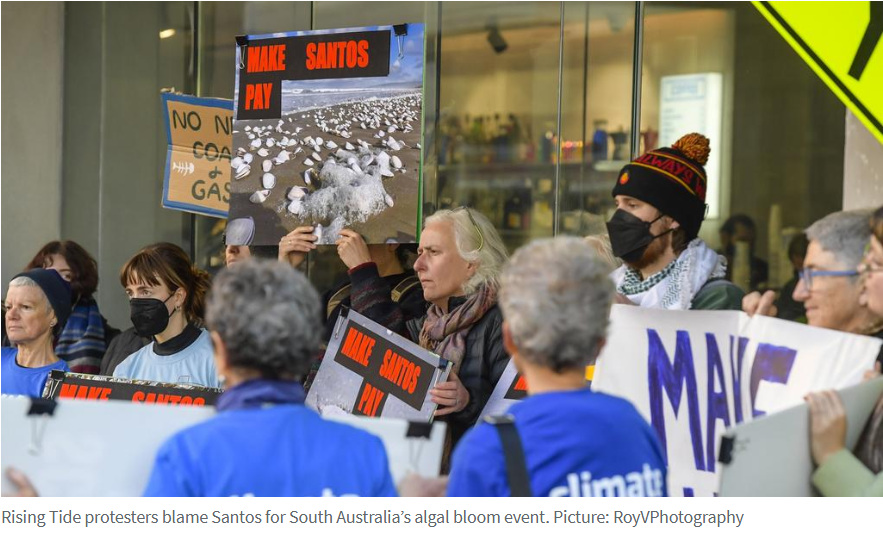
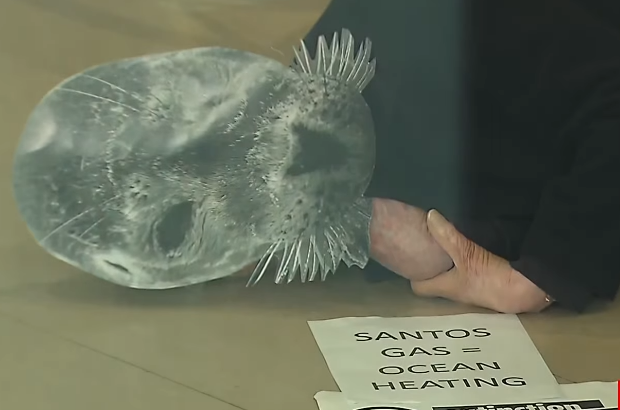
(July 30 protest against global warming at Santos offices in Adelaide. - source NT News)

Last week I went for a short walk along Seacliff Beach, one part of the unbroken stretch of suburban Adelaide beaches just kilometres form the CBD.

Every step of the way was littered with the washed-up bodies of dead marine life.

Most were benthic (bottom-feeding) species including masses of flathead, blue-swimmer crabs, abalone (with its much sought-after flesh still attached), mussels, razor fish, sea slugs, snails and worms.  There were lesser number of other species including trumpeters, toad fish, weedy whiting and red mullet.

And a dead swan.

Running parallel with the sea shore was a 50-metre width strip of brown murky water, part of the algal bloom which has turned much of Adelaide’s coastal waters to a marine graveyard.

The algal bloom first came to notice in March. Warmer waters and an absence of sea water disturbance during SA’s prolonged drought led to an explosion in the population of the toxic Karenia mikimotoi algae. We have reported several times on this.

In the immediate sense, nothing can be done until the bloom dissipates through natural means.

However, the SA algal bloom is a symptom of a sick ocean system that extends well beyond SA. On the day of my walk, news came through of a massive clean-up by volunteers of the beaches of Algiers where another algae native to the Pacific Ocean, Rugulopteryx okamurae, has found its way into the Mediterranean.  While the beach clean-up was underway on the southern side of the Mediterranean, on the northern side France and Greece were engulfed in massive wildfires that had caused loss of life.

The rise in global warming, brought on by carbon emissions from the use of fossil fuels, continues to endanger Australian coral reefs. 

The Great Barrier Reef has suffered mass bleaching in 2002, 2016, 2017, 2020, 2022, 2024 and now 2025. In the latest event, the Reef has suffered some of the most widespread coral loss ever seen and scientists warn that we’re approaching a moment where the coral may no longer be able to recover.

For the first time Ningaloo Reef on the opposite side of the continent suffered a bleaching event simultaneous with that of the Great Barrier Reef.  Once again, the word “unprecedented” has been used. 

Politicians ignore it at our peril.

Labor continues to wave through new coal and gas projects. The Nationals want to abandon net zero entirely. And the Liberals offer nothing. Australia remains the second-largest global exporter of fossil fuels.

Global warming is a part of capitalism’s destructive war on nature.

Capital must continue to accumulate by recreating its own value over and over again. In the process it exploits, ruins and diminishes the only two sources of that surplus value, human labour power and nature. The first can be kept alive and recreated at minimal cost to capital but the second can only be degraded and destroyed.

Biodiversity matters to the working class. Capitalism is the enemy of biodiversity and of workers. 

We must shutdown fossil fuel extraction, use and export.

We can only do that in an anti-imperialist independent and socialist Australia.

(On August 1, seven Extinction Rebellion members holding a marine life ‘die-in” were arrested at Santos offices in Adelaide.)


Taiwan: internal divisions as tensions rise

 Written by: (Contributed) on 10 August 2025


Political controversy between the two major parties in Taiwan has carried all the hallmarks of classic US-led Cold War rivalries. The ruling Democratic Progressive Party (DPP), which managed to form a minority government following presidential elections last year, has recently attempted to challenge the main opposition nationalist Kuomintang (KMT). 

Constitutional attempts by the DPP to deal with the political stalemate, however, have to date failed to achieve objectives in a spectacular fashion and defeat. A further DPP-led round is, nevertheless, scheduled for late August, where another smaller group of KMT politicians will be targeted.

A recent DPP political initiative to oust 24 KMT M.P.s failed and has led to a heightening of tensions between the two major parties. (1) The electorate voted against the DPP move to overcome the stalemate: the DPP is, at present, faced with holding a minority government with 51 seats, while the rival KMT hold 52 seats. Neither party has overall control of the Taiwanese parliament; the DPP require at least six further seats at present held by the KMT to form a majority government.

Behind the scenes, however, a classic US-led Cold War scenario is being played-out. The DPP, being in line with pro-independence positions, is strongly backed by the US, the Pentagon, the US military industrial complex: the relationship is along lines of a puppet-master pulling strings over a puppet which dances and sings when required. The KMT retains a more conciliatory position toward China, and is, therefore, subject to US-led scrutiny.

The Taiwan Straits remains one of the potential flashpoints for US-China diplomatic hostilities; the Cold War is being played-out across a narrow strip of water separating China with Taiwan. The US also has a large presence in Taiwan, while officially and diplomatically recognising China, in line with the One China policy.

It is no surprise, therefore, to find the DPP regularly launching witch-hunts against the KMT, with allegations of pro-China espionage. They note, for example, that China 'has frequent contacts with the main opposition national party', implying connivance and influence with China's front organisations. (2) Another piece of supposed investigative journalism recently conducted on behalf of the DPP alleged that China had control of more than 5,000 spies in Taiwan. (3) It was designed to serve a deeper purpose than mere newsprint for casual readership.

Taiwan's spy agencies are based in the National Security Bureau (NSB), based in the Yang Ming Mountain district of Taipei. Its main focus is monitoring China. Its six divisions include: International Intelligence, China – Internal Security, Strategic Intelligence Analysis, Technological Intelligence, Telecommunications Security. (4) It permeates all level of Taiwanese society. The NSB is also authorised to 'integrate, co-ordinate and support national security-related intelligence operations conducted by various functional services within the intelligence and law enforcement community. Effectively it can act as a Joint Intelligence Organisation'. (5)

There remains little ambiguity about which foreign intelligence services the NSB retains strong links with.

The US State Department has about five hundred intelligence personnel based in Taipei; they are officially noted as being on 'temporary leave' from their employer. (6) They, nevertheless, conduct Cold War operations for the Pentagon, and push Taiwanese diplomacy into the wider Indo-Pacific region through the DPP-led New Southbound Policy. (7)

Washington is currently conducting a review 'of its military deployments worldwide – the expectation is it will lead to drawdowns in Europe'. (8) With the official position stated by Defence Secretary Pete Hegseth while addressing the Senate Armed Forces committee in June, that 'Beijing is preparing for war in the Indo-Pacific and the US is laser focused on strengthening deterrence across the region', there would appear little ambiguity about into which region the Pentagon is planning to deploy further personnel. (9)

In fact, it has been noted that 'Trump's view, also conveyed by Hegseth, is that the US is shifting its global priorities away from Europe and NATO to the American continental homeland and the Indo-Pacific region'. (10) Once it takes place, the strategic importance of Taiwan will be correspondingly enhanced still further.

The US intelligence presence in Taiwan is also directly linked to military arms sales and defence budgets. While the budgets vary with different US presidential administrations, they remain very large indeed when viewed with the geographical size of Taiwan.

                                               US ARMS SALES TO TAIWAN

                                                     1977-81  -  $548.7 million
                                                     1981-89  -  $1579.64
                                                     1989-93  -  $6847
                                                     1993-01  -  $17,070.6
                                                     2001-09  -  $29,938
                                                     2009-17  -  $14,070
                                                     2017-21  -  $18,047.86
                                                     2021-25  -  $7,727.4          
                                                Grand Total = $83,159.2 million     (11)

It is interesting to note, therefore, the recent heightening of political rivalries taking place in Taiwan took place after the DPP alleged that 'the KMT and its allies … blocked … key legislation, especially the defence budget, and passing controversial changes seen as diminishing the power of the executive and favouring China'. (12) The official statements are invariably timed alongside the circulation of bizarre conspiracy theories on-line which allege the KMT has been hollowed out by the Chinese intelligence services to serve the interests of Beijing.

In effect, the KMT while blocking the Taiwanese defence budget has been held responsible for challenging the US military-industrial complex. And, Taiwanese 'diplomacy', for the US, is big business. It is known, for example, that the US has 'been hoarding missiles for several years to strengthen its position in the Pacific region against China'. (13)

It was no great surprise, therefore, to find the Pentagon, with their compliant Taiwanese personnel, organised a major military exercise immediately prior to the attempt by the DPP to oust KMT M.P.s. The 2025 Annual Han Kuang exercises, run in conjunction with civilian drills, included 22,000 reservists, and were extended to ten days duration. The exercises the previous year were only of five days duration. (14) The 2025 exercises also included extensive simulations which included 'grey zone' provision, composed of tactical manoeuvres falling short of 'real-war scenarios'. (15)  

It is also highly significant to note that US intelligence assessments have predicted China will attempt to invade Taiwan in 2027. Their evidence, however, is not available in the public domain and would appear highly speculative. It, nevertheless, serves the military-industrial agenda, pursued along the lines of preserving the importance of Wall Street.

Despite influence being brought to bear upon the Taiwanese electorate to support the DPP minority government for ousting 24 KMT M.P.s, they voted to reject the plan, signifying a substantial shift has already taken place in popular opinion. It would appear the electorate favour a more conciliatory approach to dealing with China and favour closer relations.

Beijing, meanwhile, refuse to even deal with the DPP.

A statement from DPP Secretary-General Lin Yu-chang clearly reflected their disappointment at not winning the vote. He clarified their position as 'humbly accepting the results … and they had … responsibility to reflect on public sentiments more cautiously and adjust its approach to meet people’s expectations'. (16)  They had misread the electorate.

The next round of the DPP plan, however, is scheduled for 23 August, where they will target a further 7 KMT M.P.s. The influence brought to bear, this time, is that if the DPP plan fails again, the President Lai Ching-te administration will face 'strong resistance within the legislature before elections expected in 2028', the year after US predictions of China's plan to invade. (17) Whether an official presidential statement referring to the 'national direction of resisting communists and protecting Taiwan', carries any credibility with Taiwanese voters this time round remains to be seen. (18)

Is the DPP presidential administration merely clutching at straws to serve 'US interests'?

1.     Taiwan rejects bid to oust pro-China bloc, Australian, 28 July 2025.
2.     Taiwan's spy agency, AP., 12 January 2025.
3.     China might have more than 5,000 spies in Taiwan, Website: 1945 – 1 May 2025.
4.     Taiwan: Espionage, Spies and Secrets, Richard M. Bennett, (London, 2002), pp. 305-06.
5.     Ibid.
6.     Beijing keeps a wary eye on new US Taipei outpost, The Age, 18 June 2018.
7.     Ibid.
8.     Europe hopeful on troop numbers, Australian, 29 July 2025.
9.     US is carved into the landscape, The Weekend Australian, 12-13 July 2025.
10.   Trump's strategic blunders threaten US authority, Australian, 26 February 2025.
11.   Wikipedia: List of US arms sales to Taiwan, which has provided details of each individual arms sale with dates.
12.   Australian, op.cit., 28 July 2025.
13.   Missiles demand lifts US makers, The Weekend Australian, 26-27 July 2025.
14.   Taiwan launches largest drills, Australian, 10 July 2025.
15.   Ibid.
16.   Australian, op.cit., 28 July 2025.
17.   Ibid.
18.   Ibid.