Showing posts with label unions. Show all posts

Sunday, April 26, 2026

Elections Within Unions and Their Limitations

Written by: Ned K. on 26 April 2026
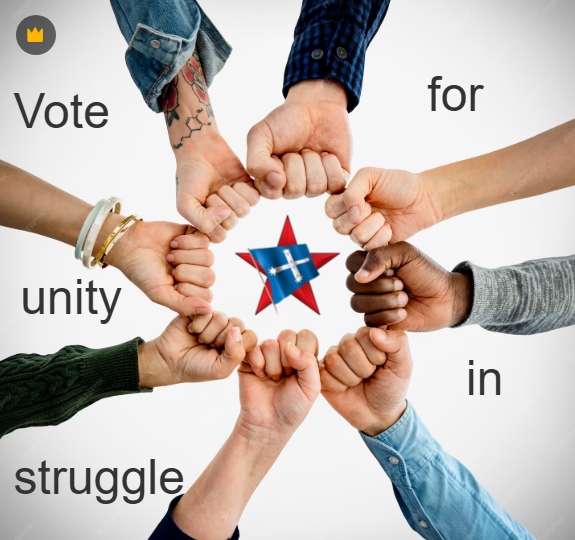
 

(Original image from www.freepik.com)

Marx and Engels in the Communist Manifesto writing about the class struggle of workers under capitalism said, "Now and then the workers are victorious, but only for a time. The real fruit of their battles lies, not in the immediate result, but in the ever-expanding union of the workers."

The expanding union of workers is influenced by the leadership of workers' mass organisations (unions) as well as other factors such as unemployment, and the relative strength of competing classes in particular industries or regions. In Australia, leaderships of Unions periodically have to answer to members as a whole.

Most Unions hold elections every four years or so when members vote for governing bodies of the respective Union concerned. There are variations from one Union to another on whether members vote for industry or occupation-wide candidates or whether they vote for candidates standing for a geographical region, similar to the parliamentary geographical electorates. Union elections are a voluntary voting system. 

Some Unions are Federations which means the members of each State or Territory vote directly for their State or Territory governing body such as a State Council. They also vote directly for the State Officers of the Union such as State Secretary, Assistant Secretary and State Presidents and Vice President/s.
The elected State and Territory candidates may then vote on who becomes the National Executive and National Officers of the federated Union. 

Some Unions are national in character and candidates elected to governing bodies such as a National Council are elected by members from clusters of industries or occupations covered by the Union. In National Unions, members may directly elect the National Executive and full time National Officers of the Union, or members only directly elect a large National Council who in turn elect the National Executive and the full time National Officers. The bodies such as National Councils usually have to meet on a regular basis during each year of each term of office and the Executives and full time Officers such as Secretaries are accountable to the elected National Councils.

Within both the Federated and National Unions it may or may not eventuate that there are rank and file members on the Executive for the National Officers.
Unions are mass organisations and came in to being to defend and extend the collective interests of workers, whether they are federated Unions or national Unions. The biggest challenge for Union members standing for any elected position in a Union is that capitalism in Australia has imposed an industrial system on workers that alienates them from one another and separates them from those in the leadership positions.

Site specific and company specific enterprise bargaining in place of industry-wide Awards as the method for workers acting collectively to improve wages and conditions, are coupled with industrial laws that make taking action on the job a highly risky business.

Workers nowadays who do join Unions have the opportunity to take significant collective action every three or four years if they have an enterprise agreement. If they are on an Award, they do not have any legal right to take industrial action in pursuit of better pay and conditions.

Transactional Relationship Between Union Member and Their Union Organisation

The restrictions placed on workers in the workplace by the system of capitalism as it operates today has resulted in many workers joining a Union firstly as an insurance policy if individually in trouble with the boss or needing information on their legal rights and entitlements.

This transactional relationship with the Union as an organisation as the primary relationship combined with the voluntary nature of internal Union elections has often seen candidates at Union election time appealing to members on the basis of what they will do for members rather than what they will do collectively with members to further the interests of workers as a whole.

Competing candidates or competing groups of candidates all "promise the world" to members and often "the world" they all promise is very similar.
When this is coupled with a voluntary voting system, candidates become desperate to find ways not only to win over hundreds or even thousands of members who they have never met to agree with what they offer, but also to ensure that those convinced members actually vote!

Recently a Union in England held the required Union election under English law and under 10% of members voted!

In Australia, Union elections are often conducted by the Electoral Commission who post the election ballot papers to residential letter boxes. This method of voting occurs in a social environment where more and more transactions are completed online, adding to the likelihood of low return rates of those who vote.

The limitations of Union elections facilitate unpredictable outcomes, irrespective of the sincerity of most candidates who stand for election and irrespective of the hopes of those who vote.

In Australia, there is the additional factor of affiliation of most Unions to the ALP. Union members may or may not know the political affiliation of candidates for a Union election. For some members the most important factor determining whether they vote or not, or who they vote for will have nothing to do with parliamentary political affiliations of the Union or a candidate. The decisive factor for them may be how the Union leadership which in their eyes may be their immediate Union rep or Organiser will represent them in the near future. 

The upshot of all this is that outcomes of Union elections when there are highly contested groups of candidates are very hard to predict.


Friday, February 27, 2026

Union elections - an opportunity for workers to have their say

 Written by: Ned K. on 27 February, 2026


(Above: Workers join unions for unity in struggle, not for division caused by factional rivalry.  Source: UWU)

On Friday 26 February the Australian Financial Review (AFR) ran a prominent page 4 article headed "Union split puts focus on ALP spend". The article was about the forthcoming United Workers Union (UWU) election for its governing body, the Delegates Convention. According to the AFR there are Convention delegate positions up for election for a four-year term.

The UWU is a 2019 amalgamation of the NUW which predominantly covered warehouse workers, food processing workers and pharmaceutical processing and United Voice which covered aged care, child care, disabilities sector, hospital workers (non-nursing), hospitality, animal care such as RSPCA , cleaners, security guards, prison officers and an assortment of manufacturing and even funeral directors. 

So, the amalgamated union UWU covers workers "from the cradle to the grave" as well as covering workers that enable Australians to have chicken on the table or a packet of chips with a beer at the local hotel!

The AFR reports that there is great rivalry playing out in the coming election essentially between the former NUW leadership and the former United Voice leadership.
As is usually the case, both sides strive to hold the high moral ground to win over enough members' votes to control the direction of the UWU for the next four years.

Both sides say they want to increase resources that benefit existing members and bring more workers in as union members with extensive social media campaigning.

Both accuse the other of poor use of members' money and about how much and under what conditions members' money should be given to the ALP.

The dark cloud hanging over Tim Kennedy and his alleged misuse of members’ money and sweetheart industrial deals with some big employers and the old NUW's smaller membership base within the UWU must be a worry for his ticket.

On the other hand, the United Voice ticket led by Jo Schofield may receive a backlash from members about the amount of members' money ($8 million according to the AFR) that the ALP received in 2024-25.

The good thing about a Union election is that members who vote have the final say.

Unlike parliamentary elections, voting in Union elections is voluntary. 

Friday, December 13, 2024

Union membership and workers’ struggle

Written by: Ned K. on 14 December 2024


The Australian Bureau of Statistics (ABS) has just released a report on the percentage of workers in Australia who are members of a Union in August 2024.

The Report said that 13.1% of workers were members of a Union in August 2024 compared with 12.5% of workers in August 2022. The increase in membership was due to an increase in public sector union members. 

Union membership in the private (non-government workers) sector actually declined from 8% to 7.9%.

The ABS report says that from 1992 to 2024, union membership has fallen from 40% of all workers to 13.1% of all workers. 

Union membership from 1992 to 2024 fell from 43% to 12% for men and from 35% to 14% for women.

The ABS report has a lot of detail in it, including duration of union membership with 66% of union members in August 2024 having been members for longer than 5 years.

The ABS report gives the appearance that the working class has "gone to sleep" as far as collective struggle is concerned, especially workers in the private sector.

This is not the case at all. The report does not explain that 1992 was about the time that big corporate interests, especially multinational corporations succeeded in having the then Labor Government, supported by the ACTU, introduce single site enterprise agreements as being in the best interests of workers. Initially these site-specific enterprise agreements could only be negotiated between an employer and Unions. Then the Labor Government allowed non- Union enterprise agreements. 

The new laws divided workers and more conservative governments made further attacks on workers’ collective strength with the Howard Government introducing individual contracts (AWAs) in an attempt to turn all Australian workers in to Howard's vision of millions of individual "enterprising workers" negotiating their own pay and conditions "free" of interference from "third party" Unions.

The ABS latest report on Union Membership would appear to suggest that the multinationals and the likes of the Business Council of Australia had won the class war.

However, the ABS figures hide the magnificent struggles of the working class since 1992 right up to December 2024.

It was the working class, some in Unions, some not, who took to the streets and barricades in support of the Maritime Union of Australia members struggle against Patricks' stevedores and the Howard Government. The ABS figures do not tell the story of the working class organizing Your Rights At Work, Worth Fighting For and throwing the Howard Government out of office in 2007.

More recently, the ABS figures do not show the breakthrough by early childhood education workers in winning a 15% pay rise through a collective agreement covering multiple employers across the early childhood education sector. This was the very reversal of that 1992 non-Union site by site enterprise bargaining.

The ABS figures do not show the tremendous struggle by the whole aged care sector workforce from registered nurses to carers to kitchen workers and chefs to collectively win a 25% wage increase and improved working conditions and staffing levels.

Finally, the ABS figures do not show that despite the decline to 7.9% membership density in the private sector, private sector workers employed in Woolworths dared to struggle and strike for over two weeks to prevent Woolworths from using artificial intelligence devices to increase surplus value from workers every second of their shifts.

Unions are part of the capitalist system as the system is based on a class war between the owners of capital and the workers who produce the wealth of goods and services. Every collective win by workers strengthens the power of the working class as a whole and gives more workers a taste for the decisive struggles that lie ahead


Friday, April 14, 2023

Workers - Keep your eyes open, ready for the next round

(Above - Norm Gallagher gave inspirational Communist leadership to builders' labourers)

 Written by: Louisa L. on 14 April 2023

Both Coalition and Labor Governments attack unions. They do it to manage the capitalist system for big business. The Coalition kicks heads, sometimes causing increased militancy. The ALP supports industrial calm and compromise with workers. 

But for both, construction workers and their unions have been the biggest corporate targets for fifty years. 

The BLF was deregistered in 1974. Freed from what its leader Norm Gallagher called the “chains” of capitalist courts, the BLF became so strong the Master Builders Association begged for it to be re-registered. 

The second deregistration was better planned after huge media attacks and a royal commission by the Fraser Coalition government from 1981. In 1986 Labor PM Bob Hawke made sure another union would take BLF work. It was a huge blow to workers’ unity. Each BLF organiser was arrested dozens of times. Rank and file militants were refused work. Leaders were jailed. 

Others, including electricity, mine and dockyard workers, meatworkers and airline pilots, also fought strong but losing battles against giant employers empowered by Hawke policies, secondary boycott laws and lack of union solidarity.

Thugs and balaclavas

But struggle for justice doesn’t stay down forever. As more workers were attacked, they rose to fight again. 

In 1998 Howard and Co colluded to send dogs and thugs in balaclavas into militant MUA strongholds on wharves around the country. The massive and magnificent Patricks’ dispute became an outburst of worker and union anger, unity, organisation with action outside every port in Australia.

Then a third Royal Commission, this time in 2001, into the CFMEU. 

By 2005 corporations backed John Howard’s so-called Work Choices against all workers, the same year his government set up set up the Office of the Australian Building and Construction Commissioner, an ongoing royal commission with far bigger powers.

Protests grew until Howard was dumped in 2007. Then many unions demobilised their members. Either leaderships didn’t know or didn’t care that the ALP still managed capitalism for multi-billion-dollar corporations. 

Labor’s UnFair Work Australia and a renamed ABCC still chained workers and unions, and threatened to jail construction worker Ark Tribe. 

The ABCC knew the Eureka flag embodied 160 years of working class unity in struggle, that it has the potential to unify and clarify thousands of smaller battles into a united front. 

Disunity means defeat

Fast forward to 2018. ABCC inspectors marched onto sites, and there it flew, a silent ‘Up yours!’ to all their threats. They pretended the flags weren’t there.
Instead, they threatened construction companies relying on government contracts. The now collapsed Probuild copped abuse from Coalition Minister Michaelia Cash, for telling her it wouldn’t pick a fight with its workers over a construction code.

The Commission switched tactics again. It charged eight rank and file workers for refusing to take down “banned” Eureka flags from cranes.

As Vanguard said at the time, “Instead of repressing the flag, it had the opposite reaction. Suddenly the Eureka flag was flying on cranes across the country. 

“Eureka flags, hard hats and t-shirts multiplied on building sites. The Queensland branch of the Australian Education Union issued Eureka stickers to its members and refused orders from the government to withdraw them … 120,000 workers on Melbourne streets put the nail in the dispute’s coffin. They had many grievances, including the flag ban. 

“The ruling class wanted Eureka’s message taken out of this fiery mix,” Vanguard stated.

The workers won in UnFair Work, and Lendlease eventually took the ABCC to court over the flag, to win peace to make mega profits. 

Now Labor governments settle some of the uproar the Coalition created in its dirty time in government. Labor compromises on many things. But how is it keeping a promise, when the ABCC leaders have set up in the Fair Work Ombudsman? 

If you think it won’t affect you, because you aren’t in the CFMEU, think again. An attack on one union, on one group of workers, is an attack on all of us. 

Of all history’s lesson, that’s the biggest. Disunity means defeat. It’s time to stick together, take a breather, celebrate hard won victories, but with all eyes open for the next round. 


Monday, November 23, 2020

Raid on CFMEU, just coincidence or police protecting profits?


 Louisa L. 

When CFMEU’s NSW Construction Division Assistant Secretary Michael Greenfield was ambushed in his driveway by men calling his name early last Monday, he ran inside for safety. Then they tried to kick down his front door. Only when that failed did they announce they were police. He immediately opened the door. His wife and three-year-old child were also inside.

Construction has always been a tough industry.

When unions shut worksites, as they have recently, things can get nasty.

At dawn, fifteen NSW and Federal police with dogs also arrived at Secretary Darren Greenfield’s family home. Police spent six hours turning things over.

Then the union was raided. Workers on trade union courses were ejected.

Elections, safety and industrial manslaughter

The day before the raid, the union’s elections opened. Just coincidence?

Nothing to do with a union blitz on sites targeting builders operating unsafely?

No link to another critical CFMEU campaign for a law against industrial manslaughter, which is already on the books in Queensland, Victoria and WA?

When 18-year-old Christopher Cassaniti died under collapsed scaffolding last year, construction workers erupted in grief and outrage. More dangerously for the boss class, Christopher’s death provoked fury against police who threatened workers trying to rescue those underneath the mangled scaffold, and strikes against corporate culpability and inaction.

Three days after the raid, SafeWork NSW settled a case against a construction company over Christopher’s death, in the words of Darren Greenfield, “effectively the cost of the company’s insurance excess”.

“They are putting corporate greed ahead of workers’ lives” Greenfield said.

Who knows what action workers would have taken if the union hadn’t been dealing with the raids?

Bleeding workers 24/7

But above all, union insiders believe the key reason is a union demand for a new RDO (Rostered Day Off) calendar with a nine-day-fortnight and a 15 per cent pay rise. These demands eat into profit. For corporations, money is the bottom line, not human life.

Big meetings were due to take place that week to finalise agreements.

Some big construction companies have been pressuring workers to accept non-union agreements. Workers at other sites have been loud in support for those resisting this pressure.

Construction sites are working flat out, finishing two to four months before schedule but are whingeing about two weeks lost to RDOs.

Workers aren’t having it. Long hours play havoc with health and family. Their comparatively big pay packets are peanuts compared to corporate profits made off their sweat.

“We deserve a break!” is their battle cry. 

Some corporations, like giants Lend Lease, Crown and Multiplex, used Covid-19 as an excuse to begin continuous shifts, 24 hours a day, seven days a week. The federal government assisted by pressuring councils to relax Development Application rules.

To give an idea of the size of these corporations, Multiplex is now owned by Canadian-headquartered Brookfield Asset Management which has $US510.6 billion under management.

AFP Canberra raids unlawful

Workers see these raids for what they are, attempts to threaten a union that organises its members to fight for their collective rights. Not one member has contacted the union to question its so-called law breaking.

According to CFMEU National Construction Secretary Dave Noonan, “The warrant relates to investigations under the Fair Work Act and related matters.

“The AFP have been taking an increasingly active role in industrial relations matters, and have previously raided CFMEU Offices in Canberra and Brisbane.

“Neither of those raids resulted in any charges being laid against any union official.

“In the case of Canberra, the AFP actions were found to be unlawful by the ACT Supreme Court,” Mr Noonan stated.

No arrests have been made, nor any charges laid in the latest raids.

Militarisation of police with military in reserve

For the NSW Construction Division, it’s business as usual. But the raid highlights another dangerous trend.

We are being prepared for a significantly increased police and military presence in all our lives. Police and army are regularly fronting the cameras instead of public officials. Witness the recent Covid scare in South Australia.

Militarised police are more often attacking everyday Australians exercising hard won collective rights. Riot squads attack peaceful student protests. Black deaths in custody escalate.

As unemployment and underemployment rise in many sectors and everyday people see their “Australian dream” trashed, dissatisfaction will grow.

A law in the Senate right now allows the Defence Minister, not parliament or even prime minister, to call the army to unspecified “emergencies” which could easily apply to striking workers or farmers or unemployed. It even allows foreign military forces to attack our people. If someone is killed or injured, the military and police – foreign or local – will have immunity from prosecution.

Corporations run capitalism. Police are increasingly used against those who don’t comply, who refuse to be crushed. The military waits in the wings.

Unity is the only answer.


Saturday, May 16, 2020

Mundey and Gallagher, two lives in working class struggle

Written by: Lindy Nolan on 16 May 2020

Jack Mundey, (above) former NSW Builders Labourers Federation leader and Sydney Green Bans’ champion who died on May 10, won huge praise in capitalist and progressive media.

As former Labor MP Meredith Burgmann stated in the Sydney Morning Herald, through 54 green bans, “It is not exaggerating to say that the NSW BLF is responsible for the shape of Sydney as we now know it."

Her weighty list includes what were once working class areas: The Rocks and Woolloomooloo saved from high rise; Glebe and Ultimo from expressways; Centennial Park from a sporting complex; Victoria Street, Kings Cross; parts of Surry Hills plus the State Theatre, the Pitt Street Congregational Church, the Colonial Mutual, National Mutual and ANZ bank buildings as his and his union’s legacy. 

The alliance of environmental groups and workers led by Mundey was powerful and important. But it is not the whole story. 

In a eulogy to Mundey, one speaker attacked “Australian Maoists” for the Federal intervention into the NSW BLF led by BLF General Secretary Norm Gallagher in the mid-70s. Ms Burgmann refrained from attack, though she has been vocal in the past.

An article by James Lesh in The Conversation went much further. 

Lesh, who “received funding from the Australian Government Research Training Program”, basically credits “Mundey and his fellow unionists Joe Owens and Bob Pringle” with battles which took place around Australia, including in Melbourne. 
He states the Kelly’s Bush battle in Sydney in 1971 was the first green ban. Certainly, it was the first using that name. But Norm Gallagher (below, with megaphone) was jailed in late 1970 for assisting Carlton residents in a victorious black ban that turned commercial land into a public park. 

He led the Victorian BLF and resident action groups to save “the City Baths, Mac’s Hotel, Victoria Market, Gothic Bank, Regent Theatre, Windsor Hotel, Princess Theatre, Collins Street and the Rialto precinct, and Tasma Terrace”, all of which Lesh appears to credit to the then NSW BLF and Jack Mundey. Lesh does credit Gallagher with stopping the Victorian Housing Commission’s high-rise housing program. But the Victorian BLF won its first successful environmental black ban in the 1940s. It also saved the site of the Eureka Stockade from development. 

Lesh calls Norm Gallagher a “Corrupt Melbourne unionist” who “notoriously clashed” with Mundey.

The intervention into the NSW BLF
A number of issues led a large group of high-profile NSW builders labourers (BLs) who had worked closely with Mundey to break with him. The most prominent were Johnny McNamara and Joe Ferguson. Mundey had been best man at McNamara’s wedding.

While many BLs supported Mundey, Joe Owens and Bob Pringle, many others thought Mundey was too close to residents and not close enough to them. The sheer numbers of bans were cutting people out of work, especially as the 1974 recession hit the construction industry.

National BLF campaigns were not implemented by the NSW branch. More importantly, Mundey proposed allowing residents to vote on bans.

Prominent members siding with national policies and opposing Mundey, like McNamara and Ferguson, were blacklisted. On top of this, the BLF was deregistered nationally in 1974, pushed by the Master Builders Association largely in retaliation to “excessive” industrial action by the NSW BLF, including worker control of job sites, as well as green bans, all of them laudable! 

But the Federal branch leadership understood that prolonged deregistration meant the risk of losing coverage of builders’ labourers to other construction unions, the AWU and BWIU, particularly in NSW where the branch didn’t have a state award to protect builders labourers’ classifications. A tactical retreat was chosen. Gallagher pointed out that the NSW leadership failed to appreciate the BLF was “only a small union and could not fight for the whole of the working class in Australia.” (Sadly, Gallagher failed to take his own advice when bosses were gunning for the BLF in the 1980s.)  

The NSW branch maintained its line, pushing on alone. A takeover of the NSW Branch was supported by all other states. By this stage, Joe Owens, who ignored offers to talk, was BLF leader, not Mundey, who may have taken a different stand, despite fiercely opposing the intervention. 

Unions belong to their members
Numerous articles, speeches and books have alleged Norm Gallagher used thugs to enforce a takeover of the NSW branch in 1975.

We are talking builders labourers here, workers in one of the toughest, most dangerous and historically most violent industries in Australia. The source of most of that violence was the clique of developers who variously sought to bribe, intimidate and physically coerce construction workers and their leaders. The BLF in NSW, and elsewhere, was for many years run by gangsters who worked with employers against their members. Communist members of the union fought to rid the BLF of these thugs. On both sides of what later became a split in Communist ranks, were men who’d wrested control of the union from those violent gangsters in the 1950s.

Violence and threats occurred after a split in the ranks of Communists in the building industry, but it was not one-sided. Joe Ferguson’s home was a boat he’d built at the quiet southern suburb of Como, when it was bombed and destroyed. He ended his days living in public housing in Malabar. 

An organiser for another union was shot in the stomach at a Sydney pub, mistaken for a BLF organiser. He died of his wounds after terrible suffering, but too long afterwards for his attacker, who had been drinking with Mundey supporters immediately before the shooting, to be charged with murder. 

Mundey himself tracked this writer’s then partner, a former BLF media official, to the back alley exit of his office, and threatened to have him killed for acting as returning officer in a union election.

Despite this, when one of Mundey’s most prominent officials turned up at Johnny McNamara’s site looking for work, McNamara did not apply the same treatment he’d received. He was given a job. McNamara, always a rank and file worker, was BLF President at the time.

Joe Owens and Bob Pringle worked in the industry for years after the intervention, but there were some in the new NSW BLF who were not as accommodating as McNamara. 

Underlying all this was a bitter split in the communist movement. Mundey was a member of the Communist Party of Australia (CPA). Ferguson and McNamara were members of the Communist Party of Australia Marxist-Leninist (CPA ).

By the 1970s, the CPA focussed on what would now be called “identity politics” and issues like the environment. (This isn’t to suggest that issues like gay liberation, which Mundey vocally supported, were unimportant, especially when being gay carried risk of gaol or murder.) The CPA was “mass party”, aligning itself with New Left ideologies and with Eurocommunist parties that focussed on parliament as a way to socialism, though there was struggle within it for a deeper analysis. It attacked the CPA (M-L) as “Maoist”. The CPA dissolved itself in 1991, against the wishes of many of its members. Mundey, by then an environmental socialist, soon helped found the NSW Greens.

The CPA (M-L) used Marx’s term, “revisionist”, to attack the CPA. Our party’s name tells our allegiances. While every person makes mistakes, the ruling class inflates those of communists to a fabricated frenzy, equating leaders like Mao with fascists like Hitler. While some use the term “Maoist” as an insult, we hold Mao as a great leader, equal in stature to Marx and Lenin. His methods in leading the Chinese people to socialism, in the face of Japanese invasion, civil war and foreign intervention, taught our party that a communist party worthy of the name needs to do more than gain leadership of trade unions and celebrate the achievements of foreign socialist countries. We have to apply detailed Marxist-Leninist analysis to Australia in its myriad of practical struggles, in order to serve the people effectively. We seek to build a Leninist vanguard party, with the indissoluble links to the masses described by Mao as being “fish in a sea of people”. 

There is no doubt this all played out in the bitter dispute leading to, during and after the national intervention. 

But the lessons are clear. While communists seek to lead the workers and help them sum up lessons they learn in struggle, unions must belong to their members. 

At their worst unions have been political play things of the Labor Party. But mistaken views of unions as revolutionary vehicles rather than as part of the capitalist system, tolerated only while it suits capitalism, have done enormous damage on all sides. 

Corruption double standards
Now, let’s look at corruption allegations. Norm Gallagher lived in a flat above the union office. With his own and friends’ labour, he built his only home and one for his son, on what was then a very cheap block of land. He made a huge error in accepting loads of bricks and sand and loans of equipment from construction companies. This was normal practice throughout the building industry, but it left him vulnerable to allegations of taking bribes to build a “beach house”. Low angle camera shots on countless front pages converted a relatively modest home into a mansion.  

The attacks were unrelenting. In 1981 Liberal Prime Minister Fraser instituted a Royal Commission against the BLF (one of a dizzying number against construction unions over the years). The Hawke Labor Government deregistered the union in 1986. 

Compare this with the inaction over corruption costing people billions by banks. Unlike bank CEOs, none of whom have been charged, Gallagher was sentenced to prison for eighteen months, though he served less.

Never was evidence provided of Gallagher selling out his members in return. He retained their support. They knew the union was militant and hated by the ruling class. 

Again, and again he led them to corporate headquarters demanding multinational insurance companies pay up, or stopped concrete pours to ensure workers’ wages, conditions and safety were guarded. He was gaoled numerous times for failing to bend his knee to the bosses, once gaoled for crediting his members’ struggle for his release.

Jack Mundey leaves a very strong legacy. He turned his back on communism, but not on struggle. He continued to fight for working class housing all his life. Like all of us, he was a human being affected by the capitalist system in which he lived.  

Likewise, Norm Gallagher had his faults. His time in gaol, ill health, a waning revolutionary movement, his reputation trashed by an avalanche of ruling class lies, and finally isolation from the workers he had served all his adult life, saw him hit out at Marxist-Leninist leaders like John Cummins. Our party should not have interfered in internal union business to back Gallagher. It is testament to Cummo’s generosity of spirit, and his deep commitment to communism and the revolutionary working class, that he overcame this to remain one of our standout leaders.

Once a Vice Chairperson of the CPA (M-L), Gallagher left the party not long before he died. Yet he never rejected his adherence to communism. He leaves a lifetime of struggle that will long be remembered by the people, and hated by the ruling class.