
Written by: Nick G. on 30 October 2026

Capital’s incessant drive to produce and accumulate more of itself relies on credit.
Credit is a many-headed monster: credit cards, payday loans, consumer leases and rent-to-buy, bank and other financial institution loans, and the stock and bond markets.
In the first lot of credit, the consumer is the recipient; in the stock and bond markets, companies and governments are the recipients.
The little piggies who have gone to the stock market are the so-called “mum and dad” investors. Taking gas giant Santos as an example, there were 69,080 investors owning between 1 and 1,000 shares each. They held in total just 0.91 percent of Santos shares.
The big piggies that went to market are the institutional investors. These include hedge funds, mutual funds, pension funds, and insurance companies. They are the managers of other people’s money, but those “other people” are rarely mum and dad investors. They are usually large corporations and private equity companies whose identity, and hence, country of origin, is usually not known. In the case of Santos, (a serial tax avoider, having paid no tax on its Australian earnings over the last eleven years) they are the 20 largest shareholders, and those twenty hold just over 77 percent of Santos shares.
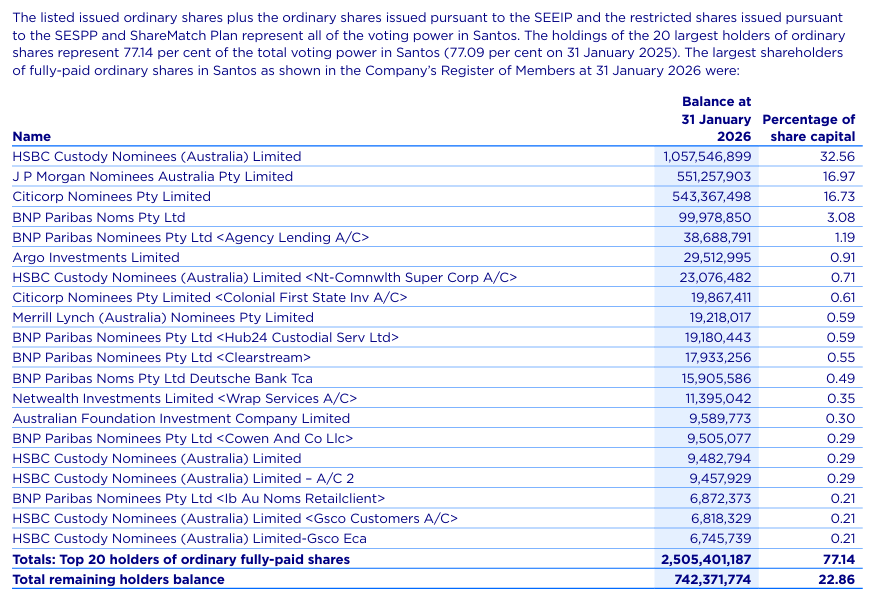
Both the mum and dad investors and the institutional investors are extending credit to Santos by purchasing shares in the company. The value of those shares is market-driven – they can either rise or fall in price. The capital raised by these share purchases remains a fictional amount until such time as the profits from future surplus value creation allows the payment of a variable interest (dividends) to the shareholders.
All of those shareholders are also gamblers, speculating on the shares holding or increasing their value along with the regular payment of dividends. A fall in the price of shares may occur in any company, but if it is a generalised fall then the stock market has crashed. If that fall particularly hits one type of company or industry, then the over-inflated value of those shares, their cost having greatly exceeded the ability of the industry to create enough surplus value, means that the bubble of over-investment has burst. Some are expecting there to be an AI bubble burst similar to the 2000-2002 dot.com bubble burst.
Of course, not every little piggy goes to market. Some stay at home. They don’t eat roast beef and usually have none. Many are locked out through poverty and low wages. Rather than buying shares, they are counting the cost of their kids’ involvement in out-of-school sports, they are depending on Foodbank and other hunger relief charities, they are praying that they can keep a roof over their heads, they are keeping the cheapest available second- or third-hand cars on the road and paying Trumpian prices for their petrol, and the last thing they are hoping is that Santos continues to expand.
And if there is a bursting speculative bubble, or a general stock market crash, all those little piggies will go “wee, wee, wee” all the way home.
Next time: Their word is your bond
Further reading:


No comments:
Post a Comment