Showing posts with label Inflation. Show all posts

Sunday, May 12, 2024

Inflation hits Interest Rate Relief: The Crisis Grows!

 Written by: John G. on 13 May 2024

 

Fruit & Veg prices not rewarding farmers. Source: publicdomainpictures.net CCO


Price inflation increased from October to March by 1.6% . That was after a drop in the previous 6 months which had government ministers and economists cheering and carrying on about a series of interest rate cuts coming right up. 

On 7 May, the Reserve Bank swept those hopes aside and locked in the current rate, way higher interest rates than any in the last decade. Now talk is of a possible interest rate increase. 

Price inflation increases have killed off hopes about imminent interest rate cuts and cast a shadow after over the whole country’s economic prospects.

Economists have commented how disastrous it is to have unemployment low at 3.8% while price inflation kicks up. 

For them, “restoring economic activity” relies on unemployment being pushed up to 5%. That’s an extra 200,000 plus people thrown out of work. 

They are disappointed just 7,000 more people were without work in March. In that month, total hours worked across the nation increased by as much as it had over the previous 11 months. 

With price inflation growing and people not being put out of work in large numbers, capitalists and their top managers, top bureaucrats, bankers and government administrators set out for people to suffer much more misery. 

Policy tensions reflect different corporate monopolies interests 

There are tensions within corporate monopolies’ ranks between their economic needs and their political needs, as well as conflicts between different sectional interests. 

The economic needs are for people to be put through hardships, businesses closing, bankruptcies, people unable to get what we want to live, being paid less and consuming less. The political needs are what people will tolerate without a significant turn against the corporate monopolies rule. 

All sorts of differences flare up between financial corporations and bankers, consumer goods suppliers, mining monopolies, industrial manufacturers supplying different industries, and small and medium hospitality businesses. The businesses selling to consumers tend to support consumers being supported to keep business sales up. Others insulated from the consumer market like the mining monopolies and foreign bankers back severe cutbacks. 

 Different corporate approaches expressed in the parliamentary slanging match over spending. 

Labor has been spreading a range of support around: electricity bill reductions, heavily subsidised childcare, increases to wages in aged care, providing free Vocational education for some careers , tax cuts extended to the poorer paid, childcare subsidies, rent assistance and payments that cut energy bills before they went to households, increases to bulk billing rebates, reduced costs of pharmacy scripts, an increase in jobseeker payments , rent assistance up 15%, increased single parent payment and expanded eligibility, opening up restrictions on wage struggles for a few workers, and more. It’s a significant spending program on services and support for people in difficulty.

It is nowhere near dealing with economic problems people face. Labor’s balancing act tries to smooth out some of the harsher effects of the crisis, and stave of tendencies for the troubles to break people’s acceptance of capitalism. They work on the monopolies’ economic needs while paying attention to political needs. Hardship, but trying to hold it to a level where lots of people won’t be rethinking the need to rebel and try to make the rich corporate monopolies pay.  

Chalmers dubs his a ‘no scorched earth austerity’ policy. He presents himself ‘dealing with inflation’ while ‘supporting the economy’. Labor’s juggling defends the corporate monopolies by letting people’s consumption drop and hardships stalk the workers, making people pay to get out of the corporates’ inflation crisis while doing a bit to mitigate the worst effects.

Liberals ‘Cut Government spending policy’ for mining, finance and other corporates 

The Liberals carry on about ending the ‘spend-a-thon’. They say they would ‘contain the growth in spending’ … to ‘take pressure off this homegrown inflation’ as Shadow Treasurer Angus Taylor put it after the recent Reserve Bank meeting put interest rates on hold. 

Taylor nominated cutting $209 billion he reckoned was increased spending since Labor’s election. While the Liberals are coy about details of what they would do, they are calling for cuts in spending programs on a variety of government services and support for people. 

It’s the severe policy of the corporates of mining, banking and finance; increasing the harshness of the squeeze on people. It’s not quite the ‘scorched earth’ criticized by Chalmers, but it is policy for a disaster to be imposed on people doing it hard now, more out of work, holding back wage rises, while slashing services and supports Labor has put in place easing the harshest troubles hitting people.  

Liberal’s approach: Devil Take the Hindmost

The Liberal’s and monopolies’ make a cynical and brutal calculation. They reckon better off sections of workers can tighten the belt for a while They work for the better off to turn a blind eye to the plight of poorer workers and non-monopoly business people most affected by recession, loss of consumer markets, government supports and services. The Libs work to bring workers and professionals in industries like mining, shipping and transport, banking and finance in support of the reactionary corporate monopolies’ approach. 

The Liberals try to drag working people in mortgage trouble into the reactionary corporates’ orbit too. They push harsher measures as the path to reduce the time high interest rates torment mortgage holders in trouble. They try to use it as an appeal to outer suburban workers and tradies to back mining, finance and wider foreign monopoly corporates’ interests rather than stand for the workers’ own interests in a better life. 

Insecure, casual and ABN employees cop the brunt of unemployment and hardships. The bottom 25% are crushed. The young are particularly affected by insecure work, shift cuts, high rents and interest rates. Small and medium businesses providing people’s goods and services and subbies in all sorts of industries lose customers and work. People with mortgages and renting cop even higher rates.   
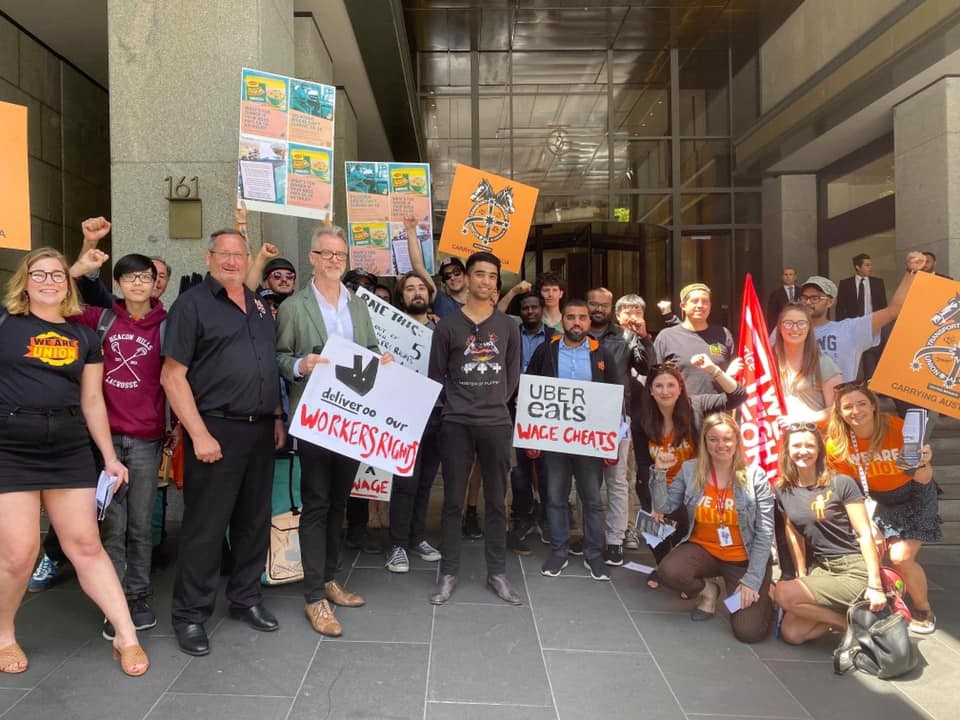
For the bulk of people, the Liberals promise a hell of a lot less ‘economic activity’, a brutal devastation of many people’s lives and the futures of today’s generation of students in their later years looking to get into good paying jobs. 

The Greens perform around the edges of government administration, raising banners for more housing, caps on rents and interest rates. They float various schemes. They perform and act to advocate for Labor to improve its game. Labor does fall short and bumbles on various fronts. The Greens aren’t going to have a decisive say in parliament any time soon. Their policies attach themselves to consumer market interests. They stand against the reactionary corporate interests of mining monopolies, finance and banking corporates. 

Labor and Liberal are wrangling about which way to make capitalism work and get back to profitability, while keeping corporate monopoly rule over the country secure. That’s no real use to workers. 

This system is failing us. It can’t keep going without periodic crashes where the corporate monopolies make working people and small business suffer to prop up their system and get it back to turning over. 

Now is a time to get serious about getting organised to get rid of the dominating US corporate monopolies’ rule over the nation and free the nation and the working class. Standing out as some initial steps to defend poor workers and start to develop organisation for workers to take command: 

First: Organise poorer workers and younger people to stand against severe policies to make poor workers pay for the corporate monopolies’ crisis. Better pay, cheaper rent, lower interest rates, better government support and services, tax the corporate monopolies to relieve peoples’ hardships. 

Second: Win better-off workers, professionals and small business people to stand with poorer workers against policies of leaving people subject to severe hardship.

Third: Reject Liberal/Coalition policies to stop spending to relieve people of some effects of price inflation and high interest rates, while they also work to impose real wage cuts and much higher unemployment. No severe economic shock to get big monopolies out of trouble.   

Thursday, March 2, 2023

Inflation solutions mock September’s Jobs & Skills Summit.


Written by: John G. on 1 March 2023

The Government trumpeted the Jobs and Skills Summit outcomes “to deliver secure jobs with growing wages, boost incomes and living standards”. Inflation and the solutions being dumped on us are putting paid to those fantasies.

Inflation is playing havoc with people’s budgets. Electricity and gas prices are up double digits. Groceries and petrol costs keep rising. Interest rates have rocketed up at rates not seen in decades. 

In contrast wages have stagnated in dollar terms, losing buying power week in week out.

What is being done to get us out of the downhill slide in living standards?

The Reserve Bank is force feeding interest rate rises. Governments, State and Federal, are fiddling pretty uselessly around at the edges. It is reminiscent of the story of Nero while Rome Burnt. 

The Reserve Bank Governor has been going around declaring its job is to look after people, apparently by bashing them with increasing interest rates until unemployment hits around 6% and people are consuming much less than now. Thanks pal!

With interest rates, mortgage repayments and rent costs shooting up, a big portion of the workforce are forced to cut their consumption. It begins by cutting out little luxuries that give life some delight, then cut back the quality and then quantity of daily necessities. As you go down the food chain the starting point of cutting back comes closer to cutting back on basic necessities of life.  

People’s living standards shoved down is what they aimed for as the solution to higher costs and lower buying power. Their solution to people short of buying power is to make our buying power even lower, and quickly. Lower economic growth, means people eat less, do less, live less, and hundreds of thousands are driven into poverty. 

That’s what the Governor and Board of the Reserve Bank aim to do. Its also behind government inaction, other than the reintroduction of the petrol tax last year. Its making working people pay to secure the wealth garnered in record profits by the massive, mainly foreign-owned, corporate monopolies at the centre of Australia’s economy. 

Those big rich monopolies have the power in Australia while the working class is at a historic weak point, with its lowest union membership in a couple of lifetimes, with a gaping leadership vacuum, and workers divided into enterprise agreements. Solidarity as a class is outlawed.    

People at work have been producing furiously, unemployment was at historic lows, and the wages portion of the economy was also at historic lows. The Centre for Future Work confirmed that last week. Public and government-funded sector workers in particular have been campaigning for more staff, easing of workloads, and higher pay, engaging in wave after wave of strikes. Profits have been and still are at historic highs. Prices have been rising.  

The squeeze on people’s pockets is business’s answer to capitalism’s problems with inflation. Hit the people who work for a living and those that are now out of the workforce to fix the problems brought on by record profits. The profiteering foreign corporate monopolies at the heart of the problem are cushioned from the impacts of inflation and their solution for it, economic recession.  

People are forced to cut their consumption because they are spending their hard earned on mortgages and rent. With less consumption, less sales and 400,000 people are thrown out of work. So much money is removed from people’s spending power that the economy slows down, people consume less i.e. living standards drop and hundreds of thousands are impoverished, products come into oversupply and prices drop, starting the cycle of boom and bust again, or so the theory goes.  


Teachers from three Shepparton Catholic schools protesting for new agreements for higher wages and more staff in August 2022. (ABC Shepparton: Rosa Ritchie)


The obvious first response is to make the rich corporate monopolies pay. They’ve got billions. The Commonwealth Bank announced $5.7bn profit for the 6 months to December last. Wesfarmers, parent company of Coles, Kmart, Bunnings, Target, Officeworks, API, Priceline, Soul Pattinson, Blackwoods, Geeks2U, CSBP chemicals and fertilizers, Covalent Lithium, and more announced profit of $1.4 bn up 14%. Woodside Petroleum made $7.7bn. Last financial year ANZ Bank took in $6.2bn Net Profit, Westpac Banking Corp $5.5bn, Commonwealth Bank $9.6bn, National Bank $6.9 bn, Fortescue Metals Group $6.2bn Profit.

The bankers and financial sector have been rolling in it particularly. Just think of the big 4 banks’ take  last year after their accountants had hidden what they could, $28.2bn, equivalent to $2,150 for everyone who works for a wage in the country. 

They can pay. The corporate monopolies should be made to pay. 

The Summit, another step on a stairway to nowhere 

It was all supposed to be sorted after the Jobs and Skills Summit in September last. 

The ink has barely dried on the summary of the Summit’s Outcomes Report; “As a result of the consensus reached at the Summit, immediate actions will be taken … - to help deliver secure jobs with growing wages, boost incomes and living standards and create more opportunities for more Australians. The Summit has also laid out priorities for further work and future action.

‘Key to these outcomes are the objectives of full employment and growing productivity … – they are at the centre of the Government’s economic agenda.’

The Summit gave some cover for government to adjust the Fair Work Act to improve the position of workers by removing some outstanding inequities and discrimination and to pump support into TAFEs and apprenticeships. However, the Summit, touted as leading working people towards better times, ran into corporate monopolies drowning in record profits, floating on crushed wages, heaving workloads, growing work-times and prices hiked above inflation.  

6 months after the Jobs and Skills Summit and the workforce has the exact reverse of the promoted outcomes. Not secure jobs, not growing wages, not boosted incomes, not full employment. What we’ve got now are higher unemployment, higher under-employment, lower participation in the workforce, and more insecure employment on top of lower wages and buying power being whittled away by inflation. 

The band-aids from the Summit, at their root, provided better conditions for people to sell their capacity to work, to sell themselves for better wages, and more secure conditions of employment. Where they have been implemented, and to the extent they get implemented, they relieved some pressures on trade union organisation, relieve some aspects of discrimination, particularly gender, disability and LGBTQI discrimination, and provide some supports to those discriminated against. That’s important, very important to the people getting some relief, which there hasn’t been lots of evidence of beyond aged care workers. But it leaves capitalist power over society untouched, as we are now finding out in all its disappointing pressure on everyone’s wallet.  

Now women suffering wage discrimination, the notorious gender wage gap, find that successes improve their situation relative to male wages, but male wages too are floundering behind inflation. Women, the disabled, LBGTQI people get an extra weight off their shoulders but find they share the exploitation and oppression their straight, able-bodied, male colleagues, partners and friends are burdened with. Like a prisoner out of solitary, they remain in the gaol of capitalist exploitation and oppression alongside the other captives of capitalism. It lifts the level of solidarity for all and opportunities for stronger unity in struggle but it hasn’t removed the essence of exploitation and oppression integral to capitalism. 

It establishes a stronger foundation of us all sharing the burdens, for more unity in the fight to end all oppressions.  

Such wins are being compromised. The buying power of the whole class of wage employees is smashed to prop up the system of corporate monopolies accumulating enormous wealth. Their survival and their system’s survival are being secured by hitting the working class as a whole.     

The Summit proved to be another example of how exploitation and discrimination against the working-class is integral to capitalism in operation. Relief from difficulties, welcome as it is, is temporary and conditional, difficulties arise again in new forms. 

Struggles for relief through reforms, leaving capitalist control untouched, are vital to people’s well-being but are not a solution. In fighting for relief, its vital to keep in mind how temporary any relief is and how vita it is to get and stay organised to meet the future needs of the people as capitalism finds new ways, new forms for the same old difficulties to assert themselves again. 

Real relief, unconditional and permanent relief for us all, requires bringing capitalism’s exploitation and oppression to an end, consigning capitalism to the dustbin of history where it belongs.